Yoga: What Does It Do for Your Body and Mental Health?

 · 5 min read
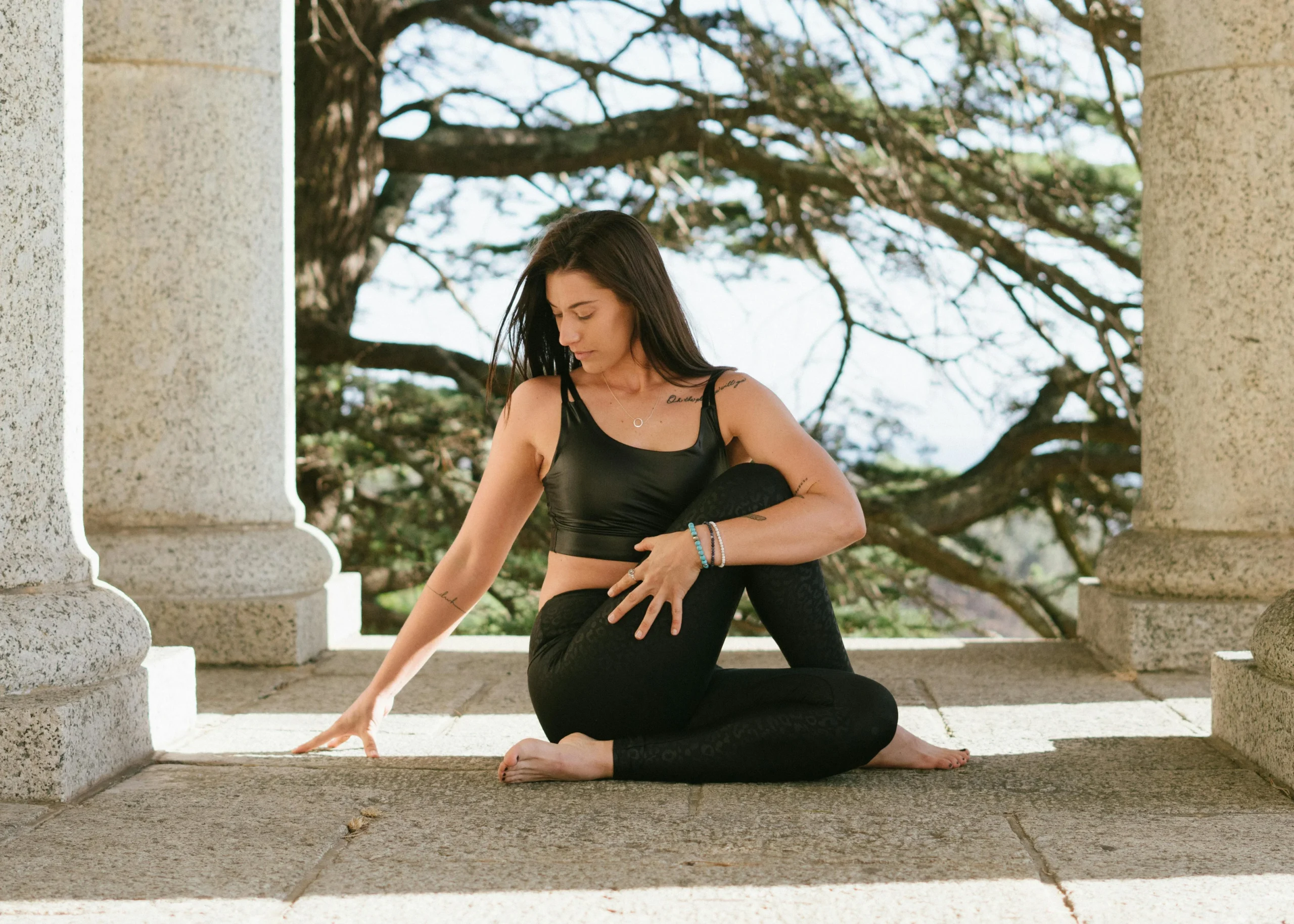
Yoga is far more than a fitness trend. This ancient practice from India unites body, breath and mind to foster inner balance. In recent years, yoga practice has grown in popularity worldwide – not only as a form of exercise, but also as a tool for mental and physical health.
For you, this means that yoga can not only improve your flexibility, but also reduce stress, promote mental clarity and even enhance your quality of life. But how exactly does it work? Let’s take a deeper dive.
What are the three pillars of yoga?
Yoga rests on three central pillars that complement one another and offer a holistic approach:
Asanas – Postures
Asanas are the physical exercises of the practice. They strengthen muscles and improve flexibility, balance and posture. Studies show that regular practice can reduce back pain, help prevent postural problems and improve body awareness.
Examples for beginners:
- Cat-Cow (Marjaryasana/Bitilasana): Loosens the spine and activates the back and abdominal muscles.
- Downward-Facing Dog (Adho Mukha Svanasana): Stretches the leg and back muscles and boosts circulation.
- Warrior I & II (Virabhadrasana I & II): Strengthens the legs, hips and core and improves balance.
A tip for you: start with 15-20 minutes a day and slowly increase the intensity. Even short sessions are effective.
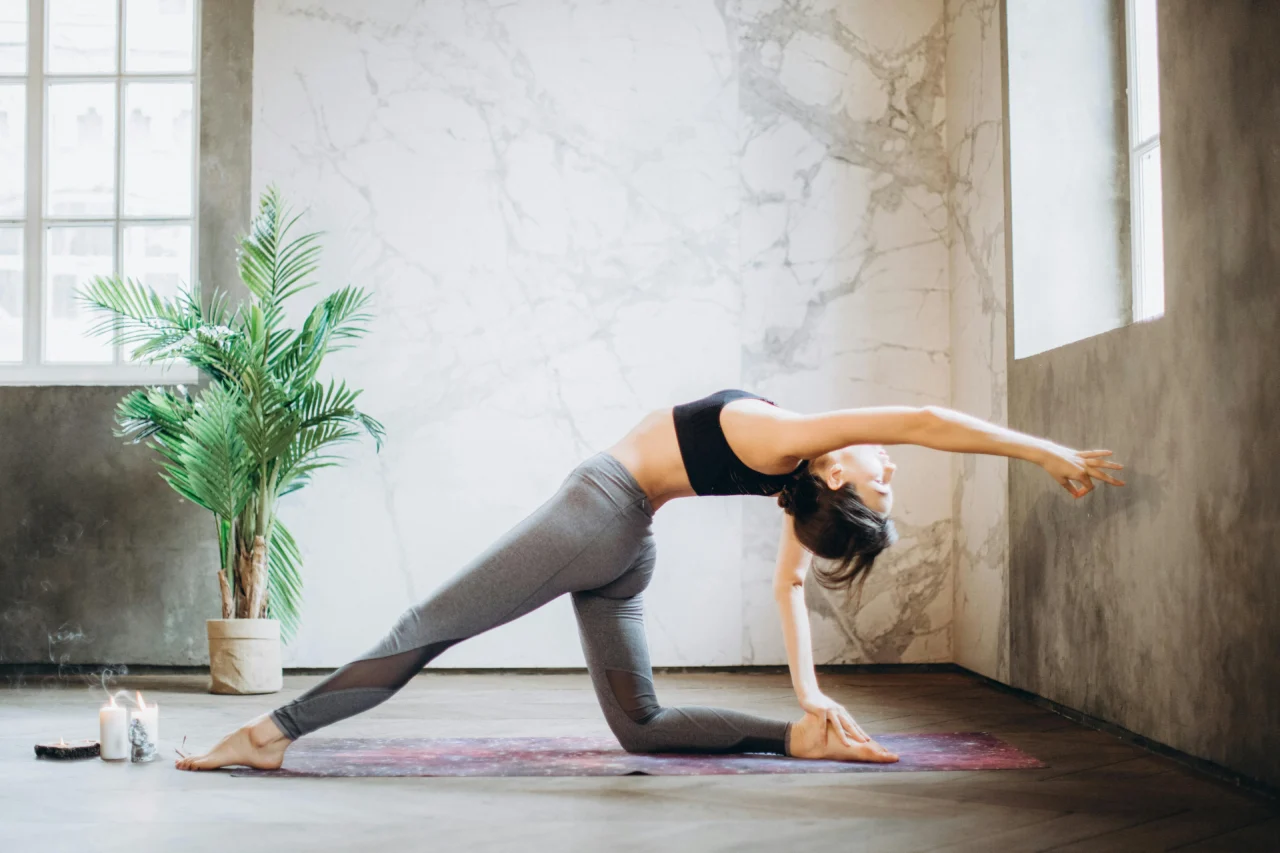
Pranayama – Breathing techniques
Pranayama means ‘control of the life breath’ and includes techniques such as deep abdominal breathing and alternate nostril breathing. These breathing exercises regulate the rhythm of your breath, increase oxygen supply and have a calming effect on the nervous system.
Research shows that pranayama lowers stress hormones such as cortisol and activates the parasympathetic nervous system, leading to greater inner calm and mental stability (Shetty et al., 2025; Nemeroff et al., 2024).
A particularly effective way to deepen the effects of pranayama is focus meditation. It helps you to deliberately steady your mind, gather your attention and direct your awareness to your breath – perfect for feeling the calming effect of pranayama even more strongly.
A tip for you: start with 5-10 minutes a day, e.g. in the evening or after a stressful day at work.
Meditation – The inner practice
Meditation helps to calm the mind, order your thoughts and develop mindfulness. Long-term practice can foster emotional balance, self-esteem and psychological resilience (Childs et al., 2023; Kauric-Klein, 2023).
Studies have found that meditation leads to:
- A reduction in depressive symptoms (Ziv et al., 2023)
- Improved stress management and sleep quality (Metri et al., 2023)
- Stronger self-regulation and cognitive abilities (Grieb et al., 2024)
A tip for you: start with 5 minutes of guided meditation a day and build up gradually.

How does yoga help with stress?
Stress is one of the main causes of physical and mental complaints. Yoga works on several levels here:
- Physically: Movement releases tension and relaxes the muscles and fascia.
- Hormonally: The practice lowers cortisol and adrenaline, allowing calm and composure to set in.
- Mentally: Meditation and breathing exercises foster mindfulness, reduce rumination and help you perceive stressors more clearly.
Studies of college students show that yoga practice as an early intervention significantly reduces anxiety and stress (Nemeroff et al., 2024). In patients with chronic conditions, too, measurable improvements in quality of life and reductions in inflammatory markers have been observed (Shetty et al., 2025).
How does yoga affect the mind?
Yoga strengthens the mind on several levels:
- Release of endorphins through asanas and pranayama: Natural mood boosters that enhance wellbeing
- Emotional regulation through meditation: Reduces rumination and stabilises self-esteem
- Support with trauma and eating disorders: Alongside trauma therapy and the treatment of eating disorders, yoga can help to strengthen embodiment and self-awareness
For you, this means that yoga can help ease anxiety, build self-confidence and develop mental stability.
What do the exercises do for muscles and fascia?
Muscles & flexibility
Asanas train specific muscles, improve mobility and strengthen the deep muscles. Regular practice can help prevent back problems and correct poor posture.
Fascia
Yoga consciously stretches the fascia, releases adhesions and makes the tissue more supple. This enhances body awareness and quality of movement.
Recovery & circulation
Yoga supports blood circulation and oxygen supply, promotes recovery and can have a positive influence on healing processes.
How does yoga improve concentration?
Yoga trains your focus by connecting body, breath and presence. Precisely executed asanas combined with conscious breathing foster mindfulness in the moment and sharpen your perception. Meditation also supports attention and strengthens what are known as executive functions. These are the mental abilities that allow you to deliberately direct your concentration, impulse control, mental flexibility and planning. Yoga helps you to train these abilities and improve your self-regulation. Studies show that yoga practice and meditation enhance cognitive performance, reduce stress and foster self-esteem and self-love (Vipassana studies; Nemeroff et al., 2024).
How can I integrate yoga into my daily life?
Yoga is easy to integrate into your daily life if you regularly schedule short sessions. Just 10-20 minutes a day is more effective than longer, irregular sessions. A morning routine with asanas and breathing exercises wakes up body and mind, while an evening routine with gentle asanas and meditation calms the body and prepares it for sleep. At work, too, short breathing breaks can help reduce stress and boost concentration. Guided sessions or yoga apps can also make it easier to get started and help you build a routine.

Conclusion
Yoga unites body, breath and mind in a holistic approach and offers a wide range of positive effects for body and mind. Practising asanas, pranayama and meditation can help reduce stress, improve concentration, increase flexibility and strength, promote posture and balance, and support breathing and circulation. At the same time, yoga practice strengthens mental stability, emotional balance and the connection to your own body and mind.
For you, this means that regular practice can consolidate your inner balance, enhance your wellbeing and support your mental health in the long term. Yoga adapts to every level and age – whether you are a beginner or already have some experience.
revised on 7 October 2025
by Katharina R. (psychology student)
If you would like to make yoga a lasting part of your daily life, you will find practical step-by-step guidance in our article ‘Changing habits’. Give it a try and experience the positive effects on body and mind for yourself!
Deepen your meditation practice with Mindfulife
Meditation can be more than a short break in your everyday life. If you would like to understand more deeply how meditation works, how to build a steady practice of your own and how to guide others mindfully, our meditation teacher training is the next step. There you will not only get to know meditation in theory, but also develop more confidence, clarity and trust in your own practice.
Would you like to find out more about the training first? In our weekly webinar you will get an insight and learn more about what your path to becoming a meditation teacher could look like.
For regular support in your everyday life, you can also use our online meditation studio and join guided meditations flexibly via Eversports.
We look forward to accompanying you on your journey.
You can find more mindfulness inspiration on our channels too
References
Baender-Michalska, E., & Baender, R. (2018). Yoga & Embodiment: Stress und Schmerz bewältigen.
Chaudhry, N., Bhandari, R. B., & Gaur, V. (2023). Yoga perspective on personal excellence and well-being. Journal of Ayurveda and Integrative Medicine, 14(3). https://doi.org/10.1016/j.jaim.2023.100717
Childs, F. J., Fontana, E., Moran, M., & Faulkner, P. (2023). Yoga‐integrated psychotherapy for emotion dysregulation: A pilot study. Counselling & Psychotherapy Research, 23(3), 638–652. https://doi.org/10.1002/capr.12602
Grieb, E. J., Schmid, A. A., Riggs, N. R., & Stephens, J. A. (2024). Executive Function After Yoga: Adults With Acquired Brain Injury-A Pilot Study. American Journal of Occupational Therapy, 78(2), 1–8. https://doi.org/10.5014/ajot.2024.050403
Härle, D., & Emerson, D. (2015). Körperorientierte Traumatherapie: Sanfte Heilung mit traumasensitivem Yoga (1. ). Junfermann Verlag.
Kauric-Klein, Z. (2023). Effect of a yoga intervention on depression, anxiety, and sleep in patients on hemodialysis - A pilot study. CANNT Journal, 33(2), 11–17.
Metri, K. G., Raghuram, N., Narayan, M., Sravan, K., Sekar, S., Bhargav, H., Babu, N., Mohanty, S., & Revankar, R. (2023). Impact of workplace yoga on pain measures, mental health, sleep quality, and quality of life in female teachers with chronic musculoskeletal pain: A randomized controlled study. Work, 76(2), 521–531. https://doi.org/10.3233/WOR-210269
Neumark-Sztainer, D., Wall, M., Zhang, Z., Larson, N., Adams, K., & Piran, N. (2025). The practice of yoga and associations with embodiment, body image, internalized weight stigma, and disordered eating in a population-based sample of young adults. Body Image, 54, https://doi.org/10.1016/j.bodyim.2025.101928
Nemeroff, R., Harden, A., & Kowalsky, B. (2024). Yoga classes as an early intervention for college students reporting high levels of stress and anxiety: A pilot study. Journal of American College Health, 72(1), 4–10. https://doi.org/10.1080/07448481.2021.2008401
Schwalbach, M. (2016). Gute Führung durch Yoga und Meditation: Mit der uralten Weisheitslehre Yoga zu mehr Führungsqualität [electronic resource].
Shetty, G. B., Shetty, P., Shetty, B., & Nanjeshgowda, H. L. (2025). Impact of Short-Term Integrated Yoga Therapy Intervention on Systemic Inflammatory Markers and Quality of Life in Rheumatoid Arthritis Patients: A Randomized Controlled Trial. Integrative Medicine: A Clinician’s Journal, 24(1), 10–15.
Ziv, A., Barnea-Melamed, S., Meisman, A., Ofei-Tenkorang, N. A., O’Donnell, J., Altaye, M., Nash, J. K., Mitan, L., & Gordon, C. M. (2023). Yoga as an intervention to promote bone and mental health in adolescent females with anorexia nervosa: A pilot study. Eating Disorders, 31(5), 526–532. https://doi.org/10.1080/10640266.2023.2196493