How do I change my habits? 4 simple steps
Bad habits can hold us back and drain our energy. But how can we break these patterns and understand how habits actually form? In today's article, you'll find answers and practical tips.

 · 5 min read

Bad habits can hold us back and drain our energy. But how can we break these patterns and understand how habits actually form? In today’s article, you’ll find answers and practical tips.
How do habits form?
First of all, some good news: habits are not innate, but the result of learning processes.
At the start of these processes, we want to learn a new skill, such as driving a car. To do this, we have to invest a great deal of attention and energy. During this phase, the front part of our brain, the frontal lobe, is active – the part responsible for awareness and rational thinking. The more often we repeat or practise something, the more it becomes routine. Conscious awareness is now replaced by an automatic process; for example, we can now hold a conversation with our passengers while driving. These automatic processes are stored in the brain in the so-called basal ganglia. When we encounter a trigger or external stimulus that we have stored in connection with the learned behaviour, the automatic process is activated.
We also distinguish between goal-directed learning, meaning learning that is intended and actively pursued, and habit learning. The latter tends to happen unconsciously and depends heavily on rewards and stimuli. This is why we often experience following our habits as something almost soothing or rewarding.

What are the advantages and disadvantages of habits?
From an evolutionary perspective, habits and automatic processes allow us to assess and handle everyday situations quickly and without much effort. For example, we don’t have to think long and hard about whether to brush our teeth before going to bed or how exactly that works, because we have done it all our lives and it has become routine.
However, habits can also have negative effects when we no longer have control over our behaviour. We know that something is bad for us and don’t really want to do it, but an inner urge drives us to do it again and again. Eventually we can’t bear it any longer and give in to the habit. Examples include mindlessly reaching into the crisp packet until it’s empty, or constantly checking our phone.
Changing habits through awareness and mindfulness
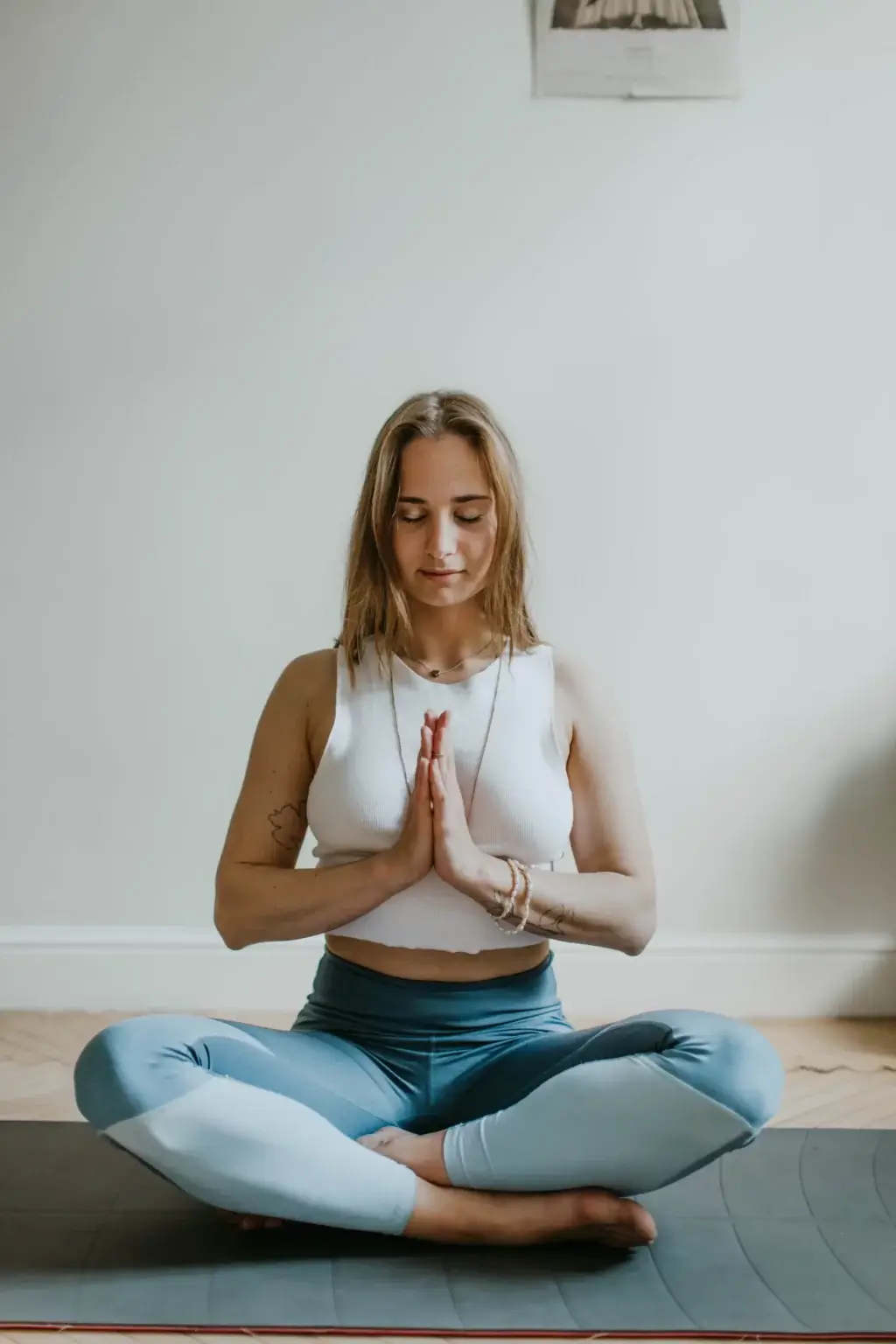
When it comes to our habits, it is just as Victor Frankl once said:
“Between stimulus and response there is a space. In that space is our power to choose our response. In our response lies our growth and our freedom.”
So if you want to change your habits, you first need to become aware of them and engage in self-reflection. This is the only way to break the vicious circle between the trigger and your habitual response.
Here’s how to go about it:
1. Notice your habits
Become aware of which of your daily behaviours happen automatically and unconsciously – in other words, which ones are habits. Feel free to take your time and go over your entire day from morning to evening. You will probably notice many of your reactions that you didn’t really carry out consciously but completely automatically. But don’t worry, that’s perfectly normal, and not all habits are bad.
2. Identify your habits
Now ask yourself which of these behaviours serve you in some way and which don’t. Is your behaviour good for your health? Does it help you achieve something that matters to you? Is it a behaviour that is part of everyday life, such as brushing your teeth? If you can’t answer yes to any of these questions, you are most likely dealing with a bad habit that does no good to your health, your life in general or the people around you.
3. Identify the triggers of your habits
Finally, become aware of which stimuli or situations in your everyday life trigger these unwanted, automatic behaviours. This is the only way to drive a wedge between the stimulus and your automatic response. Because once you are aware of the triggers, you will notice them more and more often, and you will be better able to respond the way you want to!
4. Learn new habits
Now that you can tackle the problem at its root, it’s important to think about how you would like to respond to the trigger of the old habit instead.

If you want to break an old behaviour pattern, you should learn a new, desired behaviour in its place. In fact, we don’t actually “unlearn” or “forget” habits. We simply learn new behaviours and repeat them until they are more strongly represented in our brain than the old habit. This is due to so-called “neuroplasticity”, which means that our brain is malleable and can be trained like a muscle. The dose-response relationship here is therefore similar to that in strength training: more practice brings more results! Alongside regular practice, however, you should also be very patient with yourself. Some habits may have been ingrained over many years.
These additional tips will help you reach your goal
Anticipate temptations and obstacles
Sometimes obstacles can make it harder for you to reach your goal or even block your path entirely. Some of these obstacles could be avoided or foreseen. Let’s say, for example, that your goal is to look at your phone less. Notifications and the fact that our phone is always within reach constantly tempt us to engage with it. Even when we actually want to focus on another activity, part of our attention will always subconsciously be directed towards our phone. By switching your phone to silent or even putting it out of reach in another room, you can head off this temptation.
Create commitment
Tell others which habit you would like to break or change and what your exact plan is. This binds you more firmly to your new goal and helps you stick with it and not give up, despite the inevitable obstacles. In everyday life, we are often exposed to a great many stimuli, pieces of information and demands. This can mean that we don’t always remember what we actually set out to do. For example, write the habit you want to break on a note and put it up somewhere clearly visible where you will see it often, as a little reminder that you want to change your habits.
SMART method
Changing habits has a lot to do with setting goals. Setting goals properly is an important prerequisite for successfully achieving them. You can find out how to set goals the right way in our article on the SMART method.
Revised by Amina Bjelic, A. (BA, BSc)
Deepen your meditation practice with Mindfulife
Meditation can be more than a short break in your everyday life. If you would like to understand more deeply how meditation works, how to build a steady practice of your own and how to guide others mindfully, our meditation teacher training is the next step. There you will not only get to know meditation in theory, but also develop more confidence, clarity and trust in your own practice.
Would you like to find out more about the training first? In our weekly webinar you will get an insight and learn more about what your path to becoming a meditation teacher could look like.
For regular support in your everyday life, you can also use our online meditation studio and join guided meditations flexibly via Eversports.
We look forward to accompanying you on your journey.