Laughter Yoga Effects: Does Intentional Laughter Really Help Against Stress?
Laughter is said to be the best medicine - but what does science actually say about it? While we often laugh spontaneously and exuberantly during carnival season, laughter yoga deliberately relies on guided laughter as a way to reduce stress and lift our mood. Can intentionally produced laughter really have effects similar to spontaneous, genuine laughter? And how robust is the scientific evidence behind laughter yoga? This article takes a nuanced look at current studies, sheds light on psychological and physical effects - and puts into perspective what laughter yoga can achieve and where its limits lie.

 · 6 min read
Laughter is said to be the best medicine – but what does science actually say about it? While we often laugh spontaneously and exuberantly during carnival season, laughter yoga deliberately relies on guided laughter as a way to reduce stress and lift our mood. Can intentionally produced laughter really have effects similar to spontaneous, genuine laughter? And how robust is the scientific evidence behind laughter yoga?
This article takes a nuanced look at current studies, sheds light on psychological and physical effects – and puts into perspective what laughter yoga can achieve and where its limits lie.
Between social connection, stress reduction and emotional depth
When the marquees fill up, everyday clothes are swapped for costumes, the streets glow with colour and the high spirits are accompanied by laughter, it can only mean one thing: Fasching season (in the east) / carnival season (in the Rhineland). It is probably the time of year when we laugh together more than at almost any other – and our wellbeing benefits.
While laughter at carnival time arises spontaneously – in the moment, unplanned and carried by the crowd – elsewhere laughter is deliberately induced in a structured way. The idea behind it is simple: if laughter is good for us, why not use it on purpose?

Spontaneous laughter: laughter as a biological event
Laughter is part of a universal non-verbal language – an expression that emerges from the interplay of muscle activity, breathing, emotion and social resonance. A recent meta-analysis by Kramer and Leitao (2023) examined intervention studies on the effect of spontaneous, emotionally triggered laughter on cortisol levels. Cortisol is one of the body’s key stress hormones. Among other things, it influences metabolic processes, heart rate and immune responses.
The results show that spontaneous laughter was associated with a marked reduction in cortisol levels – by around 32 % on average. Even a single laughter session was able to lower cortisol by up to 37 %, regardless of whether participants laughed actively or watched humorous content. A temporary drop in this stress hormone can be seen as an indication of a stress-regulating effect. In other words: our body responds measurably to genuine laughter.
Structured laughter: laughter therapies in general
A recent systematic review with meta-analysis by Porras-Jiménez et al. (2025) summarises 33 randomised studies on various forms of structured laughter therapy in adults. The result: overall, laughter therapy can significantly reduce anxiety and increase life satisfaction – even though the methods varied widely, from laughter yoga and humour training to comedy formats and hospital clowns.
Laughter yoga in particular showed stronger effects on anxiety and life satisfaction in the analyses than some other methods. At the same time, the programmes were carried out in very different ways – for example in terms of duration, setting and target group. Accordingly, the positive effects are not equally strong across all studies.
It is also important to note that in most studies, the results were measured directly after the intervention ended. How stable the positive effects remain over longer periods has not yet been sufficiently studied.
A slightly different kind of yoga: laughter yoga
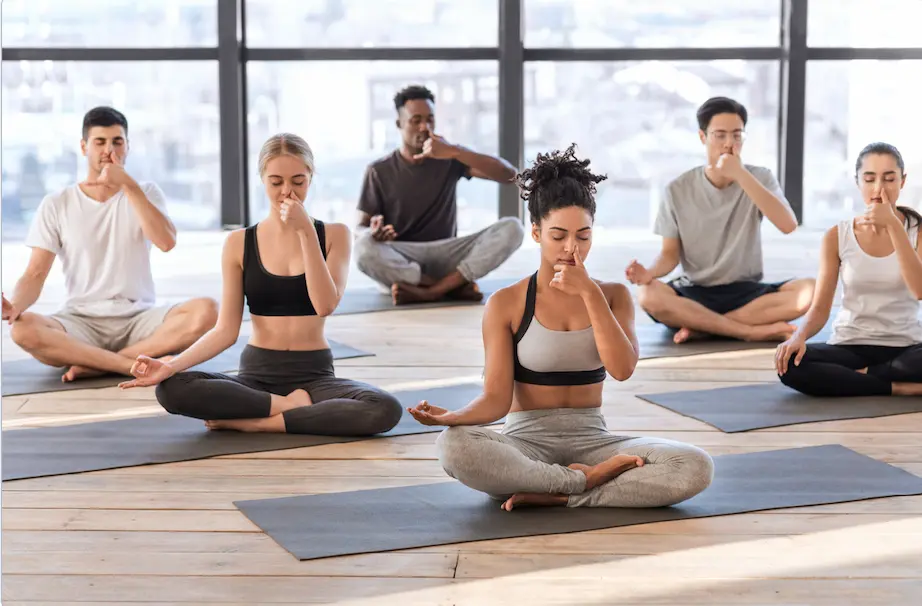
Laughter yoga is not a classic yoga class with complicated asanas. The focus is more on emotional health. Depending on the programme, it consists of a combination of:
- breathing exercises
- rhythmic clapping
- gentle stretching
- playful elements
- meditation
- specifically guided laughter exercises, led by certified laughter yoga trainers
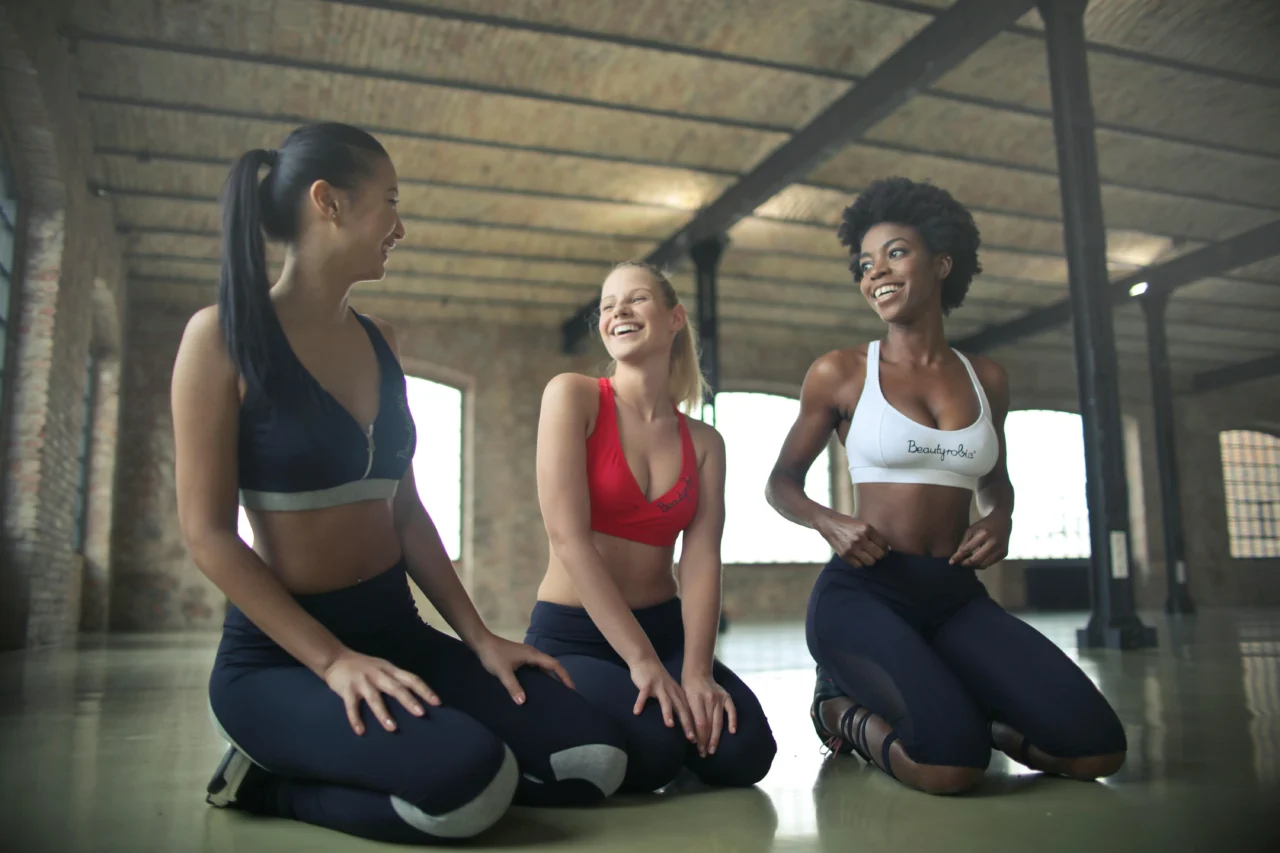
A central aim is to let deliberately initiated laughter turn into genuine, spontaneous laughter. The practice is often complemented by short phases of meditation or relaxation. Depending on the setting, a session lasts between 30 and 90 minutes.
So the laughter starts deliberately – as an exercise – but often develops into genuine, spontaneous laughter as the session goes on. Laughter yoga practice assumes that even deliberately initiated laughter can activate physiological processes similar to those of spontaneous laughter. In both cases, our stress and emotional systems respond measurably.
Laughter yoga is usually practised in groups – and for good reason: laughter is contagious and often comes more easily in company. One-to-one sessions are possible but less common. Programmes often run for four to eight weeks, with sessions one to three times a week.
But what does it actually feel like in practice? I had my first laughter yoga experience at a festival a few years ago – in a large tent with around 50 strangers. I still remember exactly how strange it felt: approaching people, making silly noises, laughing on cue.
What seemed controlled at first quickly turned into genuine laughter. Partly because I kept asking myself, ‘What on earth am I doing here?!’ And partly because it really was incredibly funny. Laughter is simply contagious. I have rarely felt my facial muscles as intensely as after that session. And yes – I was happy. And a little proud, too, of having stepped out of my comfort zone.
What effects do the studies show?
Laughter yoga seems to be particularly accessible for older people: it is straightforward, inexpensive and enjoyable.

Studies show noticeable improvements after only around four weeks of regular participation. The research paints the following picture:
Psychological and psychosocial effects
- Increased life satisfaction and overall quality of life
- Improved mood and subjective happiness (El-Sayed et al., 2024: still significantly higher after three months)
- Reduced loneliness and fear of death (in individual studies)
- Fewer depressive symptoms
- Positive effects on psychosocial wellbeing overall
- Significant reduction in overall anxiety scores (in the study by El-Sayed et al., 2024, this effect persisted after three months)
Physical effects
- Lower blood pressure
- Reduced cortisol levels
- Better sleep quality
- Reduced pain
- Improved physical functioning
It is important to put this into context: the psychological effects – for example on mood, stress and life satisfaction – are particularly well documented. Physical markers such as blood pressure or cortisol also show positive trends in studies, but are reported less consistently. In a recent study with older adults, the positive effects on anxiety and happiness even persisted three months after the programme ended. If you would like to try laughter yoga, you will probably benefit more from a course lasting several weeks than from a one-off session.
In children, laughter yoga mainly affects stress, anxiety and general wellbeing.
Beyond the scientific findings, people report something else as well: they notice that they feel more like laughing in everyday life again. That they approach others more openly. That the shared experience – with completely different people – creates a sense of connection.
Many also describe feeling more in touch with their ‘inner child’ again. Finding it easier to take pleasure in small things. And growing in self-confidence – even those who would otherwise describe themselves as shy or reserved.

Conclusion
Is laughter yoga suitable for everyone? Perhaps not at every stage of life – but there is a lot to suggest that laughter yoga can be an enriching experience. Research shows positive effects on mood, stress and life satisfaction. And practice shows that laughing together brings people closer.
Especially at a time when we are confronted every day with stimuli and often distressing news, deliberate laughter can be a small anchor. Not a substitute for therapy or for working more deeply on our own issues. And not a way of ‘laughing away’ problems. But a way to top up our feelings of happiness and to come a little closer to ourselves and to others.
Rosanna Steingaß (psychology student)
Deepen your meditation practice with Mindfulife
Meditation can be more than a short break in your everyday life. If you would like to understand more deeply how meditation works, how to build a steady practice of your own and how to guide others mindfully, our meditation teacher training is the next step. There you will not only get to know meditation in theory, but also develop more confidence, clarity and trust in your own practice.
Would you like to find out more about the training first? In our weekly webinar you will get an insight and learn more about what your path to becoming a meditation teacher could look like.
For regular support in your everyday life, you can also use our online meditation studio and join guided meditations flexibly via Eversports.
We look forward to accompanying you on your journey.
You can find more mindfulness inspiration on our channels too
References
Alici, N. K., & Dönmez, A. A. (2020). A systematic review of the effect of laughter yoga on physical function and psychosocial outcomes in older adults. Complementary Therapies in Clinical Practice, 41, 101252. https://doi.org/10.1016/j.ctcp.2020.101252
Bryant, G. A., & Bainbridge, C. M. (2022). Laughter and culture. Philosophical Transactions of the Royal Society B Biological Sciences, 377(1863), 20210179. https://doi.org/10.1098/rstb.2021.0179
Dur, Ş., Erkin, Ö., & Çetin, R. C. (2026). Healing with laughter: The therapeutic power of laughter yoga in pediatric health – a systematic review. BMC Pediatrics, 26(1), 2. https://doi.org/10.1186/s12887-025-06151-0
El-Sayed, M. M., Hafez, S. A., Nashwan, A. J., Khedr, M. A., & El-Ashry, A. M. (2024). Feasibility of a group-based laughter yoga therapy on anxiety and happiness among community-dwelling older adults: A quasi-experimental study. International Journal of Africa Nursing Sciences, 20, 100675. https://doi.org/10.1016/j.ijans.2024.100675
Kramer, C. K., & Leitao, C. B. (2023). Laughter as medicine: A systematic review and meta-analysis of interventional studies evaluating the impact of spontaneous laughter on cortisol levels. PLoS ONE, 18(5), e0286260. https://doi.org/10.1371/journal.pone.0286260
Lachverband - Wirkung vom Lachen. https://lachverband.org/wirkung-vom-lachen.html
Porras-Jiménez, Y., Pancorbo-Hidalgo, P. L., López-Medina, I. M., & Álvarez-Nieto, C. (2025). The role of laughter therapy in adults: Life satisfaction and anxiety control. A systematic review with meta-analysis. Journal of Happiness Studies, 26(6). https://doi.org/10.1007/s10902-025-00934-z
Üner, E., Balci, A. S., & Kadioğlu, H. (2022). The effect of laughter therapy on physical and mental health: Systematic review. Halk Sağlığı Hemşireliği Dergisi, 4(3), 251–269. https://doi.org/10.54061/jphn.1102843