Emotions: History, Functions and Feelings
For centuries, philosophy regarded the human world of feelings, and with it our emotions, as something that ought to be suppressed. Find out whether emotions really are so negative and what functions they serve!

 · 5 min read
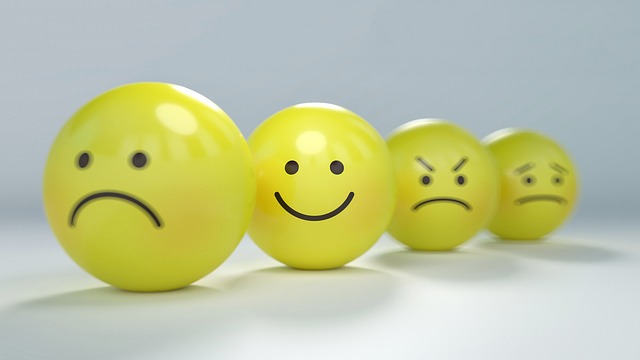
Humans have always defined themselves by their intellect. It is what sets them apart and distinguishes them from animals. For centuries, philosophy, for instance, regarded the human world of feelings, and with it our emotions, as something that ought to be suppressed. In this blog article, you will find out whether emotions really are so negative and what functions they serve!
What are emotions?
Emotions are part of the human world of feelings. Like moods and feelings, they express how a person is feeling at a given moment. They are complex psychological phenomena that encompass subjective experiences, physiological reactions, cognitive appraisals and behavioural expressions.
Emotions are subjective feelings or experiences such as happiness, sadness, anger or fear. These experiences can vary in intensity, duration and quality, and they are highly personal and subjective for each individual. They are also accompanied by physiological changes in the body. With fear, for example, the body may show an increased heart rate, rapid breathing, sweating or changes in muscle tension. These physiological reactions are linked to the activation of the autonomic nervous system.
Another characteristic is the cognitive appraisal of the trigger. Emotions are influenced by cognitive processes, including the evaluation and interpretation of events or situations. The way we perceive and interpret the world around us can shape our emotional reactions. For example, two people may react emotionally in different ways to the same event because of their cognitive appraisals and beliefs.
One feature of emotions that also sets them apart from feelings and moods is the fact that they are often expressed through facial expressions, body language, tone of voice and gestures. These expressive behaviours send social signals to others and can influence interpersonal interactions.
How have philosophers viewed emotions?
Philosophers have been debating human feelings since antiquity. In ancient philosophy, however, feelings were not held in high regard. In order to act morally, they had to be kept in check. Reason was considered the most important means of acting ethically. Anyone who gave in to their emotional impulses, on the other hand, was seen as weak. According to this view, one could only be strong and ethically upright if one’s feelings were suppressed.

Perhaps the best-known German philosopher, Immanuel Kant, also advocated a philosophy that regarded human reason as the decisive criterion for ethical, and therefore good, action. Kant, who is often seen as the starting point of German Idealism, did not deal with human emotions in any great detail in his works. He did, however, acknowledge the role of emotions in moral judgement and stressed the importance of reason in mastering feelings. According to Kant, feelings should be subject to rational control and should not dominate our moral decisions. He thus held a position strongly reminiscent of the classical thinkers of antiquity.
Even though not all philosophers painted such a negative picture, and German Idealism, mentioned above, did not hold a uniform view of feelings, the highly influential thinkers presented here show just how little value was, and still is, placed on emotions.
What function do emotions serve?
The natural sciences paint a different picture. Evolutionary biologists, for example, are convinced that some emotions (often referred to as primary emotions) serve functions essential for survival, and have thus contributed, and still contribute, to the survival of both the individual and the species.
For instance, fear warns us of potential threats, disgust protects us and others from poisoning ourselves, sadness can signal a need for support or self-reflection, and joy fosters social bonds and reward-oriented behaviour.
Also of interest to psychology is the development and socialisation of emotions, because they go through a process of development and are shaped by social and cultural factors. Through socialisation processes and cultural norms, people learn how to recognise, name, regulate and express their feelings.
Although emotions are innate and universal to all humans, people react very differently to the same trigger. Besides individual factors, this can also be down to the culture in which a person grew up. Disgust illustrates this rather well. Although disgust is innate, serves an evolutionary function and is meant to keep us away from inedible food and pathogens, we also react with disgust to foods that meet none of these criteria, insects for example.
In this way, emotions also express group membership and signal to us and to others which norms and values matter to us. They therefore also regulate how we live together in society.
Positive and negative emotions
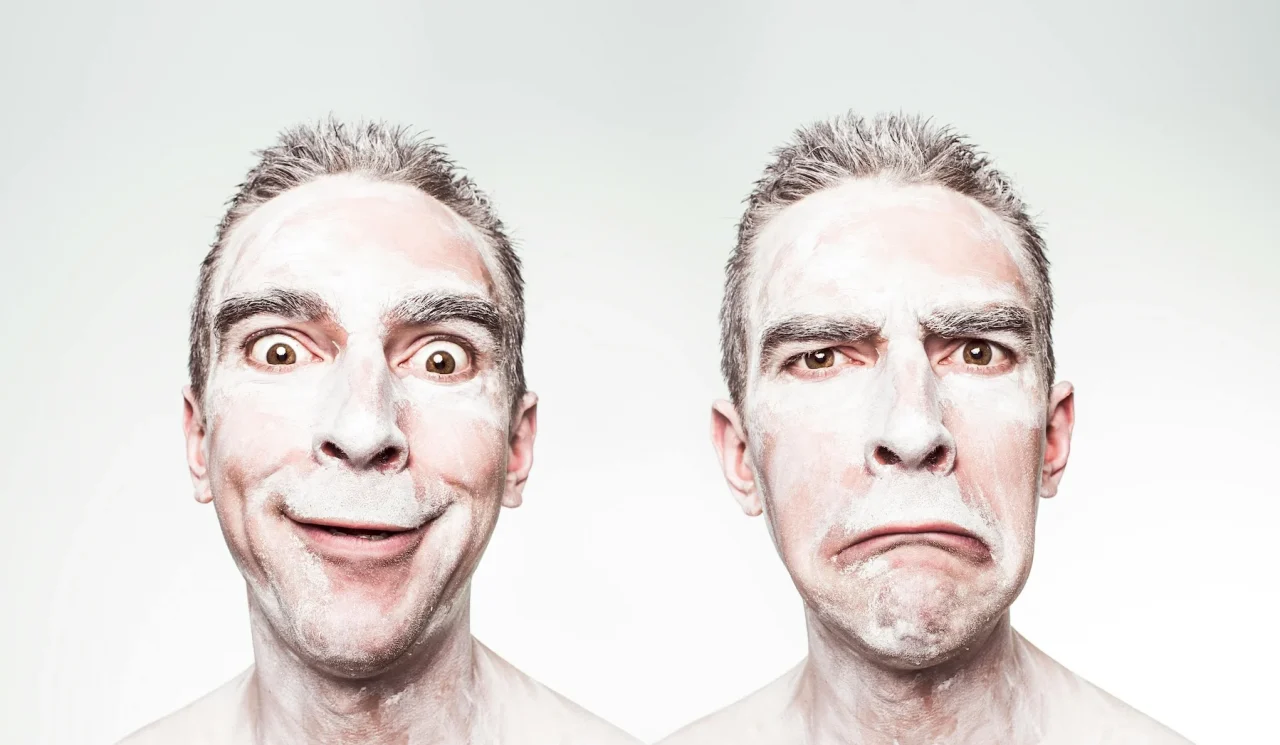
Nevertheless, the question remains whether feelings might be useful but still negative, and whether they would be better suppressed. Another common classification distinguishes between positive and negative emotions. Positive emotions are those whose triggers we perceive as desirable and whose experience can be described as pleasant. Examples would include joy or surprise.
Most emotions have a rather unpleasant trigger and provoke strong negative reactions, be it grief, anger or shame. Even so, it is important to accept feelings as they are. Suppressing negative emotions or replacing them with positive ones cannot ultimately be the solution. After all, mental and physical health are connected, and suppressing one can also have negative consequences for the other.
To understand the psychological significance of emotions, we need to examine their underlying mechanisms, their interplay with cognition and physiology, and their role in human experience and behaviour. Psychologists use a variety of research methods, including laboratory experiments, surveys, interviews and observation, to study human feelings and their psychological effects.
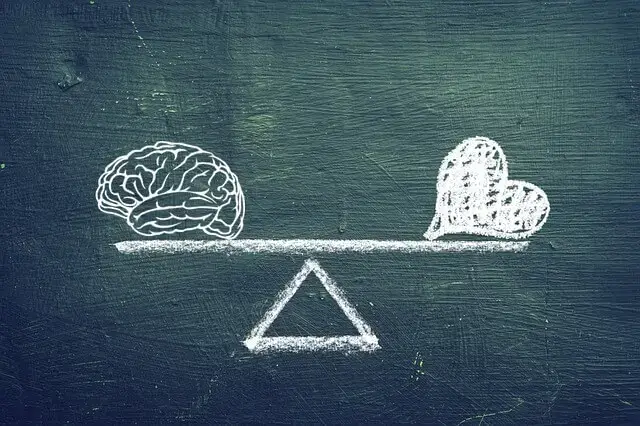
Through scientific research, psychologists aim to gain insights into human nature, mental health, social interactions and general wellbeing. After all, feelings are just as much a part of being human as reason, and define us in equal measure. Accepting this, making friends with our negative feelings too and allowing them to be there may be difficult at first, but it would be the more mindful way of dealing with our own feelings. Because this, too, is part of being human and part of life.
Gratitude in everyday life
You have now learnt quite a bit about human emotions and why it can be important to accept them and let them be. Mindfulness means noticing feelings, thoughts and bodily reactions, and can therefore play an important part in accepting feelings as they arise. Did you know that gratitude in everyday life can also help us with this? If you would like to find out more, why not read our blog article on gratitude. Happy reading!
Deepen your meditation practice with Mindfulife
Meditation can be more than a short break in your everyday life. If you would like to understand more deeply how meditation works, how to build a steady practice of your own and how to guide others mindfully, our meditation teacher training is the next step. There you will not only get to know meditation in theory, but also develop more confidence, clarity and trust in your own practice.
Would you like to find out more about the training first? In our weekly webinar you will get an insight and learn more about what your path to becoming a meditation teacher could look like.
For regular support in your everyday life, you can also use our online meditation studio and join guided meditations flexibly via Eversports.
We look forward to accompanying you on your journey.
You can find more mindfulness inspiration on our channels too
References
Ekman, P. (2016). Gefühle lesen: Wie Sie Emotionen erkennen und richtig interpretieren (2. Aufl.). Heidelberg/Berlin.
Izard, C. E. (1981). Die Emotionen des Menschen: Eine Einführung in die Grundlagen der Emotionspsychologie. Weinheim/Basel.
Schneider, A. (2012). Das Verhältnis von Emotion und Kognition: Emotionsphilosophie von René Descartes bis in die Gegenwart. Hamburg.