Evening routine: how do I find my perfect wind-down?

 · 6 min read
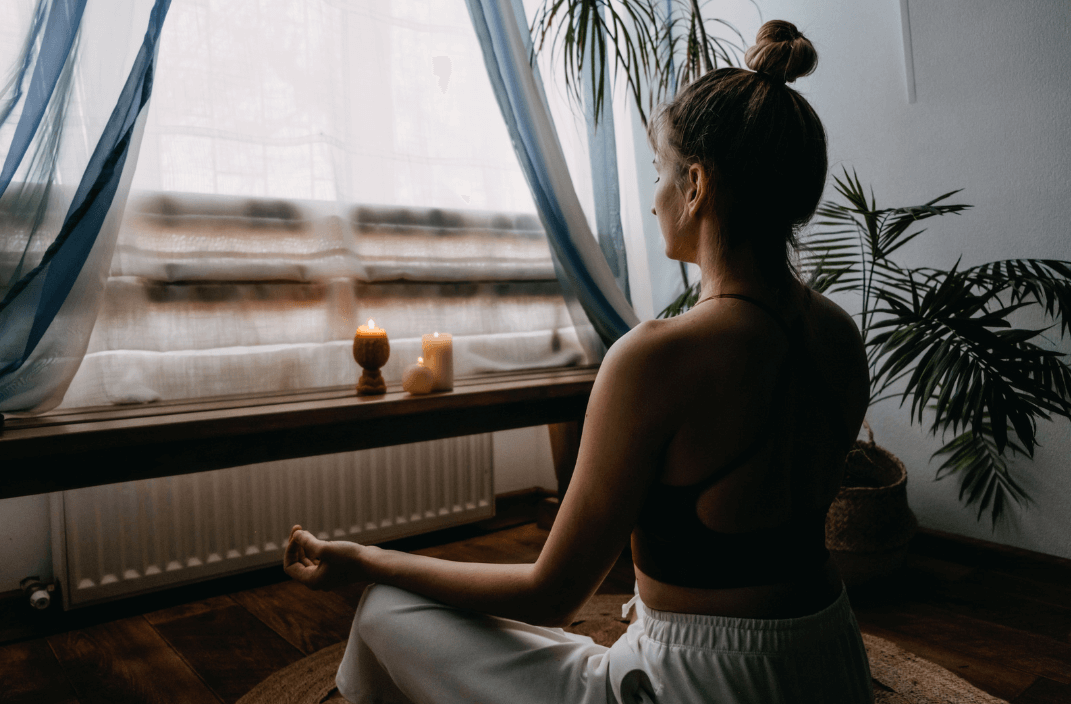
Switching off from the day, letting go, settling down and finding your way to better sleep: in this article, you will learn how your evening routine can help you do just that.
Why is good sleep important?
You have probably experienced it yourself: when we don’t get enough sleep, we really feel it. We are irritable, feel tired and drained, find it harder to concentrate, get headaches or even feel dizzy or light-headed.
If we sleep too little over a long period, this can have serious consequences for our health. Researchers have found links between insufficient sleep and various illnesses, such as type 2 diabetes (Shan et al., 2015), obesity (Wu et al., 2014), cardiovascular disease (Cappuccio et al., 2011), mental illness (Gold et al., 2016) and pain syndromes (Strocks et al., 2018).
Plenty of reasons, then, to take good care of your sleep!

Why does an evening routine lead to better sleep?
In several studies, researchers have shown that evening routines lead to improved sleep, both in terms of longer sleep duration and better overall sleep quality (Zisberg et al., 2010; Moss et al., 2015). These effects appear across all age groups, from young children to older adults.
But why is that? The psychological mechanism behind this effect is called classical conditioning. Put simply, this learning mechanism describes a process in which a neutral stimulus is repeatedly presented together with a so-called conditioned stimulus. In the best-known example, a dog always hears a bell ring when it is given its food.
After a while, the sound of the bell alone, without any food, triggers salivation. The dog’s brain has learnt that the bell means food – and reacts involuntarily, that is, without the dog consciously controlling it.
An evening routine works in a similar way: if you always do the same things in the evening before going to bed, your brain automatically comes to associate these activities with sleep and relaxation. In this way, recurring sequences help you switch into rest mode. Your evening routine acts as an anchor for your brain, much like the bell for the dog: instead of stimulating salivation, your brain switches into parasympathetic mode, in other words, a state of rest.
What does a good evening routine look like?
As a general rule, your evening routine is a chance to focus on yourself and your needs. What does you good, what relaxes you and helps you unwind? Since the answer to these questions is different for everyone, there is no such thing as the “perfect” evening routine. While a warm bath might feel relaxing to you, someone else may experience it quite differently.
From a scientific point of view, however, there are a few things you can bear in mind when shaping your evening routine. As mentioned above, routines are a good anchor for your brain, so that relaxation sets in all by itself in the evening. A first routine is your timing: researchers recommend consistent bedtimes and wake-up times.
Why should you always go to bed at the same time?
Various studies have shown that going to bed and getting up at the same time has a positive effect on sleep quality – regardless, in fact, of how many hours people sleep in total. Irregular sleeping times, on the other hand, are associated with a range of negative effects, such as sleep disorders or other illnesses (Chaput et al., 2020).
If you get too little sleep during the week because of your working hours or other circumstances, however, there seems to be an exception. In some studies, sleeping longer at the weekend in this situation appeared to be better for participants’ health. So although it would be better to sleep enough and at regular times on all seven days of the week, you are better off catching up on missed sleep at the weekend than continuing to get up early and remaining in a sleep deficit (Chaput et al., 2020).
How should you include exercise in your evening routine?
Exercise can improve the quality of your sleep through several different mechanisms. Firstly, exercise causes your body to release more melatonin (Kruk et al., 2021). This is one of the sleep hormones that help your body fall asleep. Secondly, exercise reduces stress, which can be one of the causes of disturbed sleep. And thirdly, people who get enough exercise are better able to regulate their body temperature. This also makes it easier for the body to fall asleep (Wang et al., 2021).
But not all exercise is the same – after all, your workout can vary greatly in duration, intensity and time of day. Researchers at the University of Budapest analysed and compared studies and articles from the last eight years. First of all, they were able to confirm that exercise has a positive effect on sleep quality – especially moderate exercise. Strenuous physical exertion, on the other hand, had no positive effects.
There is a stubborn belief that exercising in the evening is bad for sleep. Researchers from Switzerland were able to refute this in a meta-analysis: across 23 studies, exercise in the evening also tended to have positive effects on sleep quality. However, since exercise raises your body temperature, the researchers recommend finishing your workout at least an hour before going to bed. So you can certainly include exercise in your evening routine – just preferably not right before you go to sleep.
Screen time as an evening routine?

As electronic devices became an ever greater part of our everyday lives, researchers quickly noticed that sleep quality deteriorated as the use of such devices increased (Hysing et al., 2015). This prompted further research, and studies showed that it is above all the blue light emitted by electronic devices that suppresses the production of melatonin (Tordjman et al., 2017). That’s right – melatonin is the hormone that helps us fall asleep.
Most smartphones now have built-in filters that reduce the amount of blue light coming from the screen. Special glasses designed to filter blue light have also been developed. Studies show inconsistent effects for these techniques: some find improved sleep quality with filters, others do not (Randjelović et al., 2023; Schechter et al., 2020).
Incidentally, it is not only your smartphone that emits a lot of blue light, but your television screen too. Ideally, then, you should avoid screen time as part of your evening routine. If watching TV is an essential part of your evening, perhaps you can rearrange things a little so that at least the hour before bed stays screen-free. If you would like to read instead, avoid using an e-reader, as these too have been shown to reduce sleep quality (Chang et al., 2014).
Should I include meditation in my evening routine?
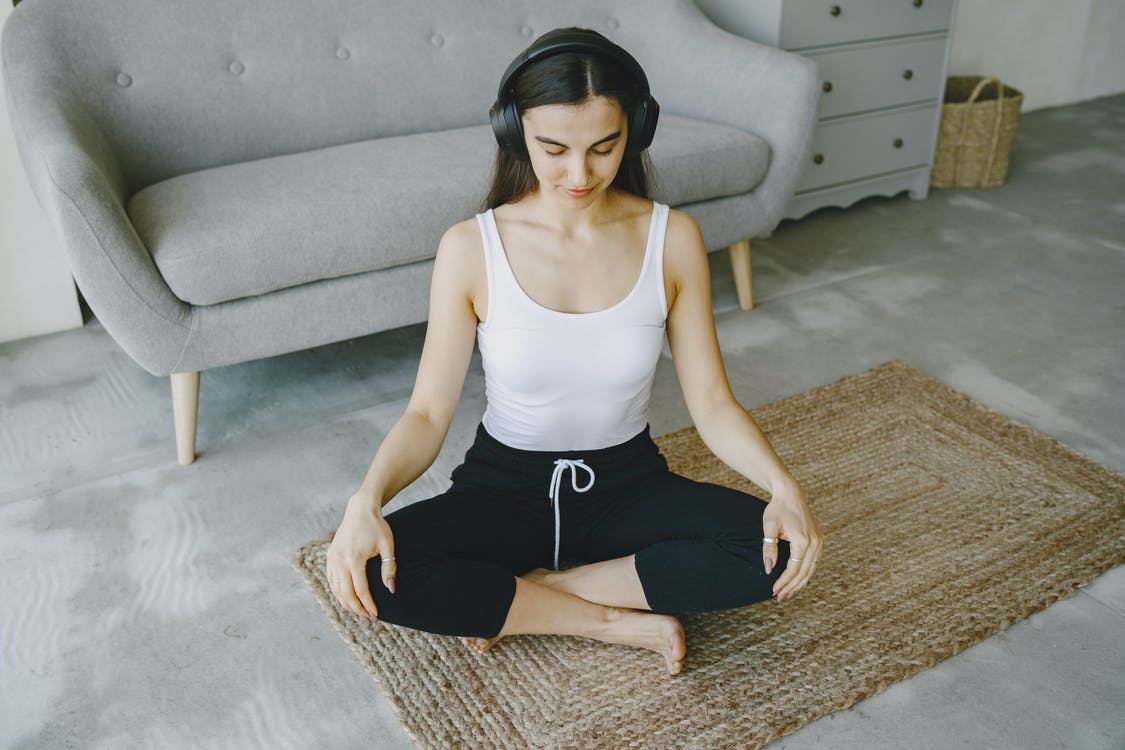
Researchers have already shown in various studies that meditation has a positive effect on sleep quality (e.g. Thimmapuram et al., 2020; Rusch et al., 2019). And it doesn’t seem to matter much what time of day you meditate: according to studies, there is no difference between meditating in the morning or in the evening – both improve sleep quality, even in people with sleep disorders (Black et al., 2015).
Would you like to learn more about sleep and how to improve it? Then have a listen to our podcast Tonka & Phil! In episode 55, our guest is Dr Hans-Günter Weeß, who has been working clinically and scientifically on sleep and sleep disorders for more than 25 years. He shares lots of fascinating insights into sleep – going well beyond your evening routine.
revised on 12 October 2025 by Sarah B. (B.Sc. Psychology)
Deepen your meditation practice with Mindfulife
Meditation can be more than a short break in your everyday life. If you would like to understand more deeply how meditation works, how to build a steady practice of your own and how to guide others mindfully, our meditation teacher training is the next step. There you will not only get to know meditation in theory, but also develop more confidence, clarity and trust in your own practice.
Would you like to find out more about the training first? In our weekly webinar you will get an insight and learn more about what your path to becoming a meditation teacher could look like.
For regular support in your everyday life, you can also use our online meditation studio and join guided meditations flexibly via Eversports.
We look forward to accompanying you on your journey.
You can also find more mindfulness inspiration on our channels:
References
Black, D. S., O’Reilly, G. A., Olmstead, R., Breen, E. C., & Irwin, M. R. (2015). Mindfulness meditation and improvement in sleep quality and daytime impairment among older adults with sleep disturbances: a randomized clinical trial. JAMA internal medicine, 175(4), 494-501.
Chaput, J. P., Dutil, C., Featherstone, R., Ross, R., Giangregorio, L., Saunders, T. J., ... & Carrier, J. (2020). Sleep timing, sleep consistency, and health in adults: a systematic review. Applied Physiology, Nutrition, and Metabolism, 45(10), S232-S247.
Hysing, M., Pallesen, S., Stormark, K. M., Jakobsen, R., Lundervold, A. J., Sivertsen, B., et al. (2015). Sleep and use of electronic devices in adolescence: Results from a large population-based study. BMJ Open 5, e006748.
Kruk J, Aboul-Enein BH, Duchnik E: Exercise-induced oxidative stress and melatonin supplementation: current evidence. J Physiol Sci. 2021, 71:27
Moss, T. G., Carney, C. E., Haynes, P., & Harris, A. L. (2015). Is daily routine important for sleep? An investigation of social rhythms in a clinical insomnia population. Chronobiology international, 32(1), 92-102.
Randjelović, P., Stojanović, N., Ilić, I., & Vučković, D. (2023). The effect of reducing blue light from smartphone screen on subjective quality of sleep among students. Chronobiology international, 40(3)
Rusch, H. L., Rosario, M., Levison, L. M., Olivera, A., Livingston, W. S., Wu, T., & Gill, J. M. (2019). The effect of mindfulness meditation on sleep quality: a systematic review and meta‐analysis of randomized controlled trials. Annals of the New York Academy of Sciences, 1445(1), 5-16.
Shechter, A., Quispe, K. A., Mizhquiri Barbecho, J. S., Slater, C., & Falzon, L. (2020). Interventions to reduce short-wavelength (“blue”) light exposure at night and their effects on sleep: A systematic review and meta-analysis. Sleep Advances, 1(1), zpaa002.
Thimmapuram J., Yommer, D., Tudor, L., Bell, T., Dumitrescu, C., & Davis, R. (2020). Heartfulness meditation improves sleep in chronic insomnia. Journal of community hospital internal medicine perspectives, 10(1), 10-15.
Tordjman, S., Chokron, S., Delorme, R., Charrier, A., Bellissant, E., Jaafari, N., et al. (2017). Melatonin: Pharmacology, functions and therapeutic benefits. Curr. Neuropharmacol. 15, 434–443.
Wang, F., & Boros, S. (2021). The effect of physical activity on sleep quality: a systematic review. European journal of physiotherapy, 23(1), 11-18. Zisberg, Gur-Yaish, Shochat, Contribution of Routine to Sleep Quality in Community Elderly, Sleep, Volume 33, Issue 4, April 2010, Pages 509–514.