Sleep doesn’t feel refreshing? 10 tips
Perhaps this sounds familiar: you 'actually get enough' sleep - and yet you wake up feeling as if you've been hit by a truck. Coffee helps for a little while, then the slump sets in. In the evening you're exhausted, yet not really tired. Many people then think there must be something wrong with them. But tiredness is not a personal failure. It is often a signal from your body that wants to be heard. Sleep is not a passive state. Even though from the outside we're just lying there with our eyes closed, a surprising amount is going on inside us. Sleep is active regeneration, for your body and for your mind.

 · 6 min read

Sleep is not a passive state. Even though from the outside we’re just lying there with our eyes closed, a surprising amount is going on inside us. Sleep is active regeneration, for your body and for your mind.
Perhaps this sounds familiar: you ‘actually get enough’ sleep – and yet you wake up feeling as if you’ve been hit by a truck. Coffee helps for a little while, then the slump sets in. In the evening you’re exhausted, yet not really tired. Many people then think there must be something wrong with them. But tiredness is not a personal failure. It is often a signal from your body that wants to be heard.
What exactly happens when you sleep?
While we sleep, our body passes through different sleep stages. These alternate in cycles of roughly 90 minutes. Over the course of a night we go through several of these cycles, each alternating between non-REM and REM sleep.
Deep sleep dominates at the beginning of the night. In this stage of sleep, the body noticeably winds down: heart rate, blood pressure and breathing slow. Muscles recover and the immune system gets to work. These non-REM stages are essential for your physical health.
As the night goes on, the REM stages increase. These are the stages in which you do most of your dreaming. Although the body lies still on the outside, the brain is especially active here, at times even more active than when you’re awake. Heart rate, blood pressure and breathing rise again. During these stages, emotions are processed, memories are sorted and experiences are integrated.
For our health we need both: the deep, restorative non-REM stage for the body and the lively REM stage for our mental and emotional stability. It is only through their interplay that you can truly recover.
What happens when you sleep too little or poorly?
Sleep deprivation doesn’t just show up as persistent tiredness. Even in the short term, we become irritable more quickly, concentrate less well and are more emotionally vulnerable. Decisions become harder, memory becomes unreliable and overall performance declines. Our cognitive abilities suffer too: attention, problem-solving and the ability to learn are measurably impaired – often more than we realise.
In children and adolescents in particular, disturbed sleep can show up as behavioural problems and poorer performance at school. Perceived quality of life can also drop noticeably even in the short term, both in healthy people and in those with existing health conditions.
In the long term, not sleeping well can have far more profound consequences. Studies show links with hormonal changes, for example in stress hormone balance and in sex hormones such as testosterone and oestrogen. At the same time, the risk of cardiovascular disease, high blood pressure, diabetes and metabolic disorders increases. Low mood, anxiety and other psychological strain also occur more frequently with chronic sleep deprivation.
Sleep is therefore not a ‘nice to have’, but a central building block of your physical and mental health. It fulfils a fundamental, life-sustaining function.
How much is actually enough?
Most adults need between seven and nine hours of sleep per night. Anyone who regularly sleeps six hours or less is permanently living below their biological needs, even if it subjectively feels ‘normal’. This amount is not healthy in the long run.
What influence does your internal clock have?
Our sleep is controlled by our circadian rhythm, our internal clock. It regulates when you are awake and when you become tired. To work reliably, it needs clear signals from the outside world.

The most important timekeeper is light. Daylight in the morning helps your body get going for the day. Darkness in the evening signals: it’s time to wind down. A key hormone in this process is melatonin. It doesn’t make us sleepy directly, but supports the process of falling asleep. Melatonin is produced in darkness and inhibited by light.
If you spend long evenings in bright light or looking at screens, this natural sleep curve shifts.
Melatonin should only be taken on a long-term basis after consulting a doctor, as high or prolonged doses can impair the body’s own production.
How does a caffeine crash actually happen?
The molecule adenosine plays a central role here. It builds up in the body over the course of the day and creates what is known as sleep pressure. The higher the adenosine level, the greater the need to sleep. At night, adenosine is broken down again, which is why we feel rested in the morning.
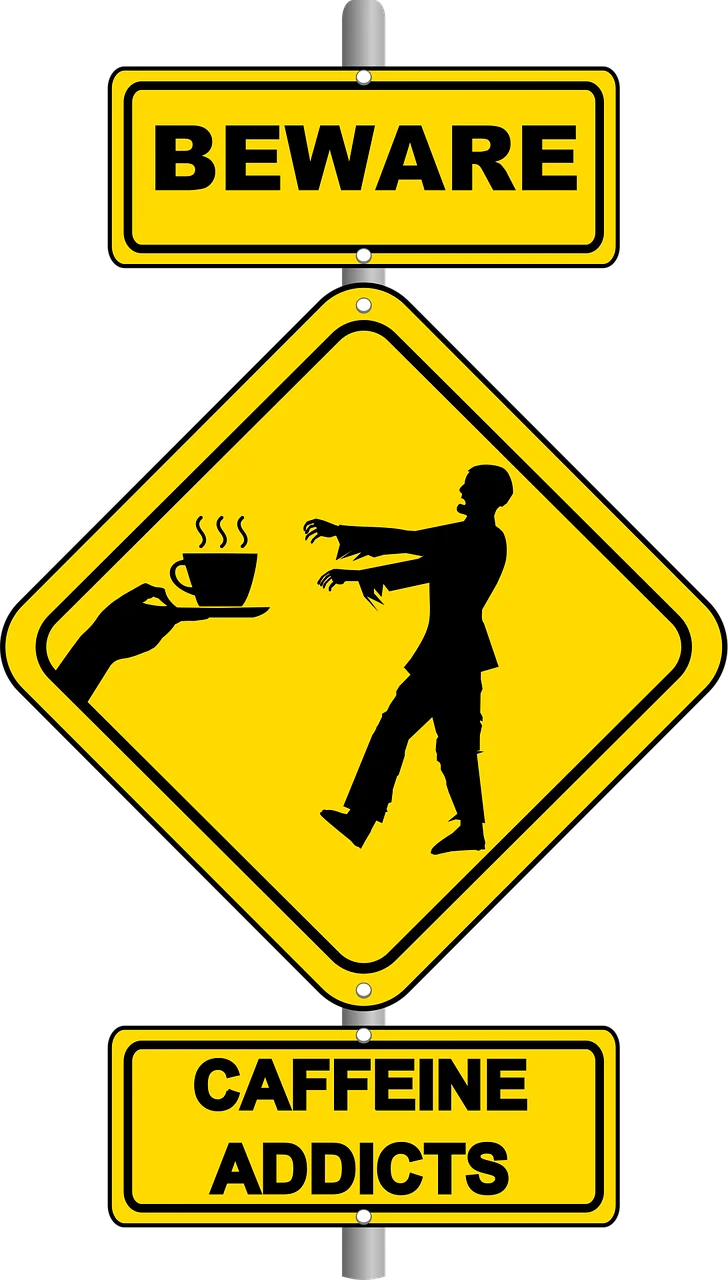
Caffeine acts as its opponent: it blocks the adenosine receptors in the brain. We feel more alert, even though sleep pressure keeps rising. When the caffeine wears off, the built-up adenosine often hits us all the harder: the well-known caffeine crash. Because caffeine has a half-life of around five to six hours, even a coffee in the early afternoon can still affect your sleep in the evening.
Why your morning shapes your evening
How you start the day also plays a crucial role. In the morning, stress hormones such as cortisol and adrenaline are naturally released. They help us become active. The more clearly this process unfolds, the more reliably melatonin production is triggered later in the day. If you stay in the dark for a long time in the morning or keep hitting snooze, you will often find it harder to settle down in the evening.
So how exactly can you promote healthy sleep?
10 tips
1. Start your day in the light
Daylight in the first 30 to 60 minutes after waking helps your internal clock find its bearings. A short walk, a trip to the bakery or a few minutes of movement outdoors is often enough.
2. Let the evening grow darker
In the evening, the light can be softer. Warm, dimmed light below eye level signals to your body that the day is coming to an end – unlike bright ceiling lights, which keep you awake.
3. Create reliability through rhythm
Going to bed and getting up at similar times helps your body prepare. The more predictable your rhythm, the easier it is to let go in the evening and get going in the morning.
4. Be mindful with caffeine
Coffee, energy drinks and green tea take effect for longer than we often think. If you enjoy them earlier in the day, you give your body more room to become naturally tired in the evening.
5. Be mindful with alcohol
Even though alcohol can make it easier to fall asleep, it disrupts the deeper stages of sleep and therefore your recovery too.
6. Make your bedroom a place of rest
A cool, dark and quiet room supports you. The more your bedroom is associated with relaxation rather than work or media, the more easily your body can settle there.
7. Consciously wind down in the evening
Your nervous system needs transitions. A quiet hour without new input, without scrolling and without the news, helps you wind down inside.
8. Be kind to yourself at night
Waking briefly during the night is normal. If you lie awake for longer, it can help to briefly change rooms and do something calm rather than lying in bed ruminating.
9. Support your sleep through exercise and food
Regular exercise has a balancing effect. In the evening, opt for light meals and leave enough time before going to bed so that your body isn’t busy digesting.
10. Use meditation as a gentle anchor
Meditation can help reduce stress, calm your thoughts and give your system a sense of safety. Just a few minutes on a regular basis can noticeably improve the quality of your sleep.

Sleep as a relationship with yourself
Sleep is not a to-do on your list. The more mindfully you treat it, the more your body begins to support you – with more clarity during the day, more presence in the moment and more calm at night.
Miriam Sara Senf (psychology student)
Videos on this topic
If you’d like to explore the topic further, you’ll find a wide range of related videos on the YouTube channel ‘Phil Pham Meditation’. There is also a video there, ‘Why you’re always tired – 10 tips for better sleep’, which goes well with this article.
Deepen your meditation practice with Mindfulife
Meditation can be more than a short break in your everyday life. If you would like to understand more deeply how meditation works, how to build a steady practice of your own and how to guide others mindfully, our meditation teacher training is the next step. There you will not only get to know meditation in theory, but also develop more confidence, clarity and trust in your own practice.
Would you like to find out more about the training first? In our weekly webinar you will get an insight and learn more about what your path to becoming a meditation teacher could look like.
For regular support in your everyday life, you can also use our online meditation studio and join guided meditations flexibly via Eversports.
We look forward to accompanying you on your journey.
You can find more mindfulness inspiration on our channels too
References
Medic, G., Wille, M., & Hemels, M. E. (2017). Short- and long-term health consequences of sleep disruption. Nature and Science of Sleep, 9, 151- 161. https://doi.org/10.2147/NSS.S134864
Rossbach, G. (2019). Gehirndoping Schlaf. In Glücksorgan Gehirn (S. 161- 176). Springer. https://doi.org/10.1007/978-3-662-57729-5_10
Schuh, A. (2022). Gesunder Schlaf und die innere Uhr: Lebensstilbedingte Schlafstörungen und was man dagegen tun kann (1. Aufl.). Springer. https://doi.org/10.1007/978-3-662-64953-4