The clock change: how does it affect our mental health?
For many people, the annual switch to winter time brings far more than just an extra hour in bed. It affects our biological rhythm and our mood, and can noticeably change our mental wellbeing. In this article, you will find out why the clock change puts a strain on our mental health, which symptoms are especially common, what research says about it and which strategies can help you get through the dark season mindfully.

 · 5 min read
For many people, the annual switch to winter time brings far more than just an extra hour in bed. It affects our biological rhythm and our mood, and can noticeably change our mental wellbeing. In this article, you will find out why the clock change puts a strain on our mental health, which symptoms are especially common, what research says about it and which strategies can help you get through the dark season mindfully.
What happens to our biological rhythm when the clocks change?
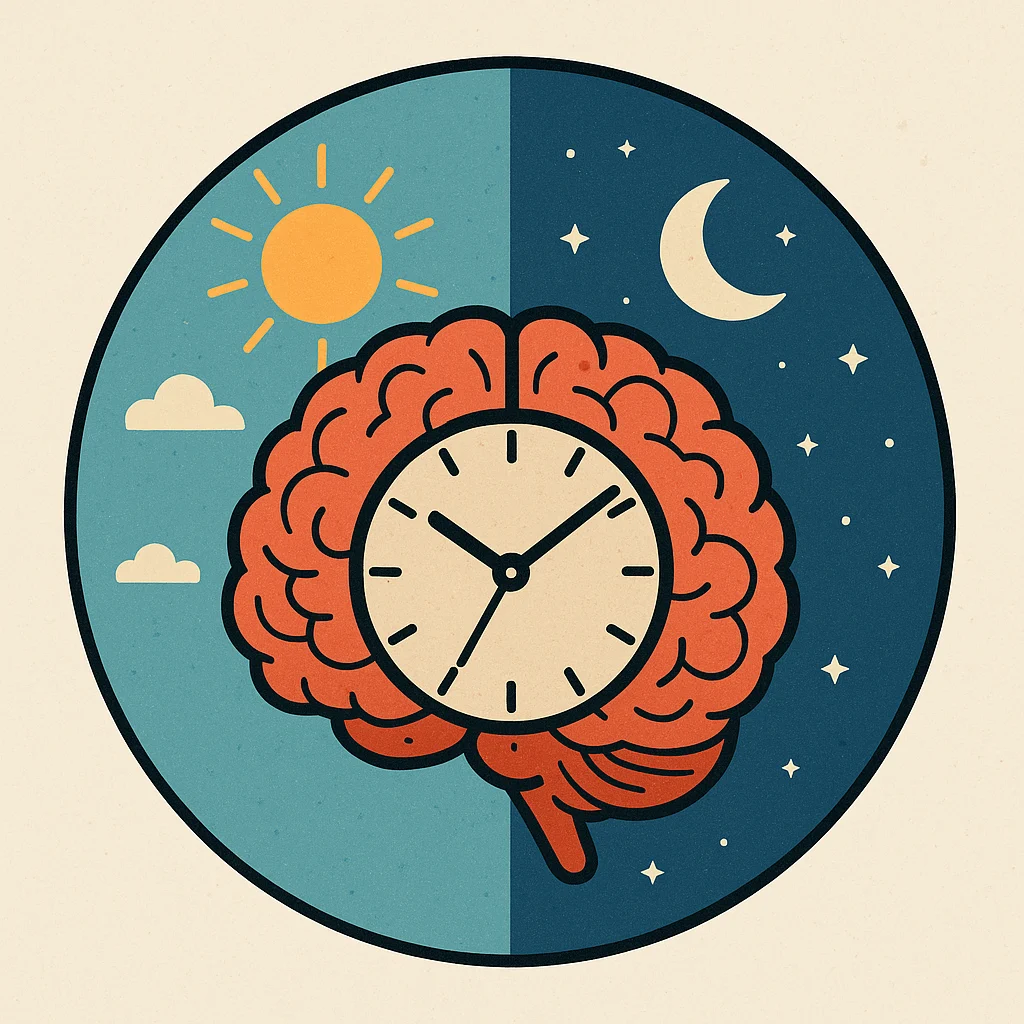
Twice a year the clocks are changed – and each time, the clock change throws our body out of sync. The switch to winter time in particular is a challenge for many people. Our body works according to a natural circadian rhythm, an internal 24-hour cycle that governs sleep, wakefulness, hormone production and metabolism. When this internal clock is shifted by an hour, biological processes are temporarily thrown off balance.
Studies show that even small changes to the circadian rhythm can affect mood, concentration and energy levels (Walker, 2020). Some people adapt quickly, while others need days or even weeks to find their way back to a stable rhythm. People who already suffer from sleep problems or seasonal low mood are particularly vulnerable.
How does the clock change affect our mental health?
Winter time brings less daylight – and this has a direct effect on our hormones. The sleep hormone melatonin is released earlier, making us feel tired sooner, while levels of the ‘happiness hormone’ serotonin fall. These changes can encourage low mood and explain why the so-called autumn blues or even seasonal affective disorder (SAD) occur more often at this time of year.
Stress reactions can also increase: the short-term activation of the stress axis (HPA axis) means that many people react more irritably, nervously or with less emotional stability. A study from Stanford University confirms that the switch to winter time can be linked to a rise in depression and anxiety (Bai, 2025).

Why does the clock change make sleep problems and tiredness worse?
Although we seemingly get to ‘sleep an hour longer’, many people report tiredness, restless sleep or even difficulty falling and staying asleep. There are many reasons for this:
- The internal clock lags behind and needs time to adopt the new rhythm.
- The lack of light in the morning deprives us of our most important timekeeper, so the signal to wake up comes late.
- Serotonin and melatonin production are temporarily thrown off balance.
What symptoms occur after the clock change?
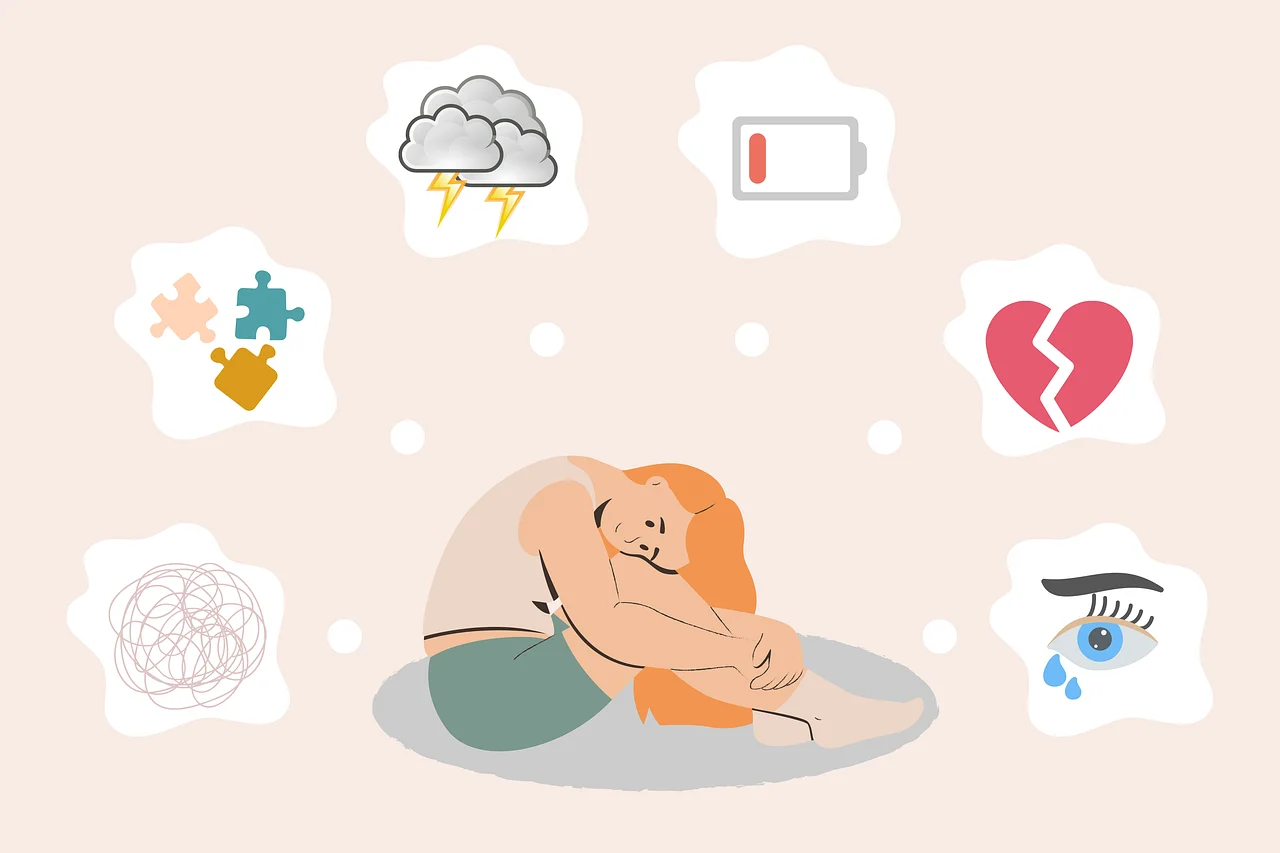
In the first few days after the clock change, many people report tiredness, lack of energy and difficulty concentrating. Mood swings, irritability and sleep problems are also widespread. Some experience mild low mood or a pronounced case of the autumn blues. A German study also indicates that the clock change can increase migraine attacks (Schmerzklinik Kiel, 2023).
Who is particularly affected?
Not everyone reacts equally strongly to the clock change. Those who are particularly vulnerable include:
- People with existing sleep disorders, depression or anxiety disorders
- People who are prone to seasonal mood swings
- Older people, whose circadian rhythm is less flexible
- Shift workers, whose internal clock is already disrupted
For these groups, it is especially important to pay preventive attention to light, sleep hygiene and mindfulness.
What special role does light play?
Light is the most important timekeeper of our circadian rhythm. Less brightness in the morning means that the body receives the signal to wake up later, while serotonin production falls at the same time. Together, these two factors encourage dips in mood.

Research clearly shows that light therapy can significantly relieve depressive symptoms. A study by Lam et al. (2016, Journal of Affective Disorders) demonstrates that people with seasonal depression benefit greatly from targeted use of light. Regular light – whether from walks outdoors or from a daylight lamp – can also help to stabilise your rhythm when adjusting to the clock change.
What health consequences does research show?
The effects range from mild mood swings to significant reductions in quality of life. In addition to tiredness, irritability and emotional instability, problems with performance in everyday life and at work also occur. In the long term, a chronically disrupted internal clock may even increase the risk of metabolic disorders and cardiovascular disease (Walker, 2020).
The DAK survey (2023) also shows that a large majority of respondents find the clock change stressful. This makes the clock change not only an individual health issue but also a societal one.
Strategies: how can you get through the clock change mindfully?
The good news is that there are many ways to stabilise your own rhythm. The following are particularly helpful:
- Soak up the light: Go outside in the morning or use a light therapy lamp to help your body get back in sync.
- Improve your sleep hygiene: Keep to regular bedtimes, reduce screen light before going to bed and make sure your sleeping environment is quiet and cool.
- Exercise & fresh air: Just 20–30 minutes of walking in daylight boosts serotonin production and alertness.
- Mindfulness & relaxation: Meditation, yoga or breathing exercises help to reduce stress. Short breaks or journaling can also provide emotional stability.
- Mindful eating: Choose serotonin-friendly foods such as bananas, nuts or wholegrain products, and cut down on sugar and caffeine in the evening.
- Nurture your social connections: Spending time with family and friends stabilises your mood and builds resilience.

Myths about the clock change
There are a number of assumptions about the clock change that do not hold up scientifically. The ‘extra hour of sleep’ is not a cure-all, for instance, as the internal clock still needs time to adjust. Younger people react sensitively too – not just older people. And contrary to some opinions, light is the decisive timekeeper for our rhythm and our mood.
Will the clock change be abolished soon?
There are recurring discussions about abolishing the clock change altogether. According to a DAK survey (2023), the majority of Germans would like a permanent time arrangement. The topic is also up for debate at EU level, but no concrete steps have been taken so far. Studies suggest that a uniform time arrangement could improve many people’s wellbeing in the long term (Kountouris & Remoundou, 2014).
Conclusion: how you can use winter time as an opportunity
The clock change is much more than a formal adjustment of the time. It affects our biological rhythm, our hormones and therefore our mental wellbeing too.
But with the right strategies, you can soften the autumn blues and approach winter time mindfully.

Use the clock change as an opportunity: get out into the light, keep moving, look after your sleep and allow yourself breaks. That way, you can not only get through the darker season well, but also use it as a chance to reorient yourself, consciously pause and strengthen your self-care.
Katharina R. (psychology student)
If you are currently going through a period of inner change, you might also be interested in our article: Inner autumn in your cycle: what helps me during the luteal phase?
Deepen your meditation practice with Mindfulife
Meditation can be more than a short break in your everyday life. If you would like to understand more deeply how meditation works, how to build a steady practice of your own and how to guide others mindfully, our meditation teacher training is the next step. There you will not only get to know meditation in theory, but also develop more confidence, clarity and trust in your own practice.
Would you like to find out more about the training first? In our weekly webinar you will get an insight and learn more about what your path to becoming a meditation teacher could look like.
For regular support in your everyday life, you can also use our online meditation studio and join guided meditations flexibly via Eversports.
We look forward to accompanying you on your journey.
You can find more mindfulness inspiration on our channels too
References
Anke, H., Peter, M., Philip, L., & Thomas, C. E. (2024). Daylight Saving Time Transitions and Risk of Heart Attack. Deutsches Ärzteblatt International. https://doi.org/10.3238/arztebl.m2024.0078
Bai, N. (2025, September 15). Study suggests most Americans would be healthier without daylight saving time. Stanford Medicine. https://med.stanford.edu/news/all-news/2025/09/daylight-saving-time.html
DAK-Gesundheit / Forsa. (2023). Forsa-Umfrage zur Zeitumstellung. https://caas.content.dak.de/caas/v1/media/48290/data/7e7c082925f1c96f4d3432dce3aea634/230323-download-forsa-dak-umfrage-zeitumstellung.pdf
Gereizt: Zeitumstellung sorgt für gesundheitliche Probleme. (2022). Ärzte Zeitung Online.
Harrison, Y. (2013). The impact of daylight saving time on sleep and related behaviours. Sleep Medicine Reviews, 17(4), 285–292. https://doi.org/10.1016/j.smrv.2012.10.001
Kountouris, Y., & Remoundou, K. (2014). About time: Daylight saving time transition and individual well-being. Economics Letters, 122(1), 100–103. https://doi.org/10.1016/j.econlet.2013.10.032
Mayo Clinic Staff. (n.d.). Seasonal affective disorder treatment: Choosing a light box. Mayo Clinic. https://www.mayoclinic.org/diseases-conditions/seasonal-affective-disorder/in-depth/seasonal-affective-disorder-treatment/art-20048298
Potter, G. D. M. (2016). Circadian rhythm and sleep disruption. Sleep Medicine Clinics, 11(4), 451–460. https://doi.org/10.1016/j.jsmc.2016.07.003
Schickert, A. (2025). Der Einfluss der Zeitumstellung auf unterschiedliche Bereiche des menschlichen Lebens: Pros und Contras der Zeitumstellung unter Berücksichtigung gesundheitlicher, sozialer, ökonomischer und ökologischer Aspekte. https://doi.org/10.25593/open-fau-1813
Schmerzklinik Kiel. (2023). Winter-/Sommer-Zeitumstellung beeinflusst gravierend Migräne – neue Studie aus Kiel mit brisanten Ergebnissen. https://schmerzklinik.de/winter-sommer-zeitumstellung-beeinflusst-gravierend-migraene-neue-studie-aus-kiel-mit-brisanten-ergebnissen/
Walker, W. H. (2020). Circadian rhythm disruption and mental health. Translational Psychiatry, 10(1), 1–11. https://doi.org/10.1038/s41398-020-0694-0