Combining Yoga and Meditation in Practice: 3 Simple Ways to Find More Calm

 · 5 min read
Does this sound familiar? After a yoga class you feel calmer, clearer and somehow more centred. But as soon as everyday life kicks in again, that feeling often fades quickly. This is exactly where meditation can make all the difference – especially if you consciously combine yoga and meditation.
Why is it worth combining yoga and meditation?
Yoga and meditation are often mentioned in the same breath – and for good reason. While yoga moves the body and regulates the nervous system, meditation trains our mindfulness and our ability to relate consciously to our thoughts and emotions. A growing number of scientific studies show that the two practices complement each other and together have a positive influence on stress, wellbeing and mental health (Fischer et al., 2022; Pakulanon et al., 2024).
The good news: you don’t need to meditate for an hour every day, nor do you need to be particularly experienced. Just a few minutes after your yoga practice can make a difference.
Why do yoga and meditation complement each other so well?
Yoga prepares the body and mind for meditation. Through movement, conscious breathing and body awareness, many people find it easier to sit still afterwards and turn their attention inwards.
Meditation, in turn, helps to deepen the calm that has developed during your yoga practice. Instead of reaching straight for your smartphone or your to-do list, you create space to consciously take in what you have experienced.
From a scientific perspective, too, yoga is no longer seen as mere physical exercise. Researchers assume that the combination of physical postures and breathing techniques has many positive effects on body and mind (Gard et al., 2014; Pascoe & Bauer, 2015).
What does research say about combining yoga and meditation?
In recent years, the number of scientific studies on yoga and meditation has risen sharply. One particularly well-researched area is how yoga and meditation can influence stress, self-awareness and psychological wellbeing
A meta-analysis by Goyal et al. (2014) showed that mindfulness meditation can moderately reduce symptoms of anxiety, depression and stress. Even though meditation is no substitute for therapy, it can be an effective building block for promoting mental health.
Systematic reviews show similar results for yoga. Regular yoga practice can lower perceived stress, increase wellbeing and improve the ability to cope with pressure (Cramer et al., 2013; Pascoe & Bauer, 2015).
Above all, what matters is regularity. Even short meditations of five to ten minutes can be worthwhile if they are practised over a longer period of time.
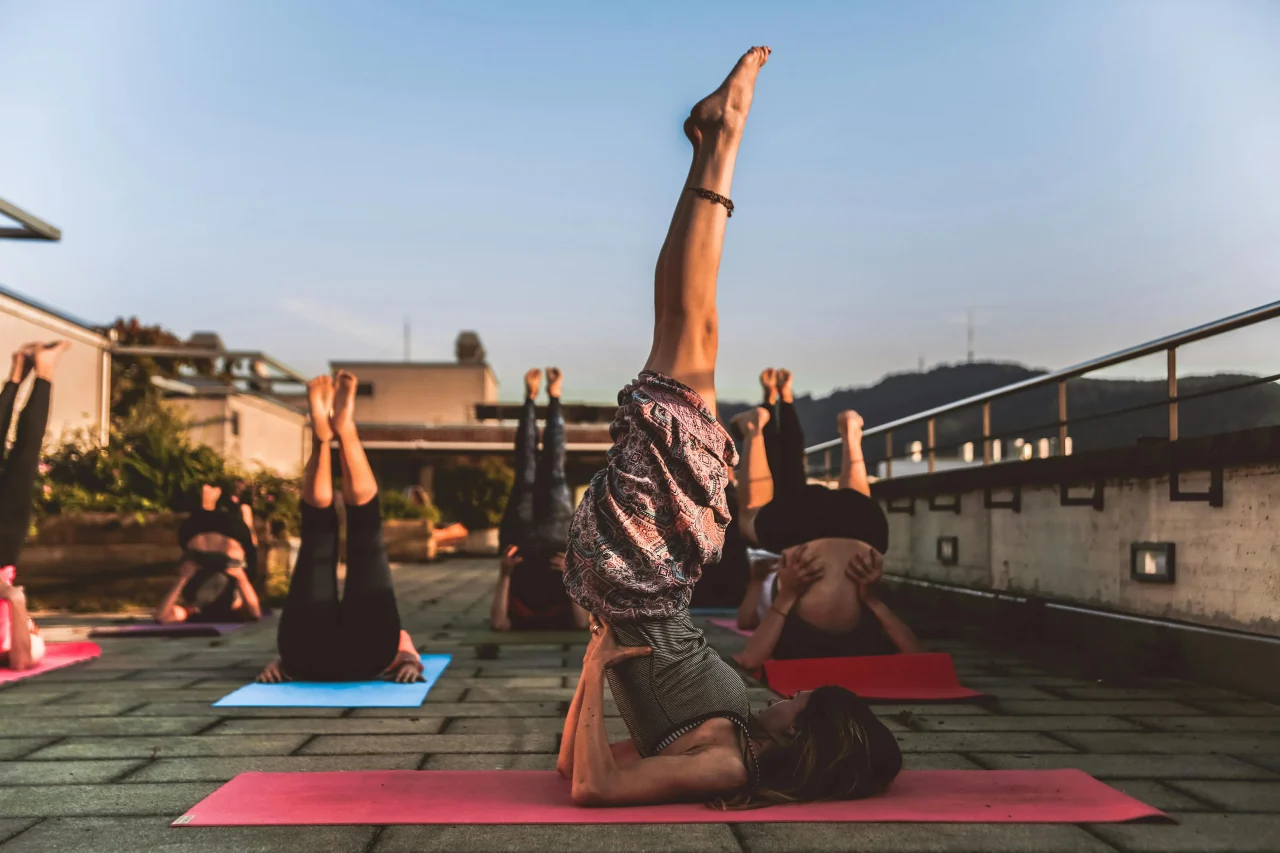
Which types of meditation go well with yoga?
If you want to combine yoga and meditation in practice, simple forms that build directly on your awareness of body and breath are particularly well suited.
Three of them are especially easy to integrate into a yoga practice.
1. Observing the breath – why is focus meditation a good place to start?
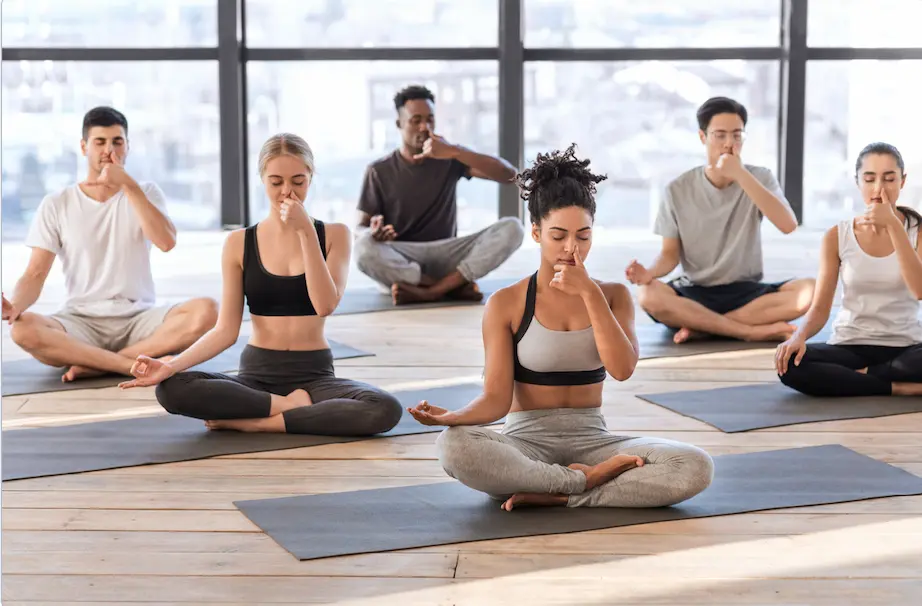
In focus meditation – also known as samatha meditation – attention is deliberately directed towards a single anchor. This is usually the breath, but sounds or bodily sensations are also possible.
As soon as thoughts arise, they are noticed without being judged. Attention is then gently guided back to the point of focus.
This form of meditation trains concentration and attentional control; it is simple in structure and can easily be practised without any prior experience (Tang et al., 2015).
Just five minutes of conscious breathing after a yoga class is often enough to bring your practice to a calm close.
2. How does a body scan help you become more aware of your body?
During a body scan your attention moves slowly through your whole body – from your feet to your head, for example. Sensations are simply observed, without trying to change or judge them.
The body scan is not a relaxation exercise in the classic sense. Rather, it is about training your body awareness and developing a mindful way of relating to physical signals.
This meditation fits in particularly well after a yoga class, because your connection with your body has already been strengthened. Improved body awareness is considered an important part of dealing healthily with stress and emotions (Mehling et al., 2012).
3. Can kindness really be trained?
Metta meditation – also known as loving-kindness meditation – focuses on goodwill and compassion.
In this practice, you silently offer good wishes first to yourself and then to other people, for example:
“May I always be happy. May I always be healthy.”
These wishes are then extended to people close to you, to neutral people and finally also to people with whom your relationship is difficult.
Studies show that this form of meditation can foster positive emotions and strengthen compassion and social connectedness. There is also evidence of positive effects on depressive symptoms and chronic pain (Zeng et al., 2015).
.
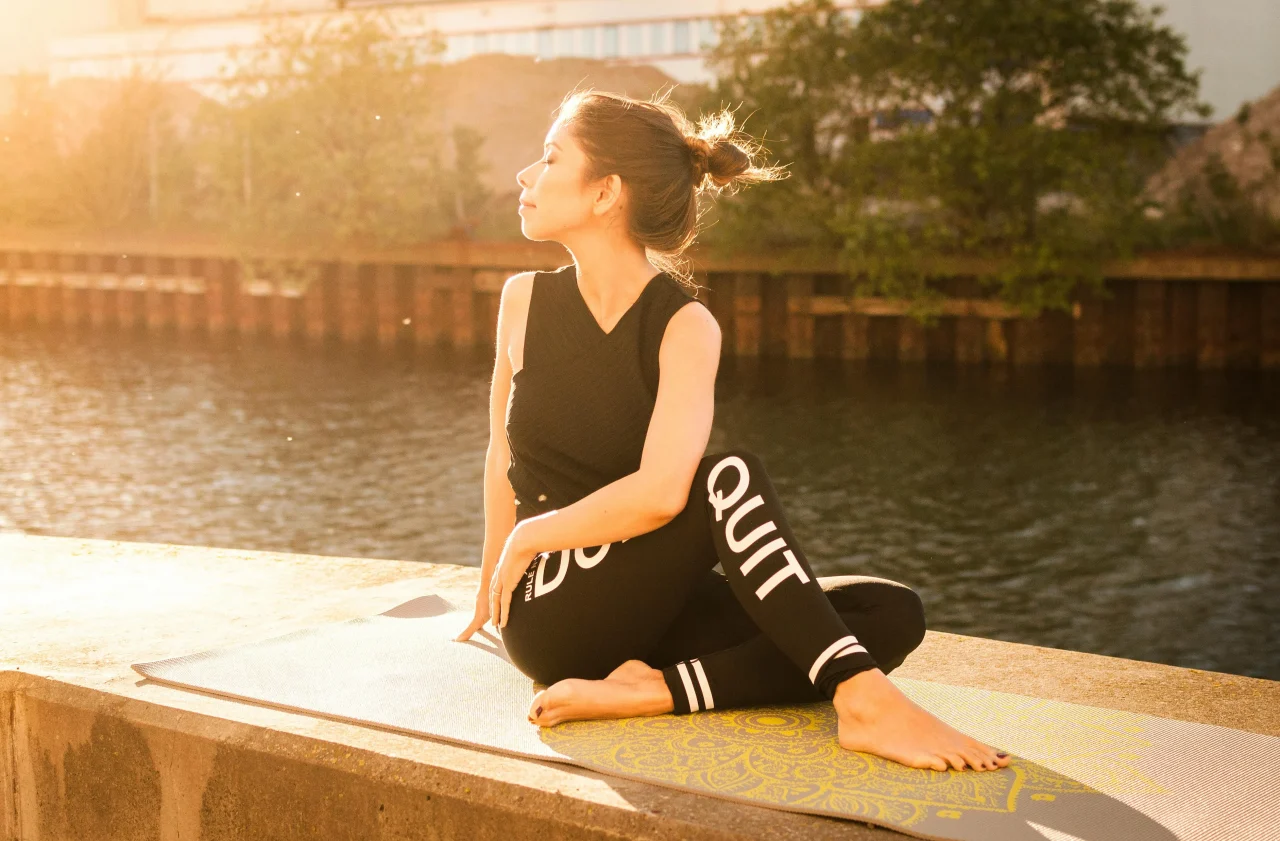
How can you integrate meditation into your yoga practice?
Many people think meditation has to take a long time. In fact, regularity matters more than duration.
A simple way to start could look like this:
First, do your usual yoga session.
Afterwards, stay sitting or lying down for another five to ten minutes.
Choose a form of meditation that feels right for you.
Try to keep up this little routine several times a week.
Over time, it usually becomes easier to direct your attention consciously and to notice the positive effects in everyday life too.
Conclusion: a small addition with a big impact
Yoga and meditation share the same goal: greater awareness, inner calm and a mindful way of relating to yourself. While yoga prepares the body, meditation deepens the experience and helps you carry that sense of calm with you beyond the mat. That is precisely why combining yoga and meditation is a good way for many people to start a regular mindfulness practice.
There is no single right method. What matters is finding a form of yoga and meditation that suits you and that you can build into your everyday life on a regular basis.
If you would like not only to practise meditation yourself but also to guide others professionally, the Mindfulife meditation teacher training will introduce you to a range of scientifically grounded forms of meditation and show you how to teach them safely and effectively.
revised on 4 July 2026
by Anastasia Prut (psychology student)
Yoga and mindfulness
If you are still interested in the topic of yoga and mindfulness, we have just the right article for you here. We hope you enjoy reading it and look forward to seeing you there!
Deepen your meditation practice with Mindfulife
Meditation can be more than a short break in your everyday life. If you would like to understand more deeply how meditation works, how to build a steady practice of your own and how to guide others mindfully, our meditation teacher training is the next step. There you will not only get to know meditation in theory, but also develop more confidence, clarity and trust in your own practice.
Would you like to find out more about the training first? In our weekly webinar you will get an insight and learn more about what your path to becoming a meditation teacher could look like.
For regular support in your everyday life, you can also use our online meditation studio and join guided meditations flexibly via Eversports.
We look forward to accompanying you on your journey.
You can find more mindfulness inspiration on our channels too
References
Cramer, H., Lauche, R., Langhorst, J. & Dobos, G. (2013). YOGA FOR DEPRESSION: A SYSTEMATIC REVIEW AND META-ANALYSIS. Depression and Anxiety, 30(11), 1068–1083. https://doi.org/10.1002/da.22166
Fischer, J. M., Kandil, F.-I., Kessler, C. S., Nayeri, L., Zager, L. S., Rocabado Hennhöfer, T., Steckhan, N., Koppold-Liebscher, D. A., Bringmann, H. C., Schäfer, T., Michalsen, A. & Jeitler, M. (2022). Stress Reduction by Yoga versus Mindfulness Training in Adults Suffering from Distress: A Three-Armed Randomized Controlled Trial including Qualitative Interviews (RELAX Study). Journal of Clinical Medicine, 11(19), 5680. https://doi.org/10.3390/jcm11195680
Gard, T., Noggle, J. J., Park, C. L., Vago, D. R. & Wilson, A. (2014). Potential self-regulatory mechanisms of yoga for psychological health. Frontiers in Human Neuroscience, 8, 770. https://doi.org/10.3389/fnhum.2014.00770
Goyal, M., Singh, S., Sibinga, E. M. S., Gould, N. F., Rowland-Seymour, A., Sharma, R., Berger, Z., Sleicher, D., Maron, D. D., Shihab, H. M., Ranasinghe, P. D., Linn, S., Saha, S., Bass, E. B. & Haythornthwaite, J. A. (2014). Meditation programs for psychological stress and well-being: A systematic review and meta-analysis. JAMA Internal Medicine, 174(3), 357–368. https://doi.org/10.1001/jamainternmed.2013.13018
Mehling, W. E., Price, C., Daubenmier, J. J., Acree, M., Bartmess, E. & Stewart, A. (2012) The Multidimensional Assessment of Interoceptive Awareness (MAIA). PLoS ONE 7(11), e48230. https://doi.org/10.1371/journal.pone.0048230
Pakulanon, S., Scanff, C. L., Filaire, E., Cottin, F., Rama, L., Teixeira, A., & Woodman, T. (2024). Effects of Yoga and Mindfulness Meditation on Stress-Related Variables: a randomized controlled trial. International Journal of Yoga Therapy, 34(2024), Article 7.https://doi.org/10.17761/2024-d-22-00021
Pascoe, M. C. & Bauer, I. E. (2015). A systematic review of randomised control trials on the effects of yoga on stress measures and mood. Journal of Psychiatric Research, 68, 270–282. https://doi.org/10.1016/j.jpsychires.2015.07.013
Tang, Y., Hölzel, B. K., & Posner, M. I. (2015). The neuroscience of mindfulness meditation. Nature Reviews. Neuroscience, 16(4), 213–225. https://doi.org/10.1038/nrn3916
Zeng, X., Chiu, C. P. K., Wang, R., Oei, T. P. S. & Leung, F. Y. K. (2015). The effect of loving-kindness meditation on positive emotions: a meta-analytic review. Frontiers in Psychology, 6, 1693. https://doi.org/10.3389/fpsyg.2015.01693