Body Scan: How Does This Type of Meditation Work and What Are Its Effects?

 · 4 min read
If you explore mindfulness, relaxation and stress management, there is one exercise you simply cannot avoid – the body scan. In this article, you will find out what the body scan actually is, what effects it has and how you can practise it yourself in your everyday life. Enjoy reading!
What is the body scan?
The body scan has its origins in Buddhist Vipassana meditation, which has trained mindful awareness of bodily sensations for centuries. In the 1970s, Dr Jon Kabat-Zinn developed it further for use in psychology and medicine. Today, the body scan is a central component of the Mindfulness-Based Stress Reduction programme (MBSR), which is designed to support people living with chronic pain and stress.
What effects does the body scan have?
During the body scan, attention is guided systematically through the entire body. The focus is on perceiving bodily sensations without judging them – whether they are pleasant, unpleasant or neutral.
Numerous scientific studies demonstrate the positive effects of the body scan on physical and mental wellbeing. On a physical level, it activates the parasympathetic nervous system, resulting in a reduced experience of stress (Sparacio et al., 2024). Through mindful direction of attention and acceptance of sensations and symptoms, pain can also be perceived as less distressing (Garland et al., 2012). Overall, practising the body scan regularly promotes states of relaxation and calm, emotional regulation and self-awareness (Fischer et al., 2017). Because of these positive effects, the body scan is used particularly in clinical psychotherapy, pain therapy and health promotion, and it is one of the most widely practised mindfulness techniques.
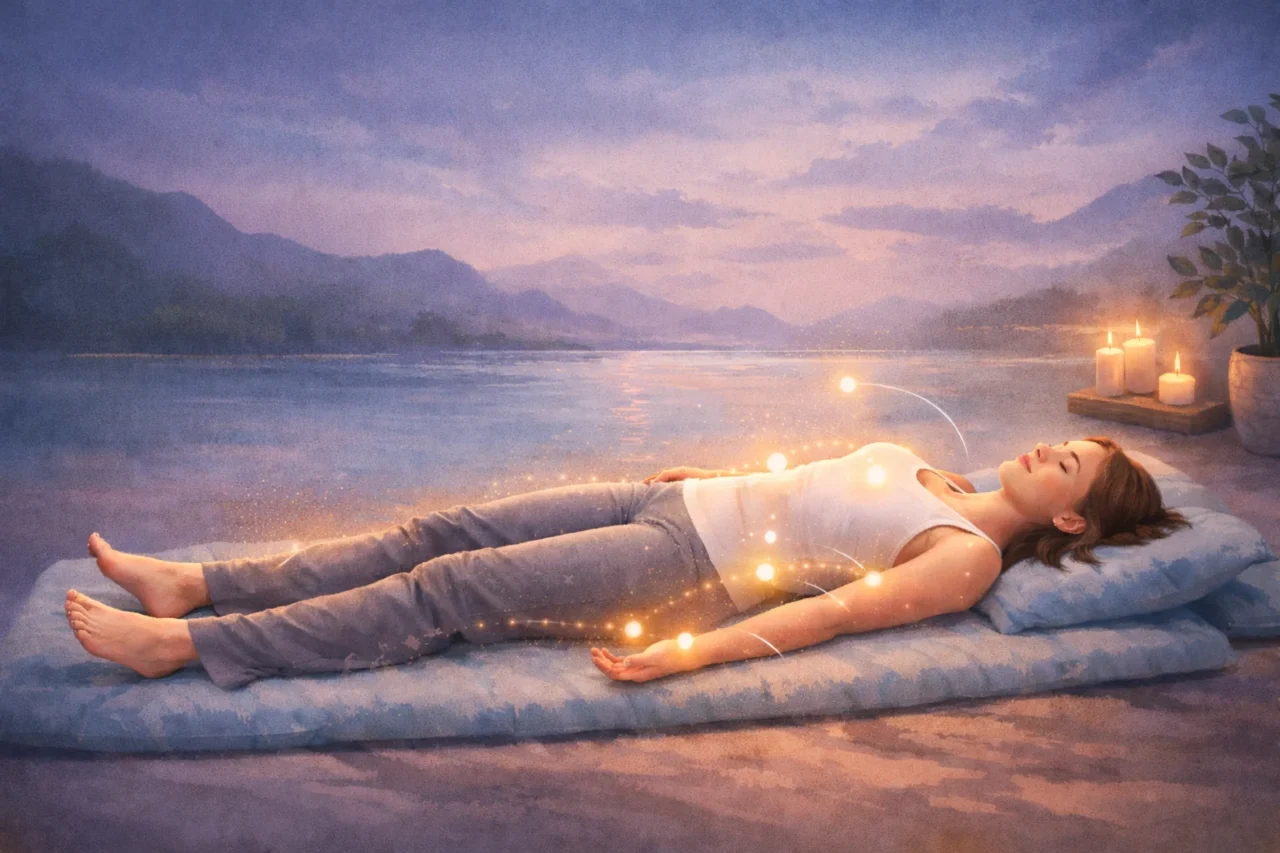
Guided body scan instructions
The classic body scan lasts 30-45 minutes. Here we introduce a shorter version that you could, for example, fit into your lunch break. Find a quiet place and a comfortable surface. The body scan can be done sitting or lying down. If you are very tired, however, it is a good idea to choose a seated position.
First, gently close your eyes and remind yourself that you have taken the time to meditate today, and that everything else can wait for this moment.
Bring your attention down to your feet. Feel your toes, the tops of your feet, the soles and the heels. Your left and right foot at the same time. Feel your ankles. Your shins and calves. Your knees and the backs of your knees. Your thighs up to your buttocks. Take a moment to feel the contact with the surface beneath you.
Feel your lower back. Move up through the middle of your back to your shoulder blades. Then move to the front of your body. Feel your pubic area and your lower abdomen. Move up through the middle of your abdomen to the upper area, to the edges of your ribcage, and up to your chest.
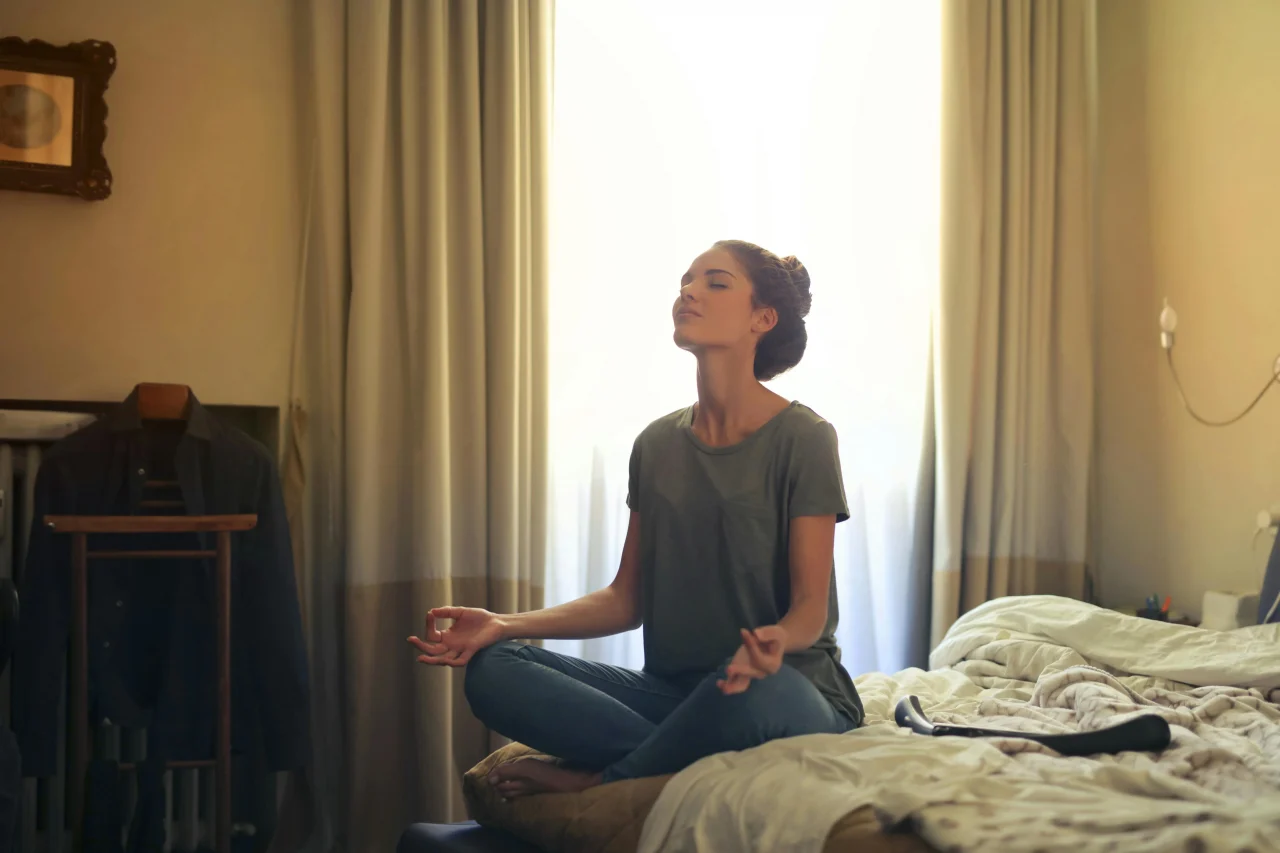
Bring your attention to your hands. Feel your fingers from the fingertips to the base of each finger. Feel the backs of your hands and your palms. Your wrists. Your forearms. Your elbows and upper arms, up to your shoulders.
Feel your throat and the back of your neck. Your chin and your jaw. Your lips and your tongue. Your nose. Your cheeks. Your ears. Your eyes and eyelids. Your eyebrows. Your forehead. The back of your head up to the crown and your scalp.
Rest your attention at the very top of your head. Imagine that you are completely empty inside – without organs, muscles or bones. Visualise that you are entirely filled with water, right up to the crown of your head, and that there are openings in your feet through which the water can flow out. Let your attention flow out of your body together with the water, at your own pace. If you like, you can let go of anything that is weighing on you along with the water.
In this way, keep moving your attention further and further down, and notice how you become emptier and lighter as you go. When you have reached the very bottom, feel your body as a whole once more. Perhaps you can soften in a few places? Slowly come back into the room, notice the sounds around you and, finally, open your eyes.
Meditation to practise along with
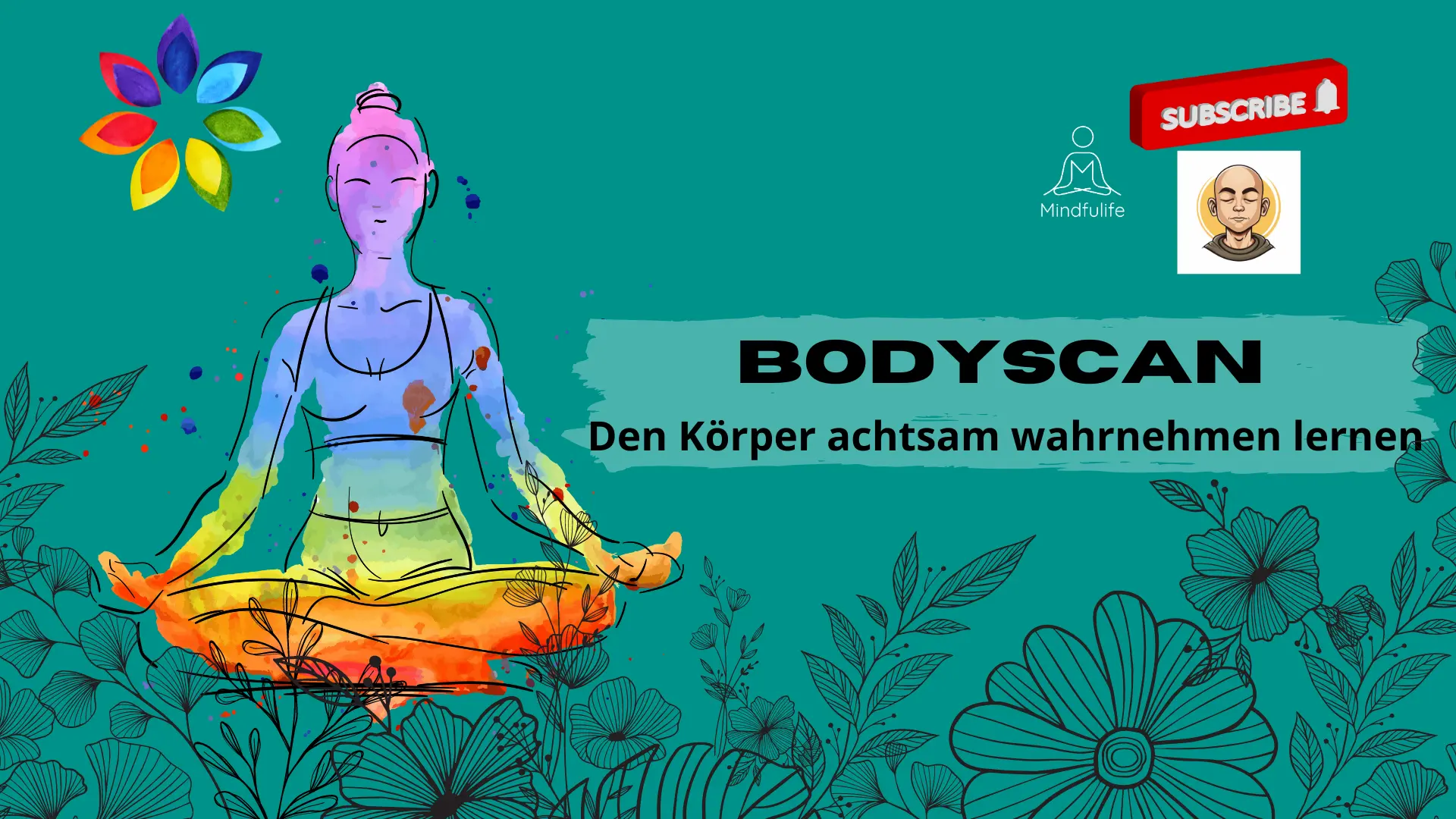
If you would like to deepen your meditation experience or get started straight away, you will find a wide range of guided meditations on the YouTube channel ‘Phil Pham’. There is also a video called ‘30-Minuten Bodyscan / Tiefenentspannung und Achtsamkeit’ (30-minute body scan / deep relaxation and mindfulness, in German), which goes well with this article.
Marie St. (psychology student)
Deepen your meditation practice with Mindfulife
Meditation can be more than a short break in your everyday life. If you would like to understand more deeply how meditation works, how to build a steady practice of your own and how to guide others mindfully, our meditation teacher training is the next step. There you will not only get to know meditation in theory, but also develop more confidence, clarity and trust in your own practice.
Would you like to find out more about the training first? In our weekly webinar you will get an insight and learn more about what your path to becoming a meditation teacher could look like.
For regular support in your everyday life, you can also use our online meditation studio and join guided meditations flexibly via Eversports.
We look forward to accompanying you on your journey.
You can find more mindfulness inspiration on our channels too
References
Fischer, D., Messner, M., & Pollatos, O. (2017). Improvement of interoceptive processes after an eight-week body scan intervention. Frontiers in Human Neuroscience, 11, Article 452. https://doi.org/10.3389/fnhum.2017.00452
Garland, E. L., Farb, N. A. S., Riquino, M. R., & Black, D. S. (2012). Immediate effects of a brief mindfulness-based body scan on patients with chronic pain: A randomized controlled trial. Journal of Behavioral Medicine, 35(4), 420–429.
Sparacio, A., IJzerman, H., Ropovik, I., Giorgini, F., Spiessens, C., Uchino, B. N., … & Higgins, W. C. (2024). Self-administered mindfulness interventions reduce stress in a large, randomized controlled multi-site study. Nature Human Behaviour. Advance online publication. https://doi.org/10.1038/s41562-024-01907-7