Train your attention with meditation: 3 simple steps against TikTok brain

 · 3 min read
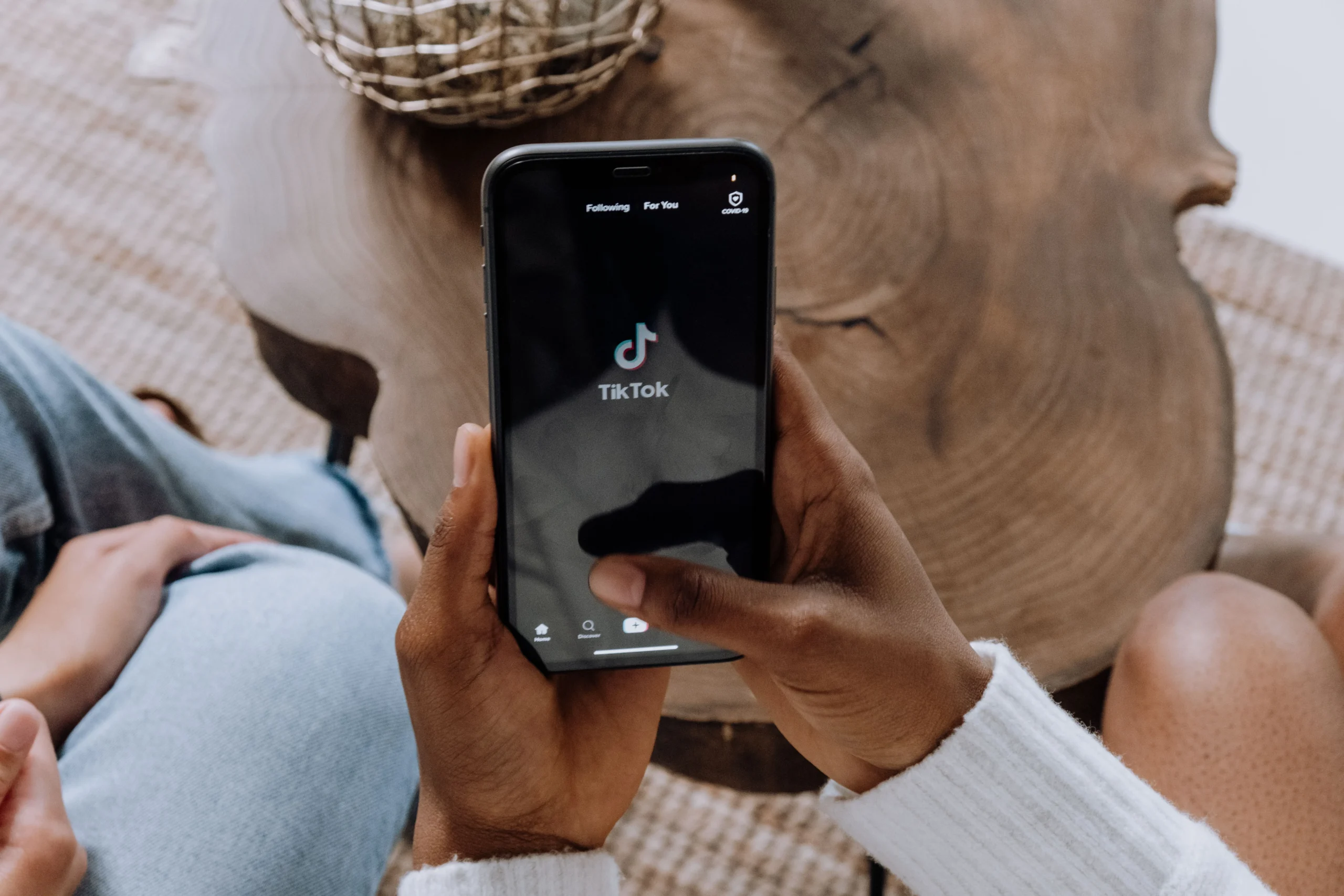
Don’t we all know the feeling of wanting to take just a quick look at Instagram or TikTok and suddenly 30 minutes have gone by? Our brain constantly jumps from video to video, from thought to thought, from feeling to feeling. As a result, sitting still for just a few minutes without any external stimuli or influences feels unfamiliar, almost exhausting. But here’s the good news: this is exactly where meditation can help!
What is a ‘TikTok brain’?
By ‘TikTok brain’ we mean the everyday state our brain slips into as a result of being constantly bombarded with social media content. Because we switch between thoughts and sensations so frequently, our brain gets used to constant stimulation, which shortens our attention span and increases our need for new input. This is precisely what makes it difficult for you to stay with one thing for a longer period of time without being exposed to new stimuli (Carr, 2010).

What can counteract this?
Social media constantly pulls your attention outwards. Meditation, however, can consciously direct your focus inwards – and the aim is not to stop having thoughts or to be perfectly concentrated. Instead, you choose a focal point, consciously notice when your mind wanders and patiently return to that focal point. The real training lies precisely in this conscious act of coming back.
At first, many people’s thoughts wander off after just a few seconds. Typical things buzz around in their heads, such as to-do lists, messages, memories or plans. This is completely normal and in no way means that your meditation practice is ‘bad’; it simply shows the current state of your mind. Meditation makes us aware of, and makes visible, how often our focus automatically drifts away.

How do I break these routines?
Many mental habits form and play out unconsciously. Frequently consuming short content, such as Instagram Reels or TikTok videos, trains our brain to expect a constant change of stimuli. Meditating regularly helps to build new habits, with each practice training these three points:
- Setting your focus
- Recognising distraction
- Coming back
This strengthens the ability to direct attention consciously. We become aware of certain bodily sensations, thoughts, feelings and our breathing, without judging them or feeling compelled to change them. We simply observe what is there right now.
Where do I start?
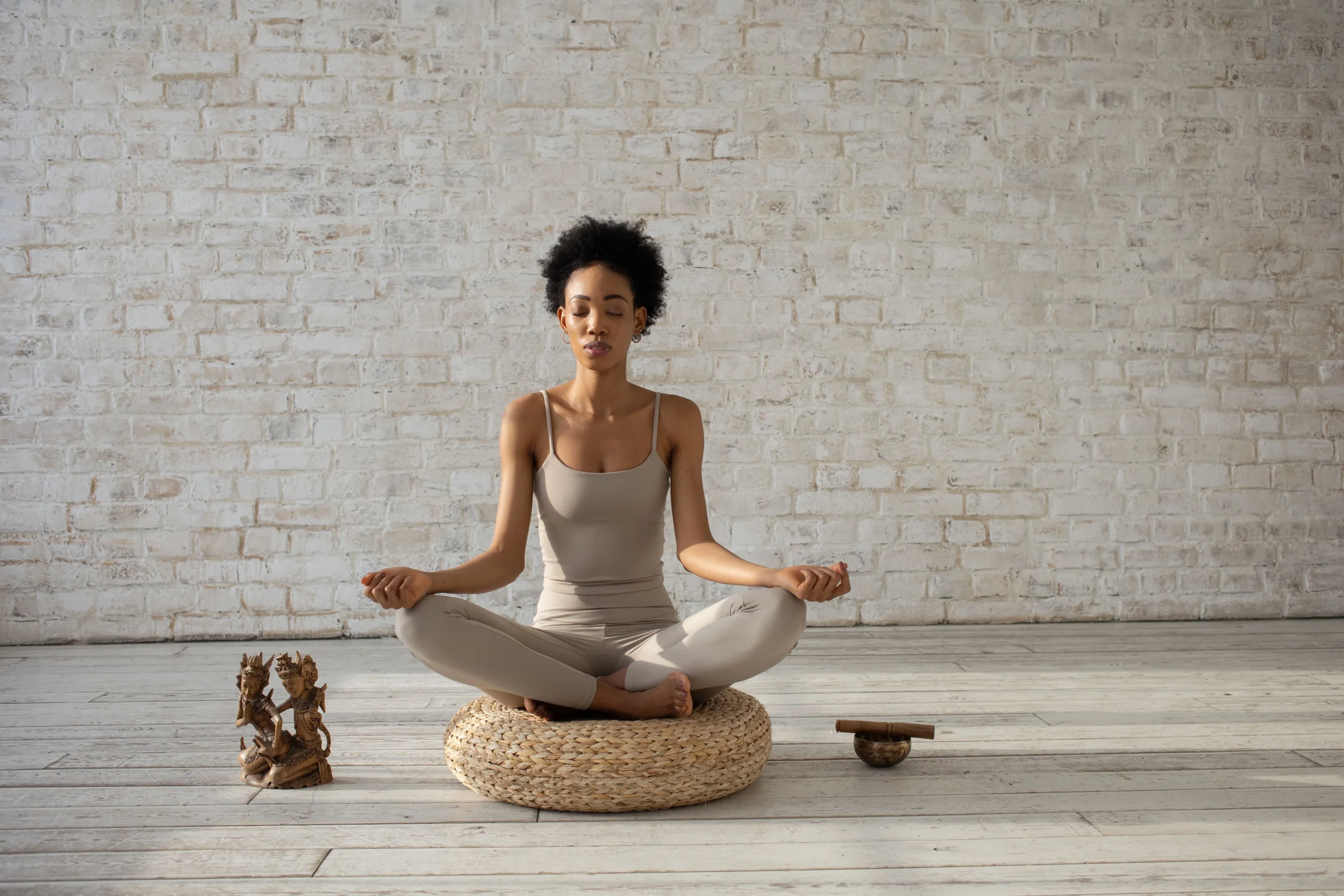
Your body can serve as a starting point. When scrolling, we often sit slumped, with our head tilted forward and our back rounded. Begin your meditation by sitting up straight: lengthen your spine, open your chest, relax your shoulders. A posture like this influences your alertness and presence (Peper et al., 2017).
Your breath can be the focal point of your meditation. It is always available, which makes it particularly well suited as an anchor for your attention. There is no need to control it consciously; simply noticing your in-breath and out-breath is enough.
Throughout your practice, though, always remember that meditation is not a performance you have to deliver. There is no need to stop your thoughts completely or to practise in perfect silence. You only have one task: to keep coming back.

A short exercise
Sit up straight.
Feel your body.
Turn your concentration to your breath.
Observe your in-breath and out-breath.
Notice when your mind wanders.
Gently return to your breath.
Be patient with yourself – mind-wandering is part of the exercise. The most important moment is noticing that you were lost in your own thoughts, because that is exactly where awareness arises. Every time you come back, you train your concentration, patience and self-awareness (Cásedas, 2021).
Just a few minutes a day can make a difference. What matters in this exercise is regularity, not perfection. Over time, you may notice improvements such as a longer ability to concentrate, fewer distractions, coming back more quickly and greater presence (Feruglio et al., 2021).
Conclusion
In summary, your ‘TikTok brain’ is a trained state, learned through the constant search for new stimuli. Meditation can help you counteract it – becoming still, staying with one thing, recognising distraction, consciously coming back. Even a few minutes can be a powerful start. Perhaps put your phone down more often, close your eyes, breathe and come back to yourself.
Friederike Schuh (Media Communication student)
Would you like to try it straight away?
Then take a few minutes now and practise the meditation from this article. In the accompanying YouTube video, you will be guided through the exercise step by step.
Deepen your meditation practice with Mindfulife
Meditation can be more than a short break in your everyday life. If you would like to understand more deeply how meditation works, how to build a steady practice of your own and how to guide others mindfully, our meditation teacher training is the next step. There you will not only get to know meditation in theory, but also develop more confidence, clarity and trust in your own practice.
Would you like to find out more about the training first? In our weekly webinar you will get an insight and learn more about what your path to becoming a meditation teacher could look like.
For regular support in your everyday life, you can also use our online meditation studio and join guided meditations flexibly via Eversports.
We look forward to accompanying you on your journey.
You can find more mindfulness inspiration on our channels too
References
Carr, N. (2010). The shallows: What the Internet is doing to our brains. WW Norton & Company.
Cásedas, Luis. (2021). Daniel Goleman and Richard J. Davidson: Altered Traits: Science Reveals How Meditation Changes Your Mind, Brain, and Body. Avery, New York, NY, 2017, 336 pp [Book review]. Mindfulness. 10.1007/s12671-021-01650-4.
Feruglio, S., Matiz, A., Pagnoni, G., Fabbro, F., & Crescentini, C. (2021). The impact of mindfulness meditation on the wandering mind: a systematic review. Neuroscience & Biobehavioral Reviews, 131, 313-330.
Peper, E., Lin, I. M., Harvey, R., & Perez, J. (2017). How posture affects memory recall and mood. Biofeedback, 45(2), 36-41.