How Do I Combine Yoga and Mindfulness? – 3 Tips for Your Yoga Classes

 · 4 min read
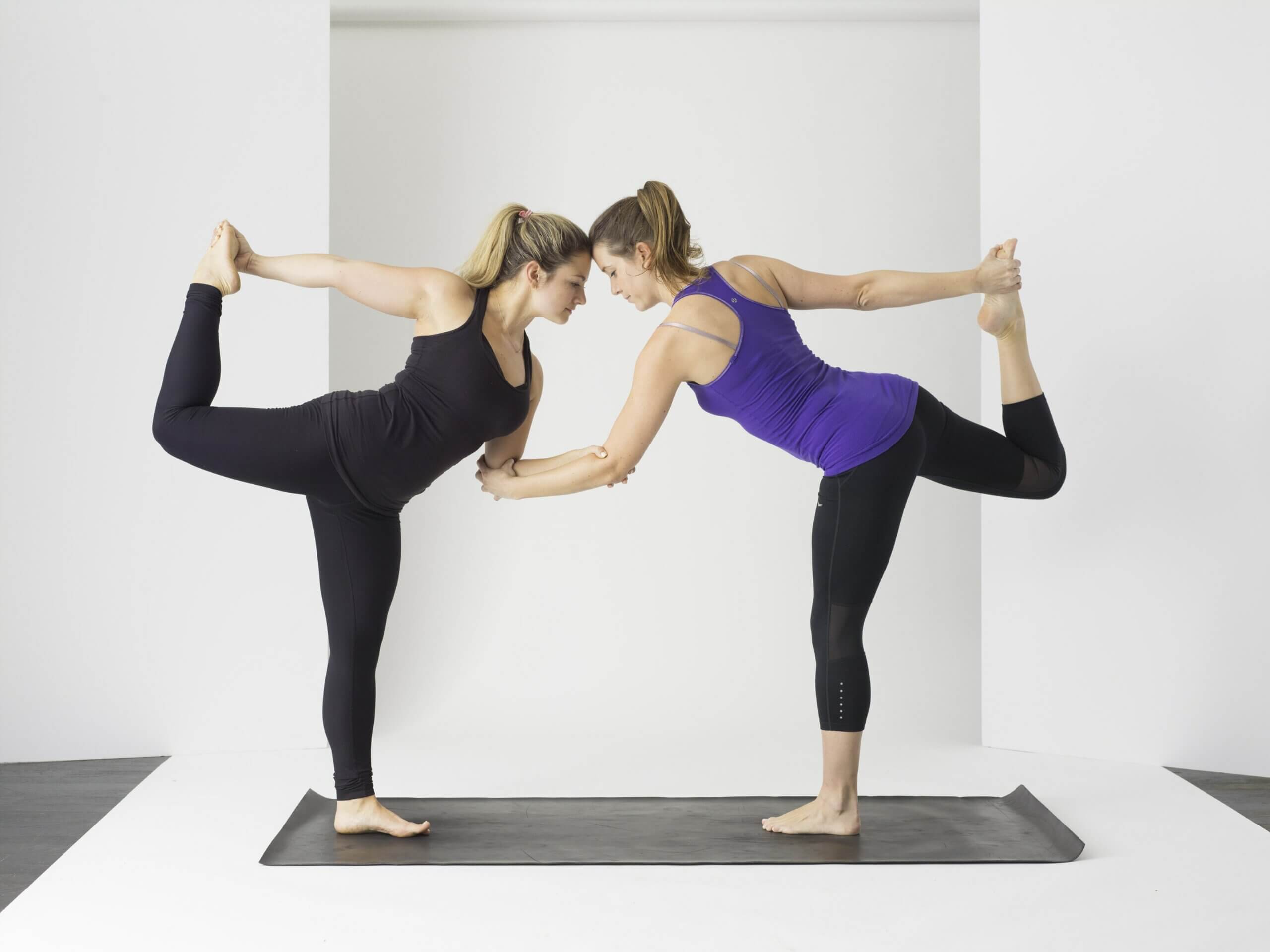
Are you a yoga teacher or studio owner looking for ways to combine yoga and mindfulness? Then you’ve come to the right place! In this article you’ll find a few helpful tips for bringing more mindfulness into your classes!
What does mindfulness mean?
Probably the best-known definition of mindfulness comes from the founder of MBSR, Dr Jon Kabat-Zinn. He defines mindfulness as a form of attention that is intentional, focused on the present moment and non-judgemental. In other words, we notice what is here right now without judging it. [1]
How do you combine yoga and mindfulness?
Yoga isn’t just about toning the body and stretching the muscles – it is much more than that. In yoga we practise being present in the current moment, focusing on the breath, letting go of burdensome thought patterns, becoming aware of our body and our self, and much more. Mindfulness plays an important role in all of these things. Yoga is, so to speak, a mindfulness practice in itself.
In the following three tips, you’ll find out how you can bring this mindfulness practice even more to the fore in your classes and combine yoga and mindfulness!
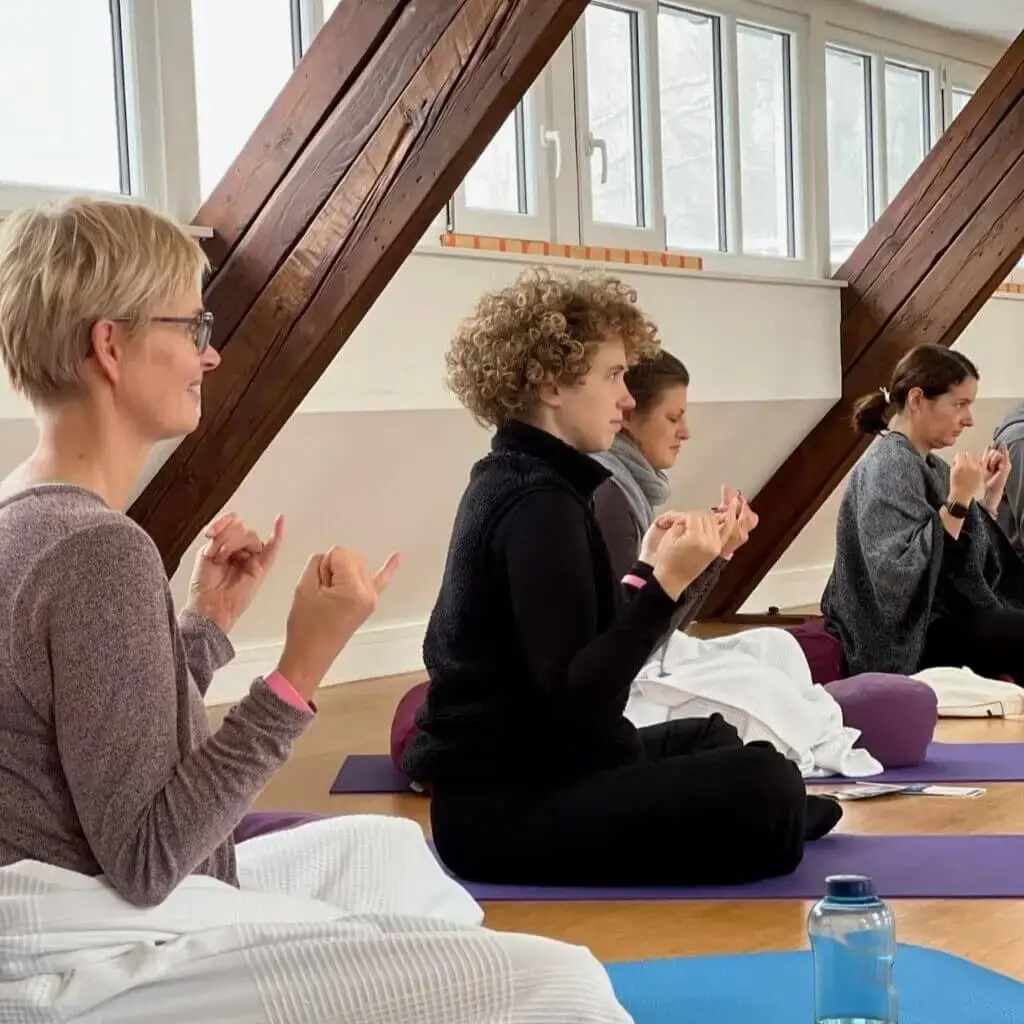
3 tips for more yoga and mindfulness
Yoga and mindfulness: 1. Practising mindfully – do your students know that?
“Come back to yourself, listen to your breath, get to know and accept your physical limits…” – these are the kinds of things we simply say in a yoga class. Of course, they indirectly speak of a mindful attitude, but the question is: do your students know that? Are they aware of why they are supposed to do these things in yoga?
Knowing why we do something can help to make what we do more effective. Only then do we understand the purpose of the action and can go on to act with a conscious intention, which automatically increases its effectiveness. So don’t just throw the nice phrases into the room – every now and then, explain the intention and aim behind them.
Yoga and mindfulness: 2. Strive for precision
Yoga isn’t about the number of repetitions or how long we can stay in a pose – rather, it’s about the precision of the pose. And this precision requires attention, presence and freedom. Through mindfulness in yoga, we train our body awareness and learn to know and appreciate our limits. Together with presence, it helps us to perform and adjust the pose precisely. Freedom means that we remain free of judgement and instead openly explore the exercise and our physical possibilities.
There is no such thing as the “perfect pose”, only the best expression of the pose for oneself – and this can be different every day. So keep reminding your students to look for their best asana without judgement, and give them time to experiment. But don’t leave them on their own – offer guidance with a few details about the pose.
Yoga and mindfulness: 3. Coming back again and again
Unless you are a yoga beginner and all your attention is on learning the exercises, your mind may wander while you practise. Here, too, you should keep reminding your participants that they can notice these thoughts and then let them pass, lovingly guiding their attention back to the breath and/or the body. A wonderful mindfulness practice that we train through regular practice and can keep getting better at – so that we can ultimately benefit from it in everyday life, too.
These were a few tips and ways in which you can foster mindfulness in yoga. Besides yoga, there is also another option: meditation.
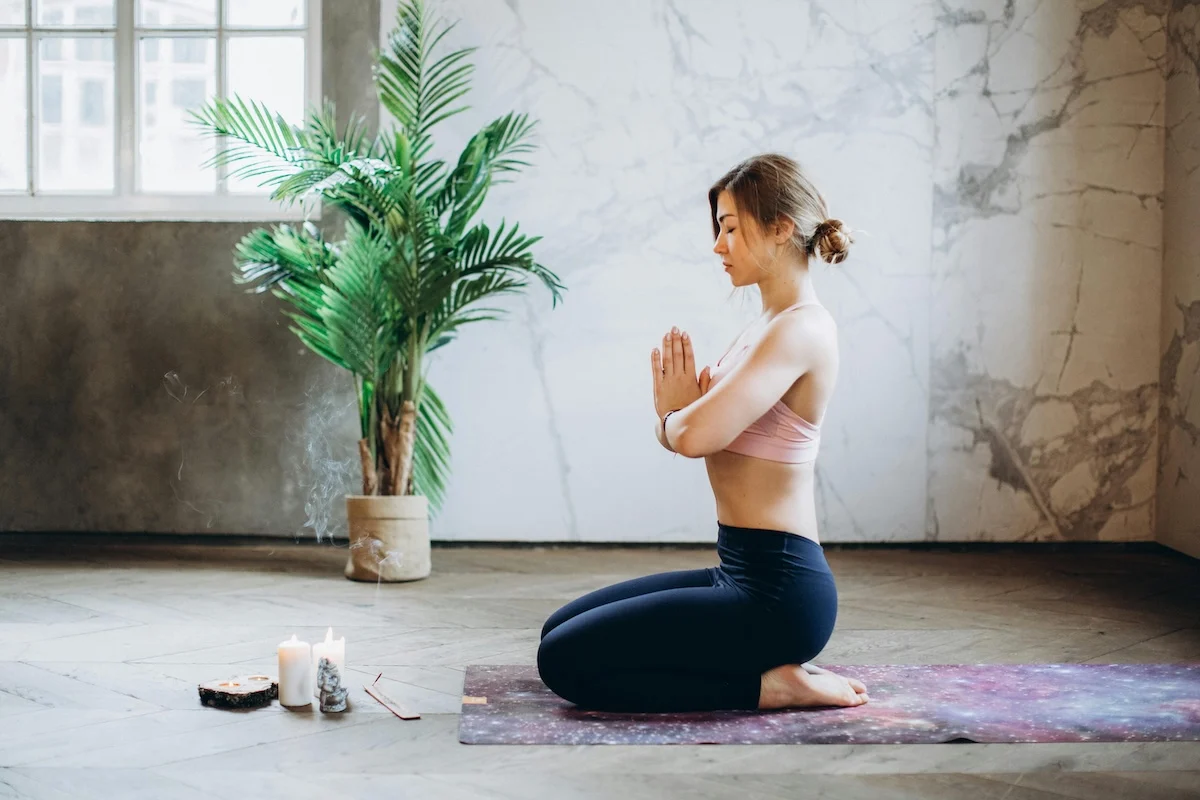
Meditation – another way to more mindfulness
In meditation, one way we practise mindfulness is by directing our attention to the breath (or to another object in the present moment) and, when thoughts arise, noticing them without judgement before kindly guiding our attention back to the breath. The aim is to shorten the episodes of distraction and lengthen the focused episodes. In the long term, this increases our ability to concentrate, relieves stress, helps us to manage our thoughts better, and so on.
Integrating meditation into your classes
Whether at the beginning, in the middle or at the end of the class in Shavasana – a little mindfulness in yoga always fits into a class. No matter how mindful the yoga practice has already been, a meditation can round it off and further strengthen the sense of mindfulness and presence. Why not make it a habit to bring meditation into your classes? If you don’t feel up to it, have a look at Mindfulife’s meditation teacher training – here you’ll learn scientifically grounded meditation techniques that you can then use to enrich your classes.
…or simply a follow-up meditation course?
Not everyone likes meditation in a yoga class – if you want to avoid those yogis running away from you, you can leave meditation out of the class and offer standalone meditation courses instead!
That’s what Mindfulife is here for: Mindfulife offers scientifically grounded mindfulness meditations led by certified teachers – directly online in the Mind Club app. Anyone can join these 30-minute group meditations from anywhere at any time. The sessions are aimed at everyone, regardless of their meditation experience.
Would you like to integrate these courses directly? Then have a look at our website www.mindfulife.de/meditationslehrer-online-ausbildung and don’t hesitate to get in touch!
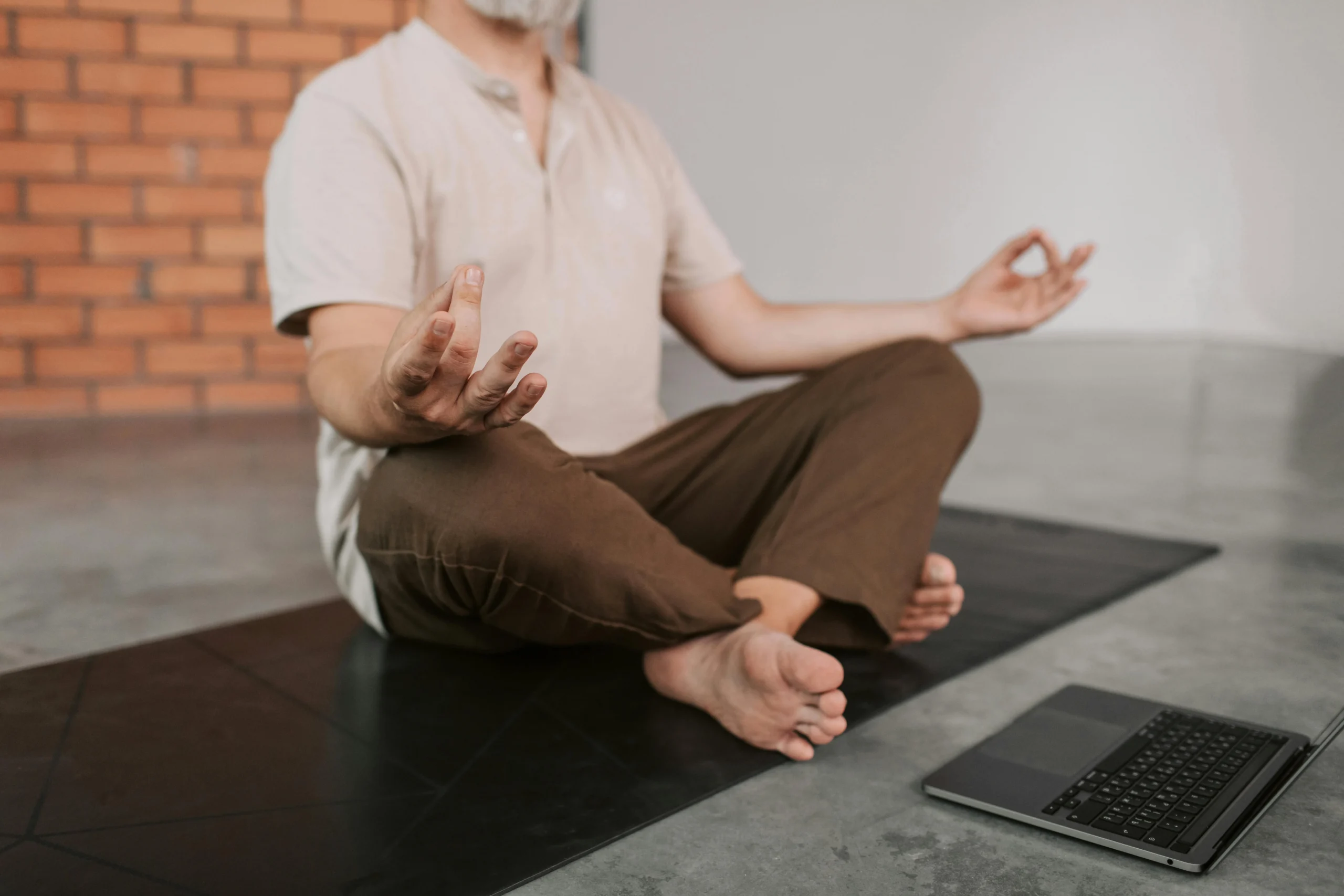
Yoga and meditation
If you’re still interested in the topic of yoga and meditation, we have just the right article for you here. Happy reading!
Deepen your meditation practice with Mindfulife
Meditation can be more than a short break in your everyday life. If you would like to understand more deeply how meditation works, how to build a steady practice of your own and how to guide others mindfully, our meditation teacher training is the next step. There you will not only get to know meditation in theory, but also develop more confidence, clarity and trust in your own practice.
Would you like to find out more about the training first? In our weekly webinar you will get an insight and learn more about what your path to becoming a meditation teacher could look like.
For regular support in your everyday life, you can also use our online meditation studio and join guided meditations flexibly via Eversports.
We look forward to accompanying you on your journey.
You can find more mindfulness inspiration on our channels too
References
Kabat-Zinn, J., Santorelli, S., Meibert, P., & Wild-Regel, A. (2006). Die heilende Kraft der Achtsamkeit. PiD - Psychotherapie im Dialog, 7(3), 318–321. https://doi.org/10.1055/s-2006-940048