Active Fatherhood: How Mindfulness Strengthens You and Your Child in the Long Term

 · 4 min read
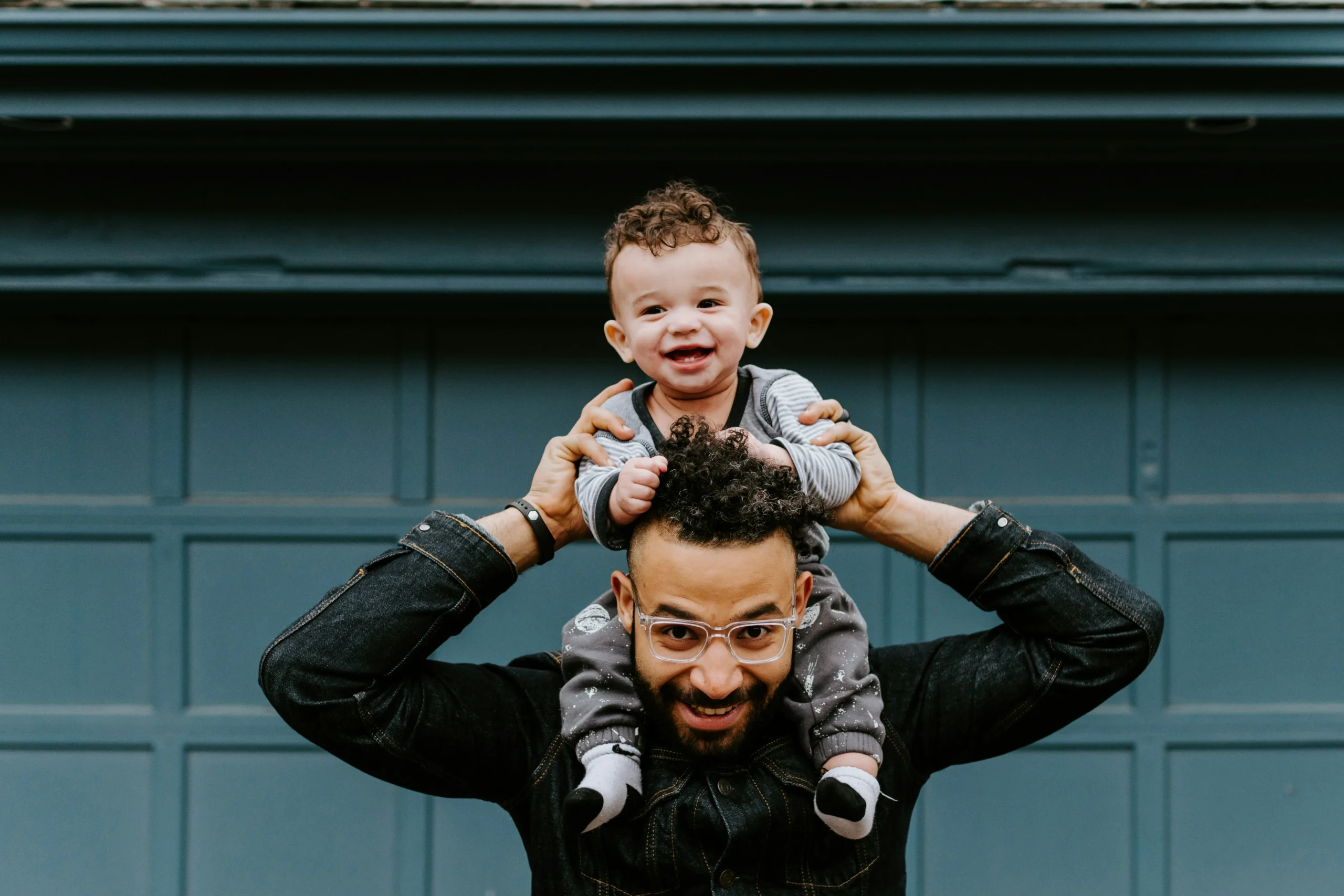
Active fatherhood means more than just “being there” – it is about genuine presence, emotional connection and conscious self-regulation in everyday life. In this article, you will find out how, as a father, mindfulness and meditation can help you not only to cope better with stress, overwhelm and irritability, but also to strengthen your child’s psychological development at the same time. You will gain evidence-based insights and practical ideas on how to make your most important role more fulfilling and healthier.
Why is your active presence as a father so crucial to your child’s development?
The research is clear: when you, as a father, are emotionally available and engaged, your children benefit in the long term. A review by Sarkadi et al. (2008) shows that paternal involvement is associated with better cognitive abilities, higher self-esteem and fewer behavioural problems in children.
But it is not just about “spending time”. What matters is how you are there: attentive, engaged and regulated. Children learn from you how to deal with emotions. When you are present, you give them a sense of security – a key foundation for their mental health.

How does your own mental wellbeing affect your role as a father?
Your inner state has a direct impact on your behaviour. Studies show that stress, depressive symptoms or feeling overwhelmed in fathers are linked to less sensitive behaviour and more conflict in everyday family life (Goodman, 2004).
This means that if you are constantly exhausted or under inner pressure, it is harder for you to respond patiently and empathetically. At the same time, a vicious circle often develops – you feel guilty because you are not the father you would like to be, which increases the stress even further.
This is where self-care comes in: not as a luxury, but as a prerequisite for good fatherhood.

How can mindfulness and meditation help you regulate stress and overwhelm?
Mindfulness means consciously perceiving the present moment without immediately judging it. This is exactly what can make an enormous difference in everyday family life.
A study by Bögels et al. (2014) shows that mindfulness-based training for parents leads to less stress, less impulsivity and better emotional regulation. In concrete terms, this means that you react less impulsively, can approach conflicts more calmly and remain able to act even in challenging situations.
Meditation has also been shown to reduce stress. It lowers physiological stress markers and improves emotion regulation (Goyal et al., 2014). Just a few minutes a day can help to raise your threshold for irritation.
What happens when you interact more mindfully with your child?
Mindfulness changes not only you, but also the relationship between you and your child. When you really listen to your child, maintain eye contact and are not already thinking about your next appointment, your child feels seen and understood.
Duncan et al. (2009) describe “mindful parenting” as an approach that fosters exactly this: present-moment attention, emotional awareness and non-judgemental responding. Children benefit from this through greater emotional security and better self-regulation.
In short: your mindfulness becomes a resource for your child.
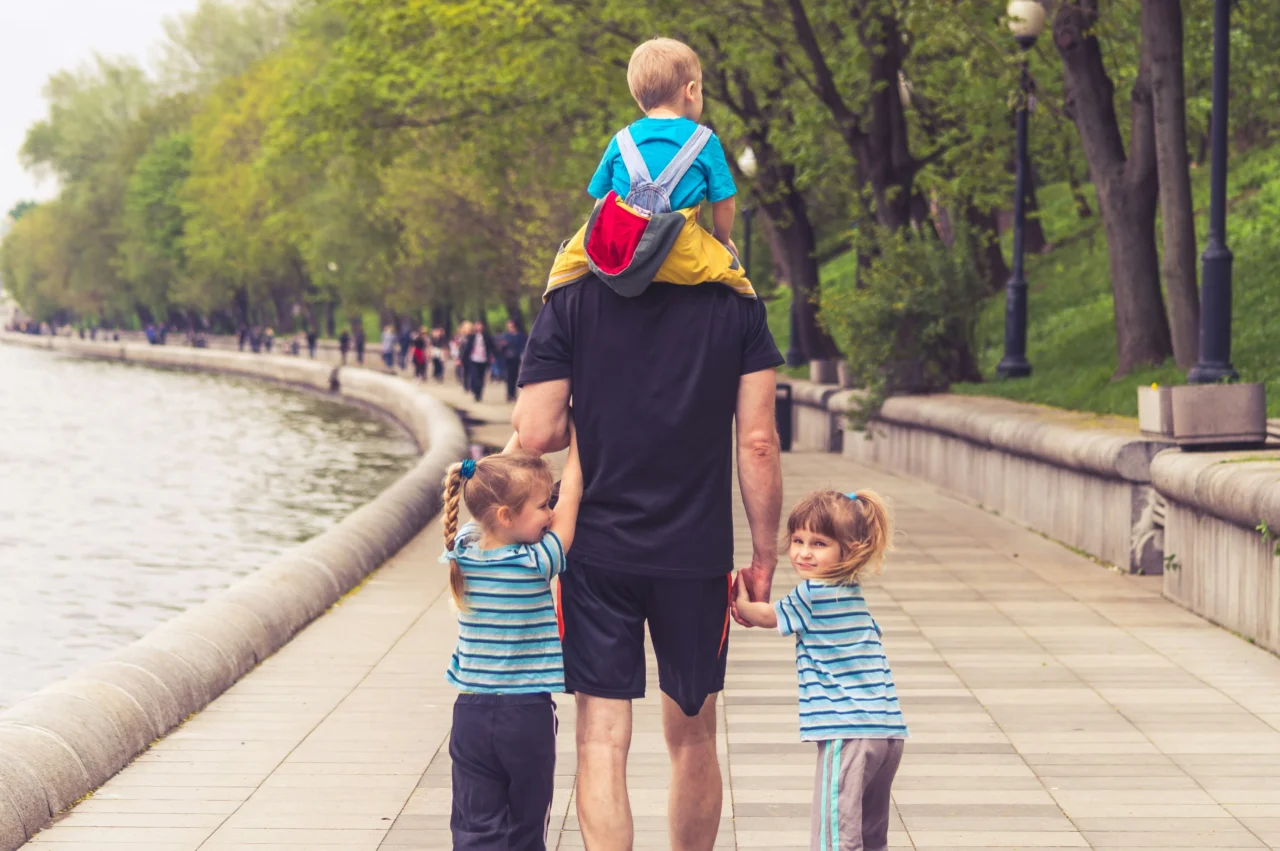
How can you be a mindful father in practice – despite a demanding daily life?
You do not need hours of meditation sessions. Small moments woven into your day are far more important:
- 1-minute pause: Before you get home, pause for a moment. Breathe in and out consciously. Let go of your working day.
- Conscious and active listening: When your child is talking, put your phone away. Look at them.
- Naming feelings: Instead of reacting impulsively, say: “I notice I’m feeling stressed right now.”
- Mini meditation: 5 minutes in the morning or evening is enough to calm your nervous system.
Studies show that even brief mindfulness exercises have measurable effects (Zeidan et al., 2010). What matters is regularity, not duration.
Why do companies also benefit from active, mindful fatherhood?
The topic goes beyond the family. When you are mentally more stable, this also affects your work: more focus, less absenteeism, better collaboration.
A study by Allen and Daly (2007) shows that engaged fatherhood goes hand in hand with greater life satisfaction and lower levels of stress – factors that have a direct impact on your performance at work.
Companies that support parents (e.g. through flexible working arrangements or mindfulness programmes) are therefore indirectly investing in healthier and more productive employees.
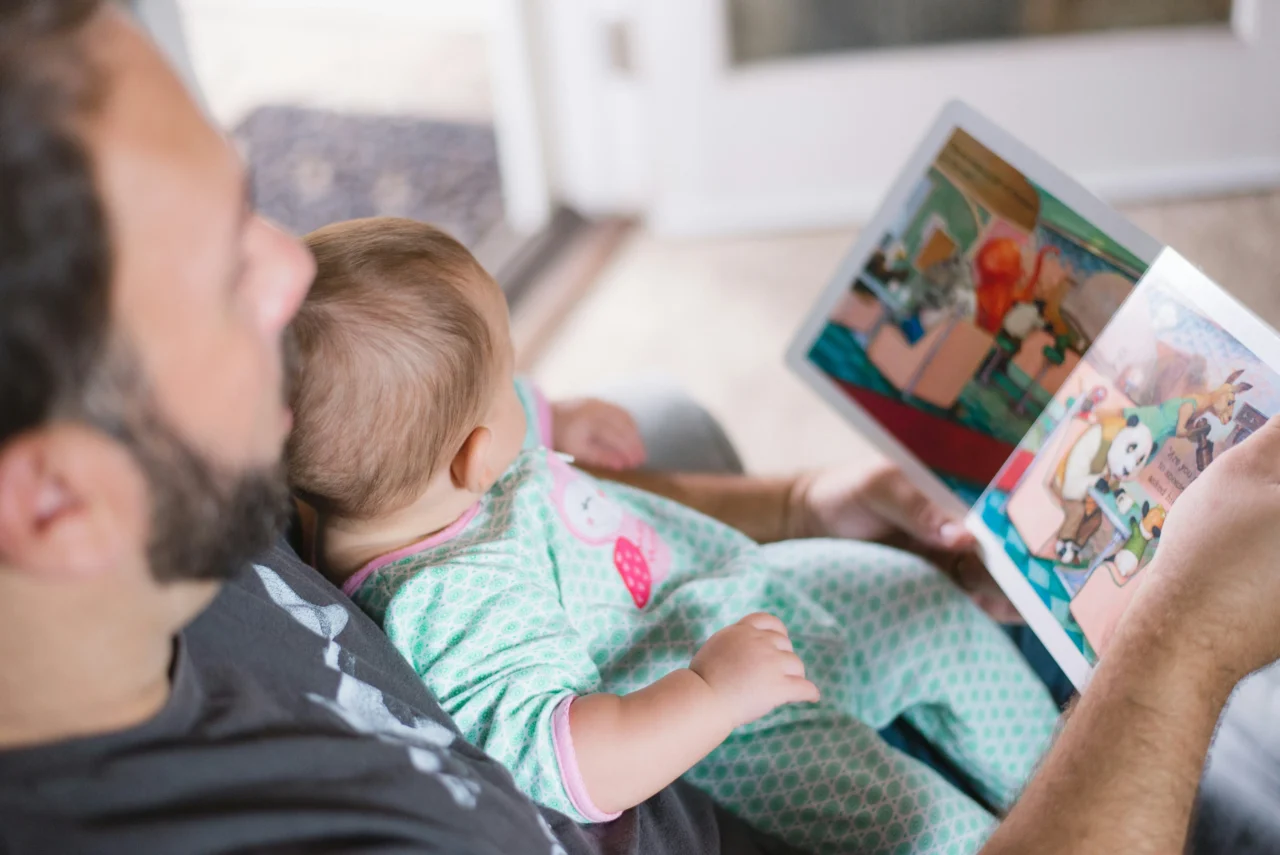
How do you deal with feelings of guilt or the pressure to “get everything right”?
Many fathers know the feeling of not living up to their own expectations – not present enough, not patient enough, not engaged enough.
Mindfulness can help you recognise this inner pressure without immediately letting it take over. Instead of perfection, it is about awareness: you are allowed to make mistakes . What matters is how you deal with them.
When you show your child that you reflect, apologise and keep learning, you are passing on what may well be some of the most important life skills of all.
Conclusion: What does active fatherhood really mean?
Active fatherhood starts with you. Your ability to be present, calm and emotionally available is the key to a healthy relationship with your child.
Mindfulness and meditation are not abstract concepts here, but practical tools that can help you regulate stress, act more consciously and understand yourself better.
When you learn to take good care of yourself, you automatically strengthen your child too. After all, your inner attitude shapes your relationship – every single day.
Anastasia Prut (psychology student)
You can find more on mindfulness in parenting here …
Deepen your meditation practice with Mindfulife
Meditation can be more than a short break in your everyday life. If you would like to understand more deeply how meditation works, how to build a steady practice of your own and how to guide others mindfully, our meditation teacher training is the next step. There you will not only get to know meditation in theory, but also develop more confidence, clarity and trust in your own practice.
Would you like to find out more about the training first? In our weekly webinar you will get an insight and learn more about what your path to becoming a meditation teacher could look like.
For regular support in your everyday life, you can also use our online meditation studio and join guided meditations flexibly via Eversports.
We look forward to accompanying you on your journey.
You can find more mindfulness inspiration on our channels too
References
Allen, S., & Daly, K. (2007). The effects of father involvement: An updated research summary of the evidence. Centre for Families, Work & Well-Being, University of Guelph.
Bögels, S. M., Hellemans, J., van Deursen, S., Römer, M., & van der Meulen, R. (2014). Mindful parenting in mental health care: Effects on parental and child psychopathology, parental stress, parenting, co-parenting, and marital functioning. Mindfulness, 5(5), 536–551. https://doi.org/10.1007/s12671-013-0209-7
Duncan, L. G., Coatsworth, J. D., & Greenberg, M. T. (2009). A model of mindful parenting: Implications for parent–child relationships and prevention research. Clinical Child and Family Psychology Review, 12(3), 255–270. https://doi.org/10.1007/s10567-009-0046-3
Goodman, J. H. (2004). Paternal postpartum depression, its relationship to maternal postpartum depression, and implications for family health. Journal of Advanced Nursing, 45(1), 26–35. https://doi.org/10.1046/j.1365-2648.2003.02857.x
Goyal, M., Singh, S., Sibinga, E. M. S., et al. (2014). Meditation programs for psychological stress and well-being: A systematic review and meta-analysis. JAMA Internal Medicine, 174(3), 357–368. https://doi.org/10.1001/jamainternmed.2013.13018
Sarkadi, A., Kristiansson, R., Oberklaid, F., & Bremberg, S. (2008). Fathers’ involvement and children’s developmental outcomes: A systematic review of longitudinal studies. Acta Paediatrica, 97(2), 153–158. https://doi.org/10.1111/j.1651-2227.2007.00572.x
Zeidan, F., Johnson, S. K., Diamond, B. J., David, Z., & Goolkasian, P. (2010). Mindfulness meditation improves cognition: Evidence of brief mental training. Consciousness and Cognition, 19(2), 597–605. https://doi.org/10.1016/j.concog.2010.03.014