Forgiving Your Mistakes – A Message to Your Future Self?

 · 4 min read

Why should you forgive yourself for your mistakes?
Our new YouTube meditation video invites you to forgive your future self – for everything that may still lie ahead. After all, we all make mistakes. Although they often feel uncomfortable, they are part of being human. This willingness to forgive ourselves can have a profound impact on our wellbeing.
But how does it actually work?
And what does science have to say about it?
Why mistakes are human – and psychologically unavoidable
All of us make mistakes in everyday life – in our thinking, our actions or our relationships. Whether it is a poorly chosen sentence, a missed deadline or a careless word, people tend to evaluate such moments internally and judge themselves harshly. Self-criticism seems to be an automatic reaction. Yet this is precisely where a central psychological problem begins:
- Self-criticism is closely linked to negative feelings such as shame and guilt.
- If you judge yourself frequently, you run the risk of getting stuck in destructive cycles of rumination and self-reproach.
This is why researchers are increasingly exploring how we can deal more constructively with our own imperfections – and how our wellbeing benefits from doing so.
Why is self-forgiveness an active process rather than ‘ignoring’ mistakes?
Self-forgiveness does not mean encouraging irresponsibility. It is not about ignoring or downplaying mistakes. Instead, it involves two aspects:
- Acknowledging your own actions – what happened?
- Relating to yourself with kindness instead of judgement.
This ability is an active psychological process that is associated with, for example, better emotional regulation and greater psychological wellbeing.

Why do mindfulness and self-compassion form a ‘bridge’ to self-forgiveness?
A key focus of research is how mindfulness and self-compassion are connected – and how together they strengthen self-forgiveness:
- Mindfulness means perceiving thoughts, feelings and experiences in the present moment without judgement.
- Self-compassion goes a step further and involves a kind, supportive attitude towards yourself in difficult moments.
According to recent studies, self-compassion mediates the positive effect of mindfulness on self-forgiveness: people who are mindful find it easier to treat themselves with kindness and understanding – and are more likely to forgive themselves.
How can meditation act as a training ground for self-forgiveness?
Meditation is not just ‘relaxation’; it can very concretely strengthen the skills we need for self-forgiveness: non-judgemental awareness, a kind inner voice and emotional regulation.
In studies on the Mindful Self-Compassion programme (MSC) – a structured training with formal meditations and self-compassion exercises – participants showed more self-compassionand less psychological distress after the course than the comparison group.
Loving-kindness meditation (Metta) has also been studied: a randomised 21-day training led, among other things, to more self-compassion and less stress compared with a control group that did not take part in such training.
Why is self-forgiveness important and more than just ‘feeling better’?
Psychological research shows that self-forgiveness is closely linked to a whole range of positive effects:
- Less self-criticism and shame
- Stronger emotional resilience
- Greater motivation for personal growth
- Better mental health overall
Some studies suggest that people who are able to forgive themselves are more likely to learn from their mistakes instead of getting stuck in feelings of guilt. In addition, self-forgiveness and self-compassion are associated with reduced emotional distress, because they can help you break the cycle of negative emotional reactions.
How can you integrate self-forgiveness into your everyday life?
Practise mindfulness
Notice unpleasant thoughts without judging them. Directing your attention to your breath can help create distance between the ‘mistake’ and your reaction to it.
Even short, guided mindfulness meditations can measurably influence how we deal with mistakes: in an experimental study, a brief mindfulness meditation improved aspects of cognitive control and error processing – precisely the processes that help us avoid automatically sliding into self-deprecation after a ‘mistake moment’.
Cultivate self-compassion
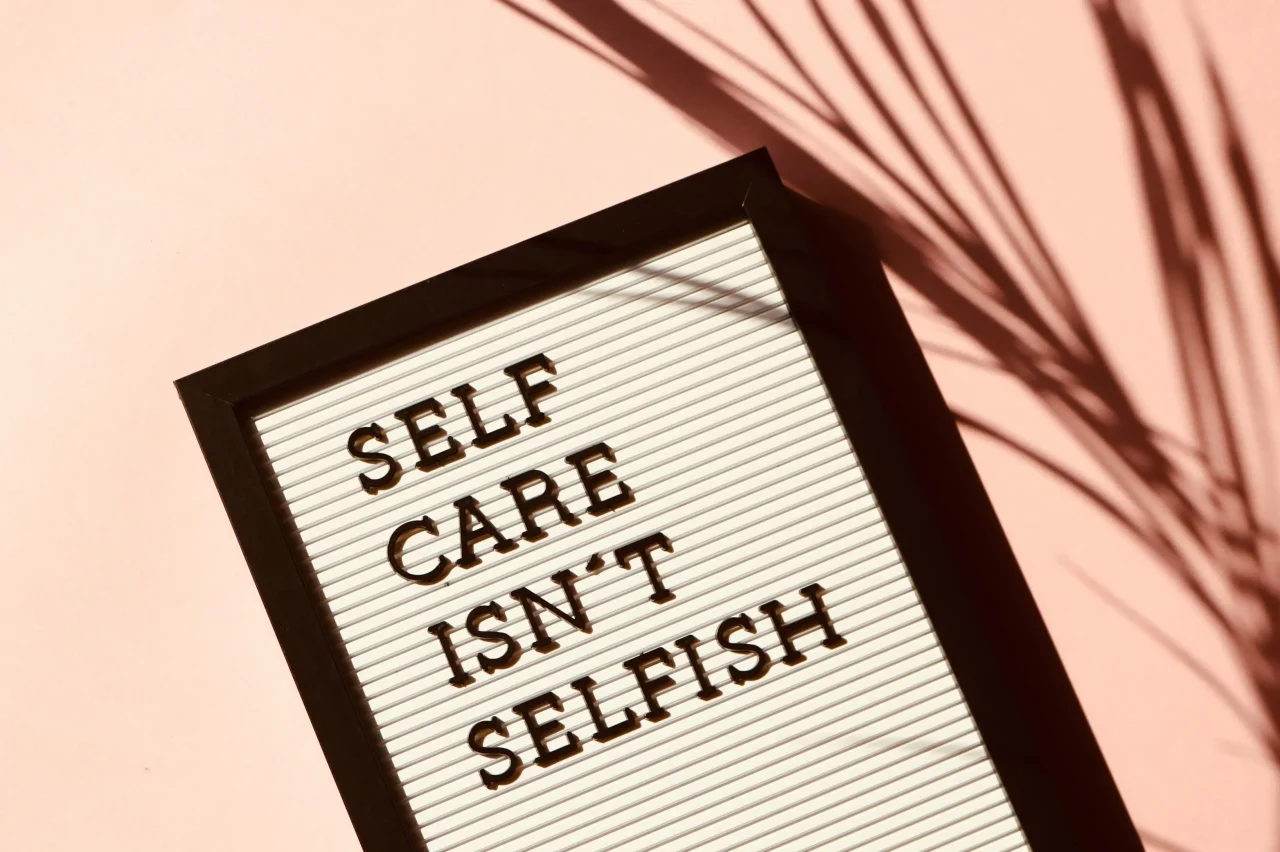
In your mind, treat yourself as you would a good friend: what would you say to them in a similar situation? Self-compassion strategies like this help to reduce self-criticism.
Narrative self-reflection
Write short reflections about mistakes, not as ‘failures’ but as experiences you can learn from. Narrative approaches to self-forgiveness work emphasise this constructive perspective.
Conclusion – your invitation to practise
Mistakes are an inevitable part of life – and of a deeper understanding of yourself. Self-forgiveness is a learnable process that draws on mindfulness and self-compassion to help you live in a more emotionally resilient, kinder and more fulfilled way.
The meditation on YouTube mentioned at the beginning of this article is a first step into this attitude – and an invitation to keep practising in your everyday life: attentive, kind and without being too hard on yourself.
Miriam Sara Senf (psychology student)
Deepen your meditation practice with Mindfulife
Meditation can be more than a short break in your everyday life. If you would like to understand more deeply how meditation works, how to build a steady practice of your own and how to guide others mindfully, our meditation teacher training is the next step. There you will not only get to know meditation in theory, but also develop more confidence, clarity and trust in your own practice.
Would you like to find out more about the training first? In our weekly webinar you will get an insight and learn more about what your path to becoming a meditation teacher could look like.
For regular support in your everyday life, you can also use our online meditation studio and join guided meditations flexibly via Eversports.
We look forward to accompanying you on your journey.
You can find more mindfulness inspiration on our channels too
References
Costa, L., Ferreira-Valente, A., & Castilho, P. (2021). Construct validity of two measures of self-forgiveness in Portugal: A study of self-forgiveness, psychological symptoms, and well-being. Research in Psychotherapy: Psychopathology, Process and Outcome, 24(1). https://pmc.ncbi.nlm.nih.gov/articles/PMC8082530/
Crego, A., et al. (2025). Long-term effectiveness of the Mindful Self-Compassion programme compared to Mindfulness-Based Stress Reduction and a control group: A comparative study with 1-year follow-up. Frontiers in Psychology. https://www.frontiersin.org/journals/psychology/articles/10.3389/fpsyg.2025.1597264/full
DeMarco, M. J. (2024). 6-Fold path to self-forgiveness: An interdisciplinary model for the treatment of moral injury with intervention strategies for clinicians. Frontiers in Psychology, 15, Article 1437070.https://doi.org/10.3389/fpsyg.2024.1437070
Larson, M. J., Steffen, P. R., & Primosch, M. (2013). The impact of a brief mindfulness meditation intervention on cognitive control and error-related performance monitoring. Frontiers in Human Neuroscience, 7, 308. https://doi.org/10.3389/fnhum.2013.00308
Neff, K. D. (2023). Self-compassion: Theory, method, research, and intervention. Annual Review of Psychology, 74, 193–218. https://doi.org/10.1146/annurev-psych-032420-031047
Neff, K. D., & Germer, C. K. (2013). A pilot study and randomized controlled trial of the Mindful Self-Compassion program. Journal of Clinical Psychology, 69(1), 28–44. https://self-compassion.org/wp-content/uploads/publications/Neff-Germer-MSC-RCT-2012.pdf
Qi, X., Shen, Y., Che, X., Wang, Y., Luo, X., & Sun, L. (2025). The effect of self-compassion versus mindfulness interventions on autonomic responses to stress in generalized anxiety disorders. Frontiers in Psychiatry. https://www.frontiersin.org/journals/psychiatry/articles/10.3389/fpsyt.2025.1483827/full
Skalski-Bednarz, S. B., et al. (2025). Self-compassion mediates the influence of mindfulness on self-forgiveness. Scientific Reports. https://www.nature.com/articles/s41598-025-21198-w
Telke, S., et al. (2022). A randomized trial of 21 days of loving-kindness meditation: Effects on stress, self-compassion, and social connectedness. Journal of Integrative and Complementary Medicine. https://journals.sagepub.com/doi/full/10.1089/jicm.2020.0512