Changing your life: She quits the police – for her dream! In conversation with KayKay

 · 5 min read
Why do we sometimes find it so hard to follow our own path?
Sometimes there comes a moment in life when we realise: things can’t go on the way they have been. Even so, many people stay for a long time in situations they would actually like to change. The reason is often not a lack of opportunities but our inner beliefs.
Many beliefs arise from experiences, upbringing or social expectations. Security, a stable job or a clear path through life are often seen as ‘sensible’. At the same time, many people feel a longing for more meaning, freedom or self-fulfilment.
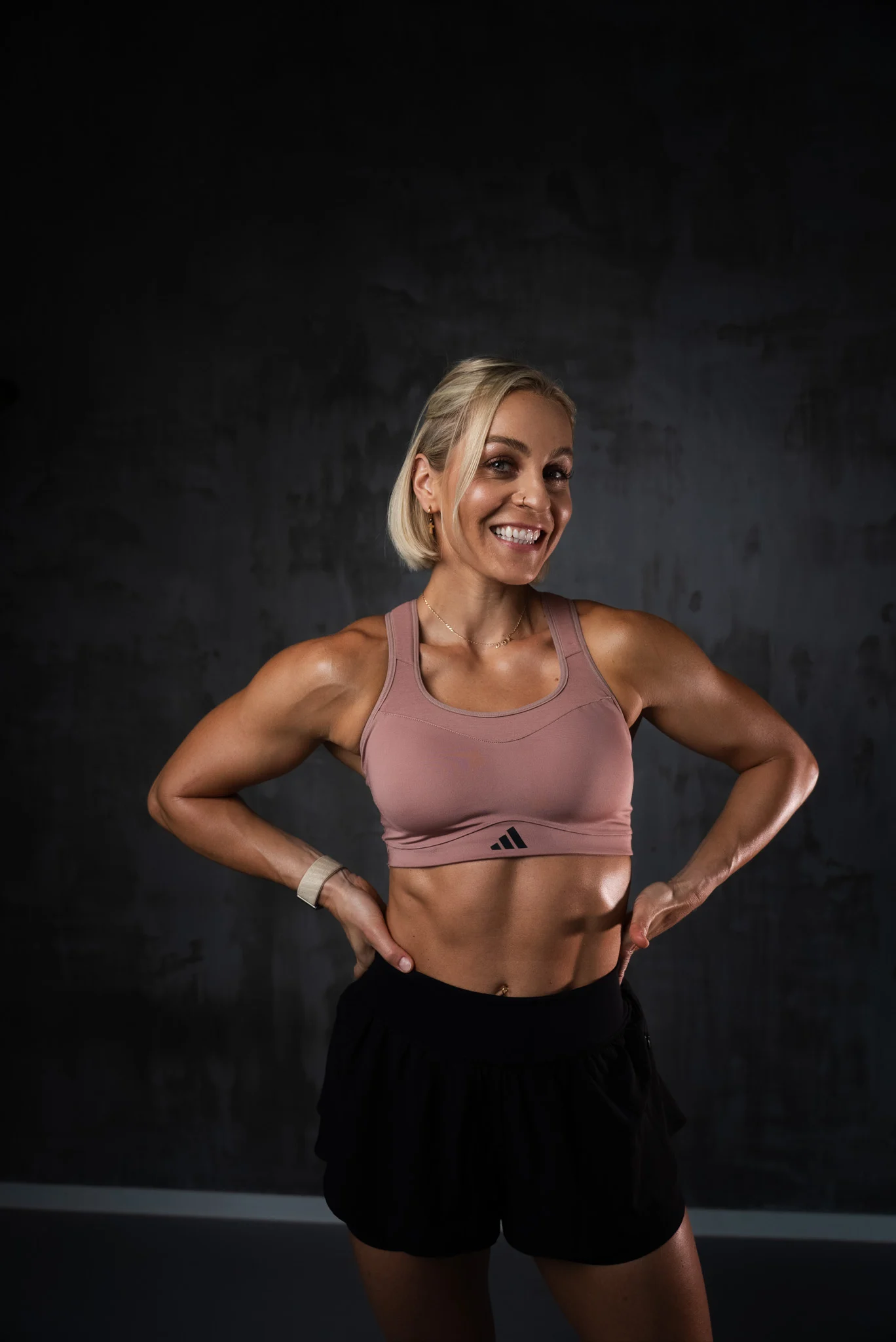
This is exactly where the story of Kathrin Kunz-Lehr begins, better known to many as Fitness KayKay. Today she is a fitness coach, content creator and entrepreneur in the health sector. But for many years she worked in the police force – a secure and structured profession.
Leaving that path was not a spur-of-the-moment decision for her. It was a process that began with one important question:
What do I really want to do with my life?
What role can sport play in our mental health?
Sport was a central part of KayKay’s life from an early age. She started artistic gymnastics when she was just six. Looking back, she describes this time as formative – not only physically, but mentally too.
Sport became a place where she built self-confidence, got to know her limits and, at the same time, learnt to grow beyond them.
Intensive training phases in particular often produce a special mix of discipline, frustration tolerance and self-efficacy.
Interestingly, several studies confirm exactly this link: regular exercise can not only improve physical health but also reduce stress, stabilise mood and boost self-esteem. Even moderate exercise sessions can help to regulate negative emotions and feel more mentally balanced.

For many people, sport therefore becomes a kind of emotional anchor – something that provides stability when other areas of life feel uncertain.
For Kathrin, too, exercise remained a constant over the years.
Where does the courage to leave a secure career behind come from?
After finishing school and spending time abroad as an au pair, Kathrin initially decided to train with the police. The job promised security and structure – values that also played a big role in her family.
Sport remained part of her life. Alongside her day-to-day police work, she trained regularly and eventually began sharing her training routine on social media.
What started out as a small side channel grew surprisingly quickly.
Her first content came about without much of a plan: workouts, training tips and glimpses into her everyday life. But soon a community grew that was interested in exactly this authentic mix of fitness, everyday life and mindset.
For several years she led two lives at once: police work on one side and social media on the other.
At times this meant getting up at four in the morning to create content before the working day began.
This phase was intense – but it also showed her the potential of her new work.
Why can community be such a source of motivation?
One aspect that became particularly important to Kathrin is her connection with her community.
For her, social media isn’t just about posting content, but about genuine exchange. Messages, comments and personal encounters show her again and again that her work really helps people.
This feeling of having a positive impact can be an enormous motivator.
Psychological research also shows how important social connection is for our wellbeing. People who feel connected to others and are part of a community often report greater life satisfaction, less stress and greater emotional stability.

Especially in a digital world, where many people experience loneliness despite social networks, genuine connection can make a big difference.
For Kathrin, this has become a central part of her work.
How does life change when your passion becomes your profession?
The moment Kathrin decided to leave her secure police career was an emotional one.
When she told her family, there were tears – above all because the step came with uncertainty. Her parents had been employees all their lives, and the idea of self-employment initially felt risky.
At the same time, though, she felt ever more clearly that she could have a greater impact through her work in fitness and health.
This became especially visible during the coronavirus pandemic: her home workout videos helped many people build exercise into their daily lives and keep some structure during a difficult time.
Today she works as a fitness coach, creates training programmes, supports people through coaching and runs her own podcast.
Her focus is on holistic health – the connection between exercise, nutrition and mental wellbeing.
Why do we so often wait for the ‘right moment’?
Many people have ideas or dreams they would love to make a reality. Yet they keep putting off change until later.
The ‘right moment’ never seems to have arrived yet.
But often this perfect moment simply doesn’t exist.
Studies on motivation and personal goal pursuit show that change usually happens when people start making small everyday decisions differently. It isn’t big, radical steps that change our lives, but many small adjustments over a longer period of time.

KayKay emphasises exactly this point, too.
It’s not about turning everything upside down straight away. Sometimes it’s enough to take a small first step – for example, planning half an hour of exercise a day or trying out new routines.
These small changes can have a big impact in the long run.
What can you take away from her story?
Kathrin Kunz-Lehr’s story shows that change rarely happens overnight.
It happens step by step:
- through experiences
- through new opportunities
- through encounters with other people
- and through the courage to question your own decisions
Her path from police officer to entrepreneur wasn’t an easy one, but it was a very conscious one.
In the end, there is one insight that many people can take away from her podcast:
We only have this one life. And sometimes a new path begins at exactly the moment we allow ourselves to ask what truly fulfils us.
Because, as she says herself:
‘It’s always the right time to change something when we’re unhappy with it.’
Miriam Sara Senf (psychology student)
Would you like to find out more about Kathrin’s journey and her thoughts on courage, change and self-fulfilment? Then why not listen to the full podcast episode now. Enjoy!
Deepen your meditation practice with Mindfulife
Meditation can be more than a short break in your everyday life. If you would like to understand more deeply how meditation works, how to build a steady practice of your own and how to guide others mindfully, our meditation teacher training is the next step. There you will not only get to know meditation in theory, but also develop more confidence, clarity and trust in your own practice.
Would you like to find out more about the training first? In our weekly webinar you will get an insight and learn more about what your path to becoming a meditation teacher could look like.
For regular support in your everyday life, you can also use our online meditation studio and join guided meditations flexibly via Eversports.
We look forward to accompanying you on your journey.
You can also find more mindfulness inspiration on our channels:
References
Chekroud, S. R., Gueorguieva, R., Zheutlin, A. B., Paulus, M., Krumholz, H. M., Krystal, J. H., & Chekroud, A. M. (2018). Association between physical exercise and mental health in 1.2 million individuals in the USA between 2011 and 2015: A cross-sectional study. The Lancet Psychiatry, 5(9), 739–746. https://doi.org/10.1016/S2215-0366(18)30227-X
Rebar, A. L., Stanton, R., Geard, D., Short, C., Duncan, M., & Vandelanotte, C. (2015). A meta-meta-analysis of the effect of physical activity on depression and anxiety in non-clinical adult populations. Health Psychology Review, 9(3), 366–378. https://doi.org/10.1080/17437199.2015.1022901
Holt-Lunstad, J., Smith, T. B., & Layton, J. B. (2010). Social relationships and mortality risk: A meta-analytic review. PLoS Medicine, 7(7), e1000316. https://doi.org/10.1371/journal.pmed.1000316