Struggling to make decisions? Meditation can help!
Meditation can help us make better decisions. Find out everything you need to know in this article.

 · 5 min read
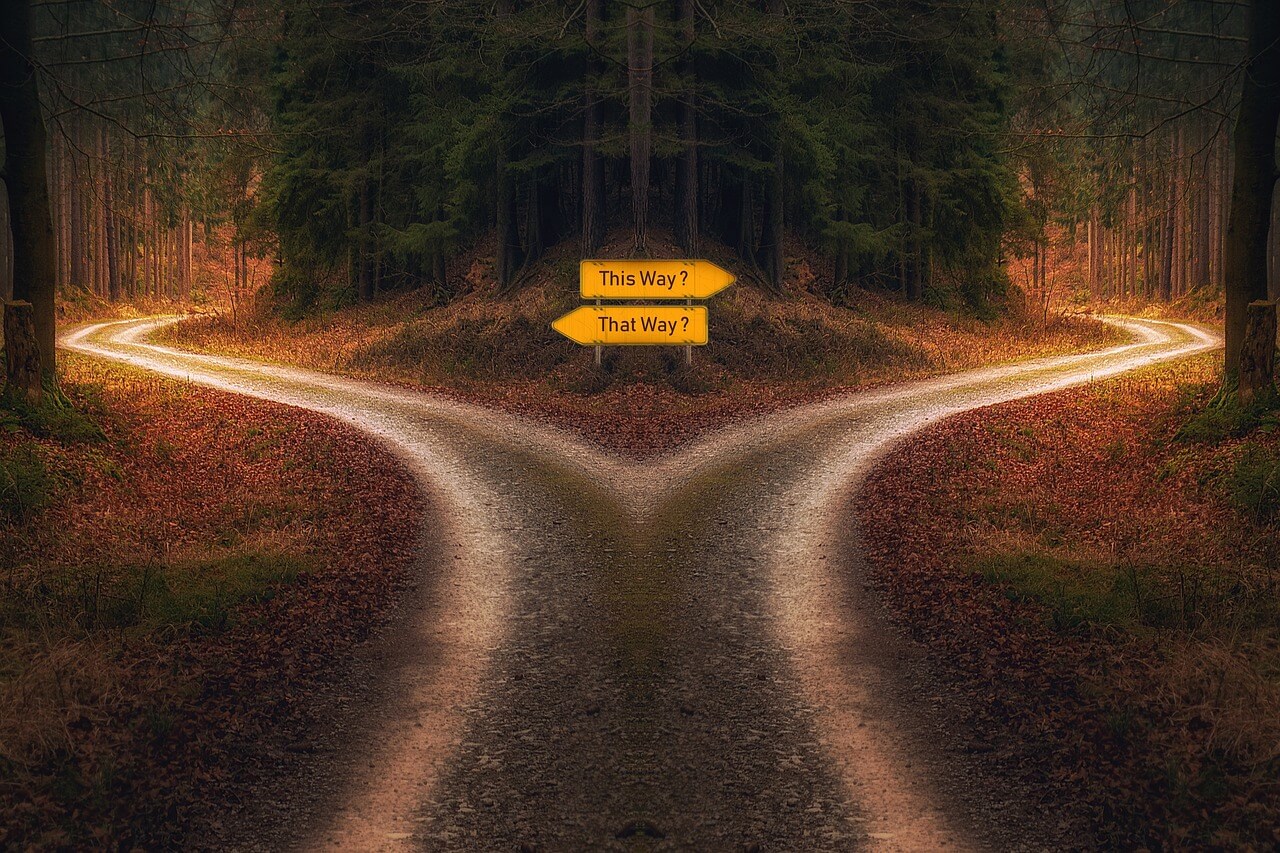
Making decisions can be challenging, and not only when big changes are involved. We’ll show you how meditation can help you with your big and small decisions. It might even come in handy when the question soon arises: presents, yes or no? And if yes, which ones?
The problem with decisions
What should I wear today? Do I feel like going out tonight? Is my degree really right for me? Should I change jobs? Is it time for a change in my relationship? The list of decisions that need to be made day after day sometimes seems endless.
And quite often we put these decisions off: we procrastinate.

Putting off decisions: procrastination
We all know the feeling: we resolve to do or finish something, and then we put it off after all. For a few hours. Or days. This is called procrastination. But why do we procrastinate in the first place?
We procrastinate in all sorts of situations. When the task we really ought to be doing seems boring; when a deadline is far in the future; or, for example, when we simply have too many, too tempting distractions at our disposal. Think about it for a moment: when did you last procrastinate, and what was the reason?
Procrastination is often an expression of impulsivity: in other words, we sometimes let ourselves be overwhelmed and distracted by our own desires and urges. Doesn’t your phone suddenly become far more interesting when you’re sitting over a boring essay or were actually planning to clean the flat? It’s exactly the same with decisions. Do phrases like “I’ll deal with that later” or “That’s a decision for tomorrow” sound familiar? Of course, they have their place. Many decisions simply call for careful consideration and a well-thought-out list of pros and cons. But we often put off decisions that aren’t actually all that complicated.
The problem is this: every decision costs energy. And even if it’s painful, we should be aware of the following points:
1. Making a decision later is a decision.
2. Making no decision at all is also a decision.
So how can we arrive at better decisions more easily? This is exactly where meditation comes in.
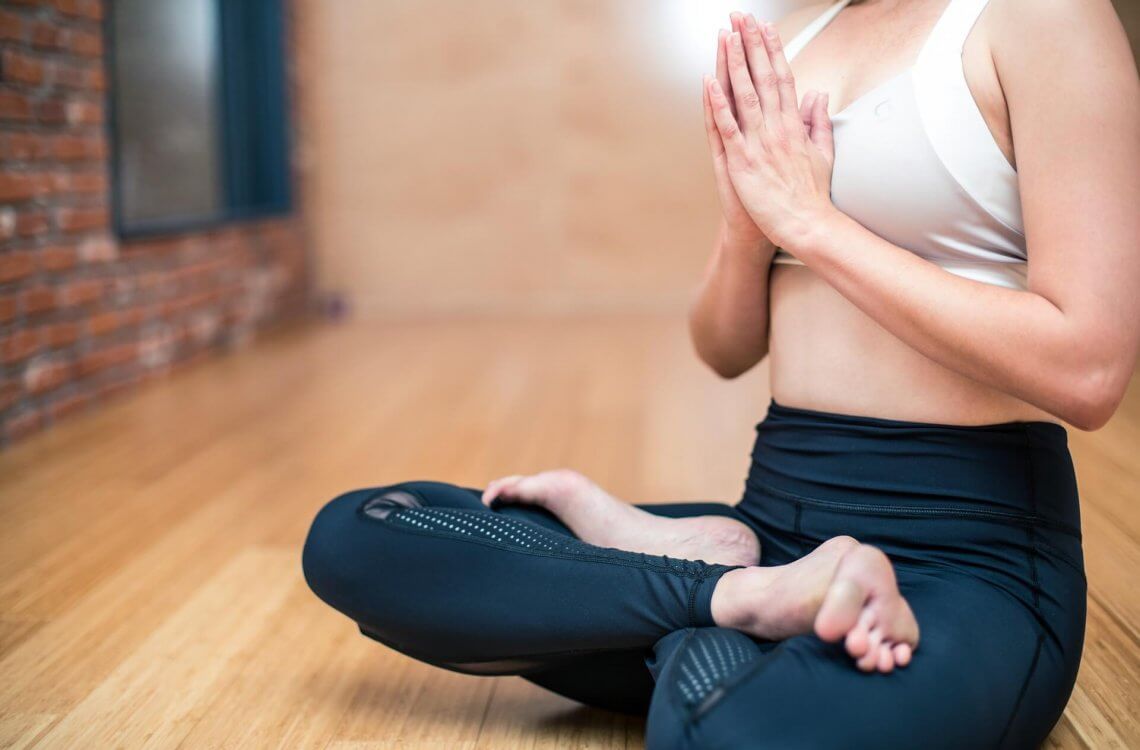
How can meditation help with decisions?
Meditation affects our brain on many levels and, through complex processes, has a direct effect on how we act.
1. Standing up to your own impulsivity
One study, for instance, showed that meditation can reduce our impulsivity when making decisions – impulsivity which, as we’ve seen, is also linked to procrastination. This means that meditation allows us to make well-founded decisions without being unduly influenced by impulses such as sudden anger, distraction or a sudden urge to act.
So meditation gives us more space to think our decisions through properly and not let ourselves be distracted by other things.
2. Making more prosocial decisions
And if that hasn’t convinced you yet, here’s another fact: deciding with the help of meditation also has a positive effect on the people around us. Studies have shown that when it comes to decisions that affect not only ourselves but other people too, meditation makes us behave in a more prosocial and moral way.
3. Negativity bias – or: why the scales between good and bad are never balanced
Do you sometimes feel influenced by so many external factors that in the end you no longer know what the right decision would be? From a psychological point of view, decisions never exist in a vacuum – they are influenced by so-called biases (systematic errors in thinking). These biases can strongly skew our decisions and actions in one direction without us being aware of it. One example is the negativity bias. The negativity bias means that negative memories, thoughts and feelings have a stronger effect on our psychological wellbeing than positive ones of the same intensity.
Think back to the last feedback you got from your boss or your teacher: which feedback can you picture more vividly? The negative or the positive? The negativity bias can distort our judgement in every decision we make. A study by Kiken and Shook (2011) showed that meditation can reduce negativity, allowing us to reach more positive judgements.
Or do you actually enjoy being guided by negativity?
4. Sunk-cost bias – or: when there seems to be no going back on a decision
And while we’re on the subject of biases, there’s another one that can strongly distort our decisions: the so-called sunk-cost bias. It describes the tendency of people who have already made an investment (of money, energy or time) to carry on with a plan – even when it is already clear that the plan won’t lead to the desired outcome. Sounds illogical? It is, but the sunk-cost bias also has its (irrational) reason for being.
For one thing, humans are not rational beings and are guided by emotions. Imagine someone who, shortly before the end of their degree – perhaps with only two semesters left until they graduate – decides to drop out because they’ve realised that the day-to-day reality of the profession simply isn’t right for them. What would their family, friends and acquaintances think? And besides, they chose this degree a few years ago after long deliberation – should they just throw all that away now? Yes, it’s a tricky situation. But simply clinging on to the degree, even though it’s clear it isn’t the right thing, out of fear of losses, of other people’s reactions and so on – that is the sunk-cost bias.
One study showed that people who meditate are more resistant to the sunk-cost bias. The reason for this is that meditation shifts our focus in time to the here and now, away from the past and the future. In the degree example, meditation would therefore draw the focus away from other people’s possible reactions (in the future) or from the fact that you chose the degree (in the past) and now feel you have to stick with it.
So meditation calms the mind and creates more space for rational decisions, free from (irrational) fears and entrenched beliefs (you can find out more about how meditation calms the mind here).

Conclusion
Now you know why we procrastinate, which factors influence our decisions and how meditation can help you make better decisions. If you need tips on getting started with meditation, click here.
Better decisions lead to better actions. And actions ultimately shape the world we live in. Napoleon already knew how important the ability to make decisions is:
“Nothing is more difficult, and therefore more precious, than to be able to decide.” (Napoleon Bonaparte)
Deepen your meditation practice with Mindfulife
Meditation can be more than a short break in your everyday life. If you would like to understand more deeply how meditation works, how to build a steady practice of your own and how to guide others mindfully, our meditation teacher training is the next step. There you will not only get to know meditation in theory, but also develop more confidence, clarity and trust in your own practice.
Would you like to find out more about the training first? In our weekly webinar you will get an insight and learn more about what your path to becoming a meditation teacher could look like.
For regular support in your everyday life, you can also use our online meditation studio and join guided meditations flexibly via Eversports.
We look forward to accompanying you on your journey.
You can find more mindfulness inspiration on our channels too
References
Hafenbrack, A. C., Kinias, Z., & Barsade, S. G. (2013). Debiasing the mind through meditation: Mindfulness and the sunk cost bias. Academy of Management Proceedings, 2013(1), 11582. https://doi.org/10.5465/ambpp.2013.11582abstract
Kiken, L. G., & Shook, N. J. (2011). Looking up: Mindfulness increases positive judgments and reduces negativity bias. Social Psychological and Personality Science, 2(4), 425–431. https://doi.org/10.1177/1948550610396585
Sun, S., Yao, Z., Wei, J., & Yu, R. (2015). Calm and smart? A selective review of meditation effects on decision making. Frontiers in Psychology, 6, Article 1059. https://doi.org/10.3389/fpsyg.2015.01059