Learning to Meditate – A Simple Guide for Beginners

 · 6 min read
Learning to meditate might at first make you think of lots of incense sticks, hours of sitting still or a completely empty mind. The good news: you don’t need any of that. Learning to meditate is much more practical and simpler than it’s often made out to be.
In this article, you’ll learn step by step how to meditate – with no previous experience, no pressure and just a few minutes a day. The aim isn’t to meditate ‘perfectly’, but to find your first way into the practice.
Why learn to meditate?
Why should you learn to meditate? Because it can help you develop a more conscious way of relating to your thoughts and emotions. Meditation is a mental exercise in which you consciously direct your attention to a particular focus – for example your breath, your body or a sound. It isn’t really about getting rid of thoughts, but about learning a new way of relating to them or letting go of them for a moment.
Meditation can help you create a little distance from your thoughts and emotions and arrive more fully in the present moment. And the best part: even just a few minutes a day can make a difference.
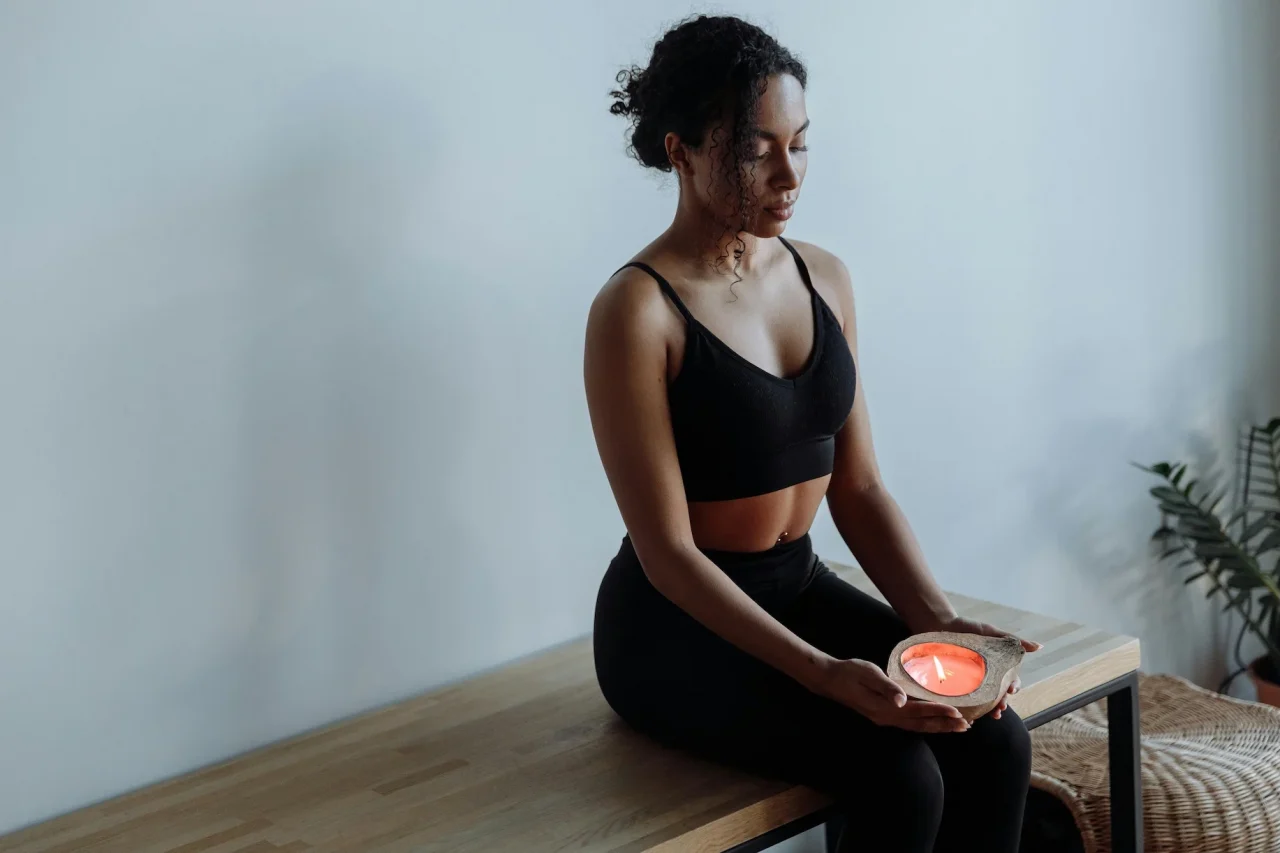
Myths & expectations about meditation
Before we get practical, let’s clear up a few stubborn misconceptions.
‘I’m not allowed to have any thoughts.’
Yes, you are. Thoughts are a completely normal part of meditating. What matters is not whether thoughts come up, but how you deal with them. You notice them – and gently return to your focus.
‘I have to sit still for 30 minutes straight away.’
No. To begin with, 5 minutes, for example, is perfectly enough. Meditation is like any other kind of training: you start small and build up gradually.
‘I’m bound to be doing it wrong.’
Meditation isn’t an exam. There is no ‘right’ or ‘wrong’. Every session in which you consciously sit down is valuable – including (or especially) the more restless ones.
So take the pressure off right from the start. Meditation is training for your attention, not a competitive sport.
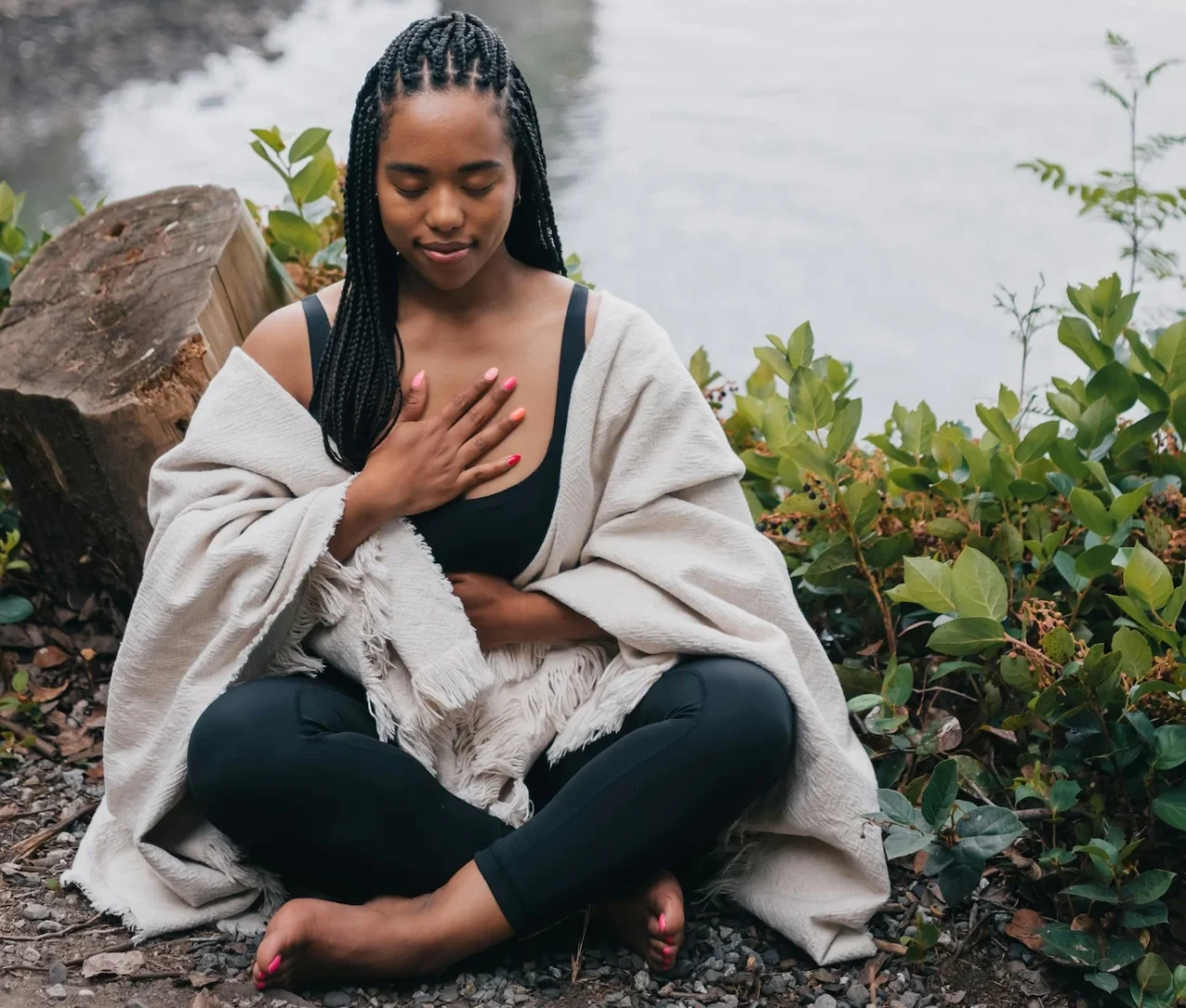
Step-by-step guide: your first meditation experience
If you’d like to learn to meditate, a clear structure will help you get started. This step-by-step guide will support you in learning to meditate without overwhelming yourself.
Think of this guide as a little recipe. You can follow it exactly as it is or adapt it to your needs.
Step 1: Find a suitable place
Find a quiet place where you won’t be disturbed for 5–10 minutes. This could be a chair in your bedroom, a corner of your living room or a cushion on the floor.
- Put your phone on silent or flight mode
- Close the door if possible
- You don’t have to shut yourself off completely – ‘quiet enough’ will do
Step 2: Adopt a comfortable posture (meditation posture)
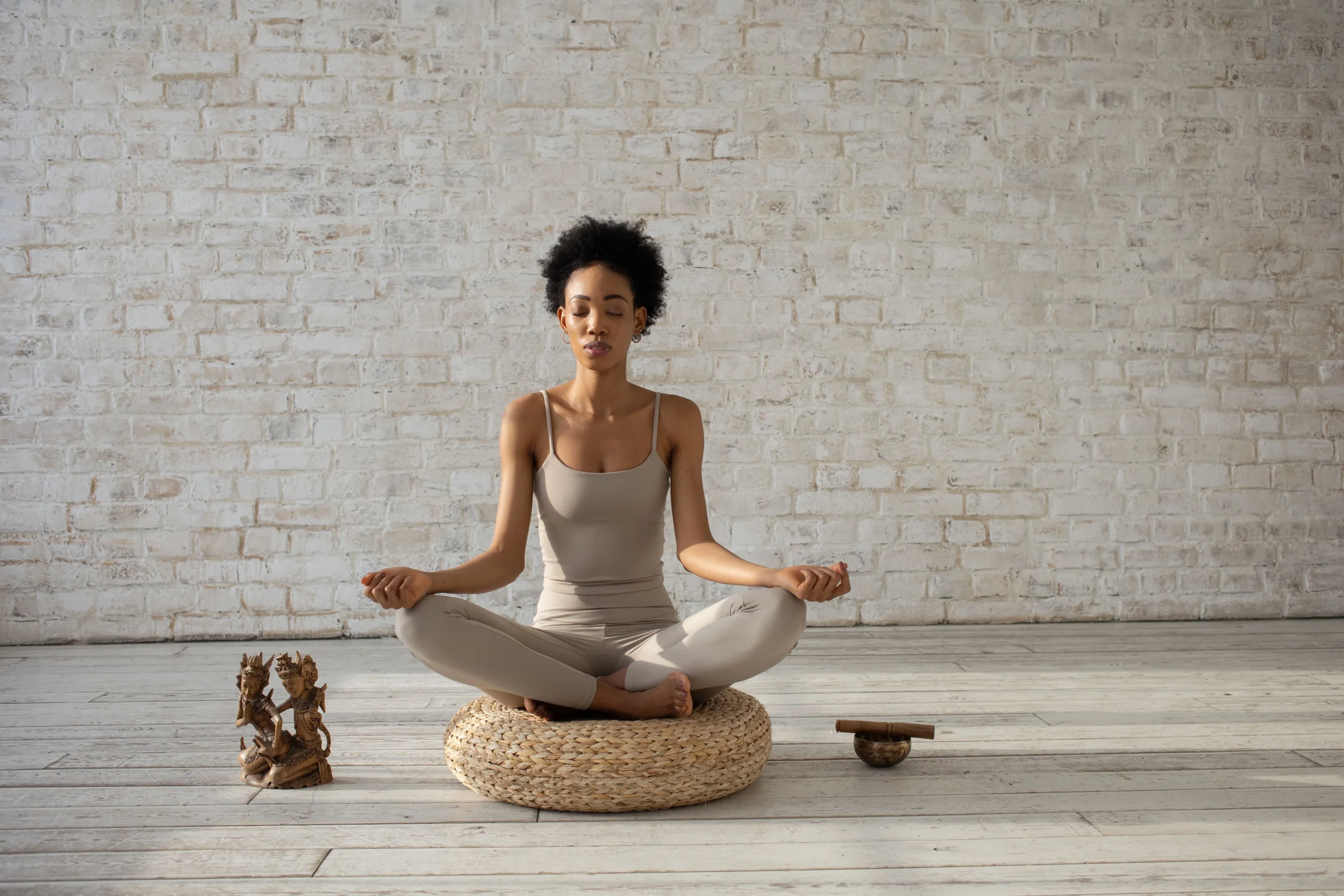
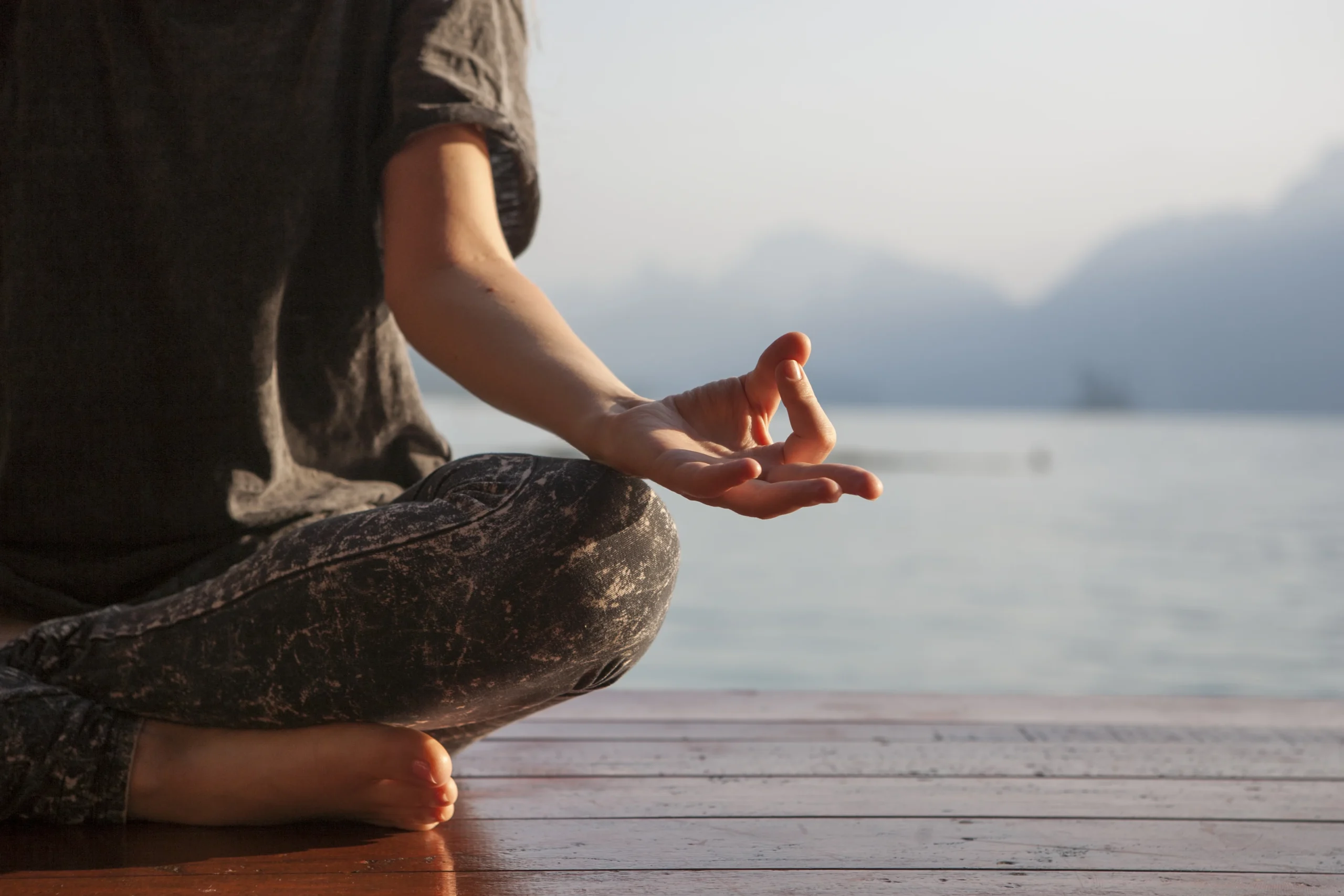
Sit upright, but relaxed. It doesn’t matter whether you sit on a chair or on the floor. Choose a posture in which you feel comfortable and can settle into yourself. Close your eyes or let your gaze rest softly on a point in front of you. Your body should be alert, but not tense.
Step 3: Set a timer
Set an alarm for 5 minutes. That way you won’t need to keep checking the time and can fully immerse yourself in the exercise.
Tip: use a gentle ringtone.
Step 4: Observe your breath
Now it’s best to turn your attention to your breath.
Notice, for example: how the air feels cooler at the tip of your nose as you breathe in
how your chest or belly gently rises and falls
how the breath feels warmer as you breathe out
You don’t need to change your breathing. Simply let the breath come and go and accompany it with your attention.
Step 5: Dealing with thoughts
Sooner or later, thoughts will come up. Perhaps plans, memories or judgements such as ‘This isn’t working’.
When you notice that your mind has wandered:
- briefly acknowledge the thought (‘Ah, a thought’)
- don’t judge it
- simply guide your attention back to your breath
This coming back is the real heart of meditation. Each time, you train your attention a little bit more.
Step 6: End the meditation
When the timer goes off:
- stay seated for a moment longer
- slowly open your eyes
- have a quick stretch or move around a little
Notice how you feel now – physically and mentally. It doesn’t have to feel ‘special’ to be effective.

Meditation isn’t just sitting
Not every form of meditation suits every person, and that’s a good thing, as we’re all individuals with different needs. Here are three alternatives to classic meditation.
Guided meditation
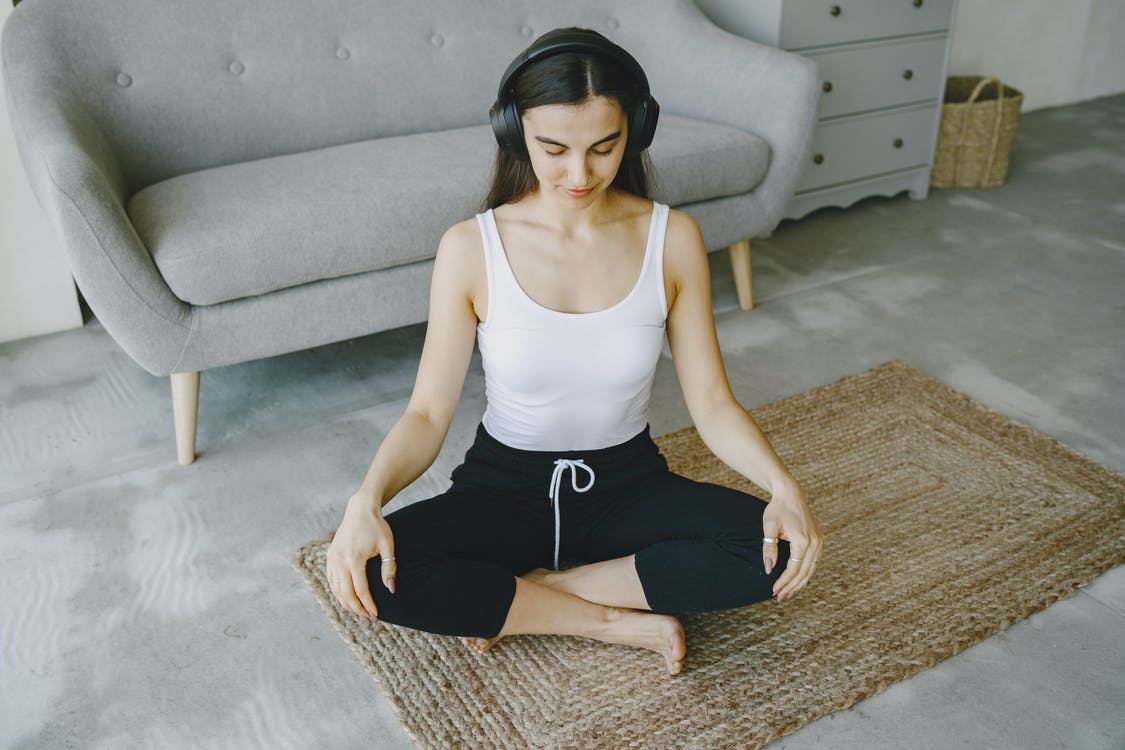
In a guided meditation, you listen to a voice (via an app, podcast or video) that leads you through the exercise.
This is particularly helpful if you feel unsure or tend to lose your way quickly on your own. Just 10 minutes is enough to get started.
Ideal if you find it hard to sit still.
- Walk slowly along a short path (park, flat, garden)
- Turn your attention to your feet
- Feel how your heel touches the ground and how your foot rolls forward
When your thoughts wander, keep returning to the sensation of walking.
A short breathing break in everyday life
A mini exercise for any moment of the day:
- 3–5 deep, conscious breaths
- lift your shoulders slightly as you breathe in
- consciously let them drop as you breathe out
Perfect before meetings, on the train or in bed in the evening.
How long, how often – and what’s realistic
If you want to learn to meditate, consistency is more important than perfection. Learning to meditate isn’t about getting through long sessions right from the start or doing everything ‘right’. What matters far more is that you don’t put yourself under pressure. There are no fixed rules about how often or how long you have to meditate.
Perhaps 5 minutes a day feels right – or 30 minutes three times a week. Allow yourself to try out what fits into your daily life and notice what feels good to you. Especially when you’re learning to meditate, regularity counts for more than the length of your meditation.
As a gentle guide, you can follow this:
Weeks 1–2: 5 minutes daily
Weeks 3–4: 8–10 minutes, if it feels good
It’s not about becoming ever calmer or ‘not thinking anything’. Progress often shows itself in much subtler ways: in a little more patience, greater distance from stress or a more conscious awareness in everyday life.
Tips to help you stick with it
- Choose a set time (e.g. in the morning after getting up)
- Create a small ritual (candle, blanket, favourite spot)
- Don’t expect to feel relaxed every day – restlessness is part of the process
- Don’t measure progress by the meditation itself, but by how you feel afterwards
To finish: your first step
If you like, try a 5-minute meditation straight after reading this. Set a timer, sit comfortably and simply observe your breath.
Afterwards, feel free to jot down two short sentences:
- How did I feel before the meditation?
- How do I feel now?
Meditation, and learning to meditate, doesn’t begin with perfection, but with the first conscious moment. And that moment can be right now.
Conclusion: learning to meditate begins with a single moment
Learning to meditate isn’t a goal you have to reach, but a path you walk step by step. It requires neither perfect conditions nor long sessions – just the willingness to regularly give yourself a few mindful minutes.
If you’d like to learn to meditate, remember: every moment in which you gently bring your attention back is already part of the practice. It’s not perfection that counts, but keeping at it.
Perhaps right now is exactly the right time to begin.
revised on 12 February 2026
by Leonie A. (psychology student)
Deepen your meditation practice with Mindfulife
Meditation can be more than a short break in your everyday life. If you would like to understand more deeply how meditation works, how to build a steady practice of your own and how to guide others mindfully, our meditation teacher training is the next step. There you will not only get to know meditation in theory, but also develop more confidence, clarity and trust in your own practice.
Would you like to find out more about the training first? In our weekly webinar you will get an insight and learn more about what your path to becoming a meditation teacher could look like.
For regular support in your everyday life, you can also use our online meditation studio and join guided meditations flexibly via Eversports.
We look forward to accompanying you on your journey.
You can find more mindfulness inspiration on our channels too
References
Fox, K. C. R., Dixon, M. L., Nijeboer, S., Girn, M., Floman, J. L., Lifshitz, M., Ellamil, M., Sedlmeier, P., & Christoff, K. (2016). Functional neuroanatomy of meditation: A review and meta-analysis of 78 functional neuroimaging investigations. Neuroscience & Biobehavioral Reviews, 65, 208–228. https://doi.org/10.1016/j.neubiorev.2016.03.021
Kabat-Zinn, J. (2013). Full catastrophe living: Using the wisdom of your body and mind to face stress, pain, and illness (Rev. ed.). Bantam Books.
Öffentliches Gesundheitsportal Österreichs. (2025, 11. April). Achtsamkeit. https://www.gesundheit.gv.at/leben/stress/achtsamkeit.html