How can you find your digital balance?

 · 5 min read

Our smartphone is always within reach – and often hard to put down again. But if you are permanently online, you quickly lose your sense of what a real break feels like. This article shows you how to regain your digital balance and, with small changes in everyday life, approach your screen time and media use more mindfully.
What does digital balance mean?
Digital balance describes a state in which devices such as smartphones, tablets or laptops support our lives – but do not dominate them. It is about consciously deciding when and for how long we are online – and when we deliberately stay offline. At a time when digital media and constant availability are part of everyday life, many people find it hard to set boundaries. Yet it is precisely these boundaries that are crucial for avoiding mental overload, sensory overload and a sense of inner restlessness.
So digital balance is not about giving everything up completely, but about shaping your own media consumption mindfully – in harmony with your own needs. It helps us to reconnect more with ourselves, with our surroundings and with the present moment.
How can you tell that you have lost your balance?

Sometimes we don’t even notice how strongly the digital world has us in its grip – until our body or mind starts sending the first signals. Digital overload rarely appears suddenly; it often creeps up on us: through inner restlessness, difficulty concentrating or the feeling of constantly having to be online. If your eyes automatically wander to your smartphone – while eating, in conversation or just before falling asleep – this can be a sign that your balance is off.
Experts now even speak of ‘smartphone addiction’ – a feeling that arises when our phone shapes our thoughts, feelings and actions more than we would like. If you recognise yourself in this, you may be asking: ‘How can I tackle a possible smartphone addiction?’
Typical warning signs can include:
- Irritability or nervousness when your phone isn’t within reach
- Difficulty falling asleep or staying asleep
- A flood of thoughts and constant rumination, often triggered by social media
- FOMO (fear of missing out) – the feeling that you are constantly missing something
- Multitasking across several devices without really being present
- Hardly any real breaks, because even ‘free time’ is filled with scrolling
Everyday tips for more digital mindfulness
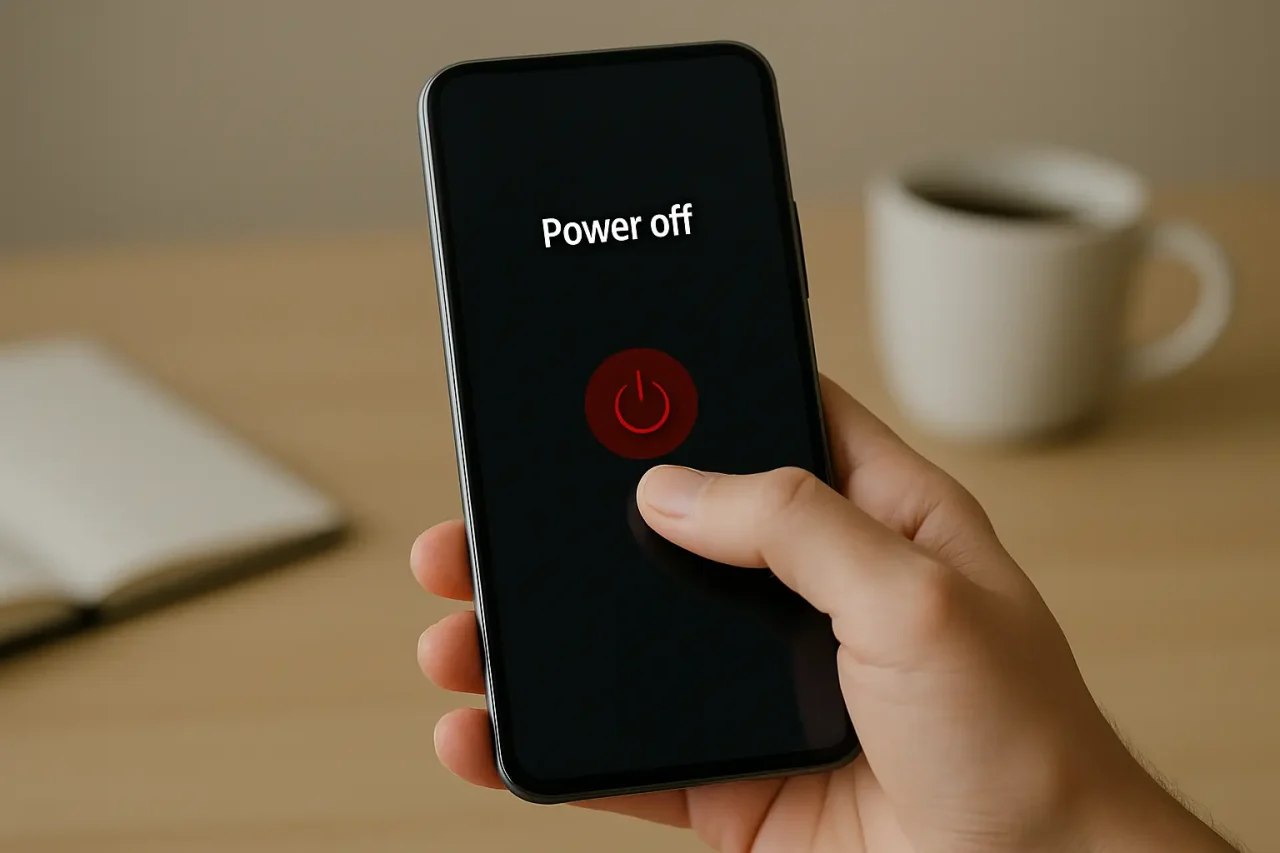
Digital balance doesn’t come from strict bans, but from small, conscious changes in everyday life. It is about questioning and steering your own media use – rather than simply reacting all the time. Here you will find simple but effective ideas that can support you:
- Start your day without your smartphone: Resist the urge to reach for your phone as soon as you wake up. To make this easier, an old-fashioned alarm clock helps – that way your phone stays off-limits first thing in the morning.
- Reduce notifications: Push notifications keep pulling us out of the moment. Think about which apps really need your attention and mute the rest.
- Schedule fixed offline times: Not just for your smartphone, but also for your laptop, tablet or streaming services, e.g. during meals or before going to sleep. You don’t always have to be available – and that’s okay. Flight mode can also be a simple trick for taking deliberate breaks from constant availability.
- Reduce your screen time: Many devices now show you how long you spend online each day. The figure is often surprising, but it is also a good starting point for bringing more digital balance into your everyday life.
Digital detox – but how?
Sometimes small changes in everyday life are enough to feel more calm and present. But if you notice that the everyday tips aren’t enough – because you reach for your smartphone or tablet almost automatically, or the merry-go-round of thoughts just won’t stop – a conscious digital time-out can also be worthwhile.
The term digital detox describes exactly that: a period in which you deliberately go without digital media – whether for a few hours, a day or even longer. What matters is not the abstinence itself, but the experience of genuine rest and inner distance. A detox is not a must but an option – and you can shape it entirely in your own way.
If you’d like to dive deeper into the topic, you’ll find lots of useful information in our blog article on digital detox.
How meditation can help with digital overstimulation
When new messages keep arriving, social media feeds never end and your mind hardly ever settles, we speak of digital overstimulation. Our nervous system is then on permanent alert – even in moments that are actually calm. A simple yet effective way to counteract this is meditation.
Meditation helps to turn your focus inwards again. It trains our attention, strengthens our awareness of thoughts and impulses – and gives you a deliberate break from constantly reacting and consuming. Silent mindfulness meditations are particularly helpful, but guided versions can also have a noticeable effect.
Conclusion
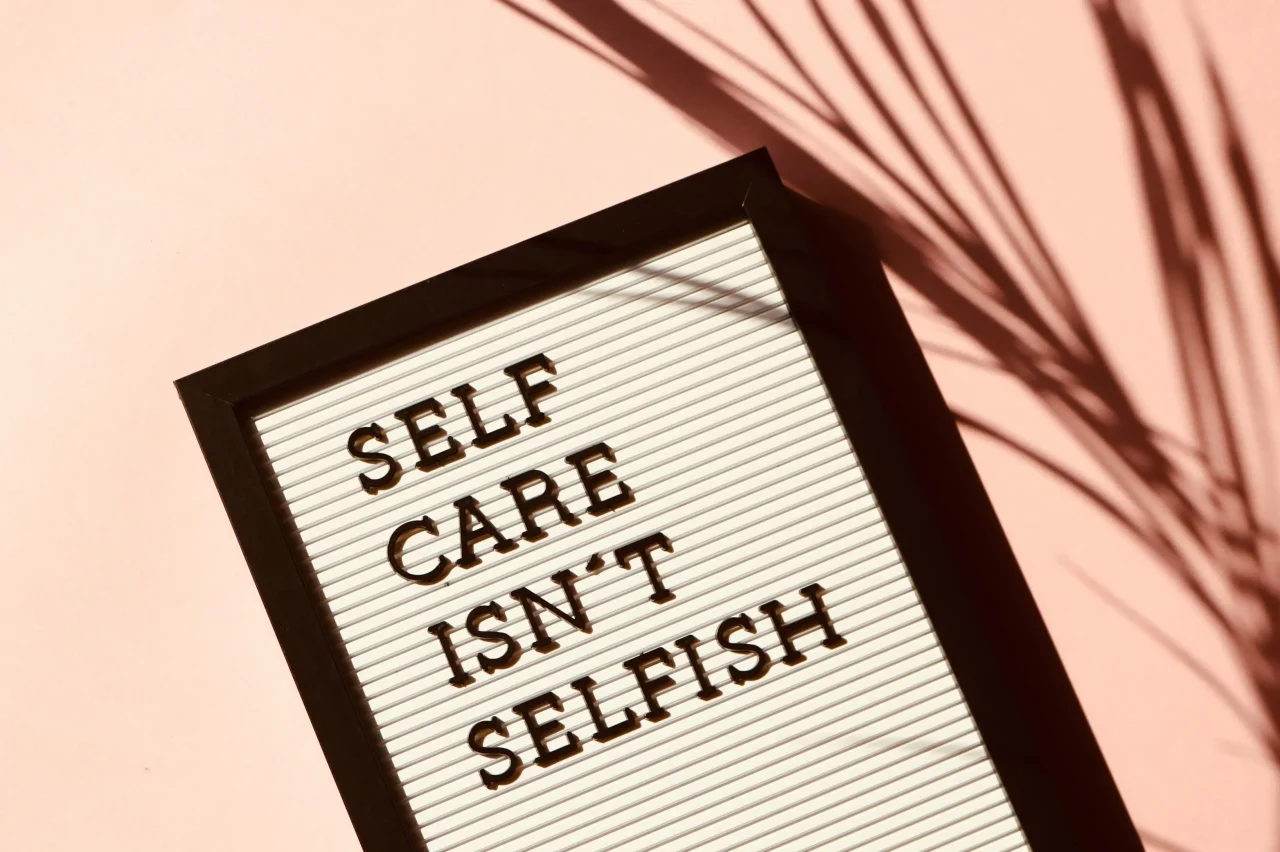
Digital balance doesn’t mean living permanently offline – it means moving through your digital everyday life in a more present, self-determined and mindful way. Often it is the small changes that make a noticeable difference: a few minutes without your phone, a conscious break, a courageous ‘no’ to being constantly available.
You don’t have to change everything at once. Start with whatever comes easily to you and observe how your digital balance gradually levels out again.
Do you sometimes feel that your smartphone and other devices are becoming too much?
Then feel free to tell us about it in the comments or on Instagram. Perhaps now is exactly the right moment for new habits.
Questions for reflection
These questions can help you take a mindful look at how you use digital media:
- How often do you reach for your smartphone each day – and why, actually?
- When were you last offline for more than an hour – and how did that feel?
- After scrolling, do you tend to feel relaxed or inwardly unsettled?
- Which apps eat up most of your time – and which ones give you real added value?
Silke K. (B.Sc. Psychology)
Deepen your meditation practice with Mindfulife
Meditation can be more than a short break in your everyday life. If you would like to understand more deeply how meditation works, how to build a steady practice of your own and how to guide others mindfully, our meditation teacher training is the next step. There you will not only get to know meditation in theory, but also develop more confidence, clarity and trust in your own practice.
Would you like to find out more about the training first? In our weekly webinar you will get an insight and learn more about what your path to becoming a meditation teacher could look like.
For regular support in your everyday life, you can also use our online meditation studio and join guided meditations flexibly via Eversports.
We look forward to accompanying you on your journey.
You can find more mindfulness inspiration on our channels too
References
Abi-Jaoude, E., Naylor, K. T., & Pignatiello, A. (2020). Smartphones, social media use and youth mental health. Canadian Medical Association Journal, 192(6), E136–E141. https://doi.org/10.1503/cmaj.190434.
Beyari, H. (2023). The relationship between social media and the increase in mental health problems. International Journal of Environmental Research and Public Health, 20(3), 2383. https://doi.org/10.3390/ijerph20032383.
Hunt, M. G., Marx, R., Lipson, C., & Young, J. (2018). No more FOMO: Limiting social media decreases loneliness and depression. Journal of Social and Clinical Psychology, 37(10), 751–768. https://doi.org/10.1521/jscp.2018.37.10.751.
Schmuck, D. (2020). Does digital detox work? Exploring the role of digital detox applications for problematic smartphone use and well-being of young adults using multigroup analysis. Cyberpsychology, Behavior, and Social Networking, 23(8), 526–532. https://doi.org/10.1089/cyber.2019.0578.
Spytska, L. (2025). Digital technology and mental health: Unveiling the psychological impact of modern digital habits. Jurnal Ilmiah Ilmu Terapan Universitas Jambi, 9(1), 348–365. https://doi.org/10.22437/jiituj.v9i1.38238.
Tang, Y.-Y., Hölzel, B. K., & Posner, M. I. (2015). The neuroscience of mindfulness meditation. Nature Reviews Neuroscience, 16(4), 213–225. https://doi.org/10.1038/nrn3916.