How can you set boundaries? The path to inner balance
Why it is so important to say "no" more often. Find out how you can set personal boundaries for greater self-esteem and wellbeing.

 · 6 min read
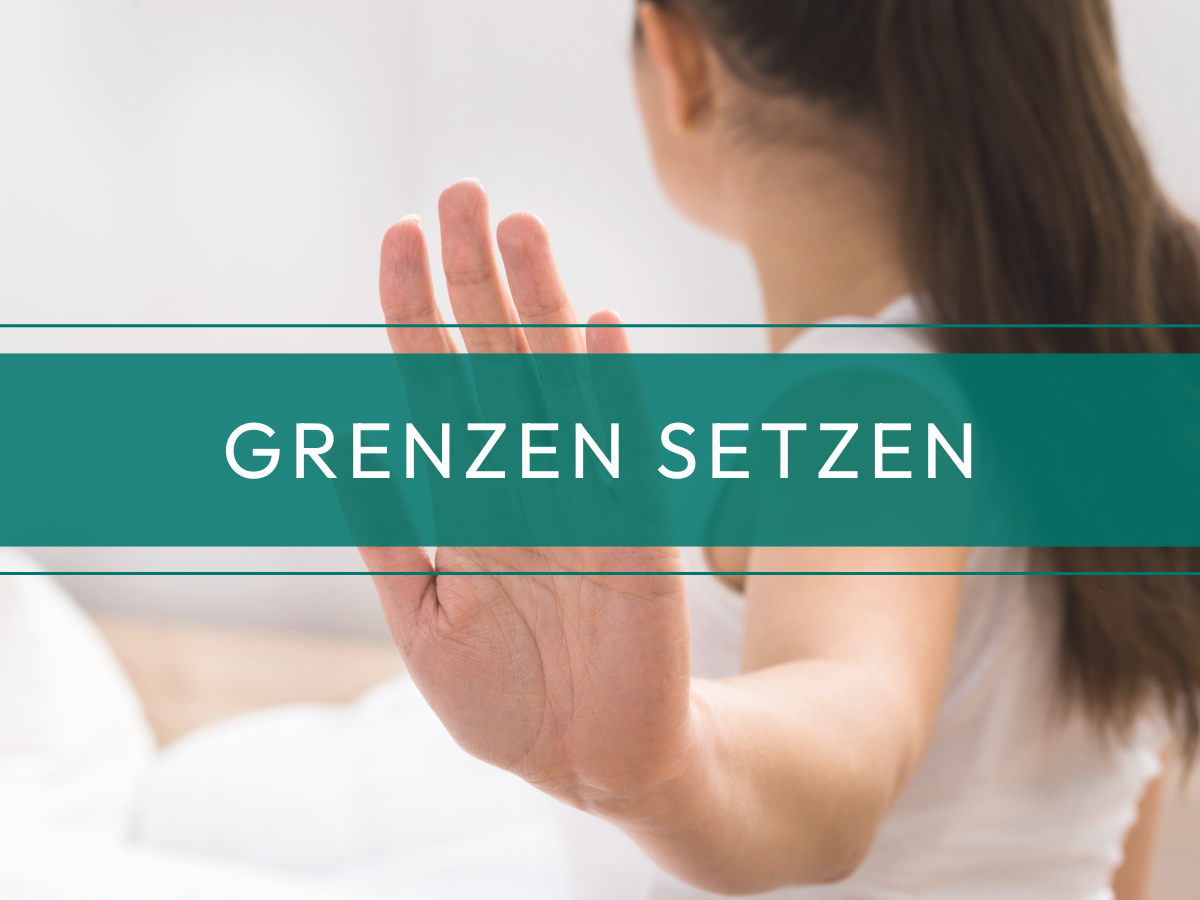
In our fast-paced world, where flexibility and constant availability are expected, many people forget the art of drawing clear personal and professional boundaries. Yet this is precisely where one of the key secrets to a harmonious and fulfilling life lies. In this article, find out how mindfulness can help you not only find inner calm, but also set clear boundaries.
Why are personal boundaries important?
Setting boundaries is essential for your wellbeing. Boundaries help you protect your energy and set clear expectations, which leads to respectful and understanding relationships. Without these defined limits, life can quickly become overwhelming, leading to stress, burnout and a sense of being overstretched. Personal boundaries enable you to manage your time and resources efficiently, set priorities and focus on what really matters to you. They are not only a protective mechanism, but also an expression of your self-respect and your identity. By setting and maintaining boundaries, you signal to others what you are prepared to accept, and so foster an environment in which autonomy and mutual respect can flourish.
What happens when boundaries are missing?
The consequences of unclear boundaries are many:
- Emotional exhaustion
Without clear boundaries, there is an acute risk of burnout, because you are constantly overstretching your own capacities. This ongoing overload can lead not only to exhaustion, but also to a state in which you feel alienated from your tasks, your relationships and ultimately from your own life. Emotional exhaustion often means that you no longer have the strength to engage emotionally, which can significantly affect both your private and your working life. - Loss of self-worth
If you always say “yes” out of a desire to please others or out of fear of rejection, this can weaken your self-esteem. This attitude leads you to neglect your own needs and wishes, which over time reinforces the feeling that your own preferences and your wellbeing are worth less. Low self-esteem can in turn lead to further compromises that erode your boundaries even more. - Conflict
Unclear or uncommunicated boundaries often create a minefield of misunderstandings and unmet expectations. These misunderstandings can lead to conflict in both personal and professional relationships. When other people’s expectations are not clear, or when you do not make your own boundaries clear, there is room for disappointment and tension. These conflicts can undermine trust and put a lasting strain on relationships, creating additional stress and emotional turmoil.

Signs of a lack of boundaries
- Feeling overwhelmed
A common sign that you have not set clear boundaries is a constant feeling of being overwhelmed. You take on more tasks than you can handle and often find yourself in situations where you have to sacrifice yourself just to meet other people’s expectations. This feeling of being overwhelmed can spread to different areas of your life and lead you to neglect even basic self-care. - Inability to say “no”
If you notice that you say “yes” even when you mean “no” inside, that is a clear sign of a lack of boundaries. This inability can lead you to become entangled in unwanted commitments or to invest in activities that suit neither your time nor your interests. Avoiding the word “no” out of fear of conflict or rejection is a clear indication that your boundaries are not being respected or are not clearly defined. - Chronic unease
A persistent feeling of unease or dissatisfaction in social or work situations can also be an indicator. This unease often arises from the awareness or the sense that you are in a position that goes against your inner convictions or needs. Perhaps you notice that you feel uncomfortable in conversations or meetings because you are not honestly voicing your opinion, or because you fear that your true needs and wishes will not be acknowledged or respected. - Feeling taken advantage of
If you regularly feel that you are being taken advantage of, this is a strong signal that your boundaries are being ignored or have never been clearly communicated. This can show up in different contexts, whether among friends, in the family or at work. You may find yourself in roles or situations that place unfair burdens on you, because others know or sense that you will not clearly say “stop”.

How to set healthy boundaries
- Self-reflection and awareness
The process of setting boundaries effectively begins with deep self-reflection. It is crucial to take time to reflect on what really matters to you, what values you stand for and where your emotional and physical limits lie. Daily mindfulness practices or meditation can help you gain this inner clarity. It is not just about knowing what you do not want, but also what you actively want to welcome into your life. This self-knowledge is the foundation for setting boundaries that truly align with your inner self, rather than merely being reactions to external demands. - Clarity in communication
Once you are aware of your own boundaries, the next step is to communicate them clearly and firmly. Effective communication means expressing your needs and boundaries respectfully but unambiguously. One example might be: “I really value our collaboration, but for my wellbeing and the quality of my work, I will no longer reply to emails after 6 pm.” It is important to do this without justifying yourself or apologising excessively, in order to underline how seriously you mean your boundaries. - Consistency and enforceability
Setting boundaries is one thing; keeping them is another. Consistency is key here. It can be challenging, especially when others are used to your old availability or when there is social pressure, but it is essential to stick to your boundaries. This might mean explaining your boundaries repeatedly and patiently, or even pointing out consequences when they are crossed. Enforceability also means allowing yourself to adjust these boundaries when your circumstances change or when you realise they are too strict or too loose. - Support and self-care
Sometimes you need support, whether from friends, family or professional guidance, to help you set and maintain your boundaries. Self-care is also an essential part of the process. Setting boundaries is not selfish; it is an act of self-love and respect. Self-care can mean taking time for yourself, pursuing hobbies that relax you, or saying “no” when something draws too heavily on your energy reserves. - Ongoing review and adjustment
Life is dynamic, and so your boundaries should be too. Regularly reflecting on how well your boundaries are working in your life is necessary. You may find that you have set too many restrictions in one area while needing more freedom in another. This constant fine-tuning helps you adapt to new phases of life, career changes or personal development without losing your balance.

Final thoughts
Setting boundaries is not just a way of drawing lines, but a form of self-respect and an essential part of self-care. It is an ongoing process that requires mindfulness, courage and sometimes difficult conversations. But the reward is a life that is more in tune with your true needs and values. Boundaries allow you to create a space in which you can thrive, in which your energy and time are respected, and in which you can meet others authentically.
In a society that often glorifies “more” and “faster”, being able to set clear boundaries is a revolutionary act. It teaches not only you, but also the people around you, what it means to interact in a respectful and mutually supportive way. This practice fosters deeper connections, because it is based on honesty and clarity. It allows you to bring your full presence and commitment to where it really counts, and gives you the freedom to withdraw when necessary, without feelings of guilt or fear of loss.
Ultimately, setting and maintaining boundaries contributes to a more fulfilling, balanced life by enabling you to use and protect your resources – time, energy, emotions – wisely. It is a lifelong learning process that leads you not only to a better understanding of yourself, but also to a more harmonious interaction with the world around you.
Meditate online with the Mindfulife online meditation studio
If you would like to try meditation for yourself, we warmly welcome you to our online meditation studio on Eversports. From the comfort of your own home, you can join one of our many expert-led live meditation sessions or audio meditations.
We look forward to seeing you!
References
Hölzel, B.K., et al. (2011). "Mindfulness practice leads to increases in regional brain gray matter density." Psychiatry Research: Neuroimaging, 191(1), 36-43. - Forschung über die positiven Auswirkungen von Achtsamkeit auf die Gehirnstruktur.
Kabat-Zinn, J. (1990). Full Catastrophe Living: Using the Wisdom of Your Body and Mind to Face Stress, Pain, and Illness. - Ein fundamentales Werk über die Anwendung von Achtsamkeit im Alltag.
Creswell, J.D., et al. (2007). "Neural correlates of dispositional mindfulness during affect labeling." Psychosomatic Medicine, 69(6), 560-565. - Untersuchung der Nervenbahnen, die mit Achtsamkeit verbunden sind.
Michalak, J., et al. (2020). "Mindfulness in psychotherapy: A critical review." Clinical Psychology Review, 77. - Eine kritische Analyse der Rolle von Achtsamkeit in der Psychotherapie.