The Power of Good Deeds: Patrick Legun Shows How Social Media Can Inspire People to Help

 · 5 min read

A family is given the chance of freedom, and a camera follows the process. ‘Do good and don’t talk about it,’ as the saying goes. But what if it is precisely the talking about it that moves other people to help, too?
Patrick Legun, known on social media as ‘humanvoll’, wants his videos to reach people and encourage them to be more willing to help.
Who is Patrick Legun?
A teacher from Aachen, Patrick Legun inspires his community on social media under the pseudonym ‘humanvoll’. As of November 2026, Patrick Legun has around 127,000 subscribers on YouTube and almost 400,000 followers on Instagram. He hands out food and Christmas presents to people in need and brightens other people’s days with small gestures.
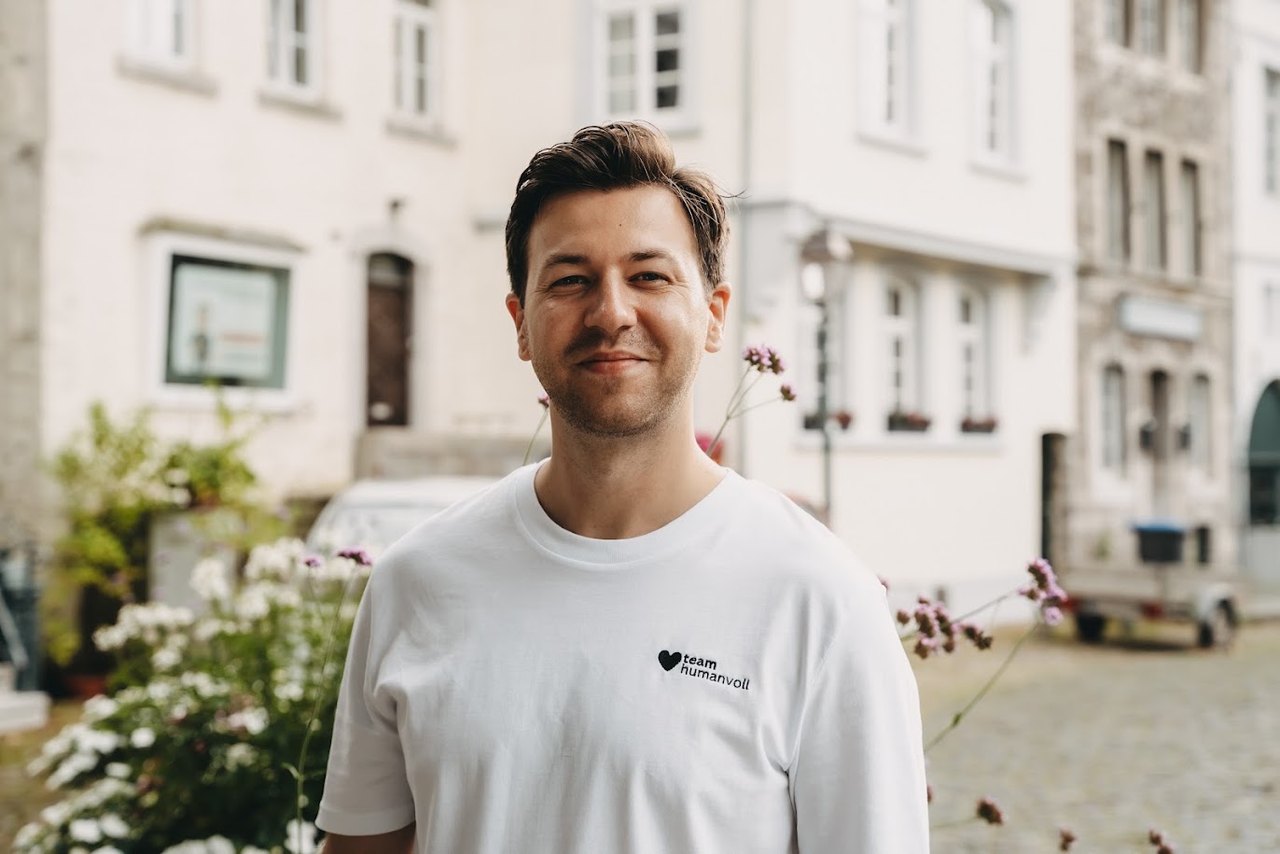
In Pakistan, he works with partner organisations to free families from debt bondage in brick kilns. His commitment began during a period of depression. He sought contact with other people and noticed a change: ‘The more I focused on others, the less I focused on myself, and looking back I realised that I was feeling better.’ With his videos, he wants to reach people and encourage them to help, too.
Why do we watch when others help on camera?
Videos of acts of help can move us, even though we don’t know the people involved at all. We watch someone receive support and experience the encounter through the camera.
Psychological research offers one possible explanation for this emotional effect: watching others do a good deed can trigger a feeling known as ‘moral elevation’ or simply ‘elevation’. This describes the feeling of being moved and inspired by another person’s willingness to help.
Researchers link this experience with the desire to do something good oneself (Büsgen, 2011). Simone Schnall and her research team investigated whether this can also lead to concrete action. In one experiment, participants who had watched a moving film about a good deed spent longer helping with a task than participants who had watched a neutral or funny film (Schnall et al., 2010). Visible helpfulness can therefore have an effect beyond the filmed moment. For social media, this opens up an opportunity: a video can reach people who were not present at the actual act of help.
Publishing a good deed means making it visible beyond the immediate moment. A video can reach people who were not there for the encounter itself and show them what helping can look like in everyday life.

This is exactly what motivates Patrick Legun to share his campaigns. Yet publishing them did not come easily to him at first: in the podcast, he explains that he preferred his friends and family not to see his videos. That is why he used a separate account rather than his personal profile. Seeking attention for his work initially took some courage.
Making your help visible can give others an idea of how they themselves can contribute. A study on online donations also shows that people take their cue from the behaviour of others: donation amounts that were already visible influenced how much money subsequent donors gave (Smith et al., 2013). Talking about good deeds can therefore be an opportunity to spark further support.
Where does attention end and exposure begin?
In Pakistan, Patrick Legun works with partner organisations to support families living in debt bondage in brick kilns. Because of unpaid debts, some of them have to work there for generations. ‘Humanvoll’ works to free families from this situation and then to support them as they build an independent life.
Legun documents his encounters on the ground in videos. In the podcast, he explains that he deliberately shows the children’s faces too. Through their facial expressions and gestures, he wants to make their reality easier to understand, to touch people and to spark further help. At the same time, this raises the question of how much publicity a personal moment can bear.
Especially where children are concerned, privacy and protection deserve particular attention. A moving portrayal should therefore take into account the consequences publication may have for the people shown. Their dignity should count just as much as the attention given to their story.
What if one video achieves more than a thousand good intentions?
Whether a video really makes a difference shows in what happens after people have watched it. Perhaps someone supports a charity project, gets involved locally or takes time for a person who would otherwise be overlooked. Not every encounter can be filmed and not every effect can be measured in numbers. But a visible example can point to a possibility that someone had never thought of before.
Patrick Legun wants his videos to provide exactly this kind of nudge. His story shows how a personal desire for connection can grow into a commitment that reaches other people. And to make a start yourself, you need neither a large following nor a trip to Pakistan. Listening, offering support or getting involved in a local project are steps that can begin in your own surroundings.
If you would like to learn more about Patrick’s motivations and experiences, you will find personal insights into his journey in his conversation with Tonka and Phil. His story invites us to reflect on the impact our own willingness to help could have if it also encourages others to act.
So perhaps the saying shouldn’t be ‘Do good and don’t talk about it’, but rather ‘Do good and definitely talk about it.’
Would you like to find out more about Patrick’s story and his campaigns? Here is the podcast with Patrick Legun.
Deepen your meditation practice with Mindfulife
Meditation can be more than a short break in your day. If you would like to understand more deeply how meditation works, how to build a stable practice of your own and how to guide others mindfully, our meditation teacher training is the next step. There, you won’t just learn about meditation in theory – you will develop more confidence, clarity and trust in your own practice.
Would you like to get to know the training better first? In our weekly webinar you will get an insight and learn more about what your path to becoming a meditation teacher could look like.
For regular support in everyday life, you can also use our online meditation studio and join guided meditations flexibly via Eversports.
We look forward to accompanying you on your journey.