Coping with grief: how can meditation really help?

 · 5 min read

Life is full of ups and downs. Grief is as much a part of being human as joy, yet not everyone experiences it in the same way. Sadness can be fleeting, whereas grief often lasts longer and can affect us deeply, both physically and emotionally. In such moments, many people look for ways to deal with their loss and find their inner footing again. One proven method is meditation: it can help you become consciously aware of your own feelings, reduce stress and support the grieving process. In this article, you will find out how meditation can specifically help you cope with grief and which strategies can accompany you along the way.
Sadness vs. grief – what is the difference?
The terms “sad” and “grief” are often used interchangeably, yet they have different meanings. Sadness is first and foremost an emotion – a temporary state that can be triggered by stress, disappointment or loss. It may last only a few seconds, minutes, hours or a few days, and is often replaced by other feelings.
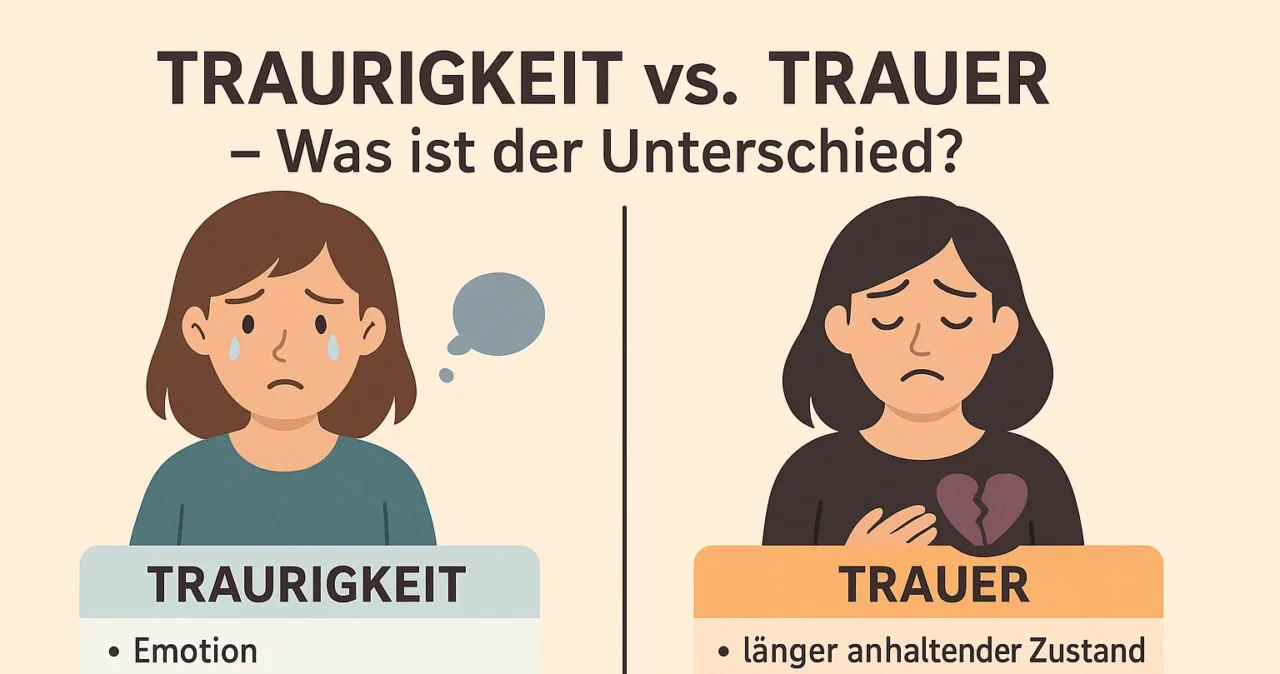
Grief, on the other hand, is a longer-lasting state that has a greater impact on body and mind. It usually arises from life-changing experiences such as the death of a loved one or a pet. How long it takes to cope with grief varies from person to person: for some it lasts only a few days, for others weeks or months. Because the loss is usually irreversible, the grieving process takes time accordingly.
What happens in our brain when we grieve?
When we grieve, numerous processes take place in the brain that affect both body and mind. The brainstem, the cerebellum and the limbic system are particularly affected. While the brainstem and cerebellum control basic functions such as sleep, hunger and our daily rhythm, the limbic system is responsible for emotions and memory. This is why grieving people may find it hard to keep up everyday routines, eat meals or get enough sleep.

Grief also affects the neurotransmitters serotonin and dopamine, which are responsible for motivation and wellbeing. Studies show that a deficiency of these “happy hormones” is common during acute phases of grief and correlates with depressive symptoms. A study by Bonanno (2004) also showed that around 15–25% of bereaved people have long-term difficulties processing their loss emotionally.
Grief can also have measurable physical effects: sleep disturbances, loss of appetite or raised levels of stress hormones such as cortisol occur in up to 30% of bereaved people (Stroebe, Schut & Boerner, 2017). These physiological and psychological reactions make it clear why coping with grief requires time, mindfulness and, where necessary, support.
What is the right way to deal with grief?
There is no universal way to deal with grief – coping with grief is highly individual. Some people withdraw and want to spend time alone, while others find comfort precisely in being close to friends and family. Exercise in the fresh air, walks or gentle physical activity can be just as helpful, while others prefer to stay at home for a while. Both strategies are perfectly fine.
What matters is listening to your own needs and consciously acknowledging your grief. Suppressing it can lead to greater emotional strain in the long run and, in the worst case, trigger anxiety or panic disorders. Don’t let anyone tell you how you should grieve. You can accept advice, but you decide for yourself what is right for you.
Professional help can be valuable during difficult phases. Doctors, psychologists and psychotherapists specialise in supporting people as they cope with grief. Studies show that around 15–25% of bereaved people may experience longer-lasting depressive symptoms if they do not receive support (Bonanno, 2004). Seeking help early can reduce this risk and make the grieving process easier.

In most cases, sadness does not disappear completely – it is a part of life. After working through their grief, many people learn to live with it. Over time it becomes less intense, even if it never fully goes away. Both happiness and grief are part of life, and it is important to acknowledge both.
How can meditation specifically help you cope with grief?
Meditation is a proven method for supporting you as you cope with grief. It helps you direct your attention to your own body and your breathing, consciously experience the present moment and let negative thoughts temporarily fade into the background. Studies show that mindfulness-based meditation reduces stress, stabilises emotional balance and can ease depressive symptoms (Shapiro et al., 2006; Garland et al., 2015).
If you are meditating for the first time, don’t expect immediate changes in your awareness or how your body feels. Meditation is a process – just like coping with grief, it takes time, patience and regular practice.
Vipassana meditation can be particularly helpful. It fosters calm and mindfulness by consciously observing thoughts and feelings without judging or suppressing them. Attention is then guided back to the breath, creating a calm, centred state.
There are many types of meditation – not just sitting meditation. Walking meditation, for example, can be practised on walks in the fresh air and combines movement with mindfulness. Guided meditations, whether online or in in-person classes, also offer structure and can ease loneliness while you cope with grief.

Research shows that regular meditation has positive effects on emotional wellbeing and supports bereaved people in processing their feelings and building resilience (Lenze et al., 2014; Watts, 2023).
Conclusion: how can meditation help you cope with grief?
Grief is a natural part of life, and everyone experiences it in their own way. There is no “right” way to deal with grief – what matters is that you listen to your own needs, consciously acknowledge your grief and give yourself the time you need.
Meditation can specifically support you in coping with grief: it helps you observe emotions, reduce stress and find inner calm. Whether sitting, walking meditation or guided meditation – regular practice can help you process negative thoughts and build new resilience. Studies show that mindfulness exercises can strengthen emotional wellbeing and reduce depressive symptoms in the long term (Shapiro et al., 2006; Garland et al., 2015; Lenze et al., 2014).
Grief will never disappear completely, but with the right support, mindfulness and, where necessary, professional help, you can learn to live with it. Meditation is a valuable tool that can help you, step by step, to regain your inner footing and balance.
Mindfulife – Team
edited by Katharina R. (psychology student)
Deepen your meditation practice with Mindfulife
Meditation can be more than a short break in your everyday life. If you would like to understand more deeply how meditation works, how to build a steady practice of your own and how to guide others mindfully, our meditation teacher training is the next step. There you will not only get to know meditation in theory, but also develop more confidence, clarity and trust in your own practice.
Would you like to find out more about the training first? In our weekly webinar you will get an insight and learn more about what your path to becoming a meditation teacher could look like.
For regular support in your everyday life, you can also use our online meditation studio and join guided meditations flexibly via Eversports.
We look forward to accompanying you on your journey.
You can find more mindfulness inspiration on our channels too
References
Alp, N. (2017, 2. Februar). Aus der Gehirnforschung: Mit der Trauer leben. Zeit zu leben. https://zeitzuleben.de/gehirnforschung-trauer/
Bonanno, G. A. (2004). Loss, trauma, and human resilience: Have we underestimated the human capacity to thrive after extremely aversive events? American Psychologist, 59(1), 20–28. https://doi.org/10.1037/0003-066X.59.1.20
Garland, E. L., Geschwind, N., Peeters, F., & Wichers, M. (2015). Mindfulness training promotes upward spirals of positive affect and cognition: Multilevel and autoregressive latent trajectory modeling analyses. Frontiers in Psychology, 6, 15. https://doi.org/10.3389/fpsyg.2015.00015
Ich will meditieren! (2025, 1. Juli). Zeiten der Trauer: Meditation bei Traurigkeit. https://ich-will-meditieren.de/herausforderungen/trauer/
Lenze, E. J., Hickman, S., Hershey, T., Wendleton, L., Ly, K., Dixon, D., Doré, P., & Wetherell, J. L. (2014). Mindfulness-based stress reduction for older adults with worry symptoms and co-occurring cognitive dysfunction. International Journal of Geriatric Psychiatry, 29(10), 991–1000. https://doi.org/10.1002/gps.4086
Niebler, T. (2025, 1. Juli). Traurigkeit & Trauer (Philosophie) – Bedeutung + Unterschiede. Die Inkognito-Philosophin. https://www.die-inkognito-philosophin.de/blog/traurigkeit-trauer
Pfizer. (2023). So wirkt sich Trauer auf Körper und Psyche aus. https://www.pfizer.at/get-science/so-wirkt-sich-trauer-auf-koerper-und-psyche-aus/
Shapiro, S. L., Astin, J. A., Bishop, S. R., & Cordova, M. (2006). Mindfulness-based stress reduction for health care professionals: Results from a randomized trial. International Journal of Stress Management, 12(2), 164–176. https://doi.org/10.1037/1072-5245.12.2.164
Stroebe, M., Schut, H., & Boerner, K. (2017). Cautioning health-care professionals: Bereaved persons are misguided through the stages of grief. OMEGA – Journal of Death and Dying, 74(4), 455–473. https://doi.org/10.1177/0030222817691870
Watts, M. (2023). Geführte Meditation für Trauer und Traurigkeit. Siddhi Yoga. https://www.siddhiyoga.com/de/meditation/guided-meditation-for-grief