Face Yoga: What’s Behind the New Trend?

 · 5 min read
Perhaps you’ve already come across a term on social media that raises quite a few questions at first: face yoga.
While yoga for the body has long been part of our everyday lives, this new beauty trend promises a completely natural way to achieve a fresh, relaxed appearance – through yoga for the face.
Sounds almost too good to be true, doesn’t it? In this article, I’d first like to explain what face yoga actually is, before we look together at what it can really do – and what it can’t.
What exactly is behind the term?
Face yoga – also known as facial yoga – is a combination of targeted facial exercises, conscious breathing, massage and relaxation techniques. The aim is to activate and strengthen the facial muscles while releasing tension at the same time. Just like our body, our face also reacts to stress and tension – and this is where we see the effects particularly quickly. Perhaps you know the situation: the sun is dazzling, you unconsciously squint – and later you wonder why the line on your forehead suddenly looks deeper.
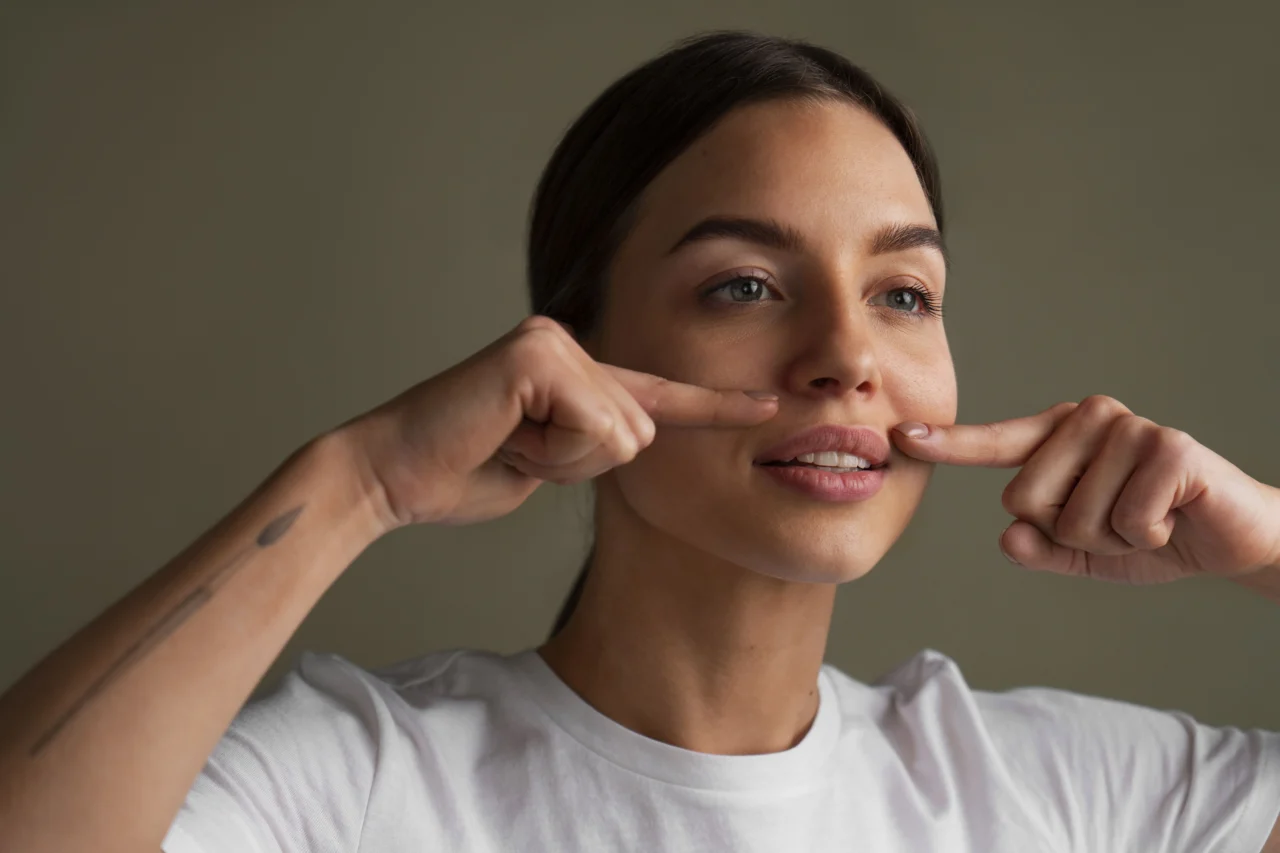
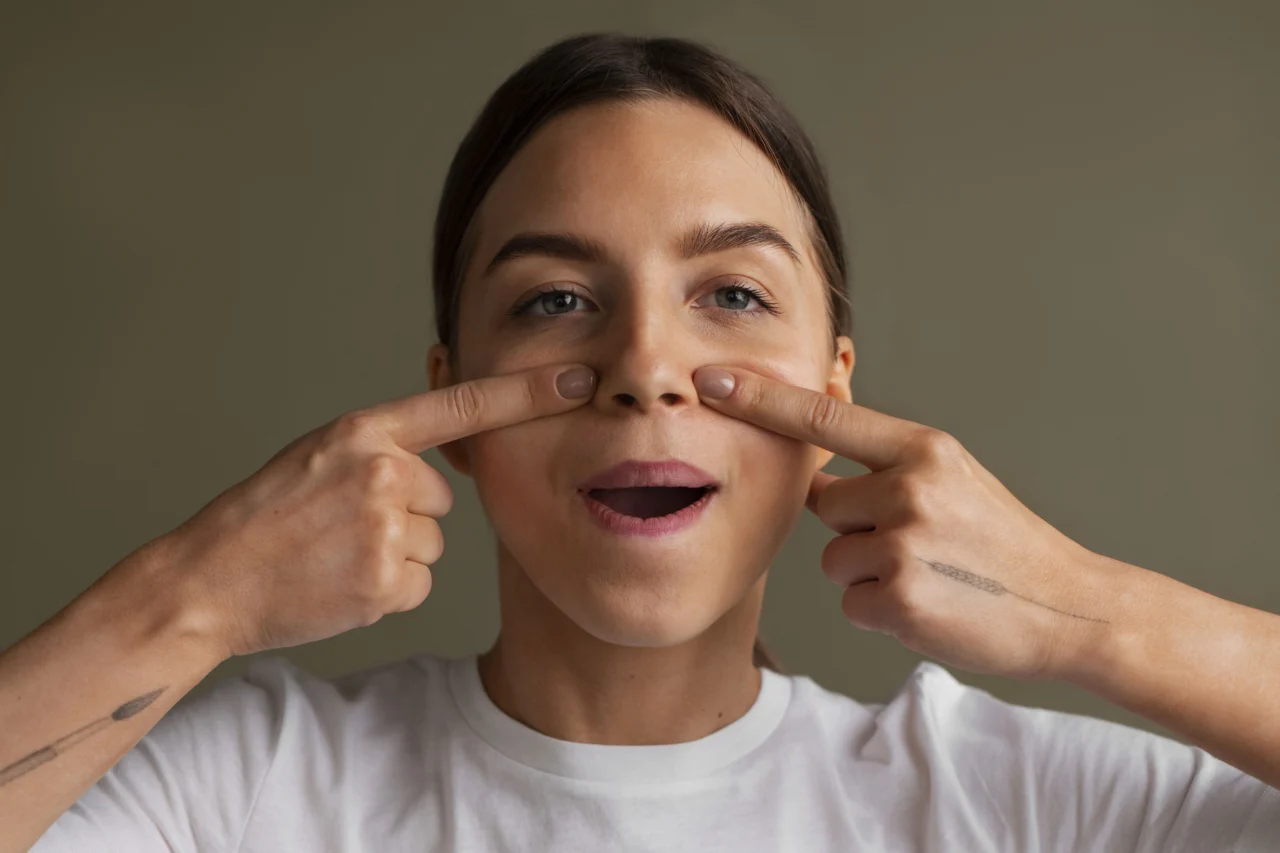
The idea is that exercises can help by boosting circulation, stimulating lymph flow and training muscles that are often neglected in everyday life. As we age, our face loses substance and develops wrinkles. The muscles built up through the exercises are supposed to replace the lost volume and thus tighten the face. The promised result is less tension in the jaw and neck and a better sense of your body and skin. Example exercises include saying the word “wow” very slowly and silently but with exaggerated movements, or sticking out your tongue and circling it five times in each direction.
But does it really work?
Put simply: there is no clear answer to this question. There are studies that suggest face yoga has a positive effect, and others that find no effect. Positive pilot data, such as the 2018 Northwestern study with 27 women aged 40 to 65, speak in favour of face yoga. After 20 weeks of daily practice, blinded raters judged the participants to be on average 2 to 3 years younger, thanks to fuller cheeks and fewer wrinkles on the upper lip. Japanese 3D CT studies add to this. Such results are consistent across several small studies, which a systematic review classifies as promising for further research.
The other side, however, points to sample sizes that are too small, as well as a lack of randomisation and control groups, which can lead to expectation effects. Objective measurement methods such as ultrasound or histology are often missing – instead, photos and self-assessments dominate. Such limitations make generalisations risky, as placebo effects or lifestyle changes (e.g. a better diet, exercise) could skew the results. Experts are therefore calling for larger, double-blind trials to rule out bias. As you may notice, it isn’t easy to judge how effective it really is.
One factor you should certainly also consider is the risks. Face yoga is non-invasive. This means no needle or anything similar has to break your skin, and it carries none of the Botox-like side effects such as paralysis or allergies, as it works purely mechanically. Thanks to its mindfulness components and breathing techniques, it reduces stress, which can lower cortisol levels. When done correctly, it strengthens muscles without overloading them, similar to the facial exercises actors do. In the long term, it can improve posture by involving the neck. However, doing it incorrectly can also increase the risk of injury. That’s something you shouldn’t overlook.
How can you integrate face yoga into your everyday life?
We live in a fast-paced society in which all kinds of knowledge are available at the click of a button. Special apps and YouTube make face yoga accessible to all age groups. No equipment needed, just a mirror and some time. The exercises can easily be built into your morning or evening routine, and the first results will motivate you to turn it into a firm routine. However, it’s important to stick with it, as it can take some time before you notice the first changes. So face yoga isn’t a quick trend to dip into now and then, but a practice that requires time, mindfulness and patience. If you’re willing to engage with it regularly, you can use it as a small break in your day – with possible positive effects that go far beyond appearance.
For all its positive aspects, though, it’s important to keep your expectations realistic. Face yoga is no miracle cure – and that’s exactly why it’s worth taking an honest look at what face yoga can actually do and what it can’t:
Face yoga can:
- release tension (jaw, forehead, neck)
- improve circulation & body awareness
- support your skincare & lifestyle
Face yoga cannot:
- make deep wrinkles “magically disappear”
- replace Botox or fillers
- stop genetic skin ageing
So what does this tell us?
At the end of this article, one thing above all is clear: face yoga is neither a miracle cure nor pure nonsense. The findings so far are mixed, and many of the promised effects cannot yet be clearly proven scientifically. At the same time, many people report positive experiences – more relaxation, better body awareness and a more mindful relationship with their own face. Both can exist side by side.
That’s precisely why it can be worth approaching face yoga with an open but also critical mind. As a gentle practice that you’re free to try out, without attributing more to it than it can deliver. Not every change is measurable, not every effect is visible – and it doesn’t have to be. Sometimes the value lies less in the outcome than in the process itself.
Face yoga can be a tool for letting go of tension and treating your own body more mindfully. But you may just as well find that it isn’t right for you – and that’s perfectly fine too. Self-care doesn’t show itself in the perfect routine, but in the freedom to be honest about your own needs.
And perhaps this attitude will also bring a slightly gentler view of your own face. Not everything that is visible needs to be smoothed out or optimised. Traces of our expressions and our lives are part of us and tell of experiences that have shaped us. Some lines tell of concentration, of laughter, of experiences lived. They are as much a part of us as our facial expressions and our expressiveness. Face yoga can help to release tension – but it should also leave room for what is already there.
Conclusion
Ultimately, it’s less about forcing something out of your face and more about listening to it. With mindfulness, with patience and with the awareness that beauty doesn’t lie in the promise of change, but in treating yourself with respect.
Leonie Marie Althaus (psychology student)
Deepen your meditation practice with Mindfulife
Meditation can be more than a short break in your everyday life. If you would like to understand more deeply how meditation works, how to build a steady practice of your own and how to guide others mindfully, our meditation teacher training is the next step. There you will not only get to know meditation in theory, but also develop more confidence, clarity and trust in your own practice.
Would you like to find out more about the training first? In our weekly webinar you will get an insight and learn more about what your path to becoming a meditation teacher could look like.
For regular support in your everyday life, you can also use our online meditation studio and join guided meditations flexibly via Eversports.
We look forward to accompanying you on your journey.
You can find more mindfulness inspiration on our channels too
References
Frazão, Y. D., de Oliveira Medeiros, E., da Silva Lopes, F., de Souza, C. A. B., de Morais Barbosa, T., Torres, G. M. X., & de Andrade, A. N. (2024). Facial exercises for rejuvenation: A systematic review. Revista CEFAC, 26, e20230271. https://doi.org/10.1590/1982-0216/202426e20230271
Alam, M., Walter, A. J., Geisler, A., Roongpisuthipong, W., Sikorski, G., Tung, R., & Poon, E. (2018). Association of facial exercise with the appearance of aging. JAMA Dermatology, 154(3), 365–367. https://doi.org/10.1001/jamadermatol.2017.5142
Güzel, H. Ç., et al. (2025). Effect of intensive face yoga on facial muscles’ tonus, stiffness, and elasticity in middle-aged women: A pre-experimental clinical trial. Medicina 61(5), 840. https://doi.org/10.3390/medicina6100840
De Oliveira Medeiros, E., da Silva Lopes, F., de Souza, C. A. B., de Morais Barbosa, T., Torres, G. M. X., de Andrade, A. N., & Frazão, Y. D. (2024). Facial exercises for rejuvenation: A systematic review. Revista CEFAC, 26, e20230271. https://doi.org/10.1590/1982-0216/202426e20230271
Christoph Glaser, Atmen (2024), Campus Frankfurt / New York, 60486 Frankfurt/Main, ISBN: 9783593459776