Are naps healthy? Key facts about napping

 · 6 min read
Whether in childhood, as a conscious decision or even by accident – every one of us has taken an afternoon nap at some point. As we get older, however, we often hear that napping can easily lead to poor sleep at night. But is that actually true?
How common is napping, really?
Napping is part of many cultures in countries that experience a great deal of heat during the day. The siesta, a traditional midday rest, is part of everyday life for many people living in Spain, Portugal or Greece, for example. In Germany, however, this phenomenon is not nearly as common. Only one in three people say they take a nap at least once a week, while almost half never or only rarely lie down for a power nap.
Although many people would probably love to take a moment during the day to recover from a short night or a long working day, they often lack the time and the right opportunity to do so. Afternoon naps, or so-called power naps, go beyond a simple snooze, though, and involve far more nuance than you might expect at first.
Key facts about napping
Afternoon or daytime sleep is, in fact…
- a clear sign of relaxation and recovery, on both a physical and a mental level.
- a skill that can be trained – depending on whether or not you want to.
- a way of reducing sleep pressure during the day. This means that the need for sleep and the tiredness that build up over the course of the day are reduced, and you feel more alert.
Of course, there are other aspects of napping that you might find interesting. This list is only meant to give you a rough overview – but if you would like to know more, you can also take a look at our article on power naps.
The effects on night-time sleep
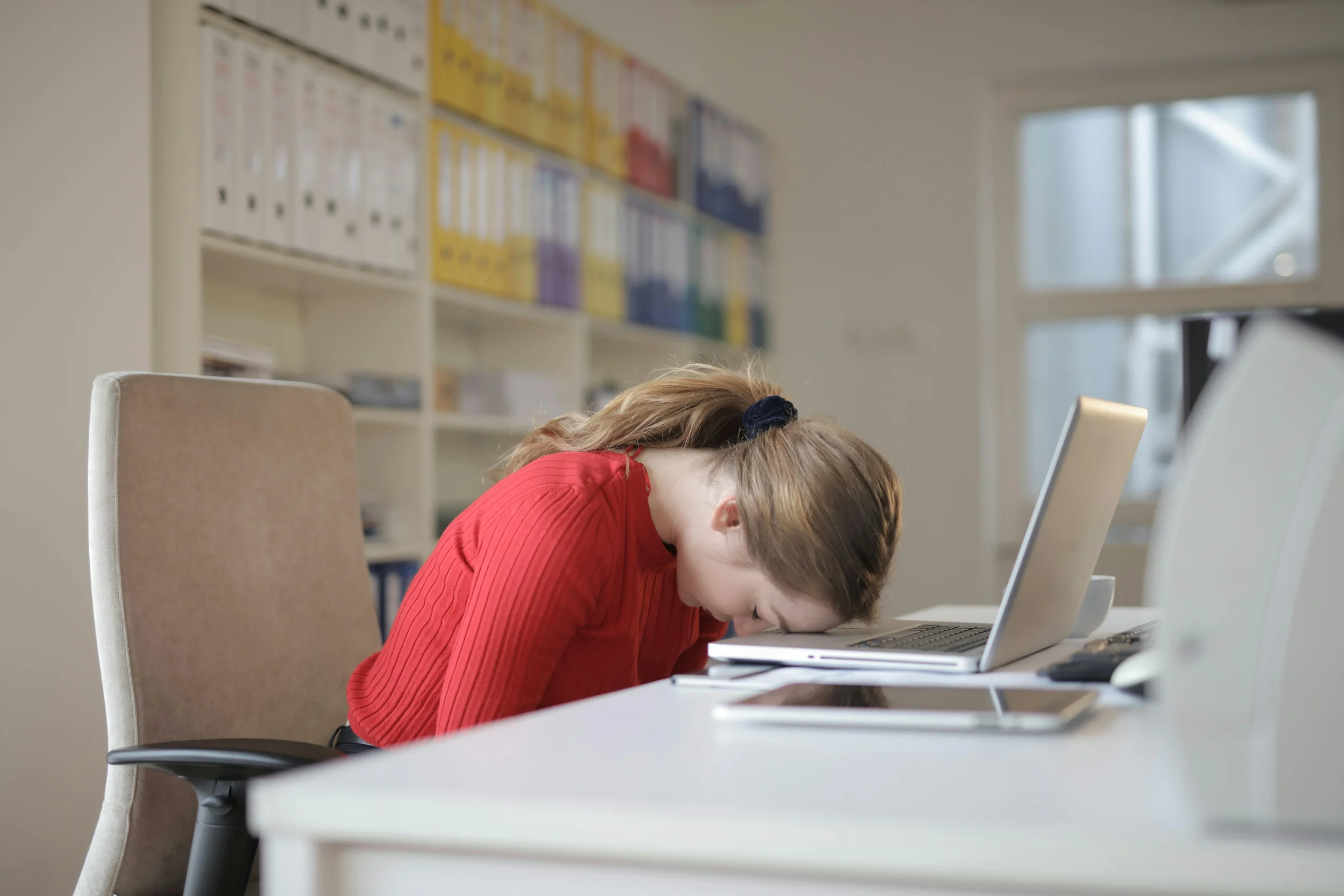
Napping can indeed have a negative effect on night-time sleep. This is first and foremost due to sleep pressure, which builds up bit by bit over the day and ensures that we are tired enough to fall asleep in the evening. Napping reduces precisely this tiredness, which causes problems in particular if the power nap is too long or taken too late in the day. As a result, you don’t have enough time to rebuild the inner need to go to sleep. This ultimately means that you lie awake in bed for longer at your actual bedtime.
The quality of the nap itself is another aspect that can have a negative impact on night-time sleep, and above all on how the person feels. Naps often involve much less REM and deep sleep. These are the usual stages that occur during a night-time sleep cycle and that allow us to regenerate and to process the previous day, for example in the form of dreams. So you may end up feeling even more exhausted and even less rested after your nap. That’s because it is only after around 90 minutes of sleep that you can complete a proper sleep cycle with REM and deep sleep.
If your nap reaches this length, however, sleep pressure drops again, which in turn affects the quality of your sleep. So it is quite a fine line between a good, high-quality nap and a nap that unfortunately robs you of some of your night-time sleep. That’s why it is important to know what to look out for when napping.
Why is good sleep so important?
Sleep serves many functions for us and our bodies. These include a number of biological processes, such as the rise in growth hormone levels or the replenishment of the glycogen stores that are used up over the day. The immune system is also influenced by the quality, but above all by the quantity, of sleep. Beyond these very physical functions, sleep is also important for memory and for storing newly learned information. The latter is probably something many of us are already familiar with: when studying at school, it often happens that you go over new material shortly before going to sleep and then remember it better.
The points mentioned are only an overview and just a small selection of the many reasons why sleep is so important for us. But it quickly becomes clear that we should make an effort to get sleep that is as good as possible, and enough of it.
What is sleep hygiene?
Sleep hygiene refers to behaviours that lead to better sleep quality. Sleep hygiene is therefore comparable to the kind of hygiene most of us already know from everyday life. Just as we brush our teeth, wash our faces or have a shower, we should also try to look after the quality of our sleep. After all, sleep affects our wellbeing and our everyday lives on various levels. Many people already know how the course of a day can change when they have slept a little too little or too badly the night before. That’s why it is also important to set certain sleep rules and to follow them as closely as possible.
4 rules for a good night’s sleep
Rules for good sleep are part of sleep hygiene, but they don’t work in the same way for everyone. The following sleep rules are a small collection you can use as a guide if you want to work on the quality of your sleep.
- Napping: your daytime sleep should last no longer than 20 minutes and ideally not be taken after 3 pm.
- Time in bed: you should ideally only stay in bed for as long as necessary and avoid, for example, watching series before going to sleep and in bed. It is important for your body to learn that lying in your bed is a signal for sleep.
- Screen time: you should also keep screen time immediately before sleep to a minimum. Feel free to set yourself a limit for how late you want to use your phone, and try to put it away half an hour before bedtime.
- Caffeine: ideally, avoid caffeinated drinks in the second half of the day. This naturally varies depending on your bedtime, but from 1 pm onwards you should cut back on your caffeine intake a little.
Frequently asked questions about napping
How long should my nap or power nap ideally be?
The ideal length for a nap is around 20 minutes. Half an hour is also possible, but depending on the person, napping for more than 30 minutes can make it harder to fall asleep at night.
After what time should I stop napping?
You should stop taking naps by 3 pm at the latest, as otherwise you get too close to your actual bedtime. So ideally, you should also avoid nodding off in front of the TV in the evening.
Where should I take my nap?
The best place for any kind of sleep is your bed. That way, your body associates your bed with sleep, and you may find it a little easier to fall asleep in the evening.
Conclusion
Napping is nothing unusual, as probably every one of us has experienced it at some point. However, not everyone is aware of the effects a daytime power nap can have. While napping can reduce your tiredness in the short term, you should be aware that it can have a negative impact on your night-time sleep.
What about you? Do you nap regularly, and how do you usually feel afterwards? Feel free to share your experiences with us!
Isabell S. (psychology student)
Deepen your meditation practice with Mindfulife
Meditation can be more than a short break in your everyday life. If you would like to understand more deeply how meditation works, how to build a steady practice of your own and how to guide others mindfully, our meditation teacher training is the next step. There you will not only get to know meditation in theory, but also develop more confidence, clarity and trust in your own practice.
Would you like to find out more about the training first? In our weekly webinar you will get an insight and learn more about what your path to becoming a meditation teacher could look like.
For regular support in your everyday life, you can also use our online meditation studio and join guided meditations flexibly via Eversports.
We look forward to accompanying you on your journey.
You can find more mindfulness inspiration on our channels too
References
Crönlein, T., Galetke, W., & Young, P. (2020). Schlaf und Schlafmedizin – Grundlagen. In T. Crönlein, W. Galetke, & P. Young (Hrsg.). Schlafmedizin 1x1. Praxisorientiertes Basiswissen. (2. Aufl., S. 1-30). Springer. https://doi.org/10.1007/978-3-662-60406-9
Müller, T. (2016). Gesunder Mittagsschlaf? – Das hängt vom Alter und von der Dauer ab. DNP - Der Neurologe & Psychiater. 17(5). 15. Springer. https://doi.org/10.1007/s15202-016-1270-6
Stiftung für Zukunftsfragen. (2023). Mittagsschlaf: Faulheit oder sinnvoll? https://www.stiftungfuerzukunftsfragen.de/mittagsschlaf-faulheit-oder-sinnvoll/
Stuck, B. A., Heidbreder, A., Maurer, J. T., Schlarb, A. A., Schredl, M., & Weeß, H.-G. (2025). Praxis der Schlafmedizin. Interdisziplinäre Diagnostik und Therapie bei Erwachsenen und Kindern. (4. Aufl.). Springer. https://doi.org/10.1007/978-3-662-70031-0
Zeitlhofer, J., Seidel, S., Klösch, G., Moser, D., Anderer, P., Machatschke, I. H., Bolitschek, J., Fugger, B., Holzinger, B., Kerbl, R., Lehofer, M., Mallin, W., Pavelka, R., Popovic, R., Saletu, A., Saletu, B., & Högl, B. (2010). Die Schlafgewohnheiten der Österreicher. Erste Ergebnisse einer repräsentativen Umfrage. Somnologie - Schlafforschung und Schlafmedizin. 1(14). 6-14. https://doi.org/10.1007/s11818-010-0452-2