Power Naps – Sleep Your Way to Better Health with These Tips
The benefits - after reading this article, you'll want to go to sleep! In this article, you'll find out everything a power nap does to your brain. In short, after a brief nap you're more effective overall, less annoyed by anything and everyone, sleep better overall, and even live longer and healthier. And who doesn't want that? Enjoy reading!

 · 4 min read
After reading this article, you’ll want to go to sleep!
In this article, you’ll find out everything power naps do to your brain. In short, after a brief nap you’re more effective overall, less irritable, sleep better overall, and even live longer and healthier. And who doesn’t want that? Enjoy reading!
First things first: what is napping?
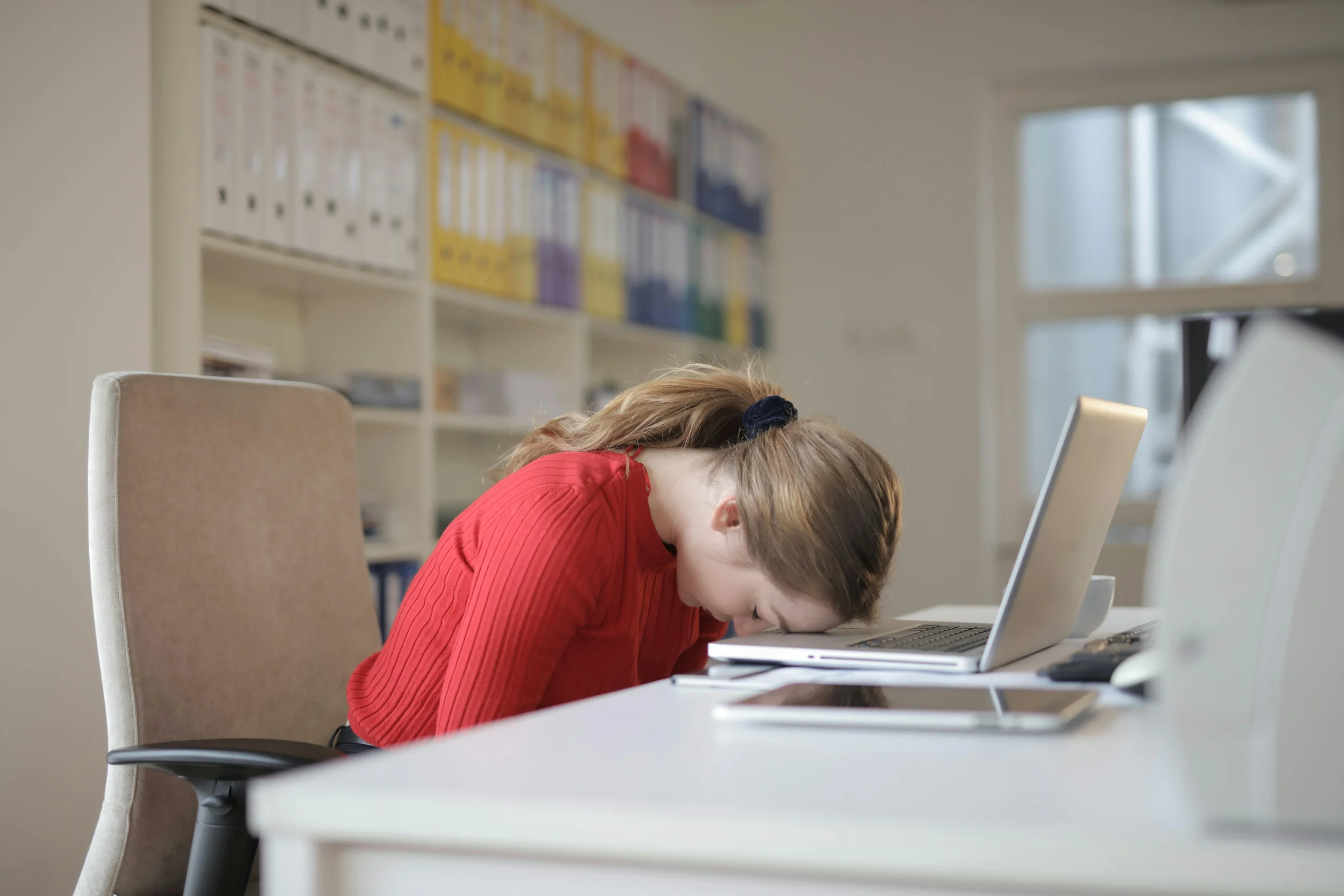
Most of us know the feeling: it’s midday and you start to feel tired. You’d love to lie down, but everyday stress won’t let you, because you can’t find the time to relax. By the afternoon you’re completely worn out and can’t concentrate any more, you get a headache or you feel totally drained.
BUT midday would have been exactly the right time for a power nap!
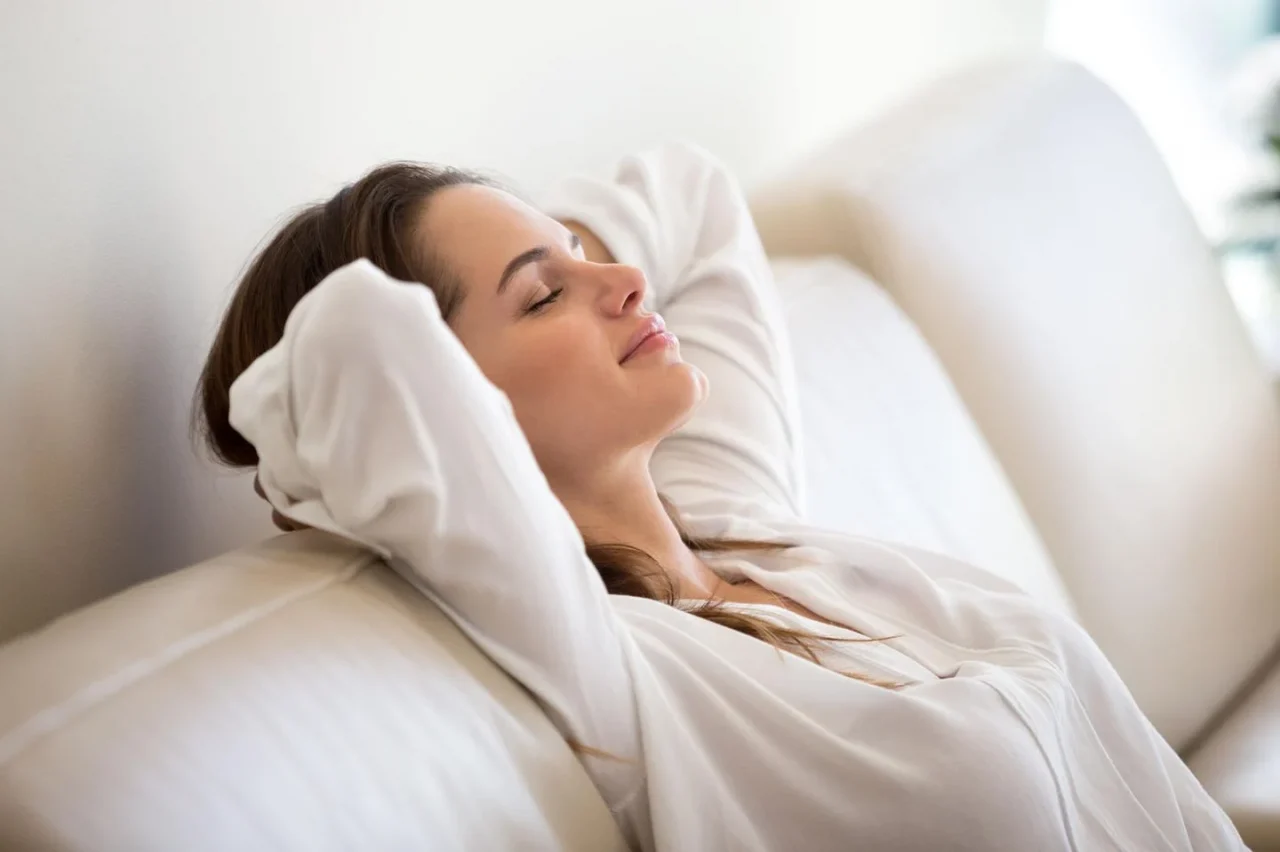
Power nap, midday nap, snooze, whatever you want to call it, describes a short sleep lasting between 10 and 60 minutes. Experts’ opinions differ on how long power naps should be, but on the whole they agree that a nap should never last longer than 90 minutes and can even be very short.
Naps, then, are short periods of sleep outside the main sleep cycle, i.e. during the day rather than at night.
What happens during a power nap?
In short, the amygdala in your brain resets. Put simply, you’re less irritable after a power nap. If, for example, you’ve slept badly for a night or had less than four hours’ sleep, your threat centre, the amygdala, is 60 % more reactive, and you’re very irritable and easily annoyed. After a power nap, the amygdala resets to 0 %, as if you were reformatting your phone. This has an enormous influence on your mood.
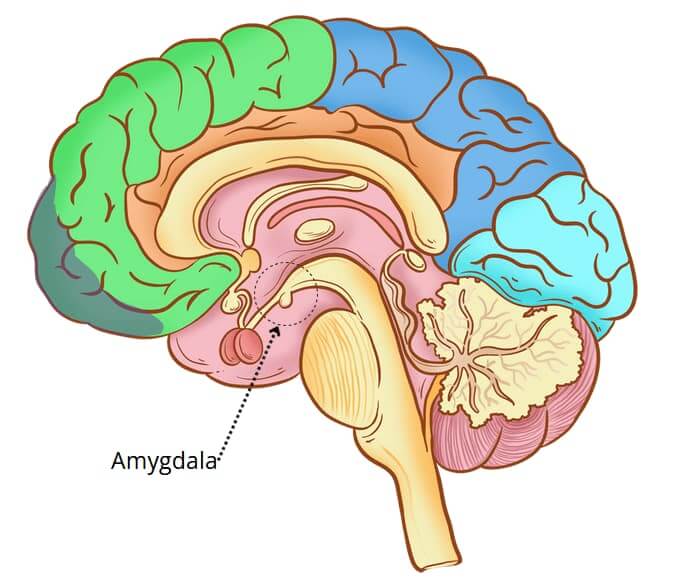
And what if I can’t fall asleep?
Power naps aren’t even really about falling asleep. They’re more about the period of rest. This is called ‘non-sleep deep rest’, a state like the one just before you drift off. If it lasts 20 to 60 minutes, the effect of a power nap applies here too. So even if you couldn’t fall asleep at all, these consciously chosen minutes of rest still count as napping and you’ll have more energy for the rest of the day. To be precise, after your ‘power nap’ you’re up to 34 % more productive for around two hours.
Why do I get tired at midday?
The midday slump has less to do with lunch and digesting it than you might think. The phenomenon most people experience at this time of day is so-called ‘sleep pressure’. It builds up within six hours of getting up. Your body is signalling that it wants to rest.
Is there an ideal time for power naps?
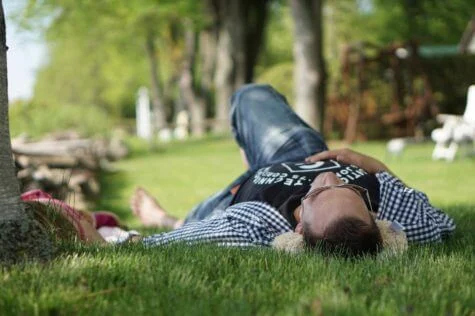
Definitely. As just described, the body feels the need to sleep at midday, when sleep pressure is at its highest. Even so, you should also make sure you don’t nap too late. This means the golden ‘6’ applies here too. Your power naps should be over six hours before you go to bed. So if you plan to go to bed at 11 pm, your nap should end by 5 pm at the latest. That way, you’ll also be able to sleep better at night.
Shouldn’t I keep sleeping if my body wants to?
No. Even if it can be hard to wake up after a power nap, or you’d rather stay lying down, it’s important not to fall back asleep. The groggy state after waking is called ‘sleep inertia’, and it disappears within minutes of getting up. If it doesn’t, head outside into the sunshine. Even when it’s cloudy, the sun’s rays have a positive effect on the grogginess. If you sleep for too long, you slip into deep sleep and then wake up more tired than before the nap.
What’s more, overly long midday naps are a sign of dementia – especially in older people. This doesn’t mean you should stop napping in old age. It simply means that the length of the nap is what matters.
How often and for how long should you take power naps?
Even with just one midday nap a week, the likelihood of dying from heart disease, a stroke or a heart attack falls by 42 %. Men in particular have a 68 % lower risk of dying from heart disease if they nap three or more times a week. If you want to nap regularly, try to do it at the same time each day so that your body gets used to it and eventually asks for it automatically. Ideally, your nap should last between 20 and 60 minutes.
Why do I sleep better on holiday – even without power naps?
Whenever you do something relaxing, you charge up your so-called ‘parasympathetic drive’. You can think of it as a battery that helps you sleep at night. If it gets charged during the day through relaxation, such as meditation or yoga, this improves your sleep quality. We’re usually more relaxed on holiday because we choose relaxing activities, or simply do what we enjoy, which relaxes us mentally. So as soon as you meditate for around 30 to 60 minutes in your everyday life, for example, you’ll fall asleep more easily in the evening and be able to sleep for longer too.
Conclusion
Power naps make you healthier and help your brain work better. Even so, there are two rules to bear in mind that will improve your sleep quality both during the day and at night. Don’t sleep for longer than 60 minutes, and make sure you don’t take your nap too late. And if you can’t fall asleep, you can still rest effectively or do something relaxing!
Deepen your meditation practice with Mindfulife
Meditation can be more than a short break in your everyday life. If you would like to understand more deeply how meditation works, how to build a steady practice of your own and how to guide others mindfully, our meditation teacher training is the next step. There you will not only get to know meditation in theory, but also develop more confidence, clarity and trust in your own practice.
Would you like to find out more about the training first? In our weekly webinar you will get an insight and learn more about what your path to becoming a meditation teacher could look like.
For regular support in your everyday life, you can also use our online meditation studio and join guided meditations flexibly via Eversports.
We look forward to accompanying you on your journey.
You can find more mindfulness inspiration on our channels too
References
Deboer, T. (2018). Sleep homeostasis and the circadian clock: Do the circadian pacemaker and the sleep homeostat influence each other’s functioning? Neurobiology of Sleep and Circadian Rhythms, 5, 68–77. https://doi.org/10.1016/j.nbscr.2018.02.003
PubMed
Goldstein, A. N., & Walker, M. P. (2014). The role of sleep in emotional brain function. Annual Review of Clinical Psychology, 10, 679–708. https://doi.org/10.1146/annurev-clinpsy-032813-153716
Leng, Y., Redline, S., Stone, K. L., Ancoli-Israel, S., & Yaffe, K. (2019). Objective napping, cognitive decline, and risk of cognitive impairment in older men. Alzheimer's & Dementia, 15(8), 1039–1047. https://doi.org/10.1016/j.jalz.2019.04.009
Skalli, S. (2016, October 10). Die richtige Zeit für ein Nickerchen: Das Nickerchen für sich arbeiten lassen. Zeit Online. https://www.zeit.de/wissen/gesundheit/2010-10/Nickerchen-Powernap-Arbeit
Sun, J., Ma, C., Zhao, M., Magnussen, C. G., & Xi, B. (2022). Daytime napping and cardiovascular risk factors, cardiovascular disease, and mortality: A systematic review. Sleep Medicine Reviews, 63, 101682. https://doi.org/10.1016/j.smrv.2022.101682