Mindfulness in sport: useful for leisure and performance? 3 exercises show you!
In recent years, the concept of mindfulness has received growing attention in sports psychology, and not only in competitive sport. In this article, find out what scientific research says about mindfulness in sport and how you can use mindfulness as a recreational athlete too.

 · 6 min read
In recent years, the concept of mindfulness has received growing attention in sports psychology, and not only in competitive sport. In this article, find out what scientific research says about mindfulness in sport and how you can use mindfulness as a recreational athlete too.
What actually is sport?
In this article, we would like to explain what effects mindfulness can have in sport. To be able to say anything about this, we first need to clarify what we mean by both terms. We have already explained in more detail how mindfulness is defined in previous articles. In short, we mean an awareness of the present moment in which you neither elaborate on arising thoughts nor judge them (Bishop et al., 2004).
Finding a general definition of sport is not that easy. This is probably because the concept is very broad. Intuitively, you would probably say that sport always involves movement. Yet we would hardly describe a walk through the woods as sport. In English, the language mainly used in psychological science, a distinction is therefore made between the terms “physical activity” and “sports”. “Physical activity” refers to any activation of the muscles, such as a walk or cycling to work. “Sports”, on the other hand, means that the movements are more structured and planned and follow certain rules.
Competitive sport vs recreational sport
Depending on whether you do sport recreationally or competitively, your sporting goal is different – and so is the goal of using mindfulness-based methods.
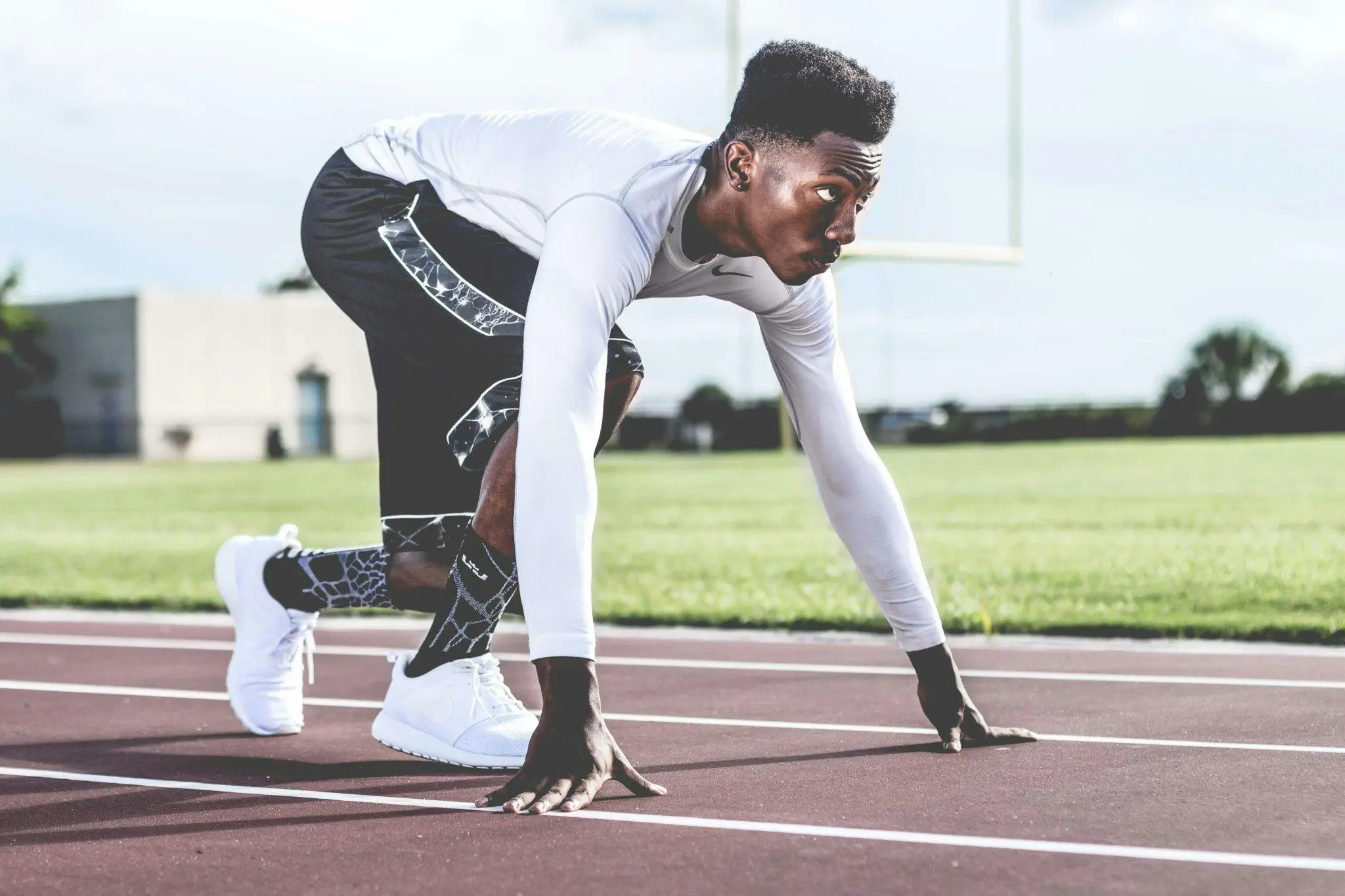
If you are active as a recreational athlete, your main goals are improving your physical fitness and enjoying movement. You may also aim to improve your performance, but your training is not managed quite so systematically. In recreational sport, mindfulness-based methods are therefore used mainly to strengthen the positive effects of exercise, such as an increase in positive emotions during or after training. Mindfulness in sport may also help you to get into a state of flow more quickly. You will find out more about this later.
If you are a competitive athlete, your sporting activity is characterised by a considerably higher training intensity and a focus on competition. The priority is therefore not enjoyment but measuring your performance against others. Mindfulness in competitive sport is therefore used mainly to help athletes perform better.
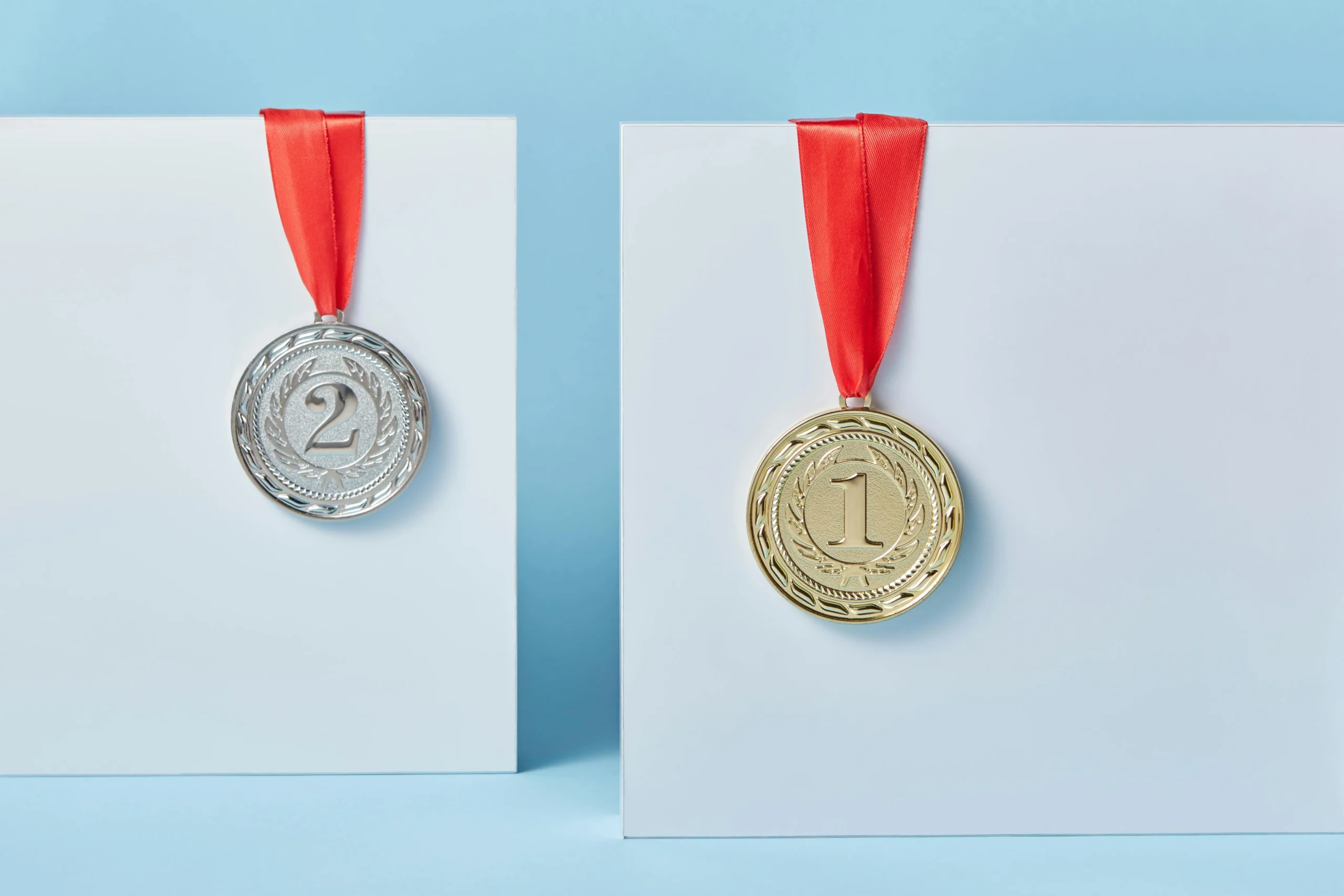
However, the boundaries here should be seen as fluid: improving performance can also be an important goal for competition-minded recreational athletes. If you count yourself in this category and are ambitious, it is worth considering the competitive athlete’s perspective on mindfulness.
How does mindfulness work in sport?
It has been known for some time that mindfulness could have an effect on sport. In 1985, Jon Kabat-Zinn and other researchers published a study on mental training in rowers. Rowers who had won an Olympic medal reported that mindfulness training had contributed to their success. More recently, mindfulness in sport has been receiving more and more attention, both as a complement to physical training and as an alternative to other sports psychology methods. Three routes are described as possible mechanisms of action:
1. Improving attention
Studies suggest that athletes who control an object in particular (e.g. fencing, table tennis) perform better than non-athletes in various areas of attention. The athletes’ advantage also depends on time: while non-athletes can maintain their attention up to a certain level of exertion, attention in competitive athletes actually increases as exertion increases. Attention is therefore seen as an important prerequisite for peak performance. Since mindfulness-based meditation leads to improved attention, this seems to be a plausible mechanism of action.
2. Enhancing the experience of flow
According to Rheinberg and colleagues, flow is understood as “the reflection-free, complete absorption in a smoothly running activity that you still have under control despite high demands”. Perhaps you are familiar with the term runner’s high: the runner feels as though the running is happening all by itself. They feel somehow far away, yet completely in the moment.
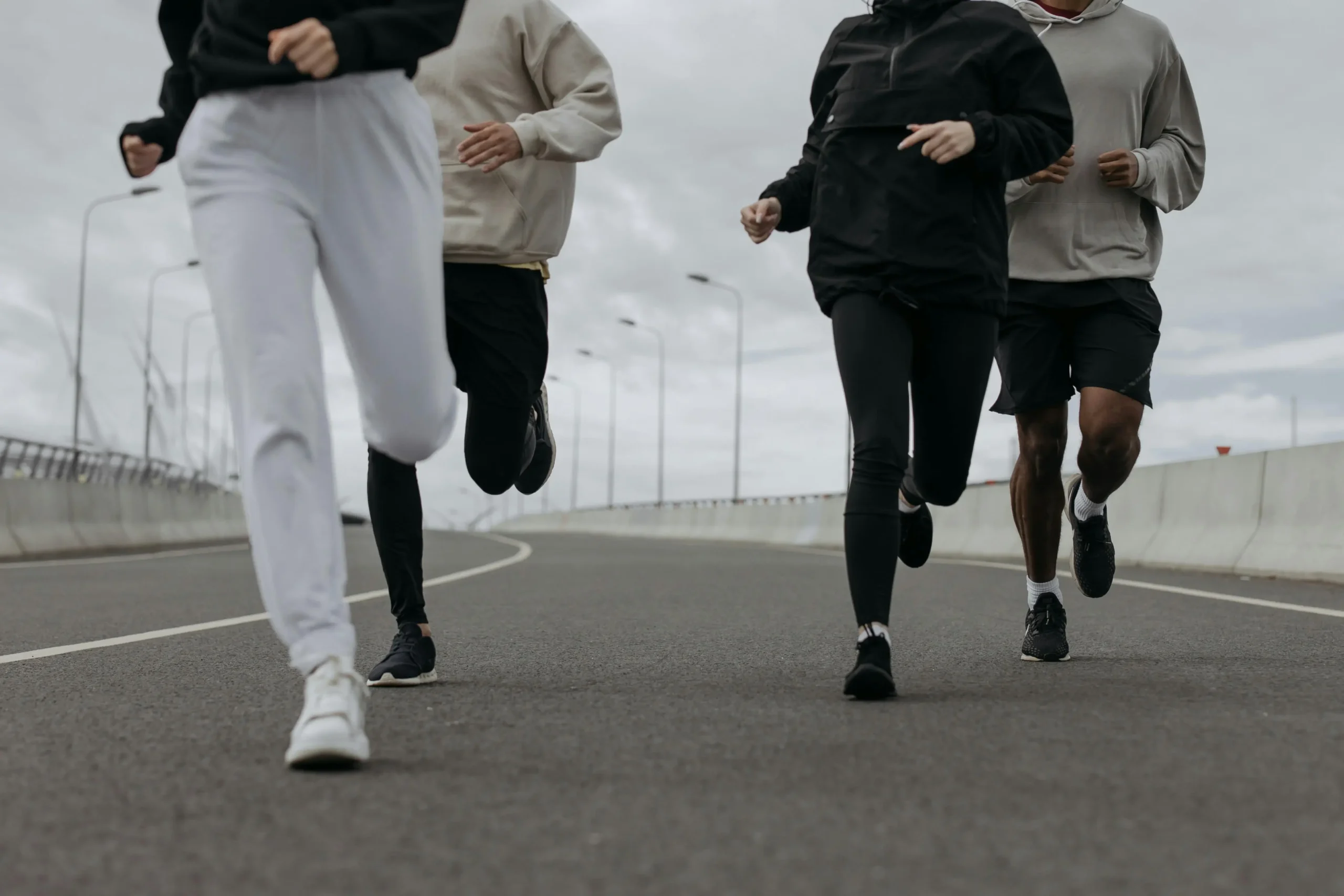
In psychology, it is assumed that this experience of flow can only be reached when both the challenge and your own skill are rated as high. Otherwise, other states such as anxiety or boredom may arise, but not flow. Alongside other psychological states, the flow state is described as very beneficial to performance. Mindfulness trains us to focus fully on a task, which can make it easier to enter the flow state.
3. Influencing emotion regulation
The third mechanism of action of mindfulness in sport is improved emotion regulation. Mindfulness training can help you actively influence which emotions you have and whether and when you express them. Various scientific studies have shown that this ability can be improved through mindfulness. In sport, this can help you process negative thoughts and feelings better, so that they interfere less with your performance.
Mindfulness in recreational sport
Even if you do sport without any performance ambitions, combining sport and mindfulness can be worthwhile. The focus here is on staying healthy and personal development. Some authors are even critical of using mindfulness in sport to improve performance: in their view, the basic attitude of wanting to optimise yourself is already problematic, as it contradicts a mindful, accepting and kind attitude.
One of the benefits of mindfulness in sport is that body awareness improves with increasing practice. This not only boosts our wellbeing, but we also treat our bodies more mindfully and can even prevent injuries in this way. The trained attention not only leads to better performance, as described above, but also has health-promoting effects. When we concentrate on what we are doing during sport, we can be more present in the moment, and the positive effect of exercise on our mood is enhanced.
How can you integrate mindfulness into sport?
There are now mindfulness courses designed specifically for athletes, which allow you to explore the topic and various techniques in depth. However, to anchor mindfulness in your normal sporting practice, you do not necessarily need such a course, especially if you may not have the resources for one. Below, we share a few simple exercises to help you bring more mindfulness into your training.
A minute of silence
This exercise works well at the start of your training. You do not really need anything for it; simply take a minute to rest in silence and arrive. Everything can stay just as it is, and you do not need to get into any particular position or anything like that.
Mindful drinking of water
With this exercise, you can easily build mindfulness in sport into short breaks during your training. Try to drink your water completely mindfully. First, feel the bottle: how does it feel? Does your water smell of anything? Then take a sip of water into your mouth. Consciously direct your awareness to this one sip: how does the water feel? Then swallow very consciously: can you follow the water on its way down? Where do you feel it?
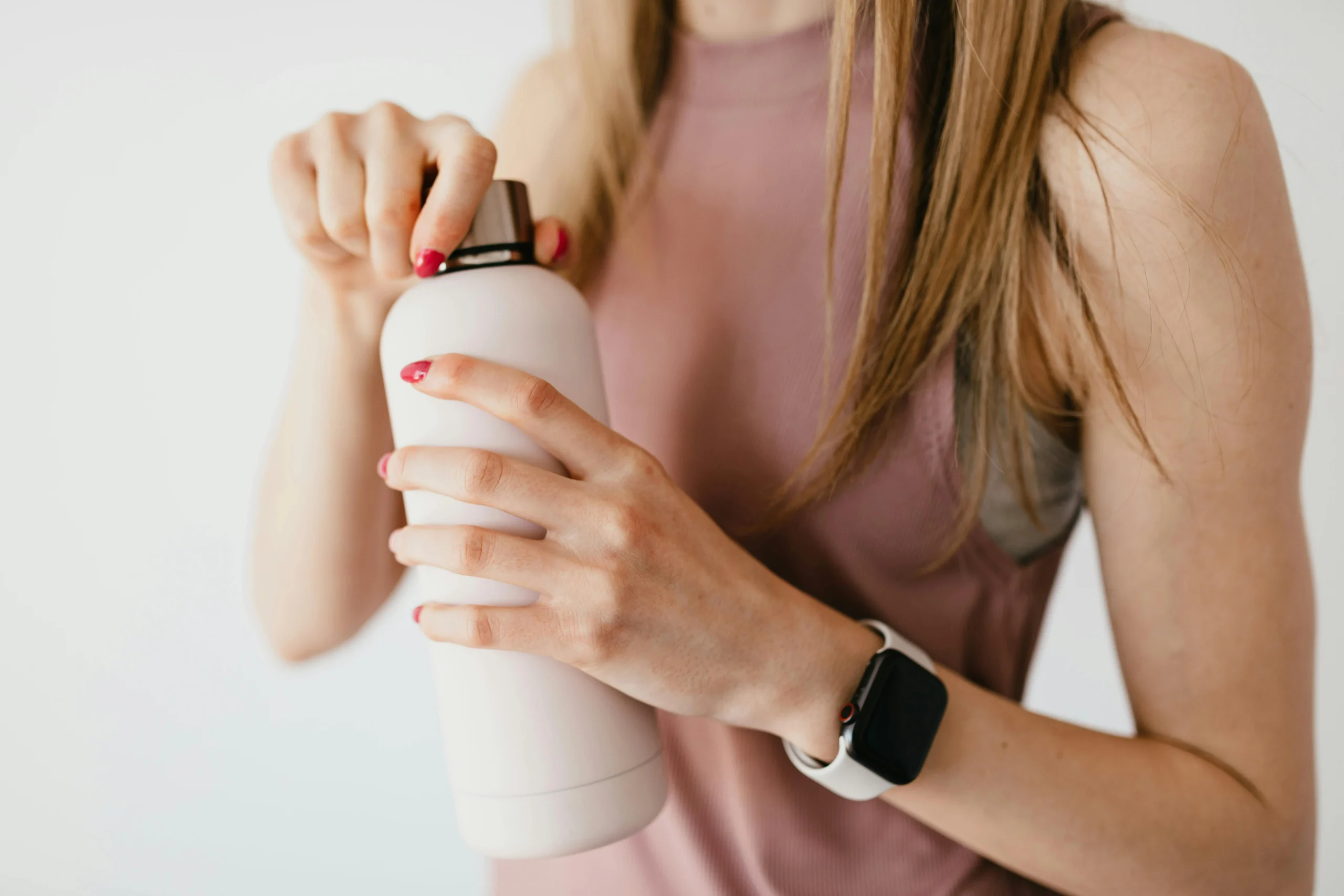
Drinking or eating mindfully is a basic exercise in mindfulness training. Especially during breaks in sport, focusing on a sip of water can help you maintain your concentration and stay in the moment. It is also a good exercise for training body awareness and attention.
Short breathing meditation
After sport, a short breathing meditation is a good idea, and it does not need to last longer than 2 to 5 minutes. You can do the exercise sitting or lying down. You can close your eyes or let your gaze become very soft. Then concentrate on your breath. Feel how your body is sitting or lying there and breathing. Where can you feel your breath most clearly? If your thoughts wander, that is completely normal. That is simply how our brain works, so it should not stress you. When you notice your mind wandering, simply return to your breath .
A breathing meditation is a good way to wind down after a strenuous training session. It reduces stress hormones that may have built up during the activity and helps you feel refreshed again. Apart from that, you are practising concentration and attention.
Conclusion – Mindfulness in sport
Mindfulness in sport can be a valuable addition to both competitive and recreational sport. It promotes attention, supports access to the experience of flow and helps with regulating emotions. What matters most is not so much optimising performance but rather a conscious, respectful relationship with your own body and experience.
revised on 01/01/2026
by Sarah B. (B.Sc. Psychology)
Deepen your meditation practice with Mindfulife
Meditation can be more than a short break in your everyday life. If you would like to understand more deeply how meditation works, how to build a steady practice of your own and how to guide others mindfully, our meditation teacher training is the next step. There you will not only get to know meditation in theory, but also develop more confidence, clarity and trust in your own practice.
Would you like to find out more about the training first? In our weekly webinar you will get an insight and learn more about what your path to becoming a meditation teacher could look like.
For regular support in your everyday life, you can also use our online meditation studio and join guided meditations flexibly via Eversports.
We look forward to accompanying you on your journey.
You can find more mindfulness inspiration on our channels too
References
Brandstätter, V., Schüler, J., Puca, R. M., & Lozo, L. (2013). Motivation und Emotion. Berlin: Springer.
Hill, A., Schücker, L., Wiese, M., Hagemann, N., & Strauß, B. (2021). The influence of mindfulness training on running economy and perceived flow under different attentional focus conditions–an intervention study. International Journal of Sport and Exercise Psychology, 19(4), 564-583.
Hüttermann, S., & Memmert, D. (2014). Does the inverted-U function disappear in expert athletes? An analysis of the attentional behavior under physical exercise of athletes and non-athletes. Physiology & Behavior, 131, 87–92.
Jansen, P., Seidl, F., & Richter, S. (2019). Achtsamkeit im Sport: Theorie und Praxis zu achtsamkeitsbasierten Verfahren in Freizeit, Training, Wettkampf und Rehabilitation. Springer Berlin Heidelberg, Imprint: Springer.
Jekauc, D., & Kittler, C. (2015). Achtsamkeit im Leistungssport. Leistungssport, 45(6), 19–23.
Josefson, T., Ivarsson, A., Lindwall, M., Gustafsson, H., Stenling, A., Böröy, J….Falkevik, E. (2017). Mindful-ness mechanisms in sport: Mediating effects of rumination and emotion regulation on sport-specific. Mindfulness, 8, 1354–1363.
Kabat-Zinn, J., Beall, B., & Rippe, J. (1985). A systematic mental training program based on mindfulness meditation to optimize performance in collegiate and Olympic rowers. Poster präsentiert auf dem 6. Welt-Kongress in Sportpsychologie, Copenhagen, Dänemark.
Rheinberg, F., Vollmeyer, R., & Engeser, S. (2003). Die Erfassung des Flow-Erlebens. In J. Stiensmeier-Pelster & F. Rheinberg (Hrsg.), Diagnostik von Motivation und Selbstkonzept (Tests und Trends N.F.) 2, (S. 261–279). Göttingen: Hogrefe.