Altruism – When Mindfulness Becomes a Gift

 · 7 min read

“The deep desire to do good for others – without expecting anything in return” – this is how the definition of altruism in psychology can be summed up. You can also use synonyms such as selflessness or unselfishness. But why do we (and some animals too) act altruistically at all, even though we seemingly come away empty-handed? What role do mindfulness and meditation play in this? And can you take altruism too far? That is what I would like to share with you here in this blog.
Small spoiler: in the end, it isn’t quite so selfless after all.
Why do we act altruistically?
There are numerous explanations for this – from psychology as well as from biology.
Reciprocal altruism
Reciprocity means mutuality or give-and-take. “Tit for tat” – only with a positive twist. So you help others out of the (perhaps even unconscious) expectation that this help will at least be returned at a later point, in one way or another. The help doesn’t have to be exactly the same, and it doesn’t even have to be returned by the same person. If you regularly and politely hold the door open for others, this contributes to you being seen as respectful and helpful by those around you. This good reputation, in turn, often opens entirely different doors for you that you would never have expected.
Empathy-altruism hypothesis
According to the so-called empathy-altruism hypothesis, your ability to feel empathy is a key prerequisite for altruism. Without empathy, altruism in the narrow sense is hardly possible. Without it, help is far more likely to be given in the expectation of a reward or to avoid punishment. As soon as empathy comes into play, you are able to perceive the suffering or the needs of others. You can identify with the person affected. Empathy creates a need in you either to escape the suffering of others or to solve their problem, so that you no longer have to suffer along with them.
Social bonding (also known as the commitment model)
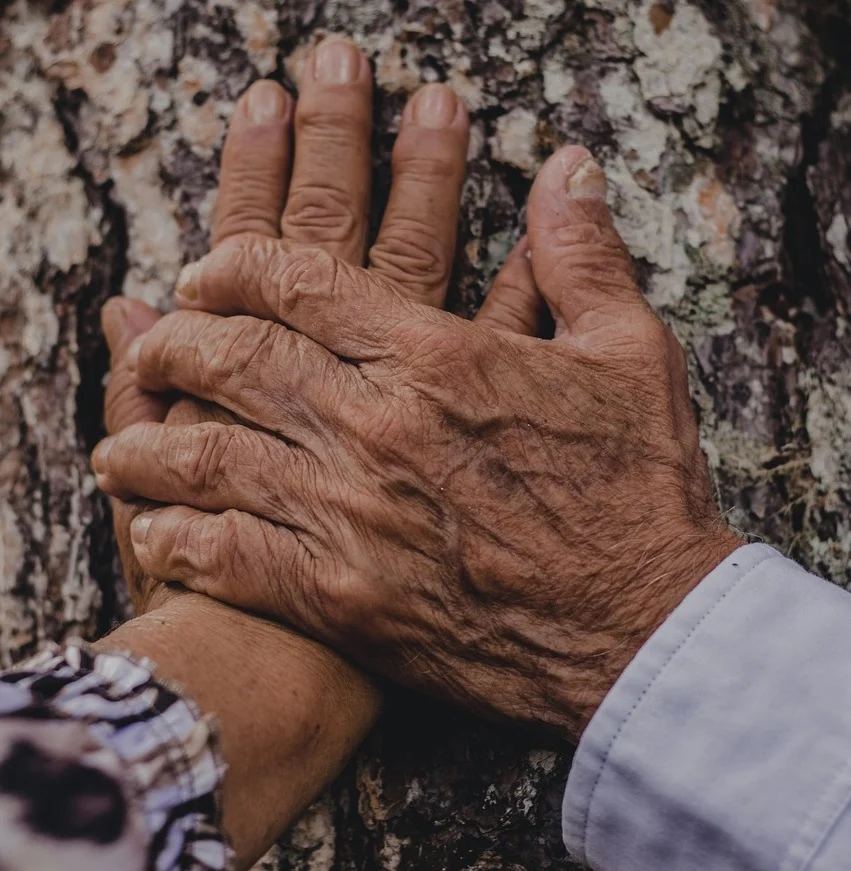
One of humanity’s greatest strengths is our capacity for bonding and the teamwork that springs from it. Unfortunately, though, not everyone is trustworthy. This is where altruism comes in, because with altruism you communicate “You can trust me – I mean well by you”, and in a way that can hardly be faked by less well-meaning people, because it involves costs that deceivers are less willing to bear. It is no coincidence that I am looking in the direction of narcissists or psychopaths, who think mainly of themselves and show little consideration for others.
So the more altruistic you are, the more you will attract people who mean as well by you as you do by them.
Insider tip: this pull works just as well on potential romantic partners.
Kinship altruism (also known as kin altruism)
This is where evolution comes into play. The idea here is that you have an interest in supporting people who share a large proportion of your genes (in other words, your close relatives). Your willingness to make sacrifices increases the more closely you are related to the person you are helping. The aim is to use your support to ensure that their genes (and therefore, to a large extent, yours too) are successfully passed on across generations. This form of altruism can also often be observed in animals, and there are studies that identify genetic factors linked to altruism.
What does altruism do for you?
Altruism is like mindfulness that you pass on to others. Every good deed conjures up a smile or warms a heart. If we follow the theories above, altruism also means that others will help you just as you help them, and that they will be more inclined to cooperate with you and build positive relationships.
Even though altruism is first and foremost a gift to others, it has noticeable effects on you too, and these should not be overlooked.
- Mental wellbeing
Helping others feels good and strengthens your mental health. Someone’s laughter makes you forget the effort you put in beforehand. If you make helping a habit, you will notice that you go through the world with more optimism. Depressive thoughts and feelings of hopelessness or loneliness fade. Instead, the feeling grows that your life has meaning and purpose.
- Physical wellbeing
Altruism is associated with lower mortality. And you can feel it, too, because you age better. Compared with less altruistic people, you will experience fewer physical limitations as you get older and will stay fit and active. But be careful – it has no influence on general health. Altruism does reduce stress and thus, indirectly, markers of inflammation. Serious illnesses such as diabetes or cancer, however, are not affected.
- Neural characteristics
Neurological measurements have shown that people with higher levels of altruism have a larger amygdala. This is a brain structure that is partly responsible for evaluating emotional stimuli. With a larger amygdala, it is easier for you to recognise when others need help. This allows you to show them empathy in a more targeted way. Interestingly, it is precisely this brain structure that is underdeveloped in psychopaths.
Finding altruism through mindfulness and meditation
Why train altruism? Can’t you be altruistic simply by helping someone?
Yes and no. In the end, it comes down to helping, but altruism is also an attitude to life. You help out of conviction and character – not out of compulsion. When helping becomes a compulsion, we speak instead of pathological altruism. More on that later.
Mindfulness can help you make helping a natural habit – one that comes easily and brings you joy.
Research has shown that mindfulness training and meditation increase lasting, lived altruism and are even associated with changes in the grey matter of brain regions involved in learning and memory processes, emotion regulation, self-referential processing and perspective-taking.
Why not try the following mindfulness exercises, which specifically foster altruism?
Metta meditation
With metta meditation, you strengthen your ability to feel warmth and compassion:
- Sit or lie down comfortably and close your eyes.
- Think of someone close to you, someone you love or feel affection for. Send them your goodwill with phrases such as:
“May you be happy.”
“May you live with ease.” - Then direct these kind feelings towards yourself.
“May I be happy.”
“May I live with ease.” - In the next step, extend the exercise to neutral people with whom you have no particular connection. Take care not to judge whether the person deserves it.
- Finally, direct the same loving attitude towards people you find difficult. Here, too – without judging.
Throughout the meditation, make a point of consciously noticing and deepening feelings of warmth, compassion and goodwill.
Emotion dyad
The aim of this exercise is to foster empathic listening, emotional acceptance and gratitude. You will need a partner for it. Sit facing each other and agree on who speaks first and who listens.
As the speaker, you talk about two recent situations, one after the other.
A stressful experience, and a situation you are grateful for.
While doing so, you consciously observe your experiences without analysing or interpreting them.
The aim is to develop familiarity with and acceptance of difficult feelings while also cultivating gratitude.
As the listener, you meanwhile listen attentively, without interrupting, commenting or giving feedback.
The aim is to practise empathic listening – with full presence and without judgement.
When the first round is over, you swap roles. The person who listened before now talks about their two situations, while the other, in turn, listens mindfully.
When altruism goes too far
More is not always better. Altruism can also tip over into pathological altruism – the so-called helper syndrome. This harms you above all, often leading to stress or burnout. It can also happen that others feel overwhelmed by too much help. Sometimes too much help can even be a hindrance – rather like a child who never learns to walk because they are constantly being carried.
So it is worth finding a healthy balance between helpfulness and self-care. Pathological altruism usually develops when the real cause is hidden and driven by others.
Four signposts for finding the balance
To finish, I would like to give you four signposts that can help you keep your helpfulness in balance.
- Altruism due to codependency
Here, you might be the person in your circle of friends who never says no or is always there. Not out of healthy altruism, but because you are afraid of breaking the friendship or losing affection.
- Altruism out of guilt
For example, when you visit your parents every week instead of sometimes doing something for yourself or with your friends. Simply because otherwise you would feel guilty for having left them alone.
- Altruism in order to “function”
This can happen, for example, when the real cause of the altruism is the fear of not being good enough and of failing to meet the expectations of teachers, friends, clients or your boss.
- Altruism to stabilise self-esteem
You get involved in clubs and associations, pay attention to sustainability, help others or support good causes – but do you really do this out of inner conviction, or also to see yourself in a positive light?
Toxic positivity
The topic of pathological altruism is related to toxic positivity, which shows a similar dynamic. Here, too, you should take care to keep the balance and not overdo something that is, at its core, deeply good. If you are interested, there is already a comprehensive article on this topic here, where you can read on. See you soon!
Tom L. (psychology student)
Deepen your meditation practice with Mindfulife
Meditation can be more than a short break in your everyday life. If you would like to understand more deeply how meditation works, how to build a steady practice of your own and how to guide others mindfully, our meditation teacher training is the next step. There you will not only get to know meditation in theory, but also develop more confidence, clarity and trust in your own practice.
Would you like to find out more about the training first? In our weekly webinar you will get an insight and learn more about what your path to becoming a meditation teacher could look like.
For regular support in your everyday life, you can also use our online meditation studio and join guided meditations flexibly via Eversports.
We look forward to accompanying you on your journey.
You can find more mindfulness inspiration on our channels too
References
Bierhoff, HW., Rohmann, E. (2012). Helfer, Helfen und Altruismus. In: Albrecht, G., Groenemeyer, A. (eds) Handbuch soziale Probleme. VS Verlag für Sozialwissenschaften, Wiesbaden. https://doi.org/10.1007/978-3-531-94160-8_31
Böckler, A., Tusche, A., Schmidt, P. & Singer, T. (2018). Distinct mental trainings differentially affect altruistically motivated, norm motivated, and self-reported prosocial behaviour. Scientific Reports, 8(1). https://doi.org/10.1038/s41598-018-31813-8
Fetchenhauer, D. & Bierhoff, H. (2004). Altruismus aus evolutionstheoretischer Perspektive. Zeitschrift für Sozialpsychologie, 35(3), 131–141. https://doi.org/10.1024/0044-3514.35.3.131
Hölzel, B. K., Carmody, J., Vangel, M., Congleton, C., Yerramsetti, S. M., Gard, T. & Lazar, S. W. (2010). Mindfulness practice leads to increases in regional brain gray matter density. Psychiatry Research Neuroimaging, 191(1), 36–43. https://doi.org/10.1016/j.pscychresns.2010.08.006
Kim, E. S., Whillans, A. V., Lee, M. T., Chen, Y. & VanderWeele, T. J. (2020). Volunteering and Subsequent Health and Well-Being in Older Adults: An Outcome-Wide Longitudinal Approach. American Journal Of Preventive Medicine, 59(2), 176–186. https://doi.org/10.1016/j.amepre.2020.03.004
Marsh, A. A., Stoycos, S. A., Brethel-Haurwitz, K. M., Robinson, P., VanMeter, J. W. & Cardinale, E. M. (2014). Neural and cognitive characteristics of extraordinary altruists. Proceedings Of The National Academy Of Sciences, 111(42), 15036–15041. https://doi.org/10.1073/pnas.1408440111
Restak, R. M. (2014). Woher kommen Empathie und Altruismus? In Springer eBooks (S. 142–152). https://doi.org/10.1007/978-3-642-36263-7_16
Reuter, M., Frenzel, C., Walter, N. T., Markett, S. & Montag, C. (2010). Investigating the genetic basis of altruism: the role of the COMT Val158Met polymorphism. Social Cognitive And Affective Neuroscience, 6(5), 662–668. https://doi.org/10.1093/scan/nsq083
Seelig, B. J. & Rosof, L. S. (2001). Normal and Pathological Altruism. Journal Of The American Psychoanalytic Association, 49(3), 933–959. https://doi.org/10.1177/00030651010490031901
Svec, Bettina: Existiert echter Altruismus? In: Sociology in Switzerland: Sociology of Health and Social Welfare. Zürich 2012 http.//socio.ch/health/t_bsvec.pdf
Teubner-Guerra, R. L. & Ochsmann, E. (2013a). Development and evaluation of a questionnaire for rating pathological altruism. HeilberufeScience, 5(1), 12–19. https://doi.org/10.1007/s16024-013-0179-7