Mudras Meaning & Effects: 4 Simple Hand Gestures for More Energy and Inner Calm
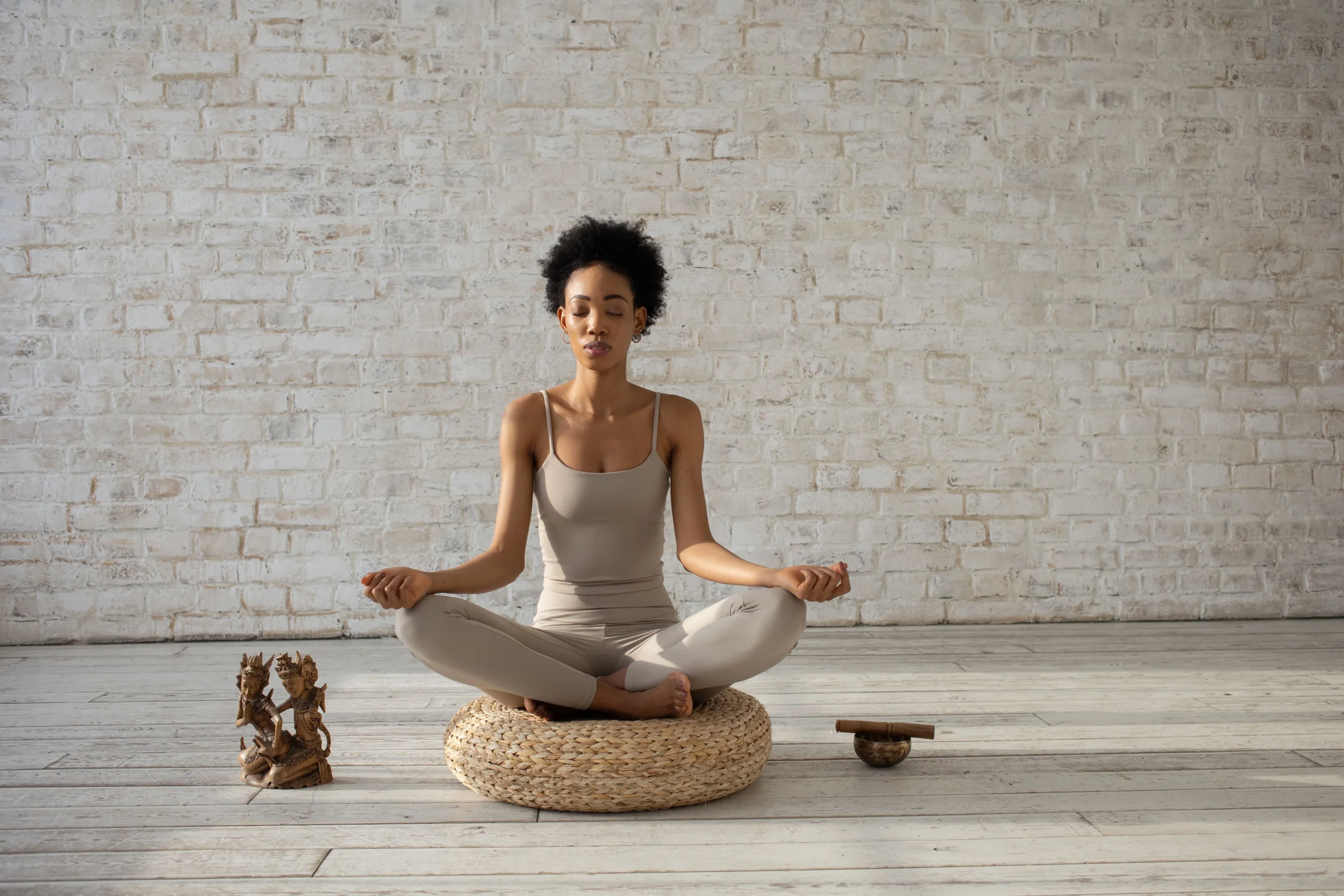
Mudras are special hand gestures from yoga and meditation practice that are intended to help bring body and mind into harmony. They have been used for centuries to improve concentration, find inner calm and consciously direct the flow of energy in the body.

 · 5 min read
Mudras are special hand gestures from yoga and meditation practice that are intended to help bring body and mind into harmony. They have been used for centuries to improve concentration, find inner calm and consciously direct the flow of energy in the body.
In this article, you will learn about their meaning, their effects and how you can easily use some of the best-known gestures yourself. Enjoy reading!
Definition
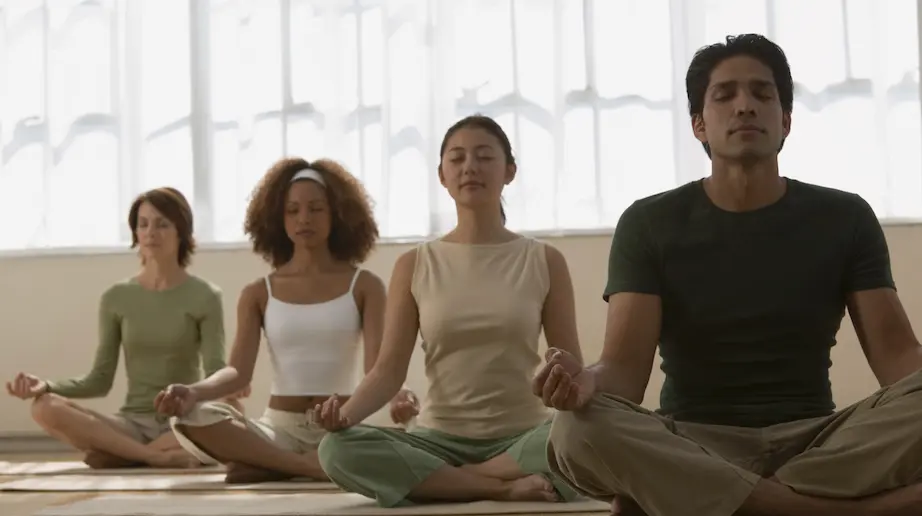
A mudra (Sanskrit: “seal” or “gesture”) is a particular position of the hands, fingers or body. Mudras appear in meditation, in yoga, in religious rituals and even in everyday life (e.g. in the “Namaste” greeting).
Traditional teachings hold that mudras influence the flow of life energy (prana) and can thus support physical and mental balance.
Effects: what do these positions really do?
Mudras are credited with various effects on both mind and body. They can help to improve concentration and consciously turn your attention inwards. At the same time, many people report that using mudras makes them feel calmer and helps them to relieve stress more easily. It is also believed that they influence the flow of energy in the body and thus contribute to a greater sense of balance.
It is important to know, however, that these effects have so far only been partly backed by science. Many of the positive experiences can also be explained by the fact that mudras are often used in combination with conscious breathing, mindfulness and meditation.
Why are they so effective?
Their particular effect lies above all in their simplicity and accessibility. They are easy to learn and can be used anytime, anywhere, without you needing any equipment. By consciously adopting a hand position, you automatically direct your attention inwards, which can give rise to a state of calm and presence. It is precisely this conscious focus that is a central element of many relaxation and meditation methods.
What types of mudras are there?
There are different types, which vary depending on how they are used. Particularly well known are the so-called hasta mudras, i.e. hand gestures, which are the ones most commonly used in meditation. There are also kaya mudras, which involve the whole body, and mana mudras, which focus on movements of the eyes and head. These are complemented by bandha mudras, which are regarded as energetic locks in the body, and adhara mudras, which relate to the pelvic floor. Each of these forms has its own focus and is used in different contexts.
The best-known mudras and how to use them
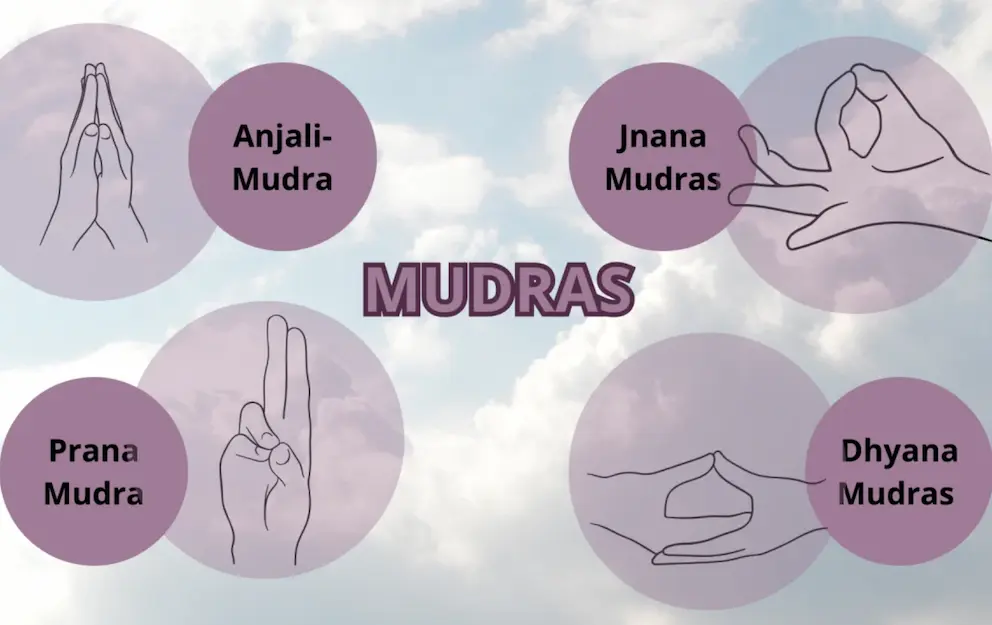
Anjali Mudra
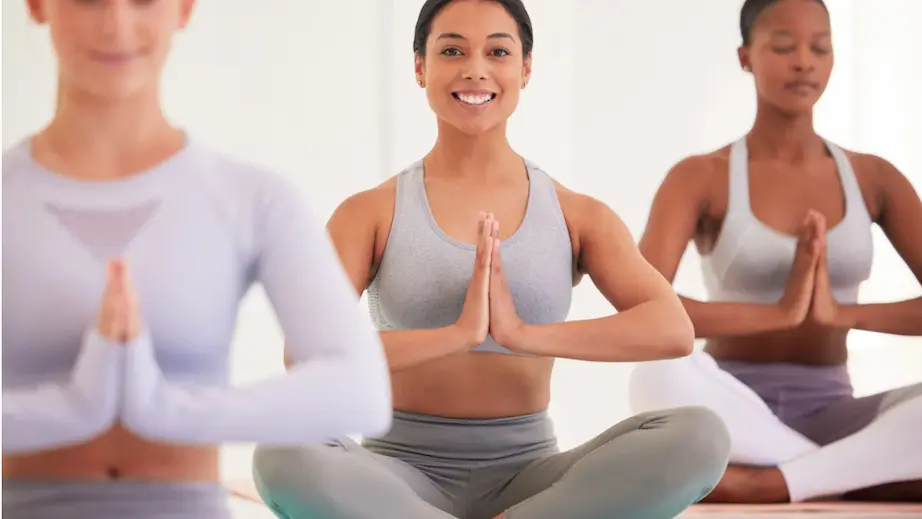
A particularly well-known mudra, also known as the prayer position. The palms are brought together in front of the chest so that the thumbs touch at heart level. This gesture has a calming, balancing effect and is often used to express gratitude or respect.
Jnana Mudra
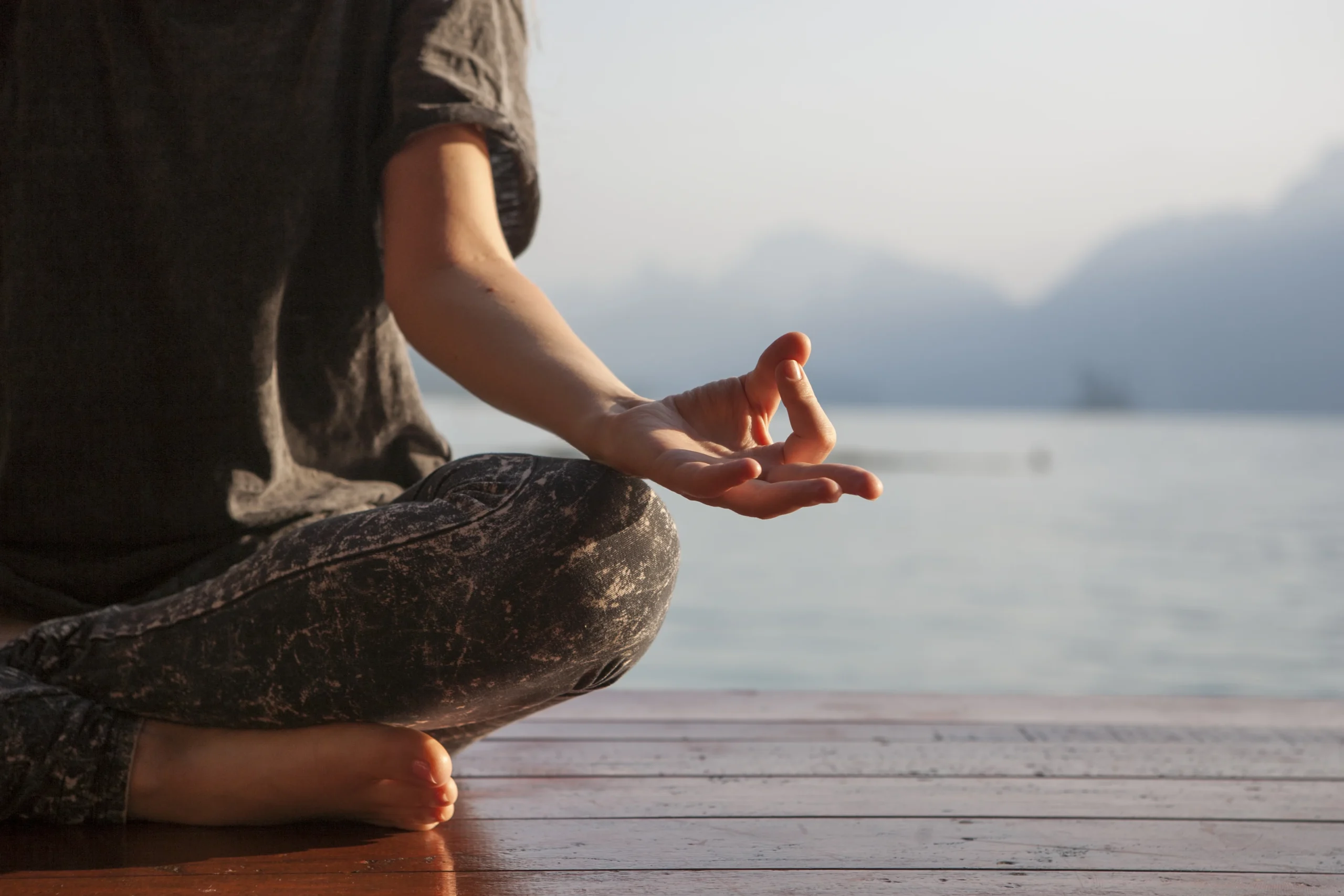
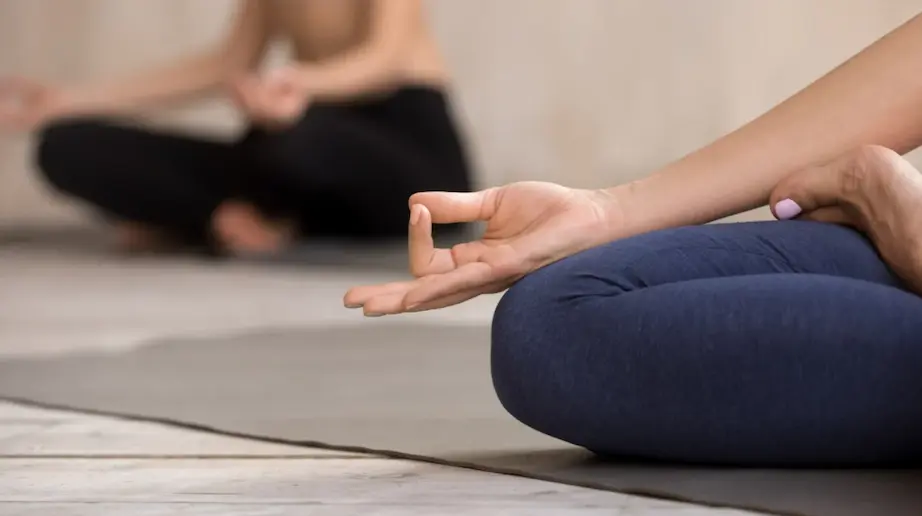
Another frequently used mudra, in which the thumb and index finger touch lightly while the other fingers stay relaxed. This hand position is often used during meditation, as it can promote concentration and contribute to greater mental clarity.
Dhyana Mudra
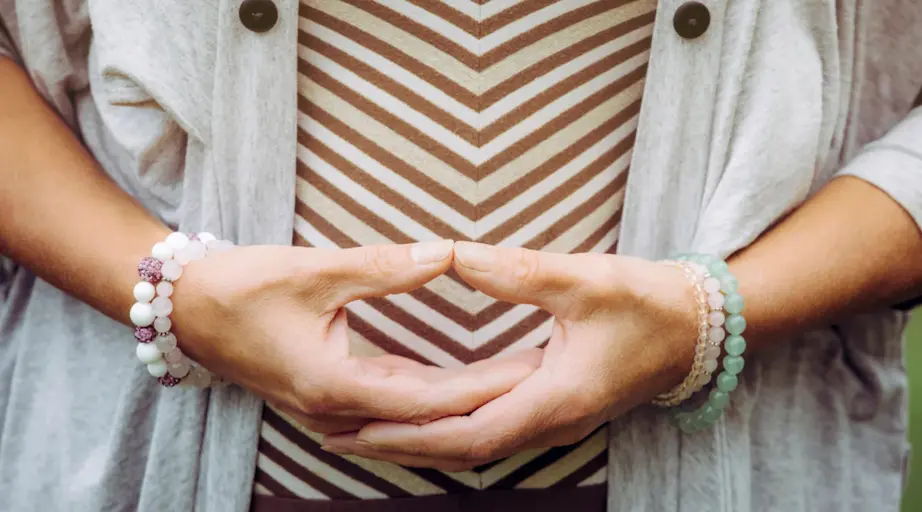
A classic meditation gesture in which the hands rest one inside the other in the lap and the thumbs touch gently. This position supports a calm, deep meditation and helps to quieten the mind.
Prana Mudra
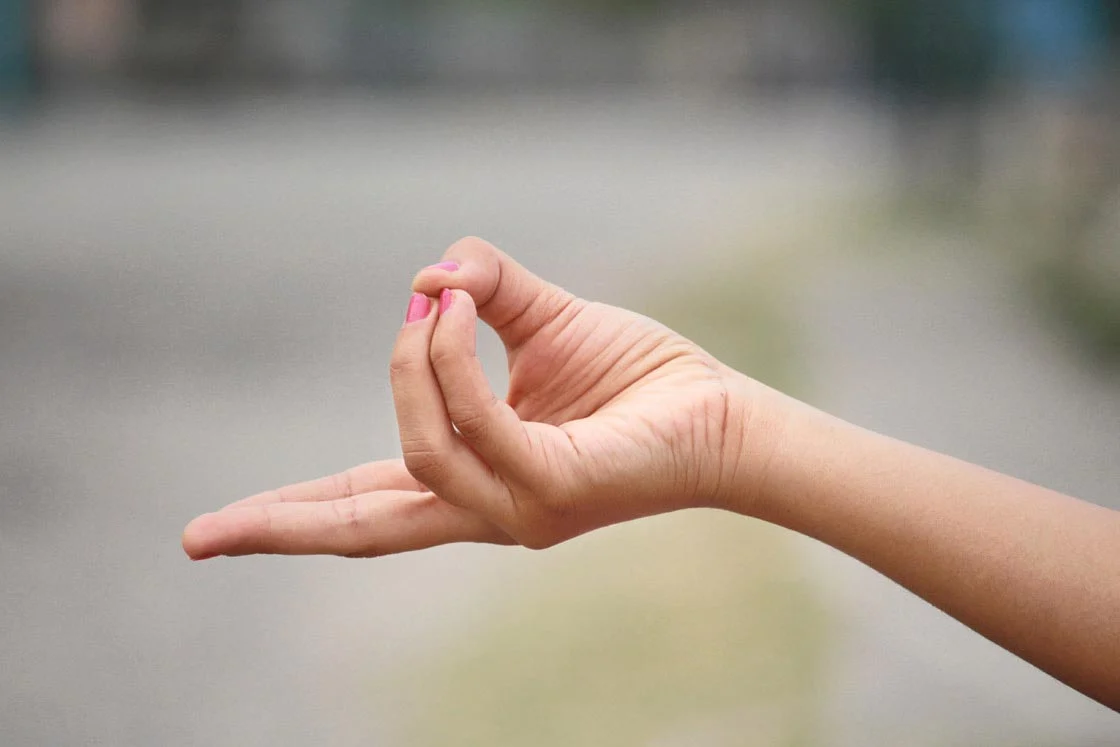
Finally, the Prana Mudra is performed by bringing the thumb, ring finger and little finger together while the other fingers remain extended. Traditional teachings hold that this mudra activates life energy and can help to reduce tiredness and replenish your strength.
Mudras and the elements
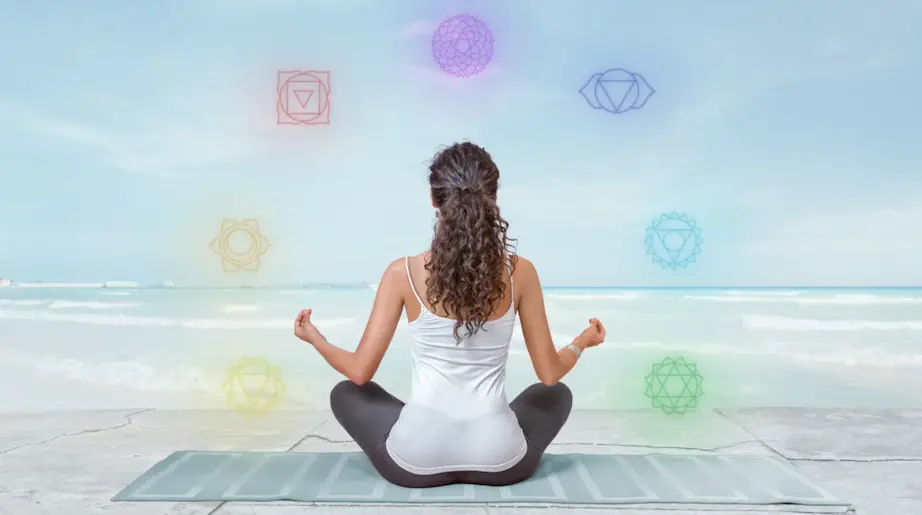
In traditional teachings, each finger is assigned a particular element. The thumb stands for the element of fire, the index finger for air, the middle finger for space or ether, the ring finger for earth and the little finger for water. Combining these fingers in particular mudras is said to influence and harmonise the flow of energy in the body.
| Element | Chakra | Function | |
| Thumb | Fire | Solar plexus (upper abdomen) | Needs: hunger, thirst, sleep |
| Index finger | Air | Heart chakra | Responsible for movement, breath |
| Middle finger | Akasha (ether ~ space) | Throat chakra | Responsible for inner wisdom, intuition and fears |
| Ring finger | Earth | Root chakra | Responsible for tissue, bones, flesh, skin and hair |
| Little finger | Water | Sacral chakra | Responsible for bodily fluids |
What are they used for?
A mudra is a symbolic hand gesture or body posture that is typically performed during meditation, prayer, yoga or ritual acts. Traditionally, mudras are used to direct and increase prana (life energy), which helps to attain a state of mukti (liberation).
- They are an integral part of many spiritual traditions. In spiritual practice, mudras are used to deepen concentration, open energy channels or reach a particular level of consciousness.
- Some mudras, however, are also used to promote physical and mental health. It is believed that they can balance the flow of energy in the body and stimulate certain organs or systems.
- In some forms of yoga, mudras are integrated into asana practice to enhance the effect of the exercises and to direct awareness.
- In religious ceremonies and ritual acts, mudras can be used to express reverence, invoke divine powers or bestow blessings.
- In some cultural traditions, mudras can also be used for non-verbal communication, to express feelings, concepts or ideas.
There is a wide variety of mudras with different meanings and purposes, and how they are used can vary from tradition to tradition. Overall, they serve to create a deeper connection between body, mind and the spiritual self and to harmonise different aspects of human nature.
Why are mudras so effective?
They are considered effective for several reasons. They influence the flow of energy in the body by directing and balancing particular energy currents. By adopting particular finger or hand positions, people can influence and harmonise the flow of prana, the life energy.
Performing mudras can also have psychological effects by stimulating the brain and triggering emotional responses. Certain mudras are associated with specific feelings or qualities and can help to direct awareness or reach a desired mental state.
Furthermore, they foster a deep connection between body and mind. By adopting particular hand positions during meditation or other spiritual practices, people can develop a stronger sense of presence and awareness.
Mudras have a long tradition in various spiritual practices, which can enhance their value and effect. Belief in their effectiveness and their transmission from generation to generation play a part in how they are used.
Their simplicity and accessibility are also compelling, as they are easy to perform and require no special equipment or preparation. They can be practised anywhere and at any time, which makes them accessible to many people.
All in all, mudras are effective because they are based on a deep connection between body, mind and energy and can have a wide range of positive effects on wellbeing and spiritual development.
Conclusion: simple support in everyday life
Mudras are a simple yet effective way of bringing more mindfulness into your everyday life. Even though their effects have not been fully proven by science, they can help you to become calmer, more focused and more balanced. Especially in combination with meditation or conscious breathing, they unfold their full potential and offer you an uncomplicated way to find more inner balance.
revised on 9 April 2026
by Katharina R. (psychology student)
Deepen your meditation practice with Mindfulife
Meditation can be more than a short break in your everyday life. If you would like to understand more deeply how meditation works, how to build a steady practice of your own and how to guide others mindfully, our meditation teacher training is the next step. There you will not only get to know meditation in theory, but also develop more confidence, clarity and trust in your own practice.
Would you like to find out more about the training first? In our weekly webinar you will get an insight and learn more about what your path to becoming a meditation teacher could look like.
For regular support in your everyday life, you can also use our online meditation studio and join guided meditations flexibly via Eversports.
We look forward to accompanying you on your journey.
You can find more mindfulness inspiration on our channels too
References
Goßmann, K. (2024, 5. September). Alles über Mudras: Ausführung, Wirkung, Tradition. YogaEasy. https://www.yogaeasy.de/artikel/alles-ueber-mudras
Hirschi, G. (2000). Mudras: Yoga in your hands. Red Wheel/Weiser.
Menen, R. (2011). The healing power of mudras: The yoga of the hands. Jessica Kingsley Publishers.
Wikipedia-Autoren. (o. D.). Mudra. In Wikipedia, Die freie Enzyklopädie. Abgerufen am 9. April 2026, von https://de.wikipedia.org/wiki/Mudra