The History of Meditation – A Journey Through Time and Cultures

 · 3 min read

The history of meditation: from early traditions to modern practice
The history of meditation stretches back a long way and shows how, over thousands of years, this practice has helped people to reduce stress, develop mindfulness and find inner calm. From the ancient Vedic sources through Buddhist and yogic traditions to modern, secular applications, meditation is a living path for fostering mental clarity and wellbeing.
This article outlines the historical development of meditation – from its early origins through religious traditions to its modern reinterpretation.
Early beginnings and Vedic sources
The origins of meditative practices are difficult to date precisely, as many traditions were passed down orally for centuries. Nevertheless, very old references to contemplative practice can be found in the Indian region. The Vedas – an ancient collection of religious texts from India – contain the first written records of spiritual practices, including meditative elements. The Vedas may have been composed from around 1500 BC onwards and form the foundation for later philosophical developments.
Later, the Upanishads – a further development of the Vedic scriptures – focus on reflection on the self, the breath and inner stillness. These texts show the shift from outward rituals towards an inward-facing form of meditation.
Buddhism, Jainism and yoga
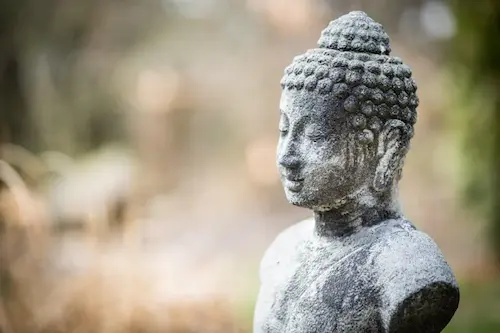
On the Indian subcontinent, various paths developed in which meditation played a central role. In Buddhism, for example, the practice of mindfulness of breathing (Ānāpānasati) or insight meditation (Vipassanā) is regarded as a core practice aimed at self-knowledge and liberation from suffering. Jainism, too, had meditative orientations that emphasised concentration, asceticism and inner control.
At the same time, yoga developed an integrated system of mental discipline in which meditation plays an essential role. A key text is the Yoga Sutras of Patañjali, written sometime between 200 BC and AD 400. It consists of 195 sutras in four chapters and describes the classical eight-limbed path of yoga (Aṣṭāṅga), in which meditation (Dhyāna) is the stage between concentration (Dhāraṇā) and deep absorption (Samādhi).
Patañjali’s work brings together many of the philosophical foundations of yoga and mental training. Later, complementary traditions emerged, such as Hatha yoga, which placed greater emphasis on physical postures (asanas), breathing techniques (Prāṇāyāma) and cleansing practices (kriyas).
Spread and transformation across Asia
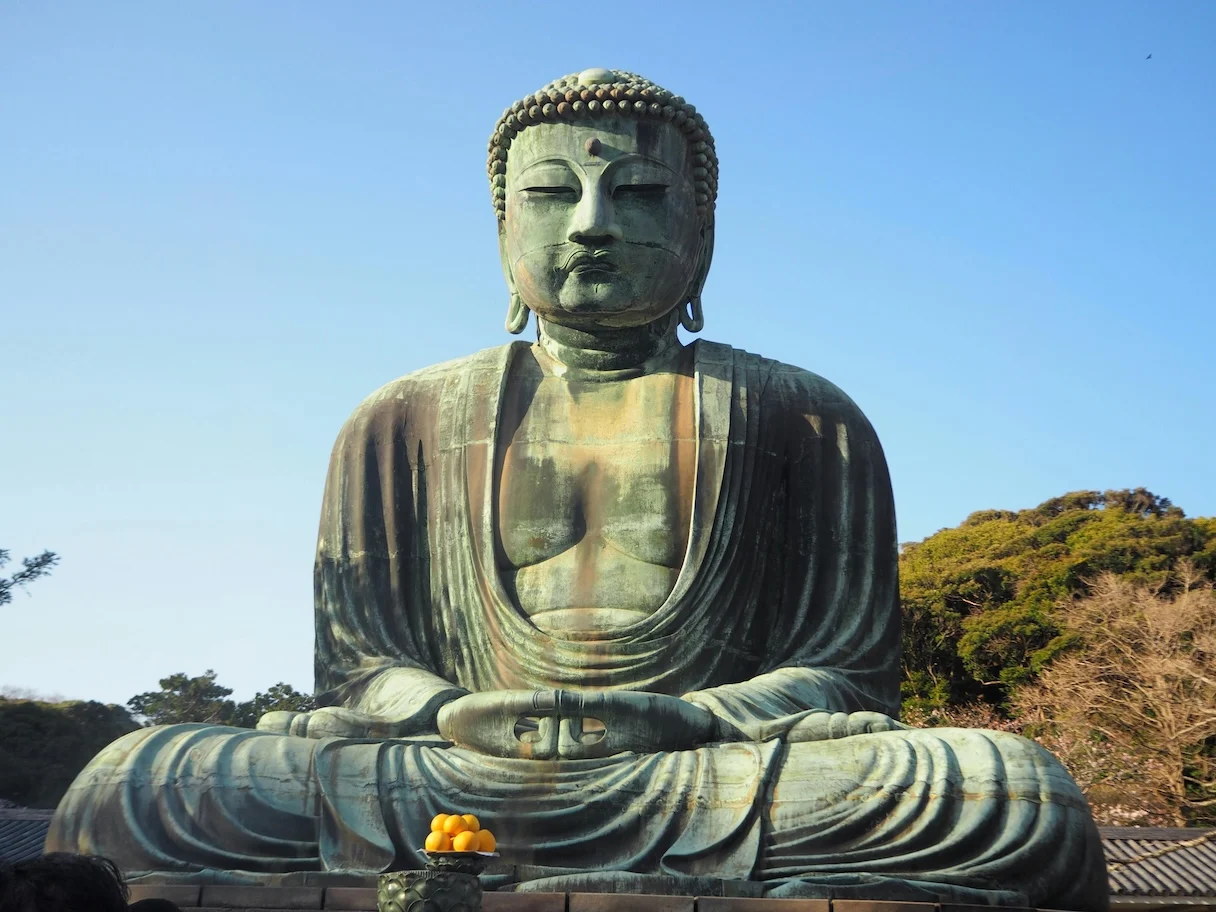
Meditative traditions spread beyond India – to Sri Lanka, South-East Asia, China, Japan and Tibet. Daoist forms of meditation emerged in China; later, Zen Buddhism developed the practice of seated contemplation, which emphasises direct experience.
In Tibet, a rich body of tantric meditation practices developed, featuring visualisations, mantras and complex mental exercises. In all these regions, meditation was developed further and adapted to the respective cultural contexts.
Meditation in the West: from first encounters to widespread practice
Western cultures’ encounter with Asian philosophies began as early as the 19th century through translations, research expeditions and early Indologists. Interest in Buddhism and yoga grew in the 20th century – initially mainly in academic circles.
Over the course of the 20th century, meditation techniques were increasingly secularised and transferred into health-oriented formats – for example in mindfulness training (Mindfulness-Based Stress Reduction, MBSR) or psychotherapeutic approaches. Institutionally organised systems such as Transcendental Meditation (TM) also became widespread.
Significance and development today
The long history of meditation shows that this practice is not static but dynamic – always in dialogue with cultural, philosophical and scientific contexts. Today there is a great variety: from Buddhist Vipassanā schools and Zen to secular mindfulness programmes.
Neuroscientific studies show that different forms of meditation are reflected in characteristic patterns of neural activity, suggesting that meditation is far more than mere relaxation – it is a deliberate form of mental training.
In German-speaking countries, too, teachers, Buddhist communities and health programmes are contributing to its further spread. Today, meditation is not only a spiritual practice but also an effective tool for self-leadership, resilience and wellbeing.
The history of meditation – conclusion
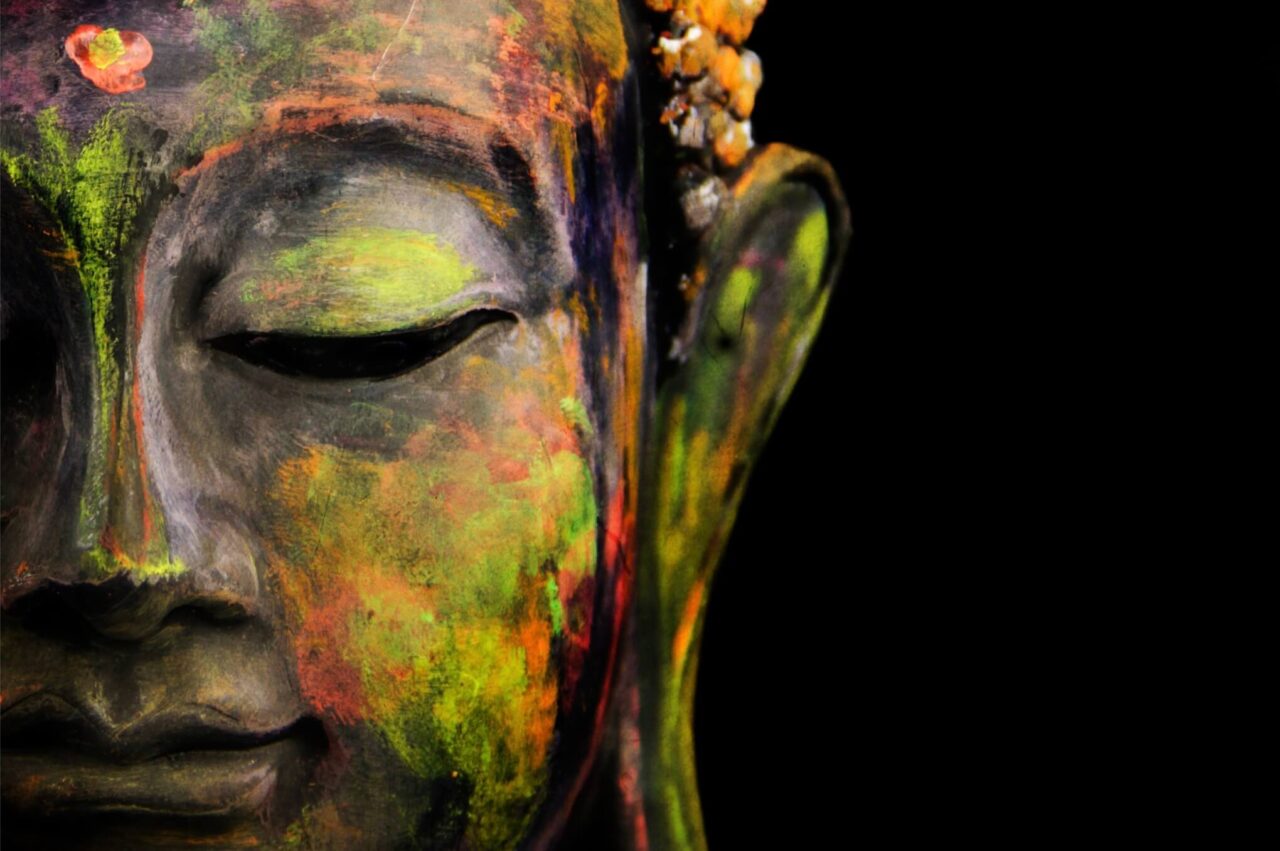
The history of meditation stretches from the ancient Vedic sources through Buddhist and yogic traditions to modern, secularised applications. Each era has added fresh impetus – through philosophical reflection, cultural adaptation and scientific refinement. Today’s wide variety of forms of meditation reflects this rich path of development.
For practitioners, understanding this history can offer orientation and a deeper appreciation – as the living background of a practice that is more relevant today than ever.
revised by Ines R. (psychology student)
on 15 October 2025
Deepen your meditation practice with Mindfulife
Meditation can be more than a short break in your everyday life. If you would like to understand more deeply how meditation works, how to build a steady practice of your own and how to guide others mindfully, our meditation teacher training is the next step. There you will not only get to know meditation in theory, but also develop more confidence, clarity and trust in your own practice.
Would you like to find out more about the training first? In our weekly webinar you will get an insight and learn more about what your path to becoming a meditation teacher could look like.
For regular support in your everyday life, you can also use our online meditation studio and join guided meditations flexibly via Eversports.
We look forward to accompanying you on your journey.
You can find more mindfulness inspiration on our channels too
References
Literatur
Die Geschichte des Yoga. (o. J.). YogaEasy. https://www.yogaeasy.de/artikel/die-geschichte-des-yoga
Entwicklung des Buddhismus in Deutschland. (o. J.). Buddhismus.de. https://buddhismus.de/geschichte-in-deutschland/
Fox, K. C. R., Dixon, M. L., Nijeboer, S., Girn, M., Floman, J. L., Lifshitz, M., Ellamil, M., Sedlmeier, P., & Christoff, K. (2016). Functional neuroanatomy of meditation: A review and meta-analysis of 78 functional neuroimaging investigations. Neuroscience & Biobehavioral Reviews, 65, 208–228. https://doi.org/10.1016/j.neubiorev.2016.03.021
Kurz erklärt: Was sind Patanjali und der 8-gliedrige Pfad des Yoga? (o. J.). Yogaworld. https://yogaworld.de/kurz-erklaert-was-sind-patanjali-und-der-8-gliedrige-pfad-des-yoga/
Meditation. (o. J.). In Wikipedia. https://de.wikipedia.org/wiki/Meditation
Patanjali und die Yoga Sutra. (o. J.). YogaEasy. https://www.yogaeasy.de/artikel/patanjali-und-die-yoga-sutra
Transzendentale Meditation. (o. J.). In Wikipedia. https://de.wikipedia.org/wiki/Transzendentale_Meditation
Yogasutra. (o. J.). In Wikipedia. https://de.wikipedia.org/wiki/Yogasutra