Extraterrestrial Intelligence: How Astrophysicist Alexander Pollak Searches for Life in Space

 · 4 min read
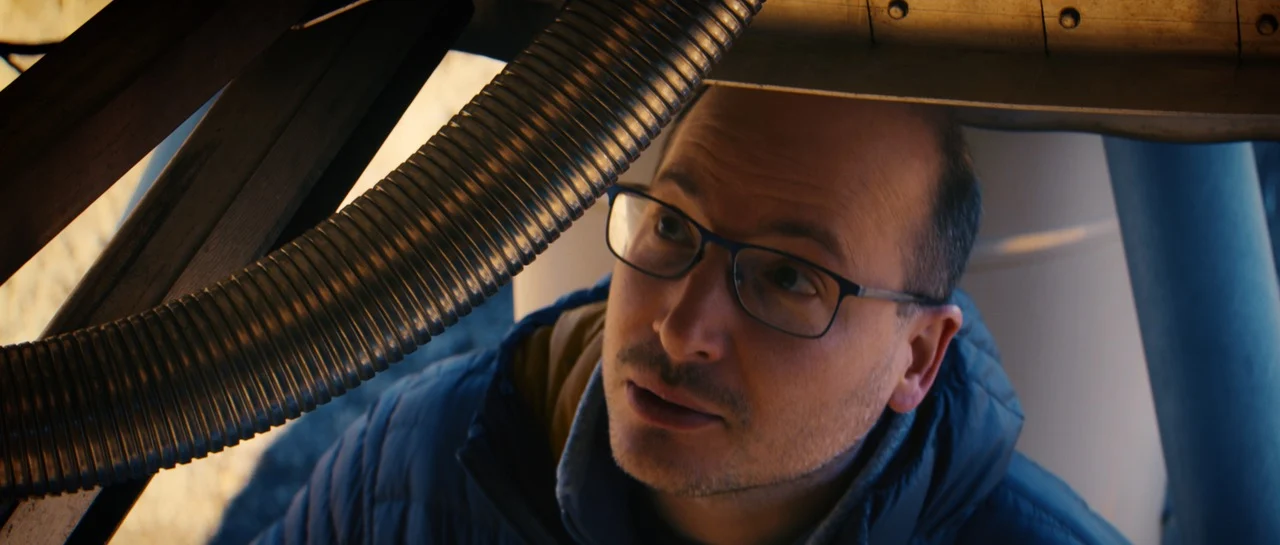
Extraterrestrial intelligence has fascinated humanity for centuries: is there intelligent life beyond Earth? While this question was long mainly the stuff of science fiction, scientists around the world are now working to investigate it using modern technologies and scientific methods.
One of them is astrophysicist Alexander Pollak, who now runs an observatory in California and searches for possible evidence of technologically advanced extraterrestrial civilisations.
Who is Alexander Pollak?
His own path into science was anything but straightforward. After training as an electrician, Pollak first went back to gain his university entrance qualification and then studied electrical engineering and mechatronics at the university in Göppingen. Even during his studies he was captivated by radio astronomy, first through a fellow student and later through an internship.
This combination of technical know-how and practical experience eventually led him into astrophysics. To this day, his research focuses on instrumentation, that is, the development and construction of astronomical measuring instruments and radio telescopes. In 2018, Pollak completed his PhD in astrophysics in the UK. A year later he moved to the USA, where he built up his own research team and still works today.
How does the search for extraterrestrial intelligence work?
His research is based on radio astronomy. Unlike optical telescopes, which capture visible light, radio telescopes detect electromagnetic radiation in the radio range. The basic principle can be compared to a thermal imaging camera: warm objects emit more energy than cold ones. If you point a radio telescope at the Sun, for example, you measure much stronger signals than when looking into the cold expanse of interstellar space.
Radio waves and visible light are both forms of electromagnetic radiation and travel at the speed of light. However, radio telescopes use much longer wavelengths and lower frequencies than optical telescopes. This makes it possible to observe phenomena that remain hidden in visible light.
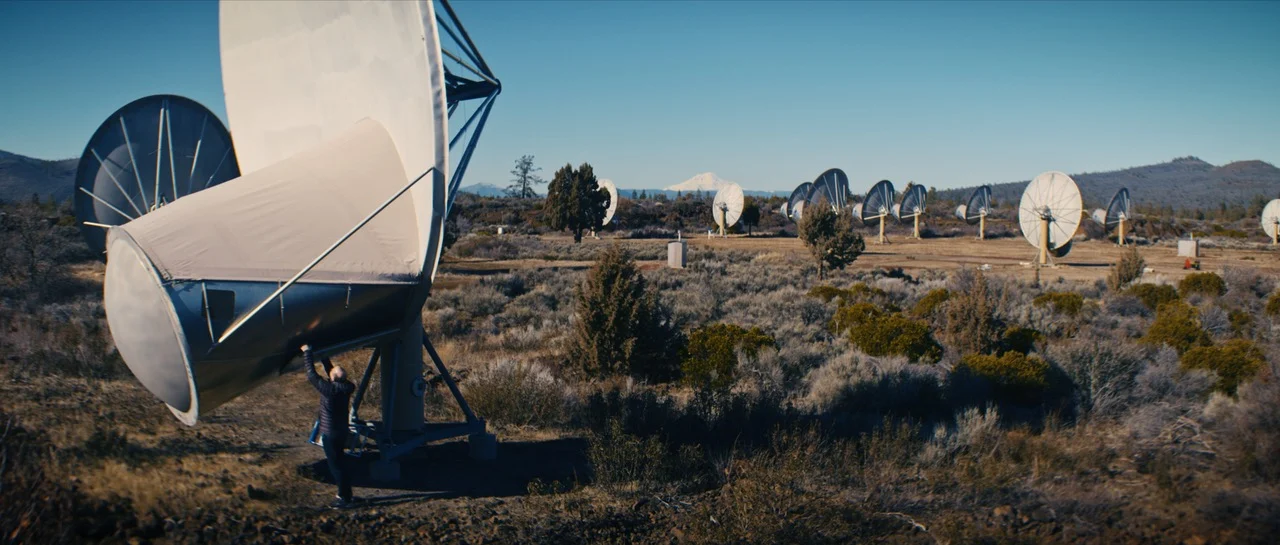
Pollak’s team is not interested in every radio signal from space, though. The focus is on so-called technosignatures. These are signals produced by technological processes or systems, such as mobile phone signals or satellite communications.
Working with assumptions and huge amounts of data
How do you look for something without knowing what it looks like?
One of the biggest challenges in SETI research (Search for Extraterrestrial Intelligence) is that nobody knows what extraterrestrial life might actually look like or how it might communicate. Researchers therefore have to make assumptions. One of them is that a technologically advanced civilisation would also use electromagnetic signals that could, in principle, be detected. These assumptions are scientifically grounded, but they could also turn out to be wrong.
On top of this comes the enormous volume of data that modern radio telescopes generate. Pollak reports that around one terabyte of data is produced in just two seconds. In total, observation campaigns can amount to several thousand terabytes. Analysing the data alone often takes considerably longer than the observation itself. While measurement campaigns may last three months, for example, the subsequent analysis often takes six months or even longer.
The data come from a range of observatories. Different telescope facilities, such as the Very Large Array (VLA) in New Mexico or other radio observatories, provide different datasets that complement one another and cover different regions of the sky or of the frequency spectrum.
Why has nothing been found so far?
There is one question that researchers in the SETI initiative hear particularly often: why has no clear evidence of extraterrestrial intelligence been discovered yet?
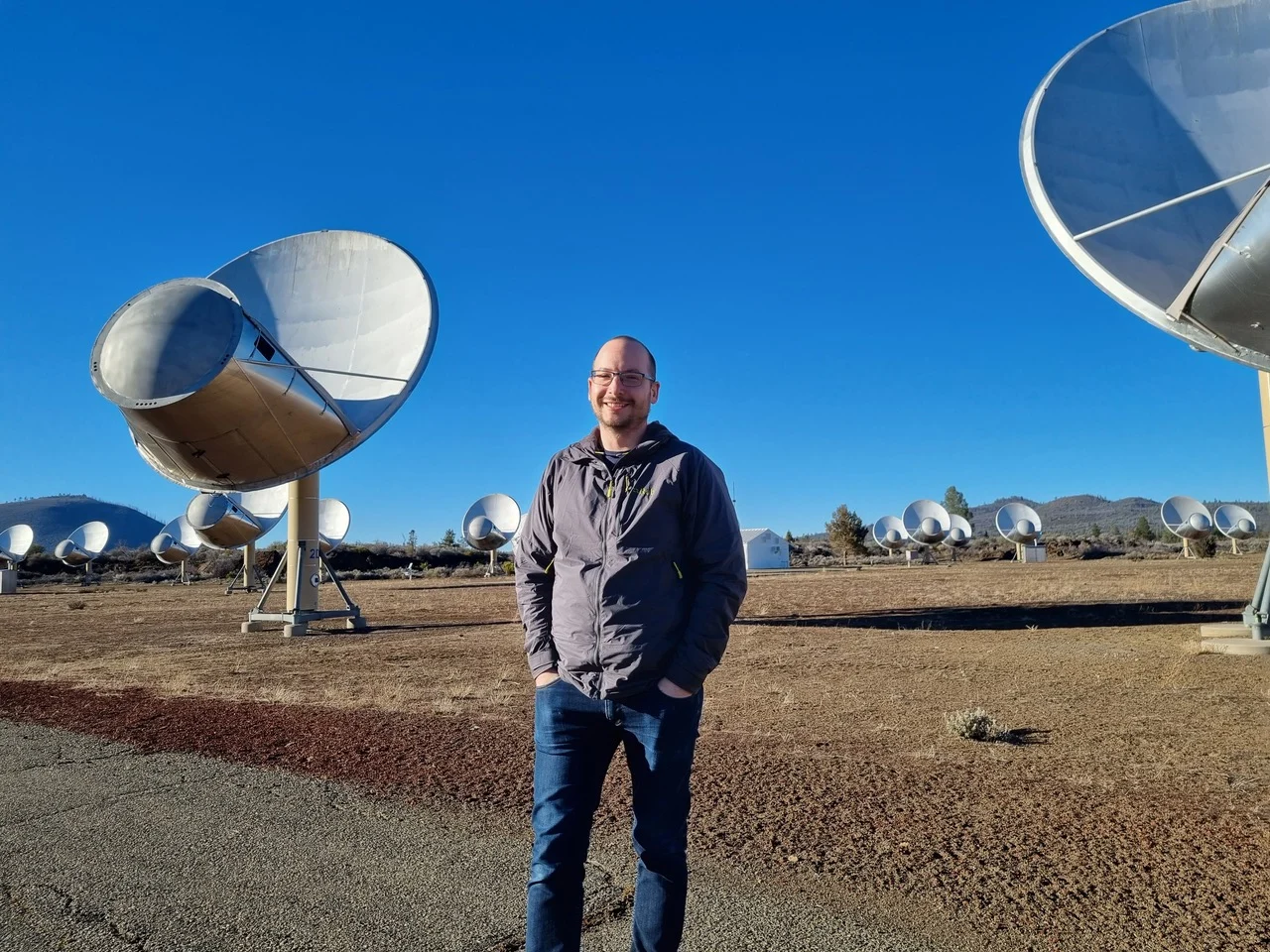
Pollak explains this with a simple comparison: if you want to find out whether there are fish in the ocean, you don’t scoop up a single glass of water and conclude from the absence of fish that the entire ocean is empty. The same applies to the search for technosignatures so far. Although modern radio telescopes capture vast amounts of data, the part of the universe examined to date represents only a tiny fraction of what could be observed at all.
With every new generation of telescopes, however, the technical possibilities improve. Greater sensitivity, wider observation ranges and more powerful analysis methods steadily increase the chances of identifying signals that have so far gone undetected.
Between science and speculation
Precisely because the subject of extraterrestrial life fires so many people’s imagination, misunderstandings are common. Pollak therefore stresses the clear scientific distinction between research into technosignatures and speculation about UFOs or UAPs (Unidentified Anomalous Phenomena). While unsubstantiated claims often circulate on social media and in conspiracy narratives, the scientific community works exclusively on the basis of verifiable data and reproducible analyses.
Could I do this too?
Above all, though, Pollak cares about a message that goes beyond his research. He wants to show young people that a career in science is possible even if nobody in their family has been to university before. He himself is the first in his family to hold a degree and emphasises that for a long time he simply wasn’t aware of many opportunities – such as internships or international research stays.
His career path is a striking example of how scientific careers don’t always have to follow a straight line. What matters is curiosity, openness and a willingness to seize new opportunities. Especially in a field of research that tackles one of humanity’s greatest questions, these qualities are indispensable.
Isabel (psychology student & dietitian)
In the podcast, Alexander Pollak talks in more detail about his work, the search for extraterrestrial intelligence and the possibilities of modern radio astronomy.
Deepen your meditation practice with Mindfulife
Meditation can be more than a short break in your everyday life. If you would like to understand more deeply how meditation works, how to build a steady practice of your own and how to guide others mindfully, our meditation teacher training is the next step. There you will not only get to know meditation in theory, but also develop more confidence, clarity and trust in your own practice.
Would you like to find out more about the training first? In our weekly webinar you will get an insight and learn more about what your path to becoming a meditation teacher could look like.
For regular support in your everyday life, you can also use our online meditation studio and join guided meditations flexibly via Eversports.
We look forward to accompanying you on your journey.
You can also find more mindfulness inspiration on our channels:
References
Cockell, C. S. (2020). The Fermi Paradox, extraterrestrial life and the future of humanity. Philosophical Transactions of the Royal Society A, 378(2183).
Davies, P. (2010). The Eerie Silence: Renewing Our Search for Alien Intelligence. Houghton Mifflin Harcourt.
National Radio Astronomy Observatory (NRAO). Very Large Array (VLA). https://public.nrao.edu/telescopes/vla/
Tarter, J. (2001). The Search for Extraterrestrial Intelligence (Seti). Annual Review of Astronomy & Astrophysics, 39(1), 511. https://doi.org/10.1146/annurev.astro.39.1.511
Wright, J. T. et al. (2018). The Search for Extraterrestrial Civilizations with Large Digital Sky Surveys. The Astronomical Journal, 156(6), 260. https://doi.org/10.3847/1538-3881/aae9f3
Lauterbach, T. (2020). Radioastronomie [electronic resource] : Grundlagen, Technik und Beobachtungsmöglichkeiten kleiner Radioteleskope / (1st ed. 2020.). Springer Fachmedien Wiesbaden.