Coping with change: 3 tips for more inner calm
Everyone goes through all kinds of changes in life. We share some tips on how you can deal with them as well as possible. Enjoy reading!

 · 3 min read

Everyone goes through all kinds of changes in life. We share some tips on how you can deal with them as well as possible. Enjoy reading!
What can you do when life changes?
Throughout life, we keep encountering all kinds of changes, and looking back, nothing stays quite the way it once was. This shows us that we cannot control everything, which can trigger anxiety. Unpleasant changes in particular can be stressful: a break-up, losing a job, the loss of a loved one. These demand a high degree of psychological and social readjustment, and the experience of stress is linked to the extent of the life change (Holmes & Rahe, 1967).
Interestingly, many changes are brought about deliberately when people are dissatisfied with their situation, because this creates motivational pressure to actively reshape it. So change is not an end in itself, but follows the need for psychological well-being (Deci & Ryan, 2000). In this article, we give you three tips on how to cope better with change.
Before we get to the specific tips, it is worth taking a quick look at why we actually find it so hard to adjust to change. This is mainly because we have built up old habits that have become anchored in our subconscious and thus protect us from additional strain. Because we know these habits, they give us a sense of security and a certain confidence, as they require no conscious attention (Verplanken & Aarts, 1999). Plenty of courage and self-confidence make it easier to deal with changes in life. So what can you do when you find yourself in the middle of a period of change, perhaps an unplanned one?
Tip 1: Allow your emotions
It is completely normal for change to be accompanied by feelings such as fear, sadness or panic. What matters is that you notice all your feelings and your body’s reactions and name them without judging them. Trying to suppress your feelings or hold back tears only makes things worse. Suppression should be avoided because these emotions may return later in an even stronger form, depending on how hard you try to avoid them (Wegner, 1994). What is more, people who do not process emotional experiences have a demonstrably higher risk of physical illness (Pennebaker, 1997). Journaling can be a good method, especially when you need to sort out your thoughts. Talking to someone about it may also help you.
Tip 2: Avoid stress
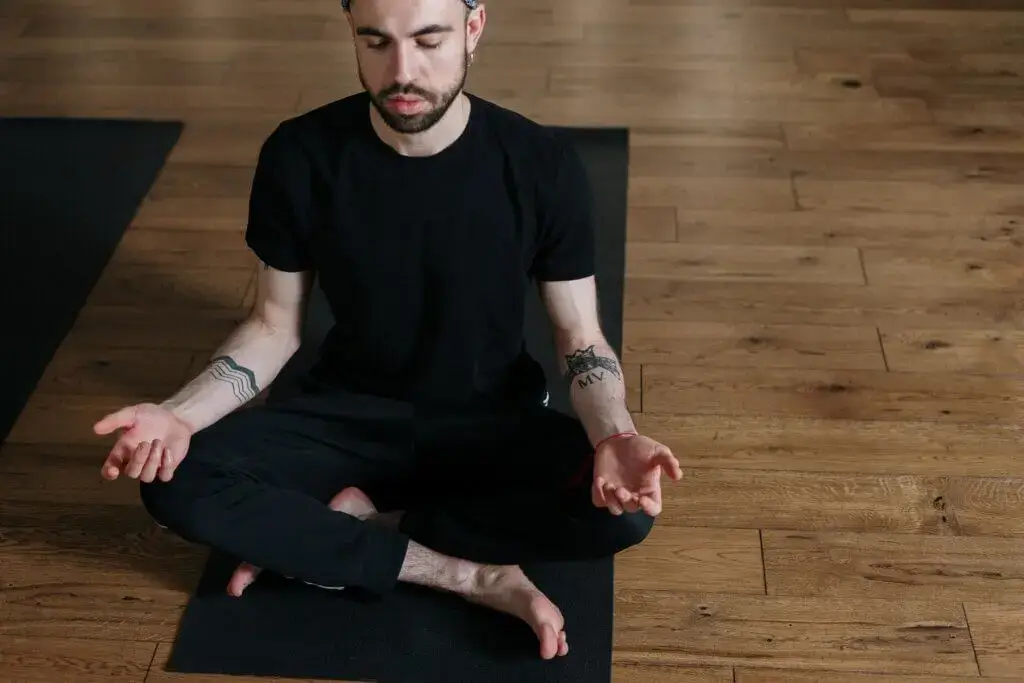
Change often raises stress levels in the body, so it is important that you know how to relax. Sport and exercise, meditation, breathing exercises or yoga and mindfulness are all good ways to reduce stress. Using these techniques reduces the release of cortisol in our body and activates the “rest nerve”. Studies show that even regular endurance training reduces anxiety and low mood, and mindfulness practices such as meditation or yoga also have a positive effect on stress, sleep and your general well-being (Grossmann et al., 2004; Salmon, 2001). Even if you are short on time or find it hard to relax on hectic days, still take at least 5-10 minutes for yourself.

Tip 3: See change as an opportunity
When one door closes, another one opens. Everyone has surely heard this saying before. Whether the change is good or bad, use it as an opportunity to find something positive in the new situation. Even if you have lost your job or ended a long-term relationship, you can still see it as a fresh start. In a few years, you will be able to look back and smile.
Every small change could lead you, step by step, closer to yourself. Take a moment to consider: which changes have made you the person you are today? What opportunities have they opened up for you? Even if some experiences did not get you very far, you have still grown from them. You can write down what you are grateful for during this period of change. After all, without rain there is no sunshine.

We hope that, whatever situation may come your way, you learn to deal with it and that these tips have helped you!
Take a moment today and ask yourself: which change is challenging me right now – and what might it make possible for me in the long run?
revised by Friederike S. (media communication student)
on 26/04/2026
Mental training
You now have three tips you can use when changes in life lie ahead. Would you also like to know how you can use mental training for your psychological well-being? Then feel free to read our article on the topic!
Deepen your meditation practice with Mindfulife
Meditation can be more than a short break in your everyday life. If you would like to understand more deeply how meditation works, how to build a steady practice of your own and how to guide others mindfully, our meditation teacher training is the next step. There you will not only get to know meditation in theory, but also develop more confidence, clarity and trust in your own practice.
Would you like to find out more about the training first? In our weekly webinar you will get an insight and learn more about what your path to becoming a meditation teacher could look like.
For regular support in your everyday life, you can also use our online meditation studio and join guided meditations flexibly via Eversports.
We look forward to accompanying you on your journey.
You can find more mindfulness inspiration on our channels too
References
Deci, E. L., & Ryan, R. M. (2000). The “What” and “Why” of Goal Pursuits: Human Needs and the Self-Determination of Behavior. Psychological Inquiry, 11(4), 227–268. https://doi.org/10.1207/S15327965PLI1104_01
Grossman, P., Niemann, L., Schmidt, S., & Walach, H. (2004). Mindfulness-based stress reduction and health benefits: A meta-analysis. Journal of psychosomatic research, 57(1), 35-43.
Holmes, T. H., & Rahe, R. H. (1967). The Social Readjustment Rating Scale. Journal of Psychosomatic Research, 11(2), 213–218. https://doi.org/10.1016/0022-3999(67)90010-4
Pennebaker, J. W. (1997). Writing about emotional experiences as a therapeutic process. Psychological science, 8(3), 162-166.
Salmon, P. (2001). Effects of physical exercise on anxiety, depression, and sensitivity to stress: a unifying theory. Clinical psychology review, 21(1), 33-61.
Verplanken, B., & Aarts, H. (1999). Habit, Attitude, and Planned Behaviour: Is Habit an Empty Construct or an Interesting Case of Goal-directed Automaticity? European Review of Social Psychology, 10(1), 101–134. https://doi.org/10.1080/14792779943000035
Wegner, D. M. (1994). Ironic processes of mental control. Psychological Review, 101(1), 34.