Child’s Play Meditations – 3 Practical Meditation Exercises for Children
Making meditation child's play isn't easy, especially not with children. We'll show you how you can still win them over in a playful way!

 · 3 min read
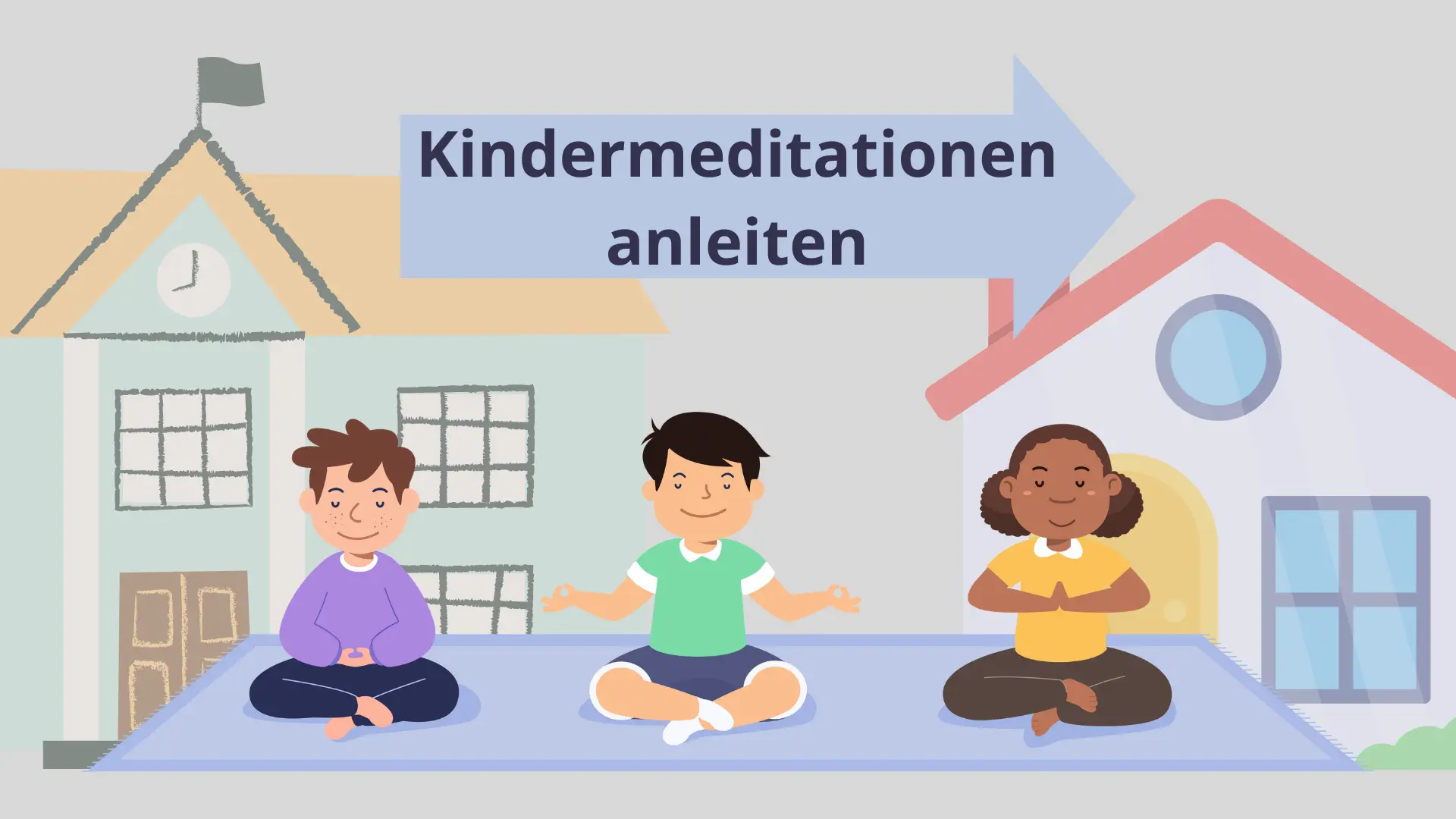
Today we’re practising meditation that’s child’s play. And if you’re now thinking, “Hang on, meditating isn’t child’s play at all”, then you have all the more reason to look forward to today’s focus: meditations for children. Children bring plenty of joy and energy with them, but those aren’t exactly the classic hallmarks of meditation, are they? We’ll show you how you can still win them over in a playful way!
Playful and creative: Why is meditation different for children?
Guiding meditations for children is fundamentally different from guiding meditations for adults. Children often have a natural curiosity and energy that make it hard for them to sit still for long periods. Their attention span is shorter and they need more variety. That’s why meditations for children are usually shorter and need to be designed in a playful and creative way, so as to hold their attention while introducing them to the practice of meditation at the same time.
1. Finger or hand meditation: A playful introduction
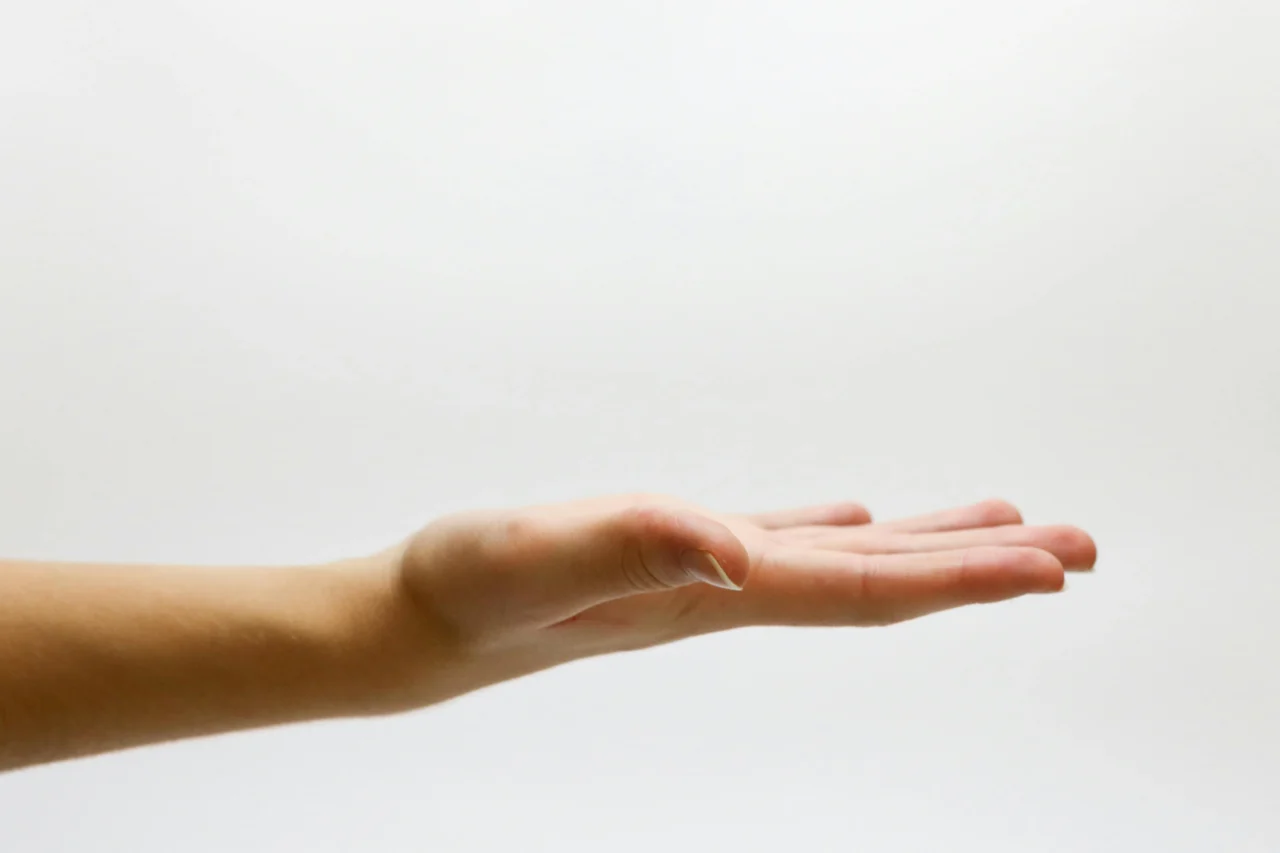
One of my favourite meditations for children is the finger or hand meditation. The child spreads out one hand and traces along the fingers with the index finger of the other hand, in time with their breathing. Slowly and playfully, they experience the connection to their own breath . This form of meditation appeals to children’s senses and makes the process of mindfulness tangible and something they can actually experience.
First, stretch out one hand and spread your fingers wide. Then take the index finger of your other hand and slowly begin to move it along the fingers of your outstretched hand while breathing deeply in and out. Pay conscious attention to how the movement of your index finger affects your palm and how each finger feels as it is touched.
As you trace along your fingers, you can notice the different textures and sensations you perceive, such as the smooth skin between your fingers or the slight tingling that arises when you stroke over your fingertips.
Do the finger meditation slowly and gently, giving yourself time to concentrate on each movement and sensation. Keep reminding the children of this, because sometimes they unconsciously speed up. This exercise helps them to focus their attention, sharpen their senses and connect consciously with their body and their breath. It offers a playful introduction to the practice of meditation and can be done both in groups and at home.
2. Observing and breathing: Discovering the movement of the breath lying down
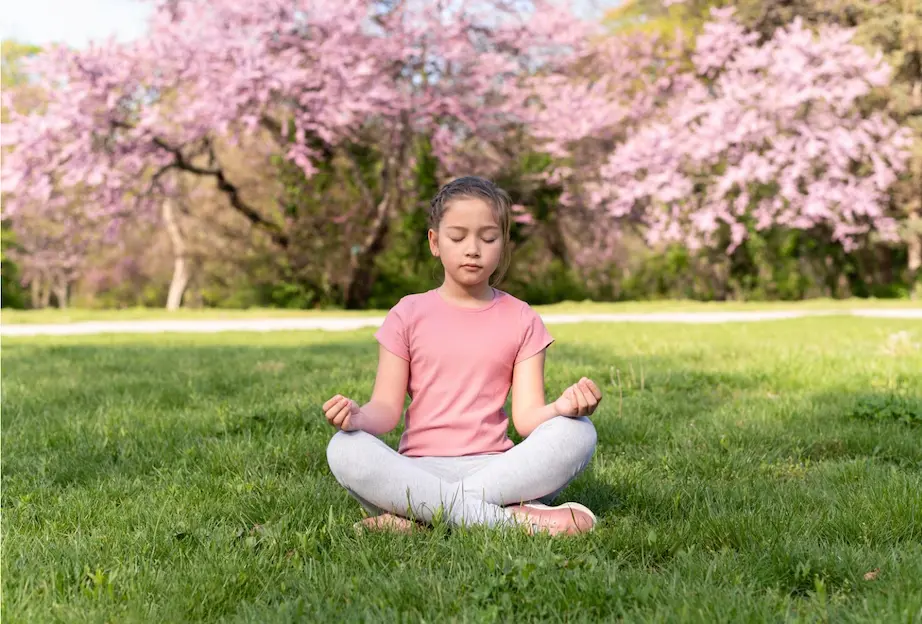
Another meditation that works well for children is observing the movement of the breath while lying down. The child lies on their back and places their favourite toy or cuddly toy on their tummy. With every in-breath and out-breath, the tummy rises and falls, and the toy moves along with it. This not only encourages attentiveness but also focus on the breath.
3. The singing bowl meditation: A sensory experience
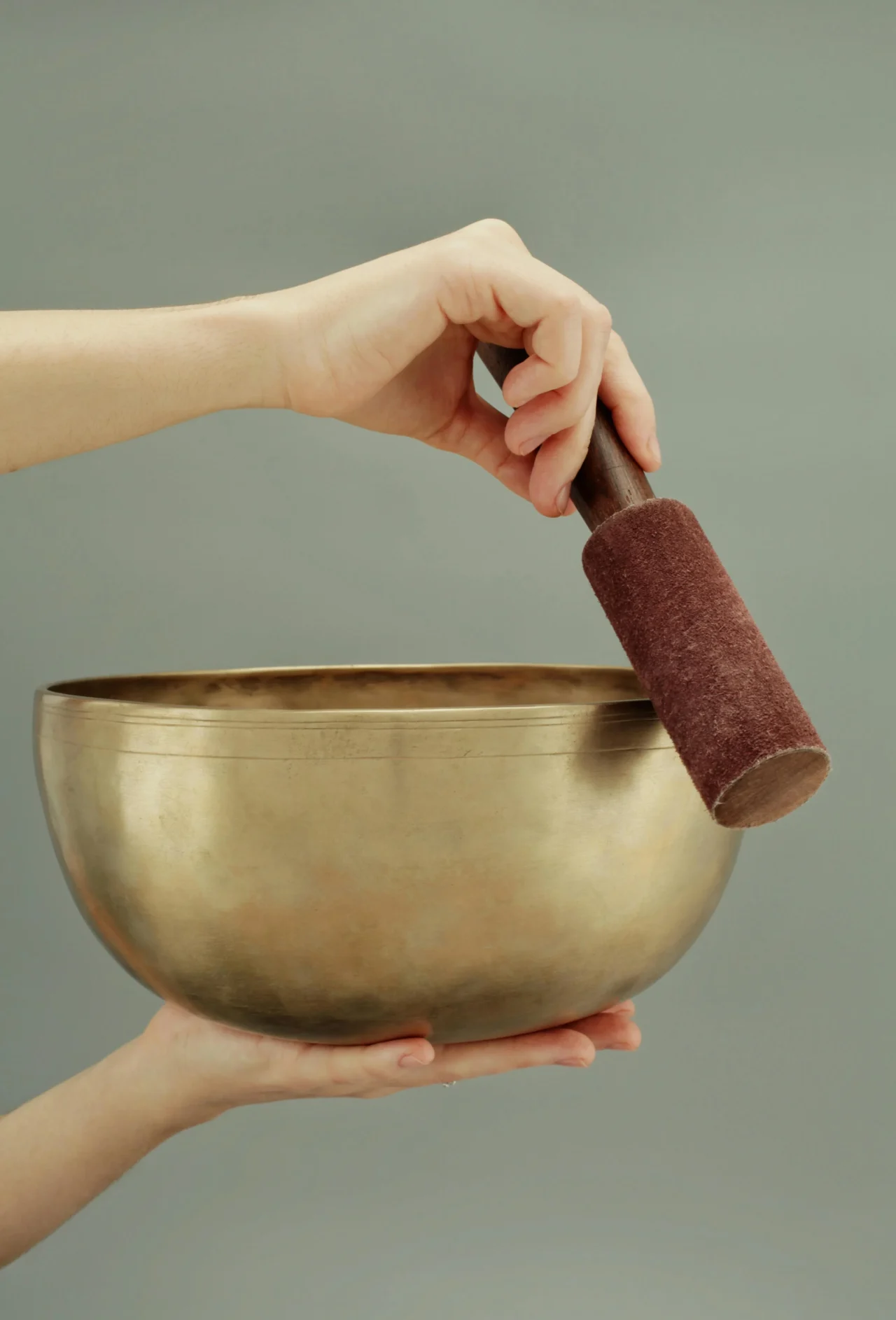
Another option is the singing bowl meditation. Children can lie down or stay seated. A singing bowl is struck, and the child is asked to listen to it for as long as they can. As soon as the sound has faded away, the child slowly raises their hand. This exercise trains mindfulness and the ability to pay attention to the present moment, while also offering a sensory experience.
Conclusion: Is meditating child’s play?
Meditations for children can be a wonderful way to introduce them to the world of mindfulness through play. With creative and playful approaches, children can learn to direct their attention and concentrate on the present moment. Because children have a shorter attention span, the meditations are usually shorter and need to be adapted accordingly. I hope these simple meditation techniques inspire you to meditate with your own children or with others.
Deepen your meditation practice with Mindfulife
Meditation can be more than a short break in your everyday life. If you would like to understand more deeply how meditation works, how to build a steady practice of your own and how to guide others mindfully, our meditation teacher training is the next step. There you will not only get to know meditation in theory, but also develop more confidence, clarity and trust in your own practice.
Would you like to find out more about the training first? In our weekly webinar you will get an insight and learn more about what your path to becoming a meditation teacher could look like.
For regular support in your everyday life, you can also use our online meditation studio and join guided meditations flexibly via Eversports.
We look forward to accompanying you on your journey.