Meditation for children: what should I bear in mind?
In our fast-paced world, children are not spared from stress, hustle and bustle and pressure to perform either. That makes it all the more important to create small islands of relaxation in everyday life that give the young brain a break.

 · 8 min read
In our fast-paced world, children are not spared from stress, hustle and bustle and pressure to perform either. That makes it all the more important to create small islands of relaxation in everyday life that give the young brain a break.
One way of creating such an island can be meditation for children. In this article, you will find out why meditation for children is effective, what you should bear in mind if you would like to meditate with children and what a well-structured meditation practice with children can look like.
Meditating with children?!
At first, meditation for children may seem a little counterintuitive. After all, many adults find it difficult to sit still for any length of time during meditation – so how are children, whose urge to move is much greater, supposed to manage it?
The answer is that meditation for children does not simply mean sitting in silent concentration (even though this is important for some exercises). Meditation also includes active techniques that train our mind.
While meditating with children is a relatively new idea in the western world, things often look different in the East. In India and other countries with strong Buddhist influences, meditation is deeply rooted in tradition. Children learn meditation practice from their parents and teachers, with the exercises adapted to the children’s age.
How does meditation affect children?
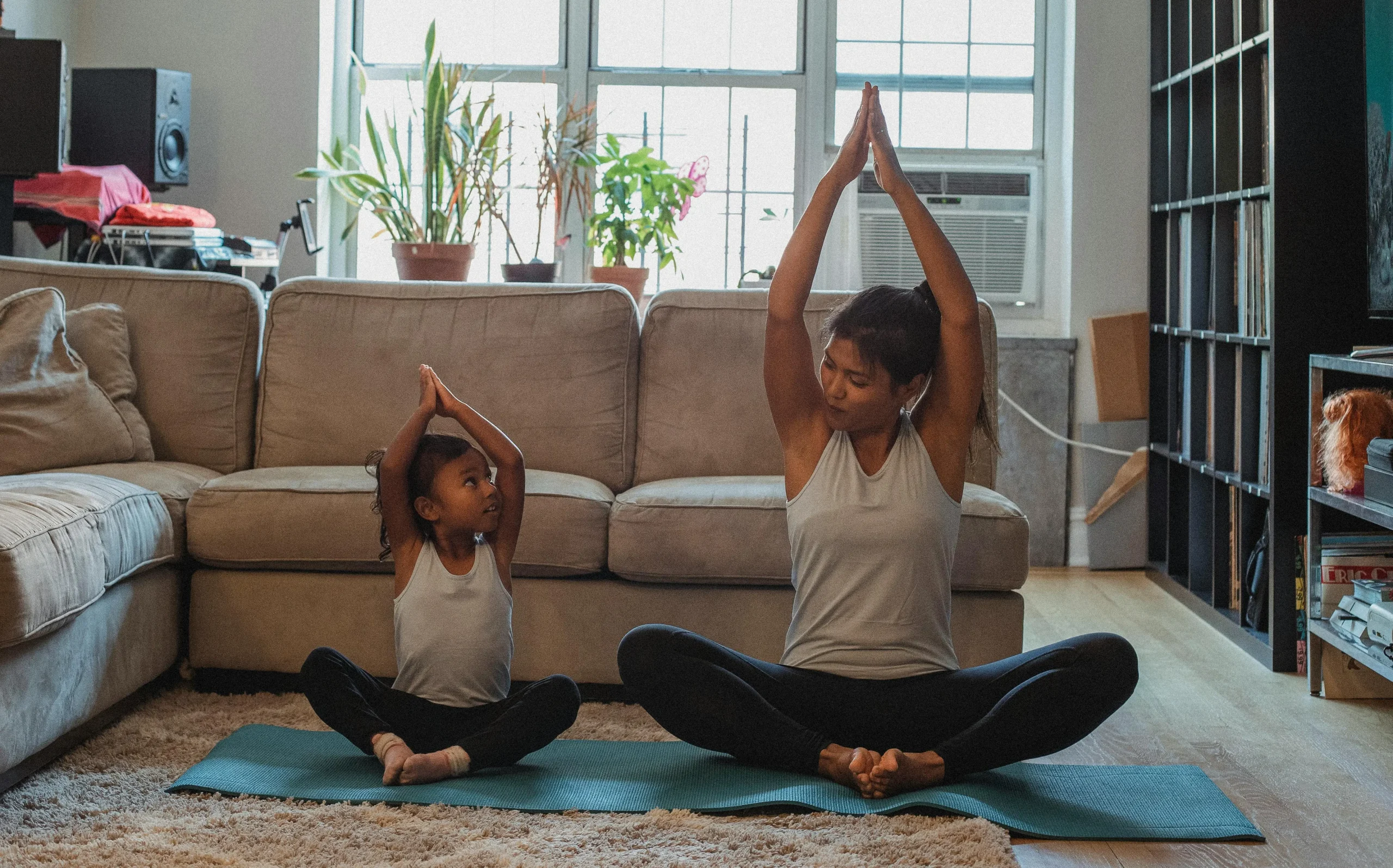
Physiologically, meditation has the same effects on children as on the adult organism. Meditation can reduce anxiety, improve self-awareness, increase attention span, reduce sleep problems and lower inflammation markers in the body. This has been shown in numerous scientific studies. Of course, children do not usually have health complaints such as high blood pressure or other stress-related cardiovascular problems yet. However, studies show that the number of children with regular tension headaches or sleep disorders, for example, has been rising in recent years.
There are now also a number of studies that have examined the effectiveness of meditation-based programmes for specific conditions in children. For example, there is evidence that meditation can reduce both behavioural problems and sleep disorders in children with ADHD. Some studies also show positive effects on headaches in children and on problems within the family in children with an autism spectrum disorder.
What role does the children’s age play?
Abilities and needs develop at a rapid pace during childhood. Although the basic type of exercise in meditation for children is in principle the same for all age groups, the details and the way they are presented need to be adapted to the child’s stage of development. The younger the children, the shorter their attention span usually is, which is why you should tailor the length of the sessions to their age. Here we reveal what else you should bear in mind.
Meditating with five- to eight-year-olds
At this age, the capacity for abstract thinking is not yet developed, or not fully. That is why everything you want to use in your children’s meditations should be linked to practical experiences, in other words to things they have already seen, heard or touched. Children of this age also love stories, rhymes and songs. A good exercise to prepare for meditation, for example, is to close their eyes after a story and picture the characters or events in detail.
Meditating with nine- to twelve-year-olds
In this age group, general knowledge and cognitive abilities develop very quickly. Understanding abstract ideas is usually still difficult, which is why you should continue to link new things you want to teach to something familiar. The need for interaction also increases at this age. Children want to have a say, discuss things and get answers to their questions. You should respond to this in your children’s meditations rather than expecting them simply to carry out guided exercises passively.
Meditating with teenagers
Once they reach their teens, young people usually turn away from anything that seems in any way childish to them. Meditations at this age should therefore not be too childlike or playful. As abstract thinking matures at this age, the range of meditation exercises you can use grows. If you practise with several teenagers, it becomes increasingly important that you manage to capture the attention of the whole group, because the peer group becomes more and more important for young people.
Apart from age, what else should you consider when meditating with children?
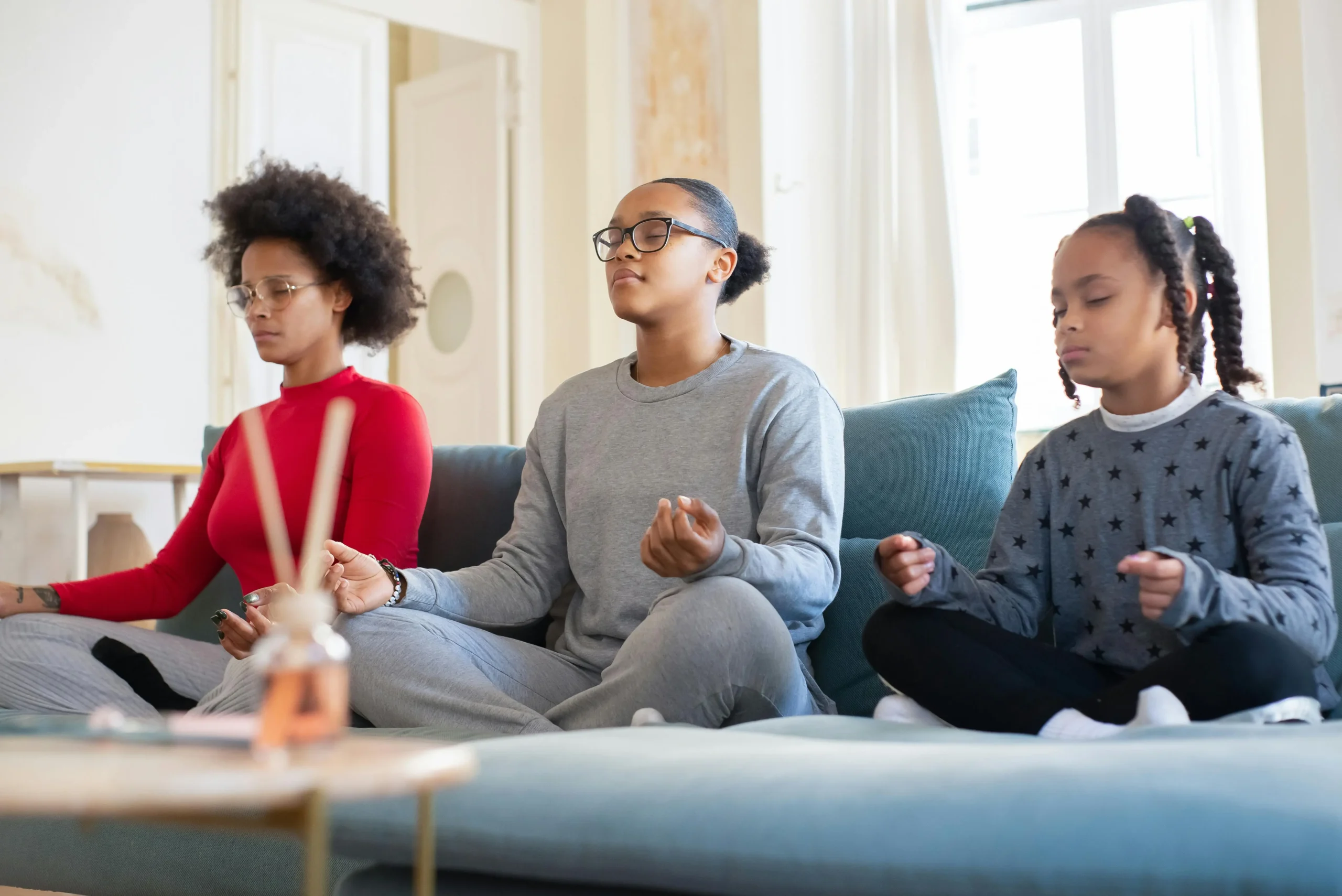
It is important not to expect too much when you want to meditate with children. Make sure you do not react with disappointment or impatience if something does not work out the way you imagined. Remember that your meditation for children is an offer – ultimately it is up to the child whether or not they want to accept it. Doing it voluntarily is a basic prerequisite for meditation to be of any benefit at all.
If you want to meditate with several children, you can emphasise from the outset that meditation is not a competition. Children often get the impression early on that they are constantly being compared with one another, and then wonder whether they are as good at meditating as the others or want to be “the best”. For this reason, you should also avoid praising individual children where possible and praise the whole group instead.
You should also keep your explanations as simple as possible, especially if you want to offer meditations for younger children. Encourage the children to speak up and talk about what they are experiencing. But bear in mind, too, that children also try to outdo each other in their accounts. If you notice fantasy creeping into their descriptions, you should gently bring the conversation to a close or steer it in a different direction.
What can meditation for children look like in practice?
Exercises that foster mindfulness are an excellent way to introduce children to meditation. They are good preparation for more intensive concentration exercises later on and can be presented in a playful way, so children will usually have a lot of fun.
Kim’s Game
This exercise takes its name from the novel Kim by Rudyard Kipling and is a good exercise for developing mindfulness. You will need a tray with as many different objects as possible, a cloth, and paper and a pen for each child. For younger children who cannot write yet, you can leave out the paper and pen. They can simply say their answers out loud.
Place the objects on the tray, making sure there is enough space between them for each one to be clearly visible. The children are shown the tray for a set period of time. They are not allowed to touch the objects and should, if possible, not talk to each other. Then you put the tray out of sight or cover it with a cloth. Now the children write down all the objects they can remember.
You will notice that most children quickly get better at the game or develop particular systems to remember more objects. How much time you give them to look and how many objects you show depends on the age of the children and the make-up of the group.
Mindful everyday life
In this mindfulness exercise, children draw from memory an object they use every day at home. This could be their toothbrush, their lunchbox, their school bag or any other object that is not in view at the moment. Make it clear that this is not a drawing competition but about drawing the object as accurately as possible.
Then ask the children to look at the chosen object at home several times from every angle before the next meditation session. Ask them not to draw the object again in the meantime (some children may do so anyway, which is not a problem). At the next session, have the children draw the object again.
It is important that you then discuss with the children why their drawings have now become more accurate. Let the children come up with their own ideas. Something happened between the two drawings – what was it? Try to make clear that it was not just because they looked at the object several times, since they had already seen it many times before. This is a good opportunity to show children what mindfulness actually is and how it can change the way we see the world.
Breathing meditation with children
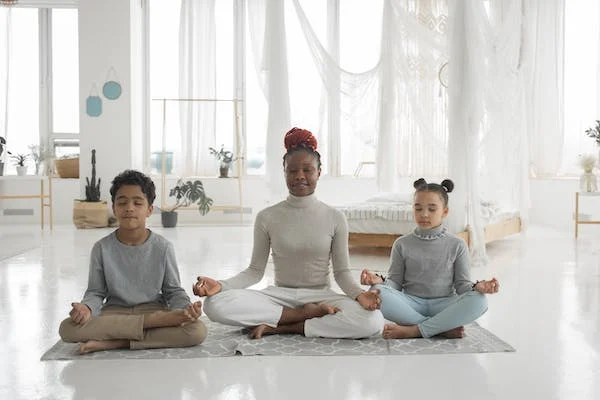
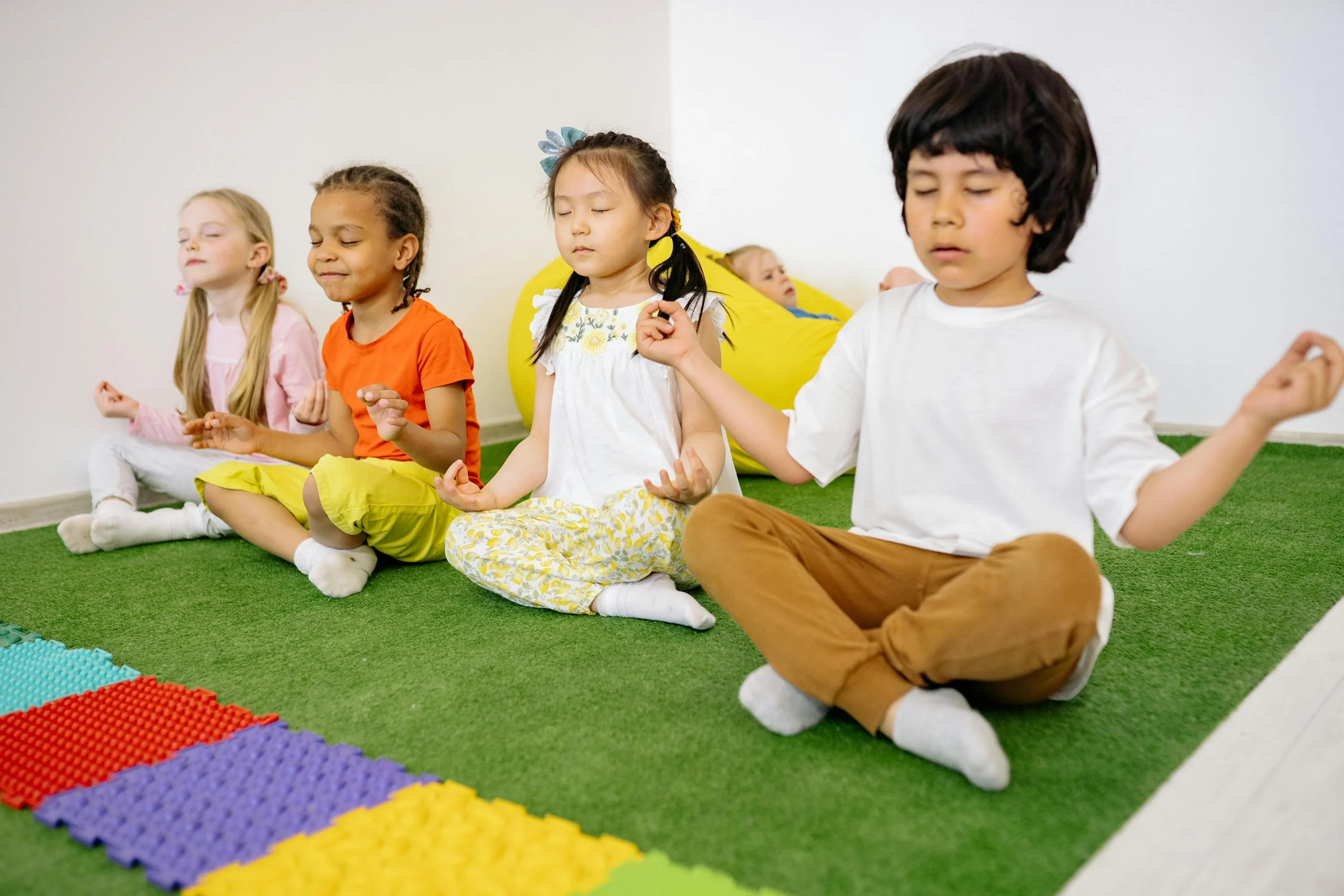
Working with the breath is the foundation of many meditation exercises and lends itself well to meditation for children too. Guide the children into a meditation posture. If possible, it helps if the children close their eyes to avoid distractions.
You can then give a short set of instructions. This might look something like this:
Now pay attention to your breathing. Maybe you can feel a cool sensation in your nose as you breathe in. Can you feel that the air feels warmer in your nose as you breathe out? Imagine you are a guard in your nose who notices everything that goes in and out through these city gates. If another thought pushes its way in, you can simply see it as someone who wants to distract you from your task. Don’t pay it any more attention and carry on watching your gate.
If you are working with children who can already count confidently, counting the breaths is a good aid. Ask the children to count “one” on the first in-breath and repeat “one” on the out-breath. On the next in-breath they count “two”, and so on. Counting helps them to concentrate on their breathing and makes it easier to return to the breath when distracting thoughts arise.
For a concrete example of a playful breathing meditation for younger children, take a look at this video on the Phil Pham channel on YouTube!
Ending the meditation
After each meditation session, you should give the children the opportunity to ask questions. Keep all explanations during the session as simple as possible. You can rely on children to ask you if they want further explanations, as long as you give them the chance. This is also a good moment to talk about any difficulties that came up during the meditation.
Do I need my own meditation experience?
In principle, you can guide a meditation for children even if you have no meditation experience yourself. But as with everything in life, it is of course easier to pass on something you know well from your own experience. The advantage is that you will already be familiar with possible difficulties and problems from your own practice and can respond better to the children’s questions. And especially with older children, you should expect them to ask you whether you meditate yourself.
revised by Sarah B. (BSc Psychology)
Deepen your meditation practice with Mindfulife
Meditation can be more than a short break in your everyday life. If you would like to understand more deeply how meditation works, how to build a steady practice of your own and how to guide others mindfully, our meditation teacher training is the next step. There you will not only get to know meditation in theory, but also develop more confidence, clarity and trust in your own practice.
Would you like to find out more about the training first? In our weekly webinar you will get an insight and learn more about what your path to becoming a meditation teacher could look like.
For regular support in your everyday life, you can also use our online meditation studio and join guided meditations flexibly via Eversports.
We look forward to accompanying you on your journey.
You can find more mindfulness inspiration on our channels too
References
Fontana, D., & Slack, I. (1999). Wir meditieren mit Kindern.
Hwang, Y.-S., Kearney, P., Klieve, H., Lang, W., & Roberts, J. (2015). Cultivating Mind: Mindfulness Interventions for Children with Autism Spectrum Disorder and Problem Behaviours, and Their Mothers. Journal of Child & Family Studies, 24(10), 3093–3106.
Jong, M. C., Boers, I., van Wietmarschen, H. A., Tromp, E., Busari, J. O., Wennekes, R., Snoeck, I., Bekhof, J., & Vlieger, A. M. (2019). Hypnotherapy or transcendental meditation versus progressive muscle relaxation exercises in the treatment of children with primary headaches: a multi-centre, pragmatic, randomised clinical study. European Journal of Pediatrics, 178(2), 147–154
Lohaus, A., Fuchs, R., & Gerber, M. (2018). Stressmanagementtrainings für Kinder und Jugendliche. In Handbuch Stressregulation und Sport; (2018) S. 163-178 (S. 163–178). Springer Berlin Heidelberg.
Zaccari, V., Santonastaso, O., Mandolesi, L., De Crescenzo F., Foti, F., Crescentini, C., Fabbro, F., Vicari, S., Curcio, G., & Menghini, D. (2021). Clinical application of mindfulness-oriented meditation in children with ADHD: a preliminary study on sleep and behavioral problems. Psychology & Health, 1–17.