Distraction during meditation: why it trains your brain

 · 4 min read
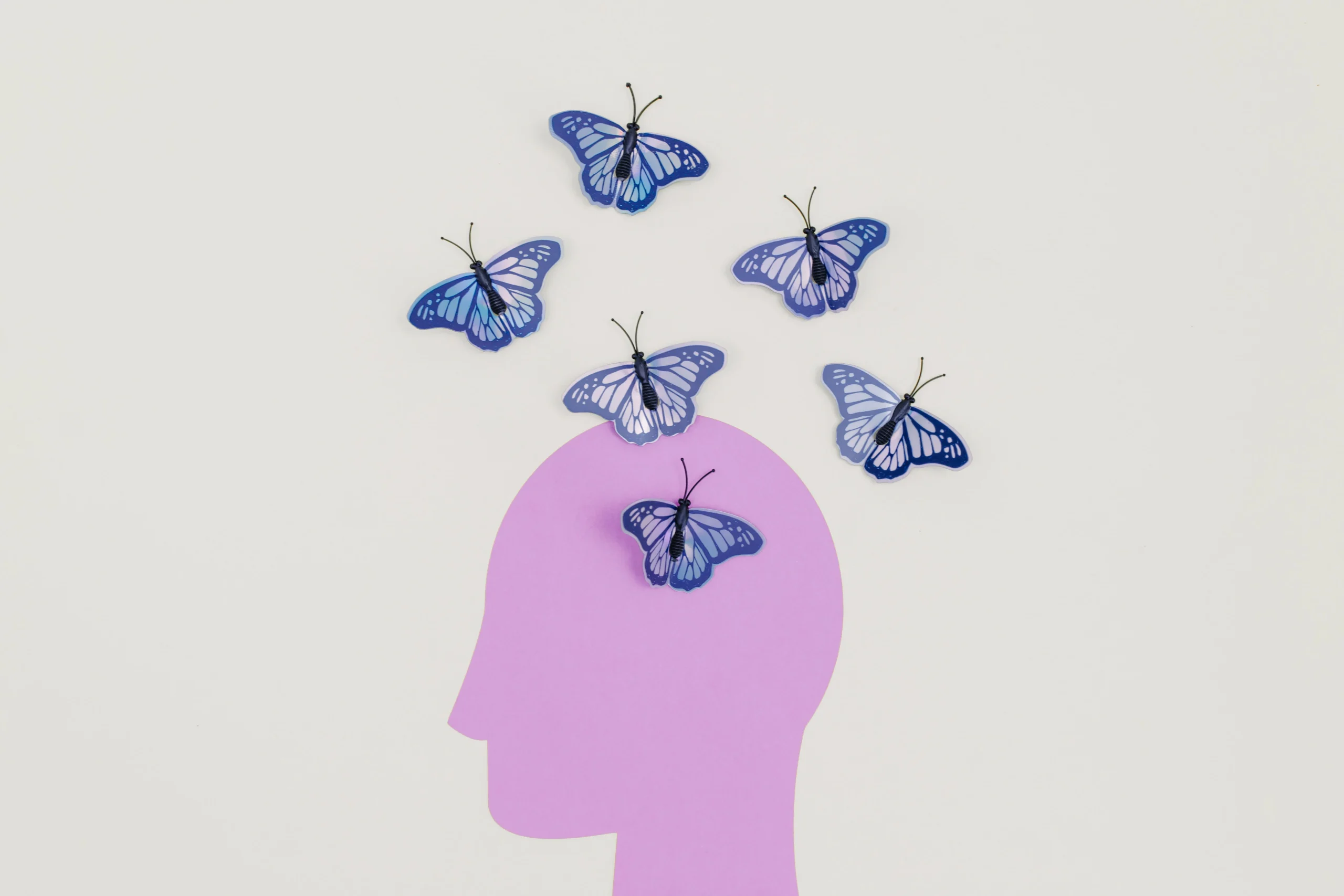
You want to meditate in peace and be fully present in the moment – but suddenly your thoughts are circling around the shopping, work or your next appointment again? When it comes to distraction during meditation, you are definitely not alone. What many people see as a sign that they are not meditating properly is in fact an important part of the process. Every time you notice the distraction and consciously return to your breath, you are training your attention. But what actually happens in your brain when you do this?
Why is your brain capable of more than you think?
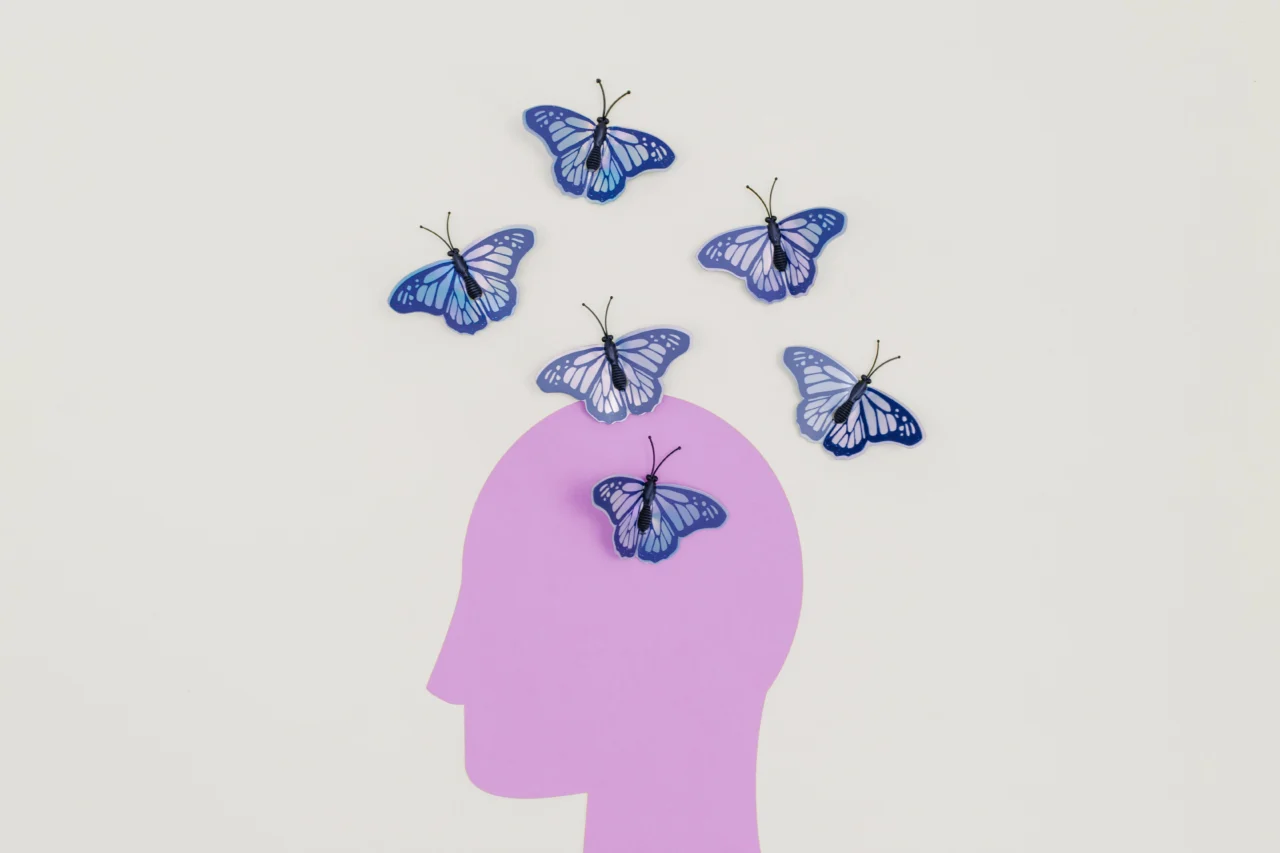
Meditation influences neuroplasticity in the brain. Neuroplasticity means that the neurons in the brain are malleable. In other words, our brain is ‘trainable’. Regular meditation leads to the formation of new neural connections (Bremer et al., 2022).
You have probably already experienced neuroplasticity when learning new vocabulary at school. Through repetition, you remember the new words.
Why is repetition the key to change?
Change comes about through constant repetition. This becomes very clear in focus meditation (shamatha or samatha meditation), because concentrating on the meditation creates a focus. This focus is interrupted by distractions such as thoughts. As soon as you notice this, you return to your concentration.
Placing the emphasis on the breath, for example, makes it easier to maintain your focus. You notice more quickly when you are no longer with your breath and can bring your focus back to it again.
What happens in the brain when you concentrate on your breath?
When you focus on your breath, the prefrontal cortex in your brain is activated. Among other things, it is responsible for focus and concentration.
You probably know the situation: you intend to place your focus on your breath, and all of a sudden you realise that you drifted off some time ago and that your focus was no longer on your breath but on your thoughts. Noticing this then brings your focus back to your breath.
While you are lost in your thoughts, the default mode network (DMN) in your brain becomes active (Doinova, 2022; Rahrig et al., 2022). The DMN is a brain network that is particularly active when you are not concentrating on an external task but directing your mind ‘inwards’. This happens, for example, when daydreaming, reflecting on yourself, imagining the future or letting your thoughts wander freely.

What happens in your brain when you notice that you are distracted?
The decisive moment is noticing the distraction. At this moment, the insula and the anterior cingulate cortex (ACC) become active. The insula is responsible for the conscious perception of bodily states such as heartbeat, breathing or pain, while the anterior cingulate cortex (ACC) is associated with attentional control, emotional regulation and error detection (Fox et al., 2016).
These areas help you to refocus and return to your breath.
As a rule, this creates a cycle in your meditation practice of concentration, distraction and return to concentration.
It is often assumed that meditation consists only of the concentration part. But that is precisely a big misunderstanding. Noticing that your mind has wandered off is just as much a part of meditation. You can only learn the skill of ‘noticing’ through being distracted by your thoughts.
The aim of meditation is not to lose yourself in thinking, nor to suppress it, but to experience that ‘aha’ moment.
The difference between you and a master is not that the master never gets distracted, but that they notice the distraction immediately and can therefore return straight to concentrating on the breath. So even for a master, meditation consists of an alternation between concentration and refocusing. This allows you to approach your meditation practice with more composure and to be pleased that you were distracted, noticed it and are able to refocus.
The five key insights at a glance:
Repetition leads to long-term change: It is not the perfect meditation but regular practice that makes the difference and strengthens your brain in the long run.
Meditation changes your brain: Regular meditation promotes neuroplasticity and supports the formation of new neural connections.
Distraction is completely normal: Wandering thoughts are part of meditation and are not a sign that you are doing something wrong.
Noticing the distraction is the real training effect: It is precisely at this moment that brain regions supporting attention and self-regulation are activated.
Every conscious return strengthens your concentration: By directing your focus back to your breath again and again, you train your attention.

So what is the real aim of meditation?
Regular meditation trains your focus and increases your attention span, while at the same time reducing how easily you get distracted. The aim of meditation is not to get rid of your thoughts, but to make friends with them and to see every distraction as part of the meditation.
Lisa-Marie Huntenburg (psychology student)
Would you like to try it out straight away?
In our YouTube video, Phillip guides you step by step through a breathing meditation. This way, you can experience for yourself what concentration, distraction and consciously returning feel like.
Deepen your meditation practice with Mindfulife
Meditation can be more than a short break in your everyday life. If you would like to understand more deeply how meditation works, how to build a steady practice of your own and how to guide others mindfully, our meditation teacher training is the next step. There you will not only get to know meditation in theory, but also develop more confidence, clarity and trust in your own practice.
Would you like to find out more about the training first? In our weekly webinar you will get an insight and learn more about what your path to becoming a meditation teacher could look like.
For regular support in your everyday life, you can also use our online meditation studio and join guided meditations flexibly via Eversports.
We look forward to accompanying you on your journey.
You can find more mindfulness inspiration on our channels too
References
Bremer, B., Wu, Q., Mora Álvarez, M. G., Hölzel, B. K., Wilhelm, M., Hell, E., Tavacioglu, E. E., Torske, A., & Koch, K. (2022). Mindfulness meditation increases default mode, salience, and central executive network connectivity. Scientific Reports, 12(1), 13219. https://doi.org/10.1038/s41598-022-17325-6
Doinova, G. (2022). Neuroplasticity induced by meditation practices: A systematic review. https://urn.kb.se/resolve?urn=urn:nbn:se:his:diva-21737
Fox, K. C. R., Dixon, M. L., Nijeboer, S., Girn, M., Floman, J. L., Lifshitz, M., Ellamil, M., Sedlmeier, P., & Christoff, K. (2016). Functional neuroanatomy of meditation: A review and meta-analysis of 78 functional neuroimaging investigations. Neuroscience & Biobehavioral Reviews, 65, 208–228. https://doi.org/10.1016/j.neubiorev.2016.03.021
Rahrig, H., Vago, D. R., Passarelli, M. A., Auten, A., Lynn, N. A., & Brown, K. W. (2022). Meta-analytic evidence that mindfulness training alters resting state default mode network connectivity. Scientific Reports, 12(1), 12260. https://doi.org/10.1038/s41598-022-15195-6