Buddha Meditation: Mindfulness, Compassion and Inner Peace
Buddha meditation is an ancient practice, thousands of years old, that is deeply rooted in the teachings of the Buddha. It is a technique that enables each of us to cultivate mindfulness, compassion and inner peace. In this article, you will learn exactly what Buddha meditation is and how you can integrate it into your everyday life.

 · 8 min read
Buddha meditation is an ancient practice, thousands of years old, that is deeply rooted in the teachings of the Buddha. It is a technique that makes it possible to cultivate mindfulness, compassion and inner peace. In this article, you will learn exactly what Buddha meditation is and how you can integrate it into your everyday life.
Buddha Meditation: What Is It?
Buddha meditation is a practice in which the mind is trained to focus on the present moment without judgement. It is based on the teachings of Siddhartha Gautama, the historical Buddha, who lived in ancient India more than 2,500 years ago. The practice aims to cultivate mindfulness, compassion and wisdom, leading to a deeper understanding of ourselves and the world around us.
What Are the Benefits of Buddha Meditation?
Regular Buddha meditation can bring numerous benefits for your physical, mental and emotional wellbeing. Some of the most important benefits are:
- Reduced stress and anxiety: Buddha meditation can help you to settle and to develop a more conscious way of dealing with stress and distressing thoughts.
- Improved concentration: Buddha meditation trains the mind to focus on the present moment, thereby fostering concentration and mental clarity.
- Enhanced emotional wellbeing: The practice cultivates compassion, self-acceptance and emotional resilience, leading to improved overall wellbeing.
- Greater self-knowledge: Buddha meditation encourages self-reflection and self-awareness, allowing a deeper understanding of thoughts, feelings and behaviours to develop.
- Better relationships: Practices such as loving-kindness meditation can foster compassion and goodwill. This can have a positive effect on how you relate to other people.
Now that we have understood the essence and the benefits of Buddha meditation, let us turn to the practical aspects of getting started with this transformative practice.
Buddha Meditation: First Steps
To begin your journey into Buddha meditation, it is important to create a supportive environment and to adopt a comfortable posture that allows for focused attention.
Create a peaceful environment
Find a quiet, peaceful place where you can practise without distractions. Ideally, this space should be clean and free of clutter. You can also set up your own meditation area with a cushion or a meditation mat to create a sense of sacredness.
Choose a comfortable posture
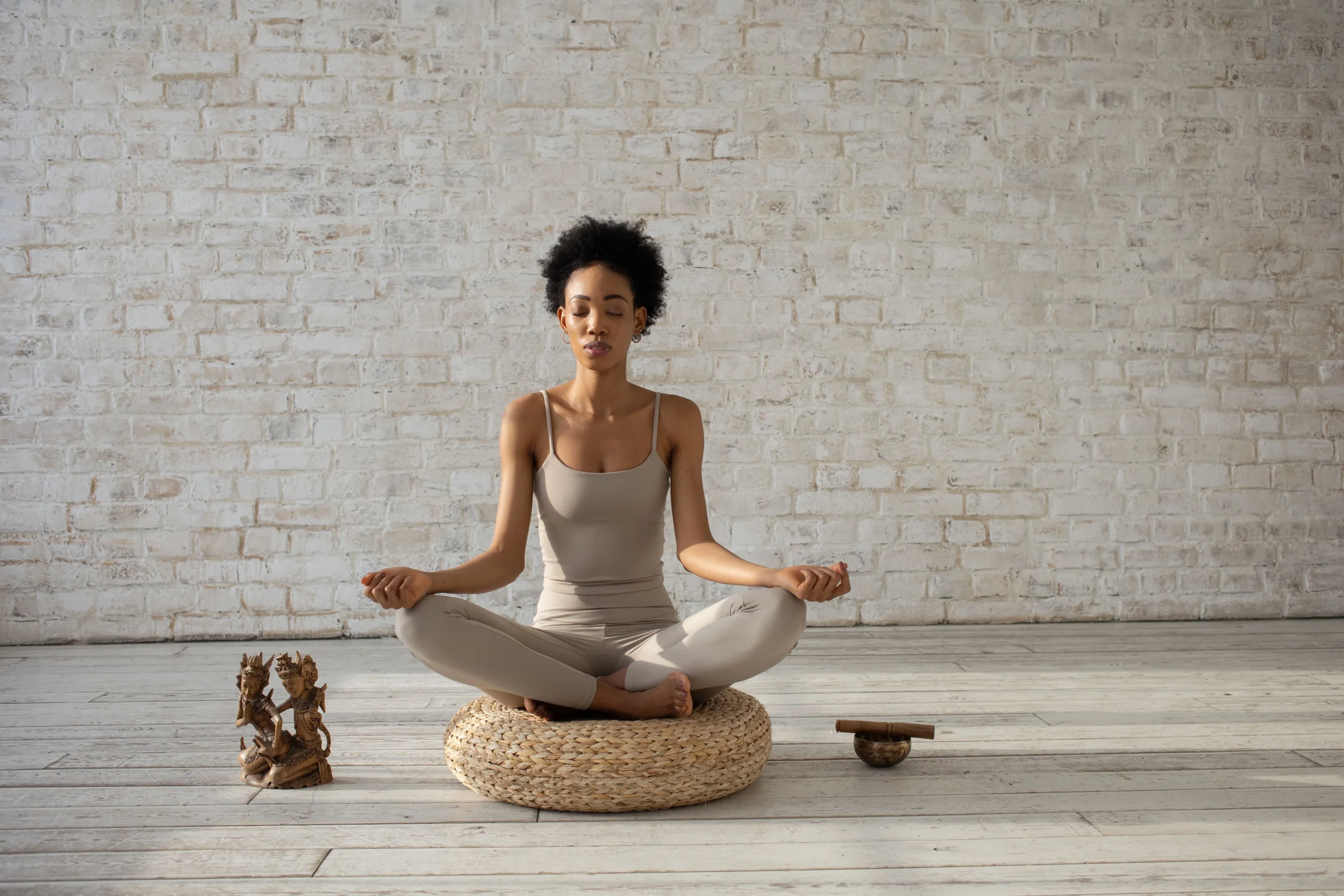
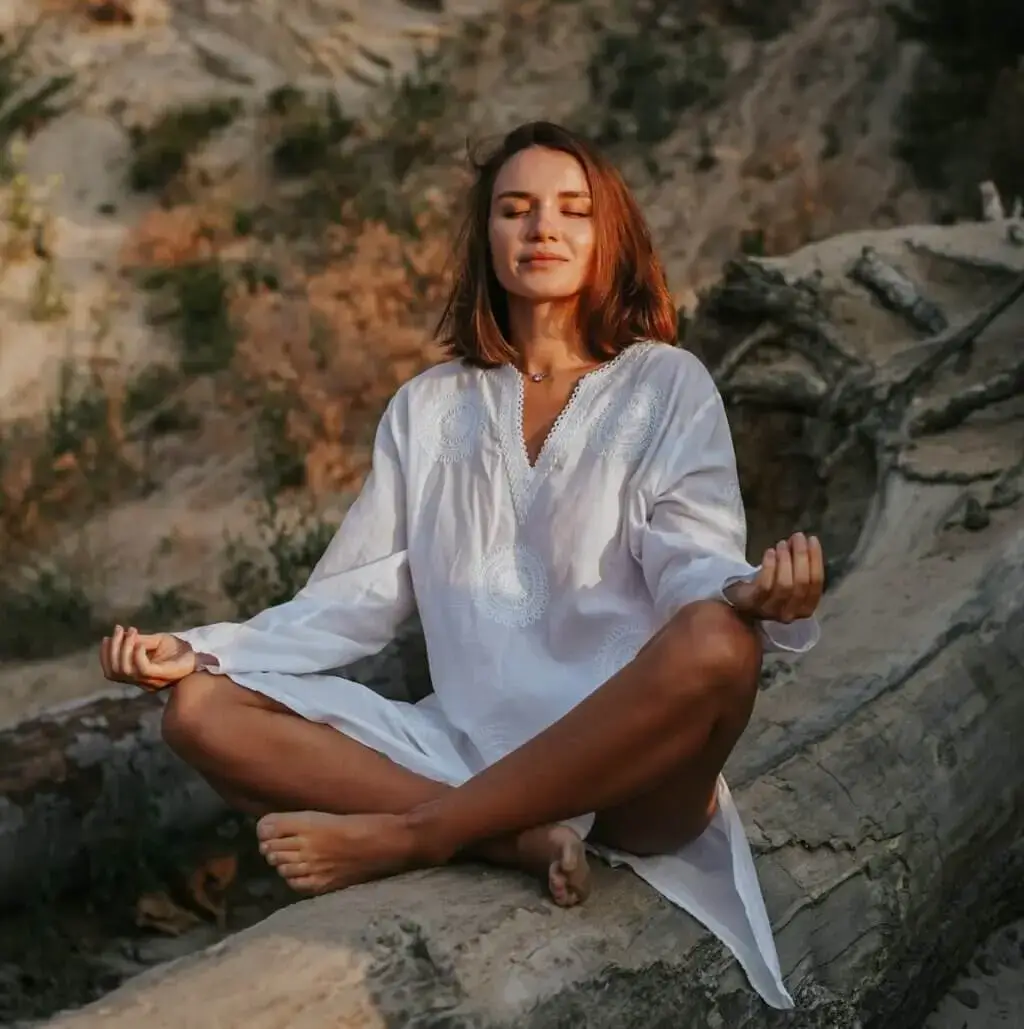
Choose a posture that allows you to be both alert and relaxed. The traditional cross-legged position, also known as the lotus position, is often associated with meditation. However, if this posture is uncomfortable for you, you can choose an alternative, such as sitting on a chair with your feet flat on the floor. What matters is that you find a position that supports an upright spine and allows your body to relax.
Focus on your breathing
Once you have settled into a comfortable posture, turn your attention to the natural rhythm of your breath. Observe the in-breath and the out-breath without trying to control or manipulate them. Notice the sensation of the breath as it flows in and out of your body. This simple act of mindful breathing serves as an anchor for your attention and enables you to cultivate awareness of the present moment.
Buddha Meditation and Mindfulness
At the heart of Buddha meditation lies the practice of mindfulness, which consists of paying attention to the present moment without judging it. By practising mindfulness, you can develop a deeper understanding of your thoughts, feelings and sensations.
Cultivating mindfulness of the present moment
In Buddha meditation, mindfulness is cultivated by directing attention to the present moment and observing whatever arises with non-judgemental awareness. This can include observing the breath, bodily sensations, thoughts and emotions as they come and go. Through consistent practice, you can develop the ability to be fully present in every moment of your life.
Letting go of distractions
When you begin Buddha meditation, it is entirely natural for distractions to arise. Your thoughts may wander, external sounds may catch your attention or emotions may surface. When this happens, gently acknowledge the distraction and bring your attention back to the present moment by focusing on your breath or another chosen object of attention. Cultivating non-judgemental awareness allows you to let go of distractions and return to inner stillness.
Buddha Meditation: Loving-Kindness Meditation
Alongside mindfulness, Buddha meditation often also includes loving-kindness meditation (metta). This practice involves cultivating feelings of love, compassion and goodwill towards yourself and others.
Cultivating compassion and goodwill
Loving-kindness meditation begins by directing loving kindness towards yourself. Start by silently repeating phrases such as ‘May I be happy. May I be healthy. May I live with ease.’ When you feel a sense of warmth and wellbeing, gradually extend these wishes to loved ones, acquaintances, neutral people and even to those with whom you have difficulties. This practice helps to foster empathy, connectedness and genuine care for the wellbeing of all beings.
Practising loving kindness towards yourself and others
By regularly integrating loving-kindness meditation into your Buddha meditation practice, you can cultivate a deep sense of compassion and understanding. By embracing and extending loving kindness, you help to create a more harmonious and compassionate world.

Buddha Meditation: Walking Meditation
While Buddha meditation is often associated with sitting meditation, it can also be practised in motion through walking meditation. This form of meditation is about bringing mindfulness to every step, creating a harmonious integration of body and mind.
Bringing mindfulness into movement
To practise walking meditation, it is best to find a quiet and safe place where you can walk comfortably. Begin by standing still and feeling the connection between your feet and the ground. As you start to walk, direct your attention to the sensation of your feet touching the earth, the movement of your legs and the subtle shifts in your balance. Engage consciously with each step, staying attentive to your body and the present moment.
Engaging with the present moment
Walking meditation offers a unique opportunity to engage with the environment around you. As you walk, notice the sensory impressions and sensations. Allow the beauty of nature to unfold before your eyes and immerse yourself fully in the experience. By integrating walking meditation into your practice, you can bring mindfulness into your everyday movements and discover a sense of serenity in the ordinary.
Buddha Meditation: Overcoming Challenges
Getting started with a meditation practice, especially as a beginner, can come with challenges. It is important to approach these challenges with patience and perseverance, and to recognise that you will make progress through consistent effort.
Dealing with a wandering mind
A common challenge in Buddha meditation is a wandering mind. Thoughts may arise that draw your attention away from the present moment. When you notice that your mind has wandered, simply acknowledge it without judgement and gently guide your attention back to your chosen focus, whether that is the breath or another anchor of mindfulness. Over time, you will develop the ability to recognise thought patterns and to bring your attention back to the present moment with ease.
Patience and perseverance
Consistency is the key to Buddha meditation. Like any skill, it takes time and practice to deepen your understanding and experience the full benefits. Be patient with yourself and approach each session with a beginner’s mind. Allow yourself to explore and learn without being attached to a particular outcome. Through consistent practice and gentle perseverance, a sense of peace and clarity will gradually develop.
Buddha Meditation: Integrating It into Everyday Life
Although it is important to set aside time for formal meditation practice, the ultimate goal of Buddha meditation is to integrate mindfulness into every aspect of your life.
Bringing mindfulness into daily activities
Extend your mindfulness practice beyond your meditation cushion by bringing it into your daily activities. Whether you are eating, going for a walk or carrying out routine tasks, give your full attention to the present moment. Notice the sensations, thoughts and emotions that arise throughout the day. By letting mindfulness flow into your daily life, you can experience a deeper sense of presence and connectedness.
Cultivating a sense of calm and clarity
As you integrate Buddha meditation into your daily life, you may find that a sense of calm and clarity develops. The practice helps you to become more aware of your inner landscape and enables you to respond skilfully to challenging situations. By cultivating a sense of calm and clarity, you can navigate life’s ups and downs with greater resilience and equanimity.
Buddha meditation can be a valuable way to strengthen mindfulness, compassion and inner calm in everyday life. By cultivating mindfulness, compassion and awareness, you can create a deep source of peace and wisdom within yourself. Remember to approach your practice with patience, curiosity and an open heart.
Buddha Meditation: Frequently Asked Questions
- Can anyone practise Buddha meditation?
Yes, Buddha meditation is accessible to people of all backgrounds and faiths. It is a secular practice that can be taken up by anyone who wishes to cultivate mindfulness and inner peace.
- How long should I meditate each day?
Start with shorter sessions of around 10 to 15 minutes and gradually increase the length as you feel comfortable. What matters most is consistency rather than the length of individual sessions. Aim for a regular practice to experience the benefits of Buddha meditation.
- I find it difficult to sit still. Can I still practise Buddha meditation?
Absolutely! If you find it hard to sit for long periods, you can try alternative postures, such as walking meditation or even meditating lying down. The most important thing is to find a posture that allows you to be both alert and relaxed.
- What if I feel discomfort or pain during meditation?
It is normal to experience physical discomfort or pain during meditation, especially when adopting a new posture. If this happens, try adjusting your posture or use cushions and props for support. If the discomfort persists, it is advisable to consult a medical professional.
- How long does it take to experience the benefits of Buddha meditation?
The benefits of Buddha meditation can be felt from the very beginning, but with consistent practice they deepen and become more pronounced over time. Some people notice positive changes after just a few weeks, while for others it may take longer. Trust the process and allow yourself to grow at your own pace.
revised on 17 June 2026
by Katharina Richter (psychology student)
Deepen your meditation practice with Mindfulife
Meditation can be more than a short break in your everyday life. If you would like to understand more deeply how meditation works, how to build a steady practice of your own and how to guide others mindfully, our meditation teacher training is the next step. There you will not only get to know meditation in theory, but also develop more confidence, clarity and trust in your own practice.
Would you like to find out more about the training first? In our weekly webinar you will get an insight and learn more about what your path to becoming a meditation teacher could look like.
For regular support in your everyday life, you can also use our online meditation studio and join guided meditations flexibly via Eversports.
We look forward to accompanying you on your journey.
You can find more mindfulness inspiration on our channels too
References
Encyclopaedia Britannica. (2026, 16. April). Buddha. https://www.britannica.com/biography/Buddha-founder-of-Buddhism
Encyclopaedia Britannica. (o. D.). Brahmavihāra. https://www.britannica.com/topic/brahmavihara
National Center for Complementary and Integrative Health. (2022, 3. Juni). Meditation and mindfulness: Effectiveness and safety. https://www.nccih.nih.gov/health/meditation-and-mindfulness-effectiveness-and-safety
Khoury, B., Sharma, M., Rush, S. E., & Fournier, C. (2015). Mindfulness-based stress reduction for healthy individuals: A meta-analysis. Journal of Psychosomatic Research, 78(6), 519–528. https://doi.org/10.1016/j.jpsychores.2015.03.009
Hofmann, S. G., Grossman, P., & Hinton, D. E. (2011). Loving-kindness and compassion meditation: Potential for psychological interventions. Clinical Psychology Review, 31(7), 1126–1132. https://doi.org/10.1016/j.cpr.2011.07.003