What are the benefits of meditation? – Explanation and examples
You've become interested in meditation and would first like to know what meditating can actually do for you? Then we hope you enjoy reading our article "What are the benefits of meditation?"!

 · 4 min read

You’ve become interested in meditation and would first like to know what meditating can actually do for you? Then we hope you enjoy reading our article “What are the benefits of meditation?”!
What are the benefits of meditation? – Let’s relax with meditation
Meditation is an activity that has gained more and more attention and popularity in recent years. The concept of meditation is frequently mentioned and shown online and in films. However, many people may have wondered: what exactly can meditating do for us? What are its benefits for the mind, for our mental health and in everyday life? And how can we meditate more effectively? This article will give you a systematic overview of meditation. Through explanation and a few examples, it sets out the benefits of meditating as well as some points you should keep in mind in your practice.

What is meditation?
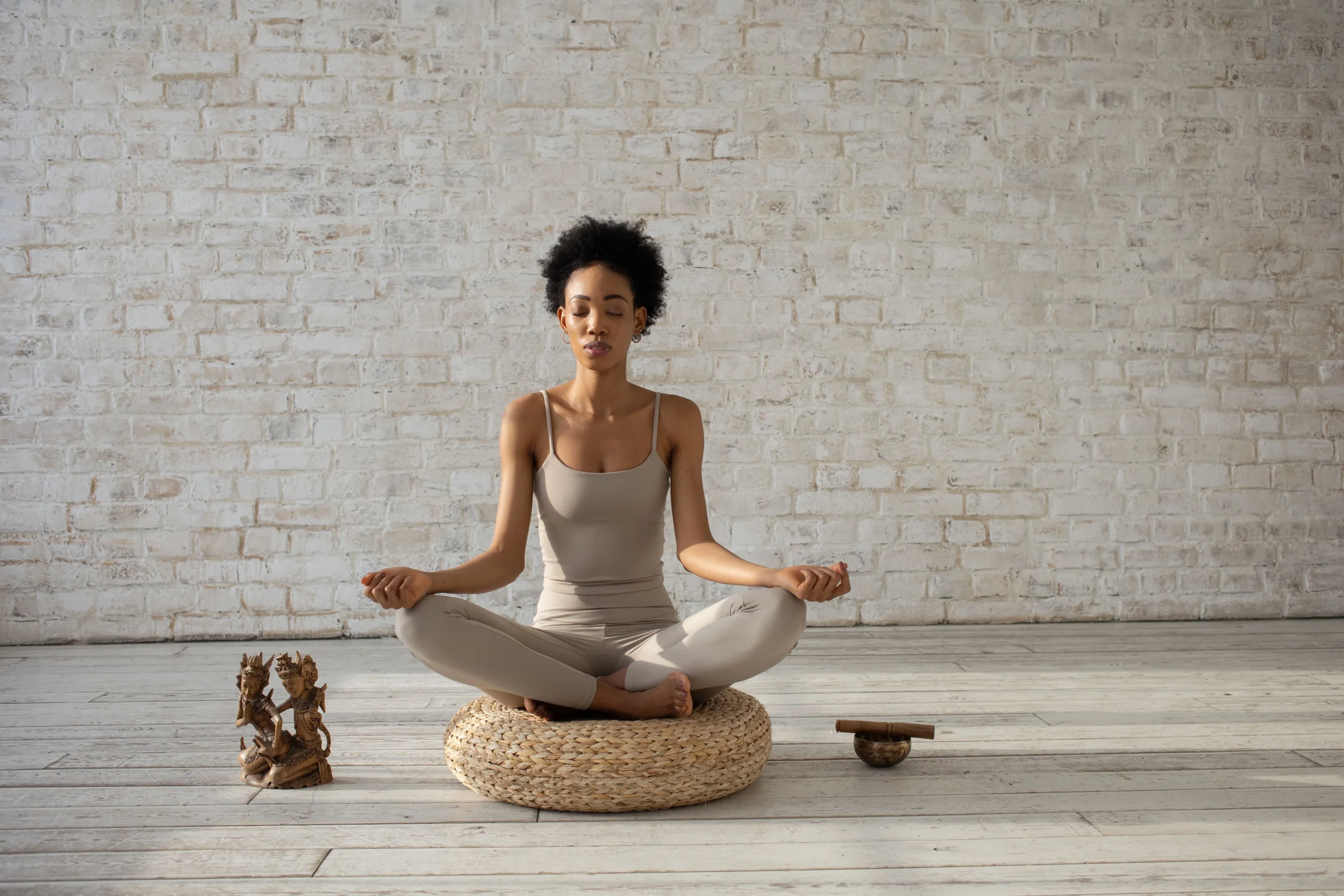
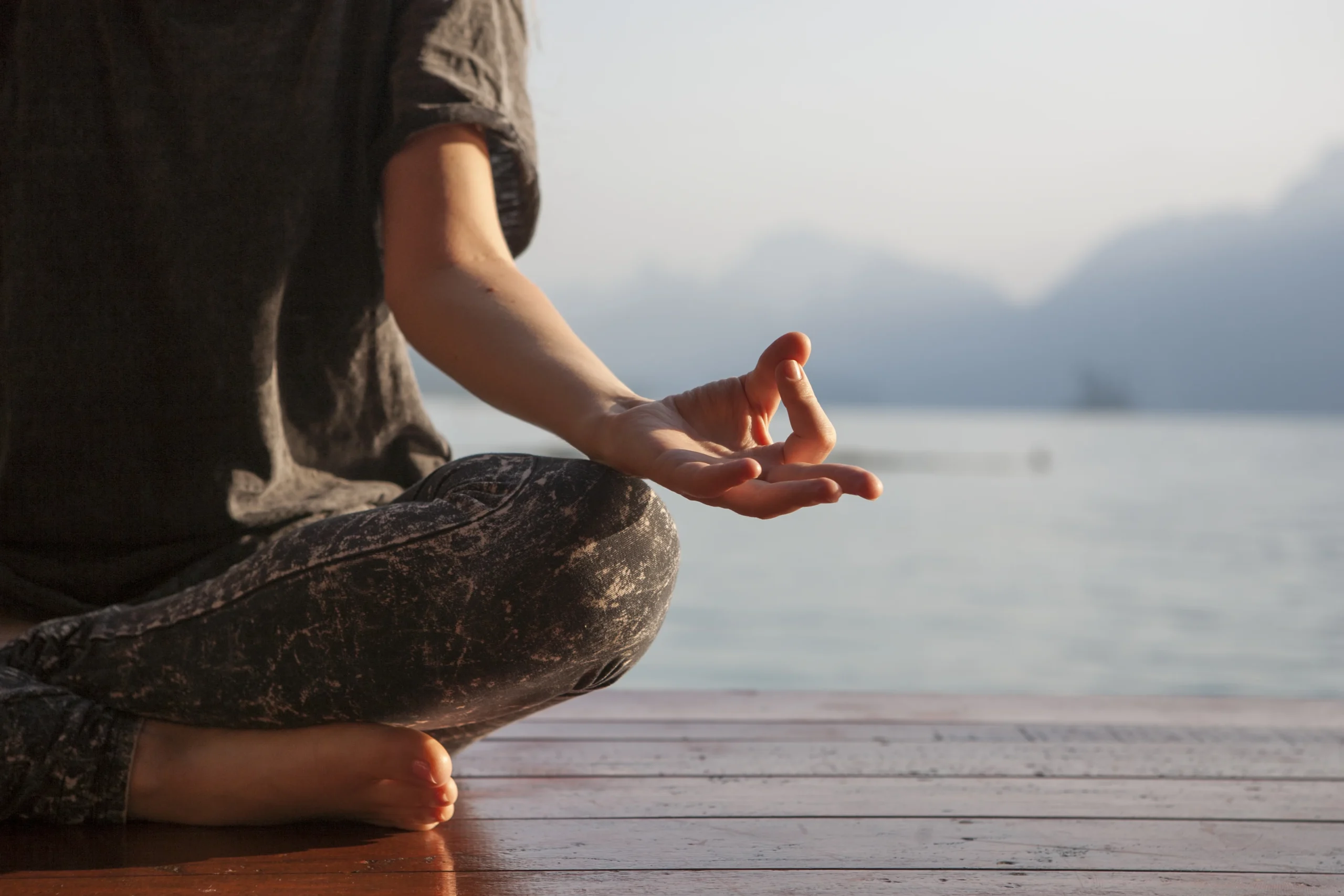
Meditation is a practice in which you relax body and mind and calm your thoughts by adjusting your posture and breathing. Common methods include: sitting up straight, regulating the breath, relaxing the shoulders and focusing your attention. The forms of meditation are very flexible. There are many possible postures: you can practise sitting cross-legged with your eyes closed. But you can also simply sit upright, lower your gaze or direct your eyes slightly upwards without closing them. The most important thing is to choose a method that suits you and feels pleasant and soothing.
The tradition of meditation originates in ancient India. Originally, it was used as a religious and philosophical practice. After it later reached China, the practice developed and changed under the influence of Buddhism, Taoism and Confucianism, gradually taking on the diverse forms we see today. The story of Siddhartha Gautama, who attained enlightenment sitting in silence under the Bodhi tree, is one of the main reasons why meditation became such an important practice.
What positive effects does meditation have?
According to research by Ulrich Hoffmann, if you choose a method that suits you and meditate “correctly”, meditation can have positive effects in many areas – from the physical to the mental and psychological. Below you will find a summary of the effects that have been found in scientific studies:
Changes on a physical level: improvement in tinnitus, better sleep; positive effects on blood pressure and the heart; supporting the body in coping with chronic pain.
Changes on a mental and psychological level and in everyday life: coping better with stress; processing negative emotions such as anger, sadness and fear more effectively; improving interpersonal relationships and interactions; strengthening your own resilience; increased concentration and efficiency; promoting health and longevity. Ultimately, meditation helps us to shape our lives consciously rather than unconsciously. (Hoffmann, 2018)

How can we get started with meditation?
Even though meditation has many benefits for us, we still need to make sure we begin the practice in a suitable way. After all, only if we practise properly from the start can the exercises later unfold their full effect. Many people may find that at first they struggle to reach the state of ’emptying the mind’. This state is the foundation of meditation – and at the same time almost the most difficult part. Without it, the practice cannot progress. To reach this state, we need to train our concentration.
Below is a little tip that helps to improve concentration so that we can meditate effectively:
Listen to your own body. (Kabat-Zinn, 2013)
Our body is constantly in motion, and it never produces only pleasant sensations. Pain, discomfort and unsettling feelings are always part of it. Besides physical sensations, mental and emotional pain is particularly significant, for example sadness, fear, anger or stress.
We don’t need to judge these unpleasant signals; we should simply listen to them and recognise them.
Building on this, we need to understand that our pain is not our identity. “You are not your pain.” (Kabat-Zinn, 2013). In this way, we detach ourselves from our own emotions: we no longer sink into them but begin to look at ourselves from a more objective perspective. Then you will notice that apart from the fact “I exist”, nothing else really matters.
At this point, our mind reaches a higher level. We free ourselves from physical and emotional burdens and can therefore be ‘focused’. Only then does true meditation begin.

How can we integrate meditation into everyday life?
In everyday life, however, meditating doesn’t always mean sitting still with your eyes closed for twenty minutes or more. We can make use of many short moments and still achieve the effects of meditation practice. Below you will find a few small exercises that can easily be built into everyday life.
We breathe continuously. That is why breathing practice is an exercise we can do at any time – except while we sleep. Abdominal breathing has a clearly positive influence on effective practice. In addition, we can observe and reflect on the state of our body, our emotions, our thoughts and our sensations at any time. This helps us to become more sensitive to our own state and to perceive ourselves more clearly.
You can use these two small methods at any time in everyday life. They help us to achieve a better physical state, better mental concentration and greater inner sensitivity.
Deepen your meditation practice with Mindfulife
Meditation can be more than a short break in your everyday life. If you would like to understand more deeply how meditation works, how to build a steady practice of your own and how to guide others mindfully, our meditation teacher training is the next step. There you will not only get to know meditation in theory, but also develop more confidence, clarity and trust in your own practice.
Would you like to find out more about the training first? In our weekly webinar you will get an insight and learn more about what your path to becoming a meditation teacher could look like.
For regular support in your everyday life, you can also use our online meditation studio and join guided meditations flexibly via Eversports.
We look forward to accompanying you on your journey.
You can find more mindfulness inspiration on our channels too
References
Black, C. J., Thakur, E. R., Houghton, L. A., Quigley, E. M. M., Moayyedi, P., &Ford, A. C. (2020). Efficacy of psychological therapies for irritable bowel syndrome: Systematic review and network meta-analysis. Gut, 69(8), 1441–1451. https://doi.org/10.1136/gutjnl-2020-321191
Elder, C., Nidich, S., Moriarty, F., &Nidich, R. (2014). Effect of transcendental meditation on employee stress, depression, and burnout: a randomized controlled study. In The Permanente journal (Vol. 18, Issue 1, pp. 19–23). https://doi.org/10.7812/tpp/13-102
Ho, L. Y. W., &Ng, S. S. M. (2020). Non-pharmacological interventions for fatigue inolder adults: A systematic review and meta-analysis. In Age and Ageing (Vol. 49, Issue 3, pp. 341–351). https://doi.org/10.1093/ageing/afaa019
Hülsheger, U. R., Feinholdt, A., &Nübold, A. (2015). A low-dose mindfulness intervention and recovery from work: Effects on psychological detachment, sleep quality, and sleep duration. In Journal of Occupational and Organizational Psychology (Vol. 88, Issue 3, pp. 464–489). https://doi.org/10.1111/joop.12115
Jerath R., Crawford M.W., Barnes V.A., &Harden K. (2015). Self-regulation ofbreathing as a primary treatment for anxiety. Applied Psychophysiology Biofeedback, 40(2), 107–15. doi: 10.1007/s10484-015-9279-816
Keefer L., &Blanchard E.B. (2001). The effects of relaxation response meditation onthe symptoms of irritable bowel syndrome: results of a controlled treatment study. Behavior Research and Therapy, 39(7), 801-11. https://doi.org/10.1016/S0005-7967(00)00078-4
Manocha, R., Black, D., Sarris, J., &Stough, C. (2011). A randomized, controlled trial of meditation for work stress, anxiety and depressed mood in full-time workers. In Evidence-based Complementary and Alternative Medicine (Vol. 2011). https://doi.org/10.1155/2011/960583
Melnychuk M.C., Dockree P.M., O’Connell R.G., Murphy P.R., Balsters J.H.,&Robertson I.H. (2018). Coupling of respiration and attention via the locus coeruleus: effects of meditation and pranayama. Psychophysiology, 55(9), e13091.doi: 10.1111/psyp.1309117
Morgan, N., Irwin, M. R., Chung, M., &Wang, C. (2014). The effects of mind-body therapies on the immune system: Meta-analysis. In PLoS ONE (Vol. 9, Issue 7). https://doi.org/10.1371/journal.pone.0100903
Simshäuser, K., Lüking, M., Kaube, H., Schultz, C., &Schmidt, S. (2020). Is Mindfulness-Based Stress Reduction a Promising and Feasible Intervention for Patients Suffering from Migraine? A Randomized Controlled Pilot Trial. Complementary Medicine Research, 27(1), 19–30. https://doi.org/10.1159/000501425
Stoodley I., Williams L., Thompson C., Scott H., & Wood L. (2019). Evidence forlifestyle interventions in asthma. Breathe, 15(2), 50-61. https://doi.org/10.1183/20734735.0019-2019
Zeidan F., Martucci K.T., Kraft R.A., Gordon N.S., McHaffie J.G., &Coghill R.C. (2011). Brain mechanisms supporting the modulation of pain by mindfulness meditation. Journal of Neuroscience, 31(14):5540–8. https://doi.org/10.1523/JNEUROSCI.579
Zhang, F., Zhang, Y., Jiang, N., Zhai, Q., Hu, J., &Feng, J. (2021). Influence of Mindfulness and Relaxation on Treatment of Essential Hypertension: Meta-Analysis. In Journal of Healthcare Engineering (Vol. 2021). https://doi.org/10.1155/2021/2272469