Meditation and Side Effects: Tips, Risks and Opportunities
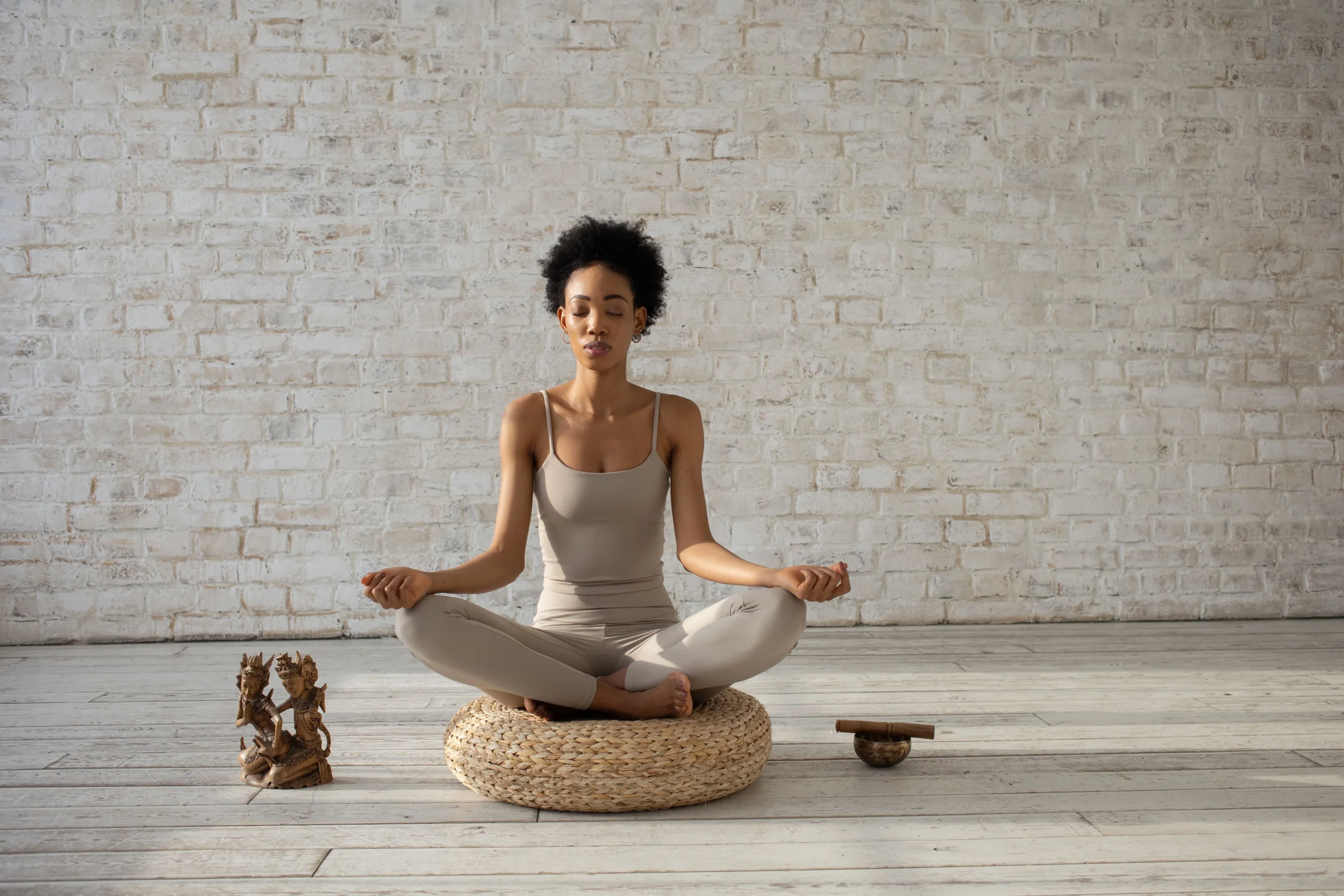
Meditation and side effects are rarely considered together. Yet while meditation can have many positive effects, not every exercise suits every person or life situation. In this article, you will find out which risks can occur, what you should look out for and how to integrate meditation into your practice safely and mindfully.

 · 10 min read

Meditation and side effects are rarely considered together. Yet while meditation can have many positive effects, not every exercise suits every person or life situation. In this article, you will find out which risks can occur, what you should look out for and how to integrate meditation into your practice safely and mindfully.
Meditation: what is it, actually?
Meditation – a word that describes a group of mental exercises. But far more than just a trend or a passing fad, meditation is a practice thousands of years old that is cultivated in a wide range of cultures and traditions. Its essence lies in deliberately directing attention, a tool intended to bring about lasting positive changes in thinking, feeling and perceiving, or to make certain religiously defined insights and states possible. The positive effects of meditation are many and well documented. However, as with any tool for self-improvement, meditation also comes with side effects.
The benefits of meditation range from cognitive improvements to emotional balance and even physical health. Neuroscientific research shows that regular meditation has a positive influence on the brain and strengthens structures associated with coping with stress, regulating emotions and concentration.
But it is not only the brain that benefits from meditation. It can also strengthen the immune system, influence epigenetics and even help to improve mental health. All of this makes meditation a holistic practice that brings body, mind and soul into harmony.
Interestingly, meditation can be found in a variety of religions, from Buddhism and Hinduism to Christianity. There it serves not only as a spiritual practice but also as a tool for self-reflection and for reaching higher states of consciousness.
At a time when stress and restlessness are everywhere, the ancient practice of meditation offers us a path to inner calm and clarity. Its transformative power reaches far beyond the individual level and has the potential to make our world a more peaceful and balanced place.
The scientific basis of meditation
Meditation is not just a practice of inner calm; it also has measurable effects on our body and mind. Regular meditation forms new neural connections in the brain, leading to lasting changes. In addition, it promotes alpha waves, which signal relaxation, and reduces beta waves, which are associated with activity.
Physiologically speaking, meditation lowers stress hormones such as cortisol and adrenaline and increases the production of feel-good hormones. It contributes to emotion regulation and can even have anti-inflammatory effects. These scientific findings show that meditation offers far more than just relaxation – it can improve our wellbeing in a holistic way.
Who is guided meditation best suited to?
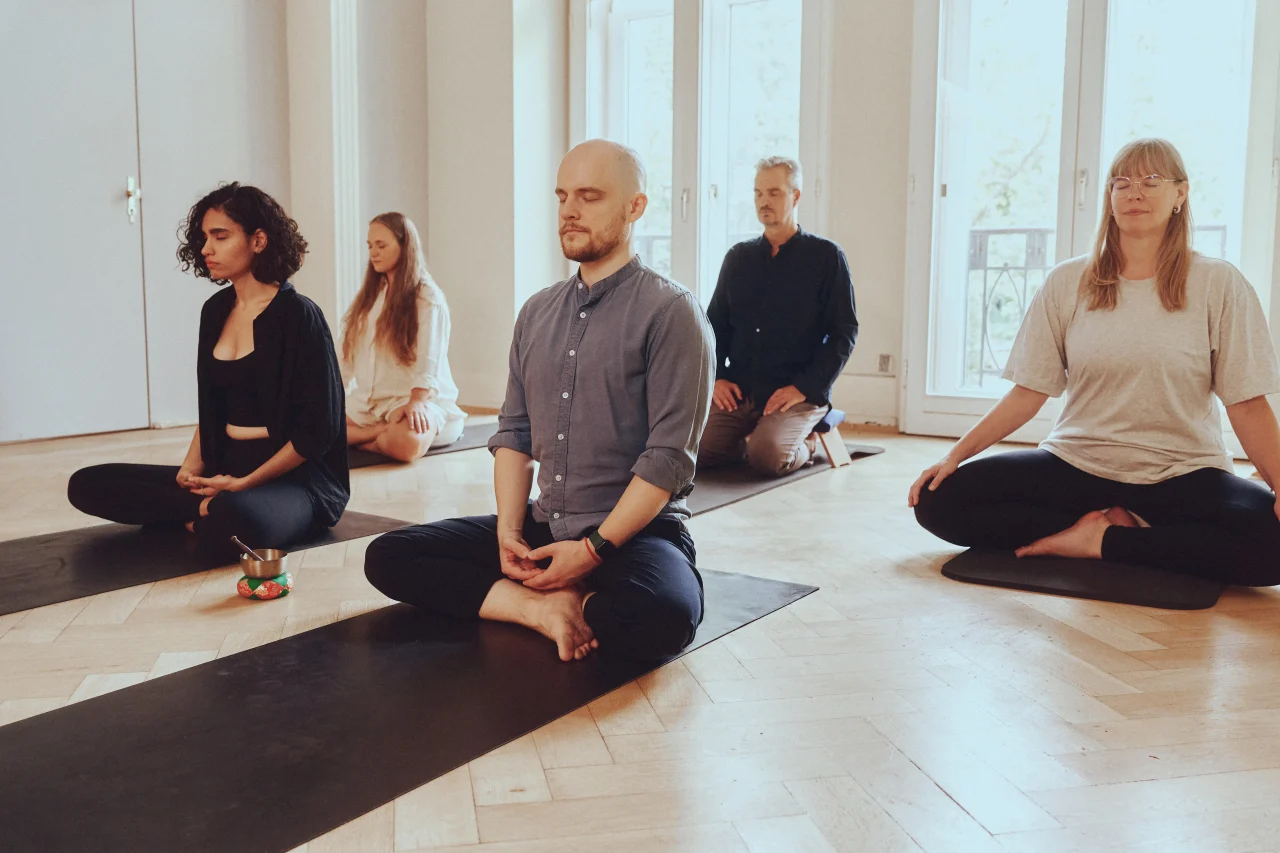
Guided meditations are particularly helpful for people who are new to meditation or who find it difficult to meditate on their own. They offer structured instructions and help to calm the mind and focus on the present moment.
This type of meditation is ideal for those looking for support in developing mindfulness and concentration. With guidance from an experienced meditation teacher, even beginners can find a way into meditation and benefit from its positive effects.
Guided meditations are also suitable for people who struggle to settle down on their own or to let their thoughts flow freely. The structured guidance helps to focus the mind and reduce distracting thoughts, which can lead to a deeper meditative state.
All in all, guided meditations are a valuable resource for anyone looking for support with their meditation practice or a simple way to reduce stress and find inner calm. Whether you are a beginner or an experienced meditator, a guided meditation can be an enriching experience and pave the way to a more conscious and balanced life.
What are the side effects of meditation?
Meditation is a fascinating practice that goes far beyond its spiritual aspects. Through regular practice, we can experience profound change in our lives. From stress reduction and better sleep to greater creativity and a sense of inner calm – the positive effects of meditation are many and well documented.
However, as with any tool for self-improvement, meditation also carries potential side effects. These can be an immediate physical reaction such as muscle tension or headaches, while the mind has to face inner conflicts and suppressed emotions. For some people, meditation can even stir up old traumas, which can lead to temporary discomfort or emotional turbulence.
The key component here is mindfulness. It is important to recognise the signals of our body and mind and not to ignore them. Instead of seeing them as obstacles, we can regard them as pointers showing us where we need to dig deeper. With a gentle and compassionate approach, we can overcome the challenges of meditation while making full use of its benefits.
It is therefore crucial not to see meditation as a cure-all, but as a journey with ups and downs. By understanding and accepting the potential side effects, we can follow a safer and more effective path to inner calm and self-improvement.
Mindfulness and meditation: what are the potential risks?
The body of research on adverse effects of meditation and mindfulness is still relatively thin, as most studies focus on positive effects. Nevertheless, negative effects have also been identified.
In a 2020 review, for example, Farias et al. examined a total of 83 meditation studies conducted between 1975 and October 2019. Adverse effects were mentioned in 65 % of these studies, with an overall rate of 8.3 % of all participants.
The most common side effects included anxiety and depression, followed by cognitive problems (such as difficulty concentrating) and gastrointestinal problems (such as stomach ache).
Negative effects have also been found in connection with mindfulness. For example, Britton et al. 2021 published an experimental study whose intervention was based on elements of Jon Kabat-Zinn’s Mindfulness-Based Stress Reduction (MBSR), combined with elements of cognitive behavioural therapy. In this study, 83 % of participants reported adverse effects, ranging from feeling unwell and sleep problems to the reactivation of traumatic memories.

Also in 2021, Baer et al. published the results of two studies whose intervention was based on an adapted version of Mindfulness-Based Cognitive Therapy (MBCT). These studies examined the effect on anxiety and depression, and a positive effect was found.
However, in the surveys around two thirds of participants said they had had unpleasant experiences, such as difficult emotions, feelings such as frustration and anxiousness, disturbing thoughts and memories, discomfort, mindfulness and pain, drowsiness or self-criticism stemming from the feeling that they had not done the mindfulness training properly or enough.
Dealing with traumatic memories and anxiety during meditation
Effects on the nervous system must be taken very seriously. They are very rare but can have far-reaching consequences. Anyone who experiences severe restlessness, anxiety or even sensory disturbances such as numbness after meditation or mindfulness training should definitely seek psychological or medical support. These phenomena may be caused by repressed feelings or memories.
In the study by Britton et al., 6-14 % of the reported side effects were associated with signs of dysregulated arousal (hyperarousal and dissociation). Hyperarousal refers to persistent, high psychovegetative arousal, in other words inner restlessness, nervousness or anxiousness. Dissociation, on the other hand, is the splitting off of certain feelings and sensations. Both can occur, for example, when experiencing traumatic events.
Unfortunately, we usually cannot know in advance whether we carry repressed memories within us. These can, however, be reactivated through meditation and mindfulness. It is important to bear in mind that side effects can occur when practising meditation, particularly in relation to dysregulated arousal. Often these memories do not come back to us as images, but initially as unsettling feelings. Competent professional support is very important here so as not to risk retraumatisation.
Anxiety can also be triggered by re-establishing contact with the body. People who, through hectic lives and worries, have forgotten how to feel their bodies in particular may perceive strong sensations when they reconnect, such as powerful surges of energy. These experiences can certainly trigger fear. Here, too, you should not hesitate to talk about it. Sensations like these are not a sign that you have done something wrong.

Guidance and contact with others are important
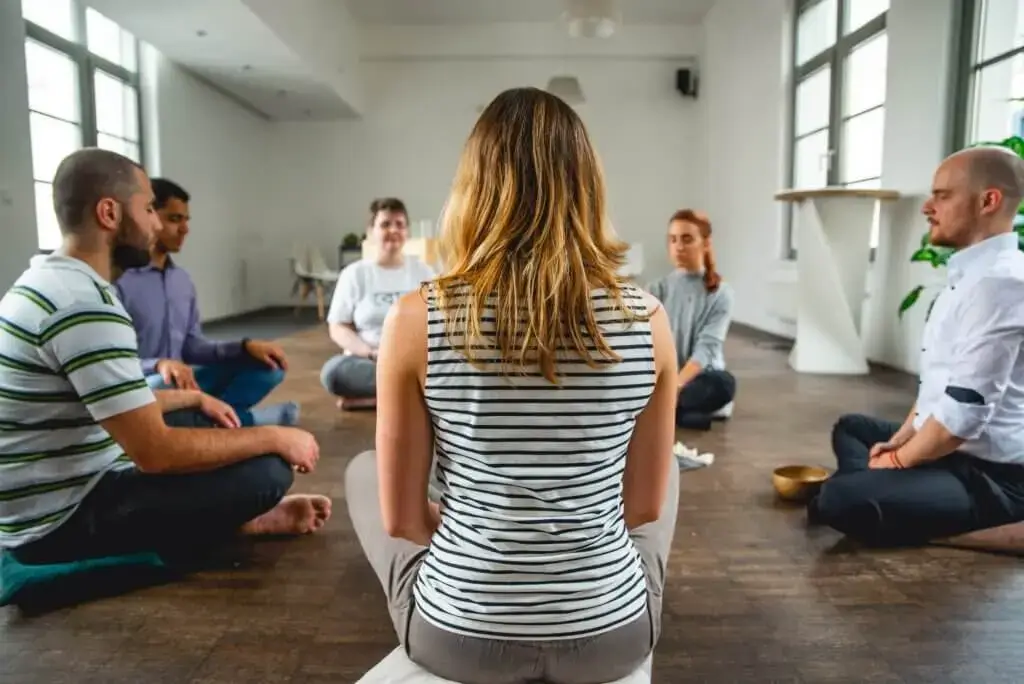
Good support is highly recommended when learning to meditate and during mindfulness training. In the review by Farias et al., for example, it is striking that the frequency of reported side effects was considerably higher in observational studies (33.2 %) than in experimental studies (3.7 %).
In contrast to the experimental studies, the meditation sessions in the observational studies reported were neither supervised nor carried out according to a set protocol. Many of the participants stated that they meditated on their own, for example with the help of books. This could be one reason why adverse effects were considerably more frequent here.
But it is not only when you are starting out with meditation that regular exchange with meditation teachers, or within a community, is highly recommended to help you make sense of your experiences.
The art of dosage: Paracelsus’ wisdom in meditation
Paracelsus once said: ‘All things are poison and nothing is without poison; only the dose makes a thing not a poison.’ Beyond remedies, this wisdom can also be applied to everything we do with our body – and with our mind. When it comes to sport, everyone will understand that ‘too much’ can harm the body rather than benefit it.
The same applies when we work with our mind. This is also supported by the results of the study by Britton et al., in which the amount and frequency of informal meditation practice were associated with more adverse events and a higher likelihood of lasting negative effects.
Length is a particularly decisive factor here. Regular short meditations of just a few minutes show more positive effects than meditation sessions lasting hours. In the worst case, the latter can even cause you to lose your sense of space and time.
Temporary stress and negative effects at the beginning are normal
In their study, Britton et al. concluded that temporary stress and negative effects at the start of mindfulness-based therapies are the norm – as with other psychological treatments. In psychotherapy, for example, according to Lambert a temporary deterioration is to be expected in 3-10 % of all cases before improvement sets in.
What are the benefits of meditation – Mindfulness practice aims, among other things, to increase awareness of what is happening in the present. However, this also includes becoming aware of negative feelings and sensations. In Baer’s studies, some of the participants reported that, looking back, they had even found the unpleasant experiences useful.
Don’t set your expectations too high
To avoid frustration and negative feelings arising during meditation or mindfulness training, you should start with realistic goals and expectations. The psychologist, neuroscientist and meditation researcher Ulrich Ott, who has also studied the negative effects of meditation, has repeatedly pointed out in several interviews that meditation is not a cure-all.
You should not take up meditation with the aim of solving existing problems. Of course, meditation can be supportive. However, anyone carrying deep-seated problems around with them should not see meditation as a substitute for therapy, but rather as a complement to it.
Nor should you set your expectations of yourself too high. Especially at the beginning, thoughts often drift off, sometimes for quite a while. There is no need to get annoyed about this; instead, it should be seen as a valuable learning experience. In this context, too, it is worth mentioning again how important contact with others is, as it can help you deal appropriately with self-criticism and frustration.

Summary – meditation and side effects
- Negative effects of meditation are rare, but they can occur and should be taken seriously.
- Adverse effects can include anxiety, depression, cognitive problems and gastrointestinal complaints.
- Negative effects can also occur with mindfulness, including feeling unwell, sleep problems and the reactivation of traumatic memories.
- Particular caution is needed if there are signs of dysregulated arousal (hyperarousal and dissociation).
- Good support and guidance during meditation and mindfulness training can reduce the risk of adverse effects.
- The dosage of meditation is crucial for maximising positive effects and minimising negative ones.
- Regular exchange with meditation teachers or within a community can help you make sense of your experiences and avoid negative effects.
- Temporary stress and negative effects at the start of mindfulness programmes are normal and comparable to other psychotherapeutic treatments.
- Realistic expectations of meditation and mindfulness are important to avoid disappointment and negative feelings.
- Meditation can be supportive but should not be seen as a therapy in its own right, especially when it comes to deep-seated problems.
What are the benefits of meditation?
If you would like a reminder of the positive effects of meditation, why not take a look at our article ‘What are the benefits of meditation’.
Deepen your meditation practice with Mindfulife
Meditation can be more than a short break in your everyday life. If you would like to understand more deeply how meditation works, how to build a steady practice of your own and how to guide others mindfully, our meditation teacher training is the next step. There you will not only get to know meditation in theory, but also develop more confidence, clarity and trust in your own practice.
Would you like to find out more about the training first? In our weekly webinar you will get an insight and learn more about what your path to becoming a meditation teacher could look like.
For regular support in your everyday life, you can also use our online meditation studio and join guided meditations flexibly via Eversports.
We look forward to accompanying you on your journey.
You can find more mindfulness inspiration on our channels too
References
Baer, R., Crane, C., Montero-Marin, J., Phillips, A., Taylor, L., Tickell, A., & Kuyken, W. (2021). Frequency of self-reported unpleasant events and harm in a mindfulness-based program in two general population samples. Mindfulness, 12(3), 763–774. https://doi.org/10.1007/s12671-020-01547-8
Britton, W. B., Lindahl, J. R., Cooper, D. J., Canby, N. K., & Palitsky, R. (2021). Defining and measuring meditation-related adverse effects in mindfulness-based programs. Clinical Psychological Science, 9(6), 1185–1204. https://doi.org/10.1177/2167702621996340
Farias, M., Maraldi, E., Wallenkampf, K. C., & Lucchetti, G. (2020). Adverse events in meditation practices and meditation‐based therapies: A systematic review. Acta Psychiatrica Scandinavica, 142(5), 374–393. https://doi.org/10.1111/acps.13225
Lambert, M. J. (Ed.). (2012). Bergin and Garfield’s handbook of psychotherapy and behavior change (6th ed.). John Wiley & Sons.