Psychoeducation: How Does It Strengthen Pupils’ Mental Health?

 · 5 min read
Pupils’ mental health is crucial for their personal development, their academic performance and their future prospects. In recent years, awareness of psychological strain among young people has grown considerably. Schools play a central role when it comes to support and encouragement. Psychoeducation is a particularly promising way to strengthen mental health in the long term.
Why is mental health so important in schools?
Schools are far more than places of learning – they are environments in which young people spend a large part of their time. Alongside maths, languages and science, they are also where social skills, self-confidence and the way we deal with stress are shaped. Today in particular, pupils face a wide range of pressures: pressure to perform, exam anxiety, social comparison and conflicts within their friendship groups. Studies show that psychological strain is increasing in adolescence and that early support is crucial to prevent long-term consequences such as depression or anxiety disorders .
This is where psychoeducation comes in – an approach that teaches knowledge about mental health and gives pupils tools to deal more resiliently with the challenges of everyday life.
What does psychoeducation actually mean?
Psychoeducation refers to the structured and accessible teaching of knowledge about mental health, stress management, emotions and coping strategies. Originally developed in psychotherapy, it is now also used in schools as a preventive measure. In the school context, psychoeducation aims to give pupils a basic understanding of their own emotions, thoughts and behaviour. At its core, this means that they learn to recognise and name their feelings, to understand psychological strain at an early stage, to develop healthy strategies for dealing with stress and conflict, and to seek support when they need it. The goal is to build skills that contribute to resilience and wellbeing in the long term.
In this way, psychoeducation helps young people not to feel helpless, but to take an active role in shaping their own wellbeing.
What role does psychoeducation play in everyday school life?
Schools are places where stress and resources alternate every day. Exams, homework and social dynamics can all be a burden. At the same time, school also offers opportunities: here, children and young people can learn to deal with psychological strain early on, before serious illnesses develop.
Psychoeducation in the school context therefore does not mean turning teachers into therapists. Rather, it is about creating a shared basic understanding of mental health. This allows pupils to better notice warning signs in themselves and others, teachers to respond more sensitively to strain, and parents to be more closely involved in providing support.
How can psychoeducation be put into practice?
There are many ways to integrate psychoeducation into everyday school life. It is particularly effective when it is embedded at several levels:
Digital support
Young people in particular enjoy using digital formats. Online platforms, videos and apps can complement psychoeducation in a contemporary way and make knowledge available at any time.
Lessons and workshops
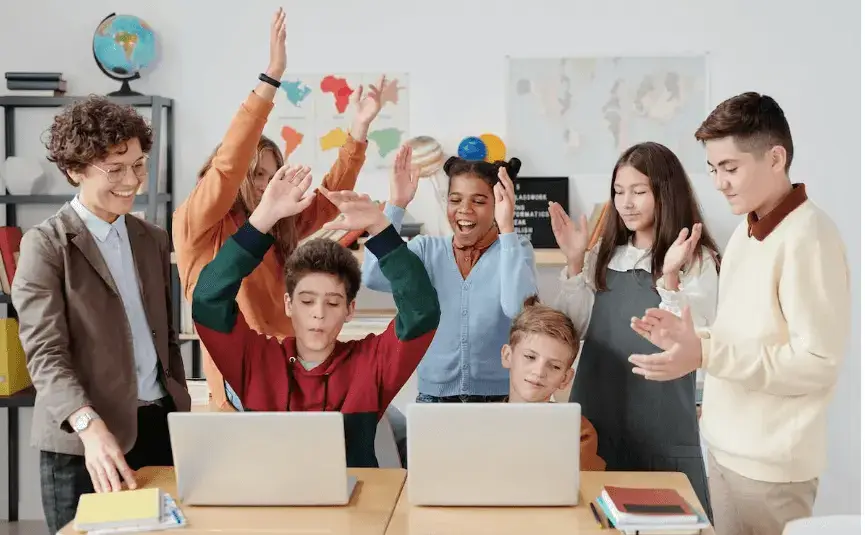
Dedicated modules on stress management, mindfulness, emotional intelligence or social skills can become a fixed part of the timetable. Interactive exercises such as role-plays, reflection rounds or mindfulness practice are helpful here.
School counselling services
School psychologists and social workers can offer regular psychoeducational sessions – for example in discussion groups or open drop-in hours.
Working with parents
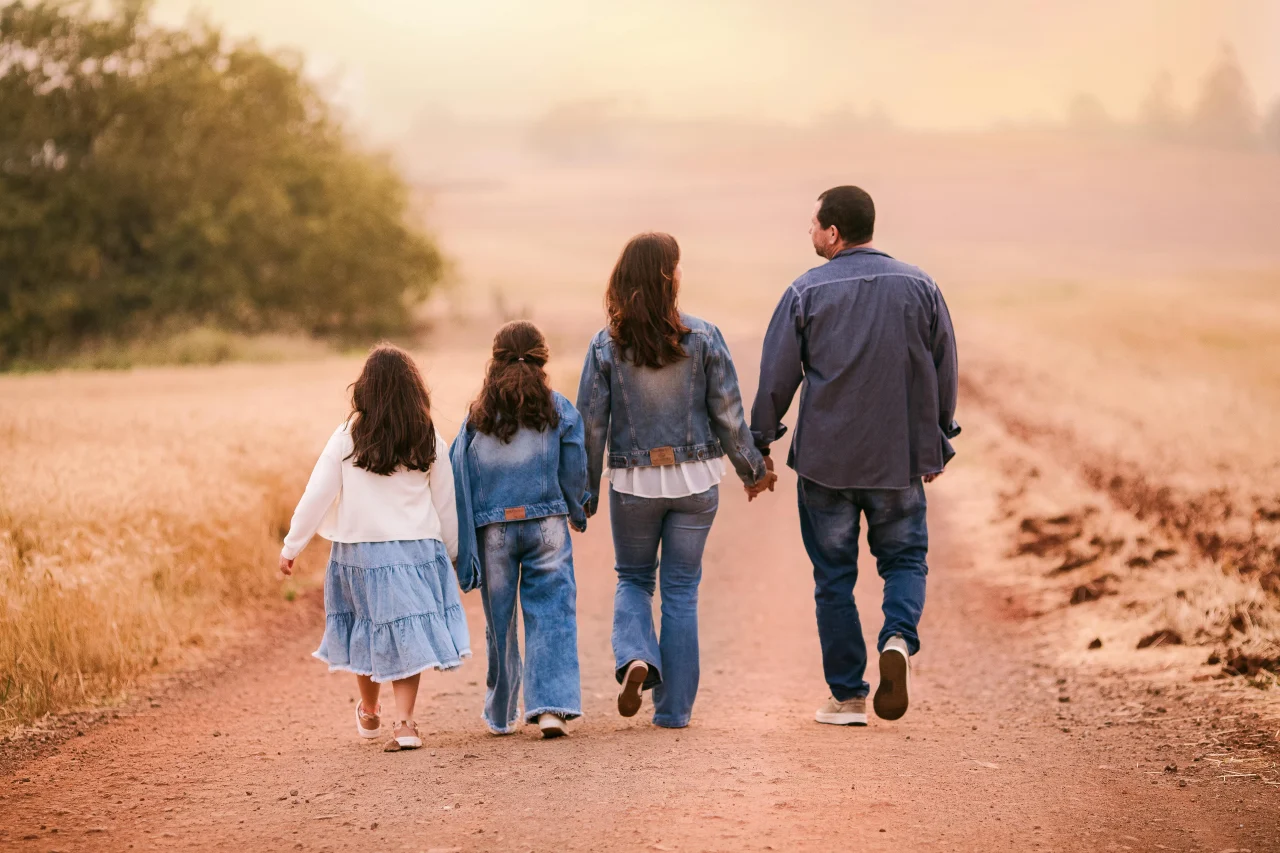
Psychoeducation does not end in the classroom. When parents learn in workshops or information evenings to take psychological strain seriously and to support their children constructively, a stable network emerges.
What are the benefits of psychoeducation for pupils?
The benefits of psychoeducation in schools are wide-ranging and have been confirmed by research time and again: pupils recognise early warning signs more quickly and can respond in good time, while strategies such as mindfulness exercises or breathing techniques help them to better regulate exam anxiety and pressure. Through the knowledge they gain and repeated practice, they also develop inner strength and greater confidence in their own abilities. At the same time, talking openly about mental health helps to reduce stigma, which lowers the threshold for talking about problems and accepting help. Better mental health often goes hand in hand with improved academic performance. Overall, this combination leads to greater emotional stability, better concentration and often higher motivation at school.
Does psychoeducation really help? A look at the research
More and more pupils suffer from psychosomatic complaints. According to a study by the AOK (a German health insurer), 41.7% report several physical symptoms such as headaches, stomach aches or sleep problems – girls (52.2%) and gender-diverse young people (80.4%) are particularly affected, but so are 31% of boys. This shows that psychological strain is increasingly affecting physical health.
This is where psychoeducation can help. Schuchardt and Griepenburg (2021) emphasise that programmes which teach knowledge about stress, emotions and conflict resolution help pupils to recognise strain early, to strengthen themselves and to seek support. Teachers play an important role here as the first point of contact.
Leipzig University (2025) confirms that psychosocial strain among children and young people has risen sharply – due, among other things, to pressure to perform, crises and limited support services. Psychoeducation can teach effective strategies here to promote mental health.
At the same time, Schlechter et al. (2025) show that the effects of such programmes are often still limited. Innovative curricular approaches and further research are needed for psychoeducation to reach its full potential.
Overall, these findings make it clear: psychoeducation is a central building block of health promotion in schools – particularly effective when combined with mindfulness, anti-stress programmes and work with parents.
What are the limits and challenges?
As promising as psychoeducation is, there are also stumbling blocks. The school system often lacks the time and resources to implement comprehensive programmes. Some teachers feel unsure because they have no psychological training themselves. And last but not least, there may be resistance where mental health topics are still taboo.
But the rule here is: small steps are better than none. Even short mindfulness exercises in class, open discussion rounds or a single lesson on stress management can make a noticeable difference.
Conclusion: An important step for the future
Psychoeducation is not an ‘add-on’ but an investment in pupils’ future. It teaches skills that reach far beyond everyday school life: self-reflection, resilience and the ability to take responsibility for one’s own mental health.
By firmly integrating psychoeducation into their everyday life and creating an environment in which open conversations about mental health are encouraged and pupils are given the tools to protect their own mental health, schools lay the foundations for a healthier and more successful generation of young people.

Or, to put it another way: When we teach pupils how to treat themselves with mindfulness and care, we prepare them for the most important subject of their lives – life itself.
revised on 10 September 2025
by Katharina R. (psychology student)
If you enjoyed this article, feel free to share your thoughts in the comments or on Instagram. If you are interested in our meditation teacher training, you can find more information here. Enjoy your meditation!
Deepen your meditation practice with Mindfulife
Meditation can be more than a short break in your everyday life. If you would like to understand more deeply how meditation works, how to build a steady practice of your own and how to guide others mindfully, our meditation teacher training is the next step. There you will not only get to know meditation in theory, but also develop more confidence, clarity and trust in your own practice.
Would you like to find out more about the training first? In our weekly webinar you will get an insight and learn more about what your path to becoming a meditation teacher could look like.
For regular support in your everyday life, you can also use our online meditation studio and join guided meditations flexibly via Eversports.
We look forward to accompanying you on your journey.
You can find more mindfulness inspiration on our channels too
References
BDP e. – Sektion Schulpsychologie. (2022). Position: Psychische Gesundheit an deutschen Schulen. Detailansicht-Neuigkeiten - BDP-Verband
Börnert-Ringleb, M., Casale, G., Balt, M., & Herzog, M. (Hrsg.). (2023). Lern- und Verhaltensschwierigkeiten in der Schule: Erscheinungsformen, Entwicklungsmodelle und Implikationen für die Praxis. Kohlhammer. https://books.google.at/books?id=-ZmrEAAAQBAJ
Deutsche UNESCO-Kommission. (2024). Psychische Gesundheit von Schülerinnen und Schülern: Perspektiven aus Wissenschaft und Praxis. Springer. ISBN 978-3-947675-52-4 Psychische Gesundheit von Schülerinnen und Schülern - Deutsche UNESCO-Kommission
Dresdner HBSC-Studie. (2024). G+G – Gesundheit & Gesellschaft: Ergebnisbericht zu psychosomatischen Beschwerden von Schüler:innen. AOK. Studie: Viele Schüler haben psychosomatische Beschwerden | G+G
Düsterdick, T. (2023). Psychoedukation in der Schule. Pädagogik, 5, 26–28. https://doi.org/10.3262/PAED2305026
Schlechter, A. D., McDonald, M., Lerner, D., Yaden, D., Clifton, J. D. W., Moerdler-Green, M., & Horwitz, S. (2025). Positive psychology psychoeducation makes a small impact on undergraduate student mental health: Further curriculum innovation and better well-being research needed. Journal of American College Health, 73(2), 563–568. https://doi.org/10.1080/07448481.2023.2227719
Schuchardt, K., & Griepenburg, C. (2021). Psychoedukation in der Schule zur Begleitung und Unterstützung Psychoeducation in schools for guidance and support (DeepL). PSYNDEX Psychologische Literatur Und Testverfahren.
Springer. (2022). Schulprogramme zur Förderung der psychischen Gesundheit. Prävention und Gesundheitsförderung.
Schulprogramme zur Förderung der psychischen Gesundheit. Die psychische Gesundheitskompetenz von Lehrpersonen als wichtiger Umsetzungsfaktor | Prävention und Gesundheitsförderung
Universität Leipzig & Robert Bosch Stiftung. (2025). BiPsy-Monitor: Zunahme psychischer Belastungen bei Kindern und Jugendlichen. Uni-Leipzig News. https://www.uni-leipzig.de/newsdetail/artikel/psychosoziale-belastungen-von-kindern-und-jugendlichen-haben-stark-zugenommen-2025-01-16