“Media Auntie” with ADHD – behind the scenes. In conversation with nessadhs

 · 4 min read
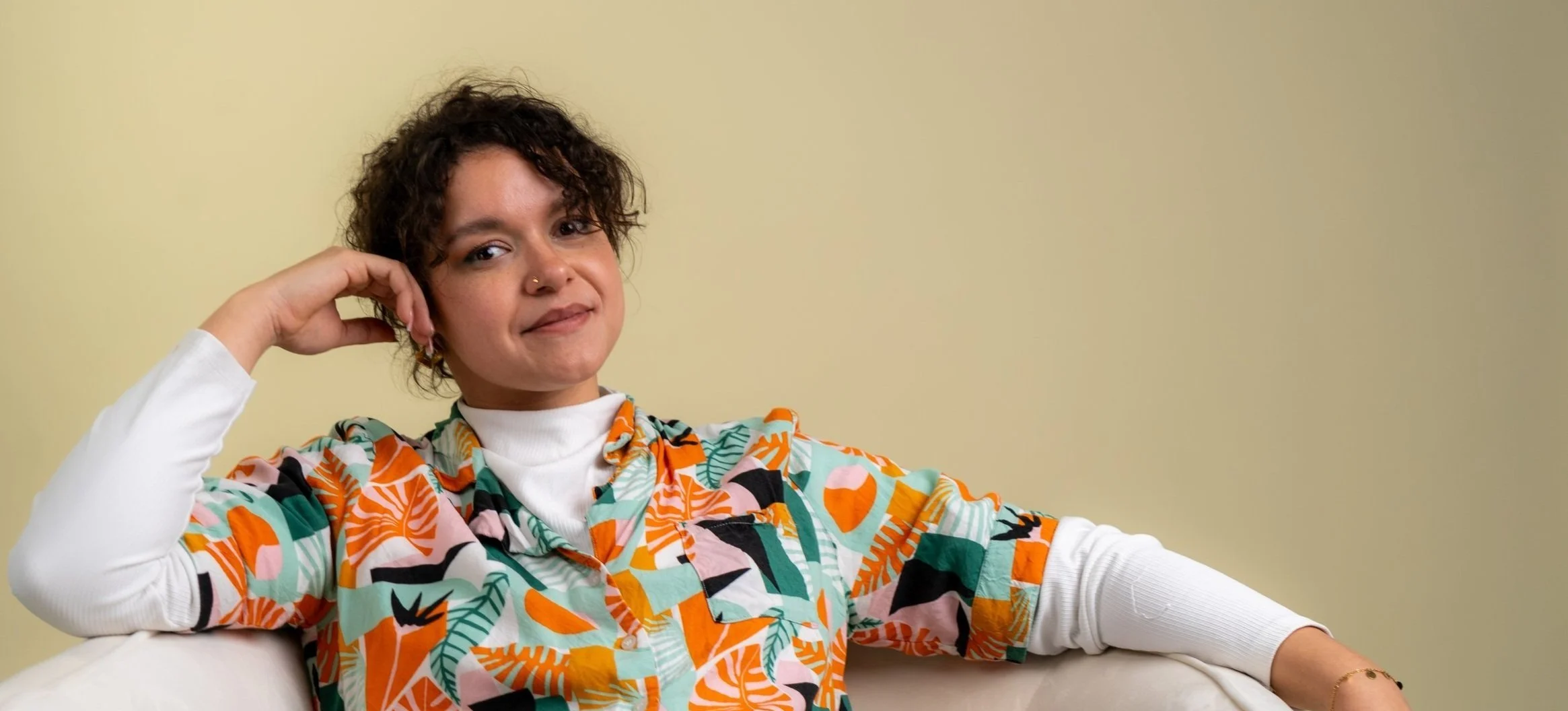
Vanessa Ebert – better known to many on social media as nessadhs – calls herself a “media auntie”. It is a term that captures her work remarkably well: she combines content creation with in-depth media knowledge, shaped by her degree in media research, her experience in livestreaming and her current work in social media.
Her path to the content she creates today, however, did not begin strategically but personally. During the coronavirus pandemic she suffered from panic attacks, had her ADHD diagnosis (attention deficit hyperactivity disorder) confirmed and realised that the existing content on the subject simply did not speak to her. Too monotonous, not dynamic enough. So she began producing and publishing content herself – without any grand plan, just in the way that felt right and aesthetically pleasing to her.

How does content come about without a strategy?
Vanessa does not have a conventional plan. No fixed upload times, no content calendar. Instead: 100% gut feeling.
When an idea comes to her, she acts on it – often immediately and sometimes for hours on end without a break. Videos are then uploaded in the middle of the night, simply because she wants to share a topic with others. Perfection is not her priority. What matters more to her is that her ideas find their way out into the world at all.
This intensity of work does, however, come with extremes: phases of intense productivity alternate with exhaustion. Vanessa describes her passion for what she does as “the best and the worst thing at the same time”.
One possible explanation lies in what is known as hyperfocus: when tasks are strongly intrinsically motivating, people with ADHD can enter states of intense concentration in which they block out everything around them (Ashinoff & Abu-Akel, 2019). These phases can be exceptionally productive, but they can also lead people to override their physical limits.
How does ADHD shape Vanessa’s creative work?
For Vanessa, ADHD is not a “superpower” but more of an early warning system. She picks up on moods quickly and notices when something is about to tip or does not feel right. This sensitivity also influences her choice of topics: she talks about things that, in her view, are misunderstood or receive too little attention.
At the same time, her work is marked by intensity. She can get an enormous amount done in a single day – but afterwards she needs time to wind down again. Her hyperactivity shows itself above all on the inside: thoughts that go round in circles and hardly ever stand still.
What drives her, above all, is intrinsic motivation. Research shows that people with ADHD respond particularly strongly to tasks that interest them personally or appeal to them emotionally, and develop a high level of engagement with them (Hupfeld et al., 2019). It is exactly this dynamic that is reflected in Vanessa’s way of working.
Authenticity is not a conscious strategy for her but a prerequisite: in her videos she can only be herself – anything else would be too exhausting.

What happens when structure has to come from outside?
As much as Vanessa relies on intuition, elsewhere it becomes clear how important external structure can be. When writing her book, she needed exactly this kind of help: she asked her mother to regularly “lock her in” to write and then check whether she had actually written anything.
Not because she was short of ideas – quite the opposite. The story already existed in full in her head. She describes the writing itself as like rewatching a film she already knows.
This is precisely where the tension between inner clarity and outward execution becomes apparent: while ideas are detailed and vivid, the step towards actually putting them into practice can require structure from outside.
How does she find balance amid the constant intensity?
Regularity hardly suits her way of working. Fixed routines quickly lose their appeal for her, which is why she keeps looking for new stimuli – at the moment, for example, on Twitch.
That makes finding a balance all the more important. For Vanessa, it is dancing. It is a kind of meditation for her, a way to step off the merry-go-round of her thoughts. A moment in which she does not have to be in control but can let herself be led.
What remains?
In the end, there is no classic recipe for success, but a clear attitude: “Be cringe.”
If you feel like doing something, you should just do it, without letting perfectionism or the fear of being judged hold you back.
Vanessa’s journey shows that creative work with ADHD is not linear. It is intense, contradictory and sometimes overwhelming. But that is exactly where its strength lies.
Or, to put it her way:
Sometimes 100% gut feeling is enough.
Would you like to find out more about Vanessa’s creative work and how she lives with ADHD? Then feel free to listen to the full podcast episode now. Enjoy!
Anastasia Prut (psychology student)
Deepen your meditation practice with Mindfulife
Meditation can be more than a short break in your everyday life. If you would like to understand more deeply how meditation works, how to build a steady practice of your own and how to guide others mindfully, our meditation teacher training is the next step. There you will not only get to know meditation in theory, but also develop more confidence, clarity and trust in your own practice.
Would you like to find out more about the training first? In our weekly webinar you will get an insight and learn more about what your path to becoming a meditation teacher could look like.
For regular support in your everyday life, you can also use our online meditation studio and join guided meditations flexibly via Eversports.
We look forward to accompanying you on your journey.
You can also find more mindfulness inspiration on our channels:
References
Ashinoff, B., & Abu-Akel, A. (2019). Hyperfocus: The forgotten frontier of attention. Psychological Research, 85, 1–19. https://doi.org/10.1007/s00426-019-01245-8
Hupfeld, K., Abagis, T., Osborne, J., Tran, Q., & Shah, P. (2019). Living “in the zone”: Hyperfocus in adult ADHD. ADHD Attention Deficit and Hyperactivity Disorders, 11, 191–208. https://doi.org/10.1007/s12402-018-0272-y