Which meditation is right for me? – A guide for you

 · 5 min read

Are you struggling to choose the right kind of meditation? Then this is the perfect article for you. We’ll give you practical tips to help you find the meditation that suits you best. Enjoy reading!
Which meditation is right for me?
Apps, online training, podcasts, websites, videos – the number of digital offerings for mindfulness training and meditation courses keeps growing. But are they just as good as an ‘analogue’ course with a meditation teacher in the room?
In this article, we compare the effectiveness of digital and analogue channels for meditation on a scientific basis. We show you what to look out for when choosing a course and to what extent online meditation can be helpful. This may help you find an answer to the question ‘Which meditation is right for me?’.
Is quality more important than the form of meditation?
One study showed that a mindfulness-based online intervention was just as effective as an offline intervention1. Both study groups were supported by a coach – the online group, however, only via the internet. What is often overlooked when comparing ‘online vs. offline’: the health-promoting effects depend not on the format (digital or in person) but on individual support2.
Another study found that stress reduction through mindfulness was significantly greater with guided training than with unguided (online) training3. So it matters less whether the meditation course takes place digitally or in person. What is decisive is the individual support provided by the teacher and good guidance during the exercises. It goes without saying that live courses with a teacher present are more likely to meet this quality criterion than standardised apps.
What are common problems when meditating?
Typical difficulties that arise when meditating include a lack of motivation and time, recurring destructive thoughts (‘I really want to do it right’, ‘why can’t I manage to calm my mind?’) or unintentionally falling asleep during meditation.
More than half of the study participants reported having fallen asleep during a mindfulness exercise. This happens particularly during longer exercises or among beginners.5 People also often have the thought of ‘wanting to do it right’.6 They want to reach a meditative state and, in doing so, resist their current sensations and thoughts.
Mindfulness, however, is about an inner attitude of acceptance, which cannot simply be copied like a fitness exercise. If these phenomena are not dealt with appropriately, frustration sets in and the positive effects of meditation cannot take hold.

Why have a meditation teacher?
A digital programme can offer plenty of general tips, but it cannot respond individually to these difficulties. Study results show that participants benefit from the support of a meditation teacher7. A teacher can take personal problems into account, pass on successful strategies based on their expertise and practical experience, and adapt the exercises where necessary (e.g. a body scan sitting up instead of lying down, or adjustments to the length). A teacher can significantly improve the quality of meditation – regardless of the format. This, too, is something worth considering if you want to answer the question ‘Which meditation is right for me?’.
What are the benefits of group meditation?
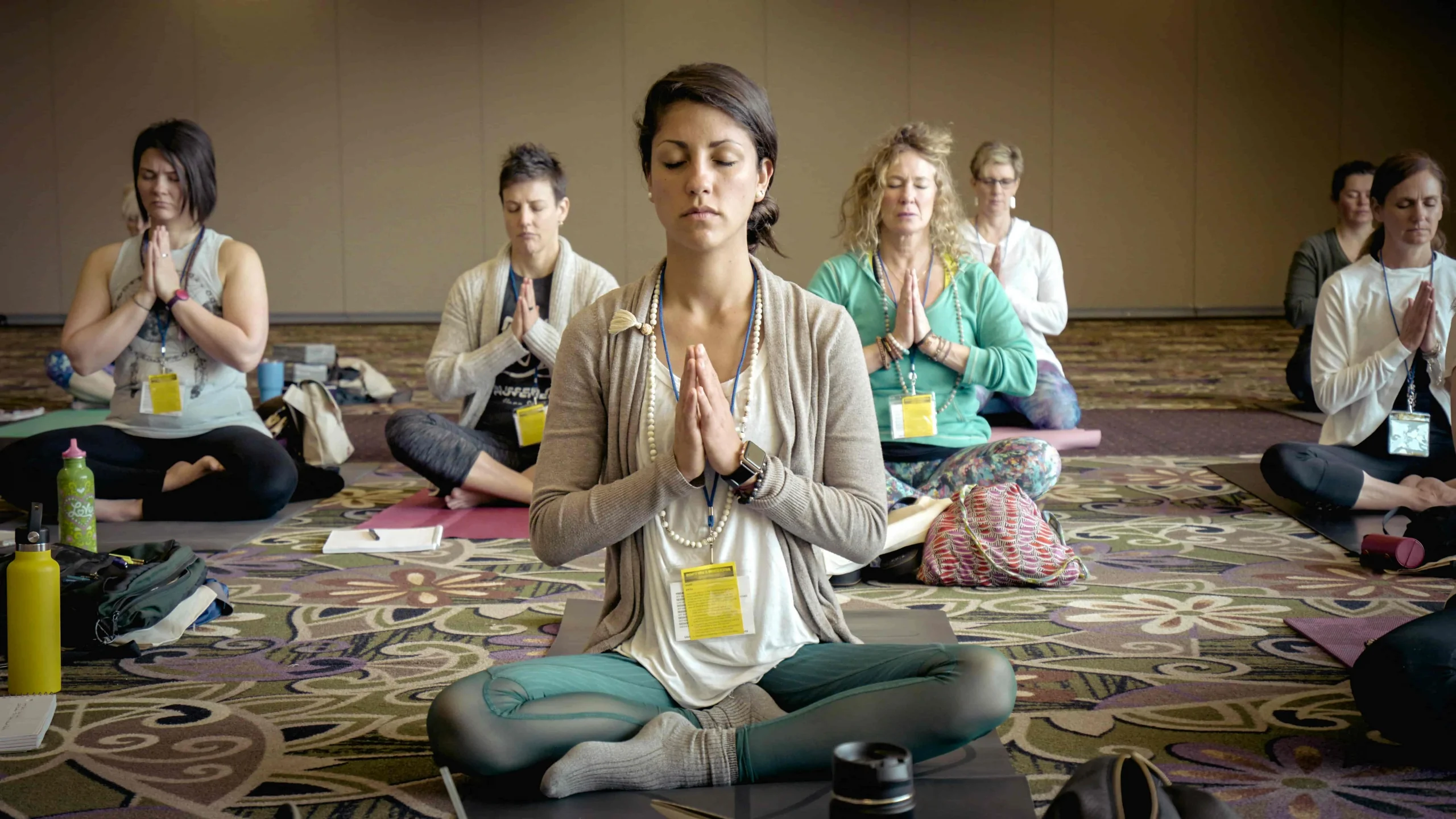
In one study, people took part in both digital and analogue group meditations. More than half of the participants preferred the latter. Most found it easier to meditate in a group than alone with an online programme. They were less distracted and experienced the personal contact with the teacher as supportive. Practising together gave them a sense of safety, cohesion and unity. Within the group, people felt responsible for one another. Even when they were finding it hard to relax, they tried to join in and not disturb the others, and so automatically became calmer. The calming environment of the community therefore makes it much easier to engage with meditation8.
Healthier through a ‘sense of belonging’
Taking part in a mindfulness group has further health-promoting effects that a digital programme cannot offer.
A ‘sense of belonging’ describes the feeling of being part of a group and accepted within it. This emotion is linked to wellbeing and is a protective factor against stress9. People who experienced this sense of community had significantly fewer psychological complaints and a lower risk of burnout10. Simply taking part in a meditation group can therefore do your health some good.
Routine is what counts
Knowing about the positive effects of mindfulness on health and wellbeing is a huge motivator for meditation practice11 and, for many people, a reason to start in the first place.
It therefore makes sense to attend digital or analogue workshops on the scientific facts about mindfulness (you can find out more about the effects of meditation here). But what use is the best meditation app if it stops being used once the initial enthusiasm wears off? Mindfulness is like sport: the training effects depend on how often you practise. To make sure the health benefits you gain at the start are not lost, a regular, disciplined meditation practice is important.
What helps you stick with it?
For many people, building a meditation routine is a real challenge. According to studies, the following help: a fixed appointment, contact with a teacher and mutual support among participants4. Another study concluded that a psychotherapeutic intervention delivered in person is more effective in the long term than its digital counterpart. In personal contact with the teacher, participants showed more enjoyment and a better understanding of the exercises than in the digital intervention. In an analogue course, mistakes can therefore be avoided more easily, participants are more motivated to carry out the intervention consistently and can benefit from it in terms of their health in the long run12.
Is it good to meditate digitally?
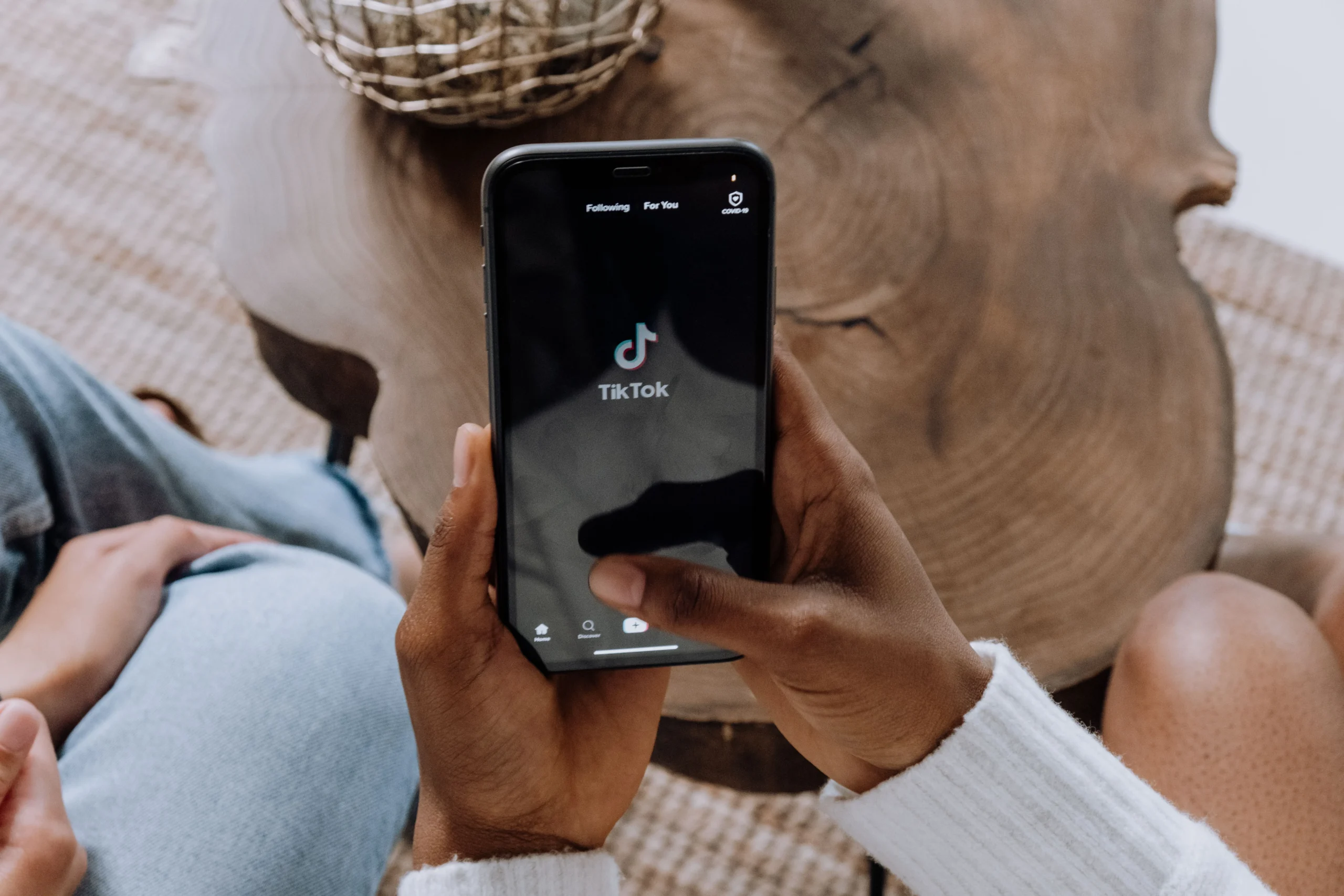
The advantages of digital meditation formats are clear: they offer great flexibility because information is available anywhere, at any time. But using digital media also carries risks for our health.
So perhaps during our meditation practice we should simply disconnect from technology for a while and connect, in an analogue and personal way, with ourselves and the other participants. By the way, you can find more on cutting down on phone use here.
Recommendations in brief: Which meditation is right for me?
To sum up, we can make the following recommendations from a scientific perspective:
- The first choice for a successful, long-term meditation practice is regular attendance at an analogue course with trained meditation teachers.
- Taking part in a meditation group also has additional positive health effects.
- Combining this with (analogue or digital) workshops on the scientific background of mindfulness is particularly recommended to boost motivation and understanding.
- If you do opt for a digital meditation course, it is important to receive regular, individual support from a meditation teacher who can guide the exercises well and respond to any difficulties.
We hope you can now find an answer to the question ‘Which meditation is right for me?’.
Read more
Hopefully you now have an answer to the question ‘Which meditation is right for me?’. If you’d like to learn more about meditation, for example as a lawyer, we have just the right article for you!
You’ll also find more fascinating blog articles on meditation techniques and dopamine detox on our site.
Deepen your meditation practice with Mindfulife
Meditation can be more than a short break in your everyday life. If you would like to understand more deeply how meditation works, how to build a steady practice of your own and how to guide others mindfully, our meditation teacher training is the next step. There you will not only get to know meditation in theory, but also develop more confidence, clarity and trust in your own practice.
Would you like to find out more about the training first? In our weekly webinar you will get an insight and learn more about what your path to becoming a meditation teacher could look like.
For regular support in your everyday life, you can also use our online meditation studio and join guided meditations flexibly via Eversports.
We look forward to accompanying you on your journey.
You can find more mindfulness inspiration on our channels too
References
Allen, M., Bromley, A., Kuyken, W., & Sonnenberg, S. J. (2009). Participants’ experiences of mindfulness-based cognitive therapy: ‘It changed me in just about every way possible.’ Behavioural and Cognitive Psychotherapy, 37(4), 413–430. https://doi.org/10.1017/S135246580999004X
Birtwell, K., Williams, K., van Marwijk, H., Armitage, C. J., & Sheffield, D. (2019). An exploration of formal and informal mindfulness practice and associations with wellbeing. Mindfulness, 10(1), 89–99. https://doi.org/10.1007/s12671-018-0951-y
Compen, F., Bisseling, E., Schellekens, M., Donders, R., Carlson, L., van der Lee, M., & Speckens, A. (2018). Face-to-face and internet-based mindfulness-based cognitive therapy compared with treatment as usual in reducing psychological distress in patients with cancer: A multicenter randomized controlled trial. Journal of Clinical Oncology, 36(23), 2413–2421. https://doi.org/10.1200/JCO.2017.76.5669
Kiropoulos, L. A., Klein, B., Austin, D. W., Gilson, K., Pier, C., Mitchell, J., & Ciechomski, L. (2008). Is internet-based CBT for panic disorder and agoraphobia as effective as face-to-face CBT? Journal of Anxiety Disorders, 22(8), 1273–1284. https://doi.org/10.1016/j.janxdis.2008.01.008
Lauricella, S. (2014). Mindfulness meditation with undergraduates in face-to-face and digital practice: A formative analysis. Mindfulness, 5(6), 682–688. https://doi.org/10.1007/s12671-013-0222-x
McCarthy, M. E., Pretty, G. M., & Catano, V. (1990). Psychological sense of community and student burnout. *Journal of College Student Development, 31*(3), 211–216.
Moore, K. M., & Martin, M. E. (2015). Using MBCT in a chronic pain setting: A qualitative analysis of participants’ experiences. Mindfulness, 6(5), 1129–1136. https://doi.org/10.1007/s12671-014-0363-6
Segal, Z. V., Williams, J. M. G., & Teasdale, J. D. (2013). Mindfulness-based cognitive therapy for depression (2nd ed.). Guilford Press.
Spek, V., Cuijpers, P., Nyklíček, I., Riper, H., Keyzer, J., & Pop, V. (2007). Internet-based cognitive behaviour therapy for symptoms of depression and anxiety: A meta-analysis. Psychological Medicine, 37(3), 319–328. https://doi.org/10.1017/S0033291706008944
Spijkerman, M. P. J., Pots, W. T. M., & Bohlmeijer, E. T. (2016). Effectiveness of online mindfulness-based interventions in improving mental health: A review and meta-analysis of randomised controlled trials. Clinical Psychology Review, 45, 102–114. https://doi.org/10.1016/j.cpr.2016.03.009
Van Gundy, K. T., Stracuzzi, N. F., Rebellon, C. J., Tucker, C. J., & Cohn, E. S. (2011). Perceived community cohesion and the stress process in youth. Rural Sociology, 76(3), 293–318. https://doi.org/10.1111/j.1549-0831.2011.00050.x