Reducing Phone Use: How Can Mindfulness Help?

 · 6 min read
What are the downsides of our connected existence, and how can you still cut down on screen time and reduce your phone use? In this article, you will find out how you can achieve this with the help of mindfulness. Enjoy reading!
Germany should reduce its phone use – but what are the consequences?
According to an ARD/ZDF online study, the proportion of internet users in Germany rose above 90 % for the first time in 2018. Three quarters of the population go online every day. Being constantly reachable and able to reach others gives us endless opportunities that go far beyond social networking in the media. At the same time, however, we pay a high price for it.
Studies have found, for example, that our psychological well-being declines when we spend a lot of time in front of screens. Life satisfaction, self-esteem and feelings of happiness in particular decrease more sharply in people with frequent screen exposure than in those who spend more time on activities away from the screen. So it is high time we reduced our phone use.
Undirected Smartphone Use – How can I reduce aimless phone use?
When we use our smartphones, we often do more than just use their many helpful features. We frequently pull out our phone, unlock it, scroll through apps and then lock it again and put it away, all completely unconsciously. For example, we only meant to check the time quickly and instead got lost in other activities. Only once we have put the phone away again do we realise that we still do not know what time it is.

These are just two examples of “undirected smartphone use”, where we use our phone without any specific goal in mind. Regular, undirected smartphone use encourages poor concentration and inattentiveness in everyday life, even in situations that have nothing to do with media. Goal-directed media use, on the other hand, has no negative effect on our attention and concentration. Above all, then, it is aimless and unconscious use that should be reduced.
Why do we find doing nothing so hard?
The fact that we so often use our smartphones aimlessly is also down to our general aversion to doing nothing. A series of studies showed that students who were asked to spend 6-15 minutes alone in a room with nothing but their own thoughts found it hard to concentrate. They experienced being alone as unpleasant.
When participants were given the option of administering electric shocks to themselves while they waited, 2/3 of the male and 1/3 of the female participants took up this offer at least once. In other words, we would rather engage in painful activities than do nothing. All the more tempting, then, that our smartphone offers us an easy way out of “doing nothing” and also stimulates the release of happiness hormones. This makes it very difficult for us to reduce our phone use of our own accord.
How does smartphone use affect the brain?
Current neuroscientific research shows that increased screen time (particularly in the case of smartphone addiction) is linked to changes in the brain. Frequent use affects the brain’s dopamine system. Here, internet use acts like a drug. Changes can also be seen in the prefrontal cortex, which is associated with, among other things, planning actions, controlling behaviour appropriately for the situation and regulating emotional processes. Excessive internet use reduces the control the prefrontal cortex exerts over the rest of the brain.
The ability to pursue long-term goals even in the face of distractions is particularly affected. In addition to these measurable changes in the brain, our cognitive performance is reduced even when a smartphone is simply lying on the table. Research has shown that the available capacity of working memory and fluid intelligence (the part of our intelligence associated with problem-solving, learning and pattern recognition) decreases in the moment due to the mere presence of a smartphone, even when participants are not actively using the device at the time.
But what do these findings mean for mindful media users? Can I be mindful and use a smartphone at all? Or do I have to log out of every channel and reduce my phone use in order to find serenity? The answer is: no! I do not have to renounce all technology and cut out my phone use entirely in order to go through life focused and relaxed. Nevertheless, we should take a closer look at how mindfulness can help us make our use of social media as healthy and sustainable as possible. After all, we want to keep our brains fit!

Can mindfulness help you reduce your phone use?
Mindfulness is a state of non-judgemental attention to the present moment. But our attention cannot possibly rest on the moment if we are constantly on our phones. We engage with content and people that, in that very moment, are most likely irrelevant to what we are experiencing. Even so, we want to stay in touch with our friends and acquaintances and keep informed about what is happening in the world.
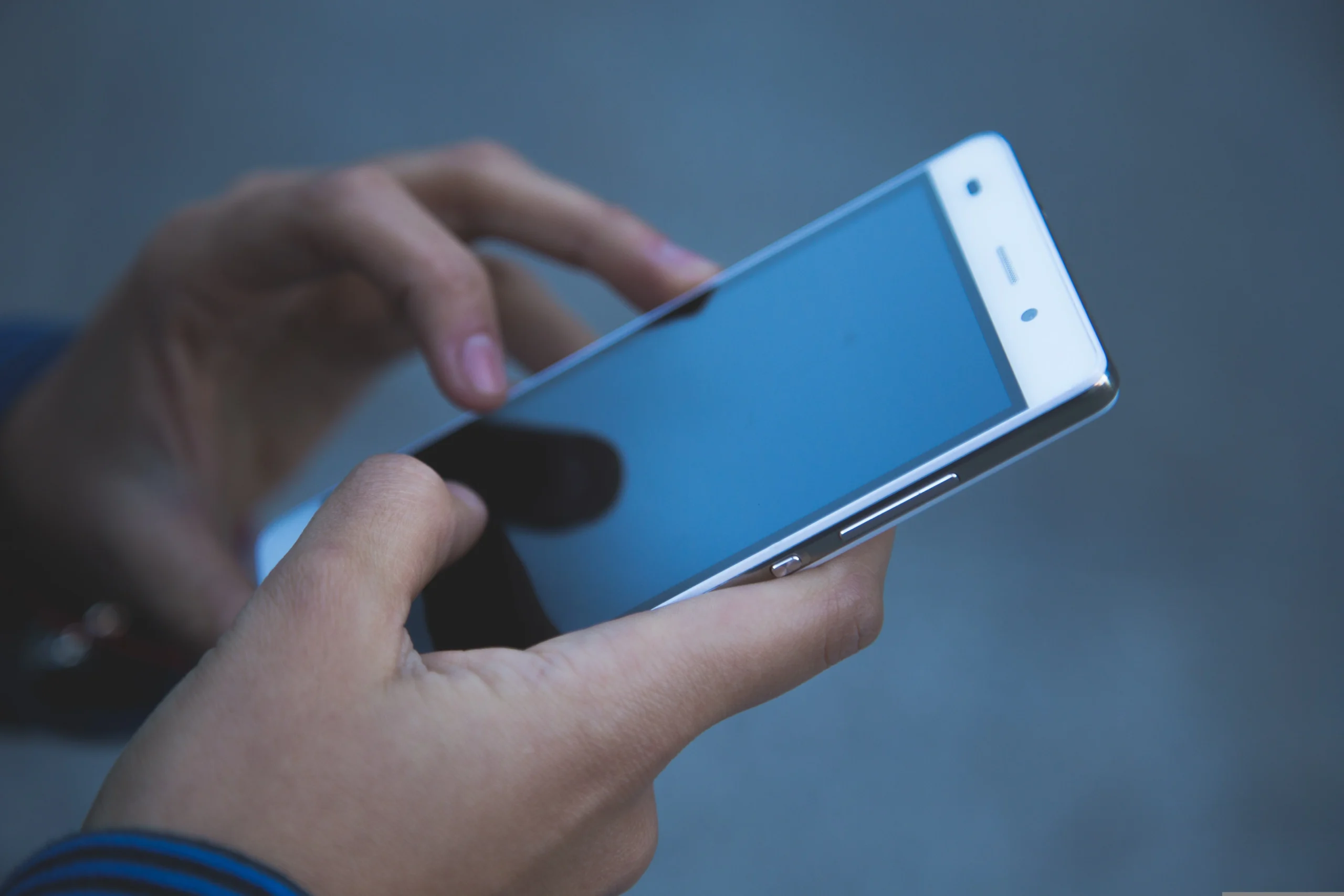
However, it is not impossible to be attentive in a non-judgemental way while using a smartphone. Even simple exercises such as noticing the shape of your smartphone or laptop can help. How many buttons does the device have? How do the surfaces, edges and corners feel?
So how do I use my smartphone mindfully?
Digital Detox
Simply using a smartphone is not a problem as far as mindfulness is concerned. The only problem is using the device unconsciously. If we really want to take a closer look at how dependent we are on our devices and what effects a life without screens would have, a “digital detox” (not to be confused with “dopamine detox”) can point to a healthy middle ground.
Much like a diet, this involves partially or completely abstaining from all kinds of digital media (e.g. smartphones, laptops, the internet, television) for a certain period of time. That might be 15 minutes a day, a whole day every now and then, or even several weeks. How often and for how long you build this “detox cure” into your life is fairly flexible and can be adapted to suit you.
A time limit
Another ray of hope: nowadays there are many apps and smartphone settings that record how much time is spent on a device, a particular app or a website. This makes it clear how much time was spent in which app each day. It helps to create awareness of your own behavioural patterns and can help you use digital media more mindfully – which in turn means you can reduce your phone use.
Fascinating, isn’t it? Would you try a digital detox? Do you think you should reduce your phone use? Feel free to share your thoughts in the comments!
If, in this context, you are interested in bringing mindfulness into your life through meditation, Mindfulife offers live meditations and mindfulness courses on a range of topics – why not come and visit us there?

Read more
If you are also interested in the topic of digital loneliness, we have just the right article for you. We hope you enjoy reading it and look forward to seeing you there!
Deepen your meditation practice with Mindfulife
Meditation can be more than a short break in your everyday life. If you would like to understand more deeply how meditation works, how to build a steady practice of your own and how to guide others mindfully, our meditation teacher training is the next step. There you will not only get to know meditation in theory, but also develop more confidence, clarity and trust in your own practice.
Would you like to find out more about the training first? In our weekly webinar you will get an insight and learn more about what your path to becoming a meditation teacher could look like.
For regular support in your everyday life, you can also use our online meditation studio and join guided meditations flexibly via Eversports.
We look forward to accompanying you on your journey.
You can find more mindfulness inspiration on our channels too
References
Frees, B., & Koch, W. (2018). ARD/ZDF-Onlinestudie 2018: Zuwachs bei medialer Internetnutzung und Kommunikation. Media Perspektiven, 9, 398–413.
Hou, H., Jia, S., Hu, S., Fan, R., Sun, W., Sun, T., & Zhang, H. (2012). Reduced striatal dopamine transporters in people with internet addiction disorder. BioMed Research International, 2012, Article 854524. https://doi.org/10.1155/2012/854524
Kabat-Zinn, J. (1990). Full catastrophe living: Using the wisdom of your body and mind to face stress, pain, and illness. New York, NY: Delta.
Kühn, S., & Gallinat, J. (2015). Brains online: Structural and functional correlates of habitual Internet use. Addiction Biology, 20(2), 415–422. https://doi.org/10.1111/adb.12128
Marty-Dugas, J., Ralph, B. C., Oakman, J. M., & Smilek, D. (2018). The relation between smartphone use and everyday inattention. Psychology of Consciousness: Theory, Research, and Practice, 5(1), 46–59. https://doi.org/10.1037/cns0000131
Twenge, J. M., Martin, G. N., & Campbell, W. K. (2018). Decreases in psychological well-being among American adolescents after 2012 and links to screen time during the rise of smartphone technology. Emotion, 18(6), 765–780. https://doi.org/10.1037/emo0000403
Ward, A. F., Duke, K., Gneezy, A., & Bos, M. W. (2017). Brain drain: The mere presence of one’s own smartphone reduces available cognitive capacity. Journal of the Association for Consumer Research, 2(2), 140–154. https://doi.org/10.1086/691462
Wilson, T. D., Reinhard, D. A., Westgate, E. C., Gilbert, D. T., Ellerbeck, N., Hahn, C., & Shaked, A. (2014). Just think: The challenges of the disengaged mind. Science, 345(6192), 75–77. https://doi.org/10.1126/science.1250830