Meditation & Neuroplasticity: How Does Meditation Change Your Brain?

 · 4 min read
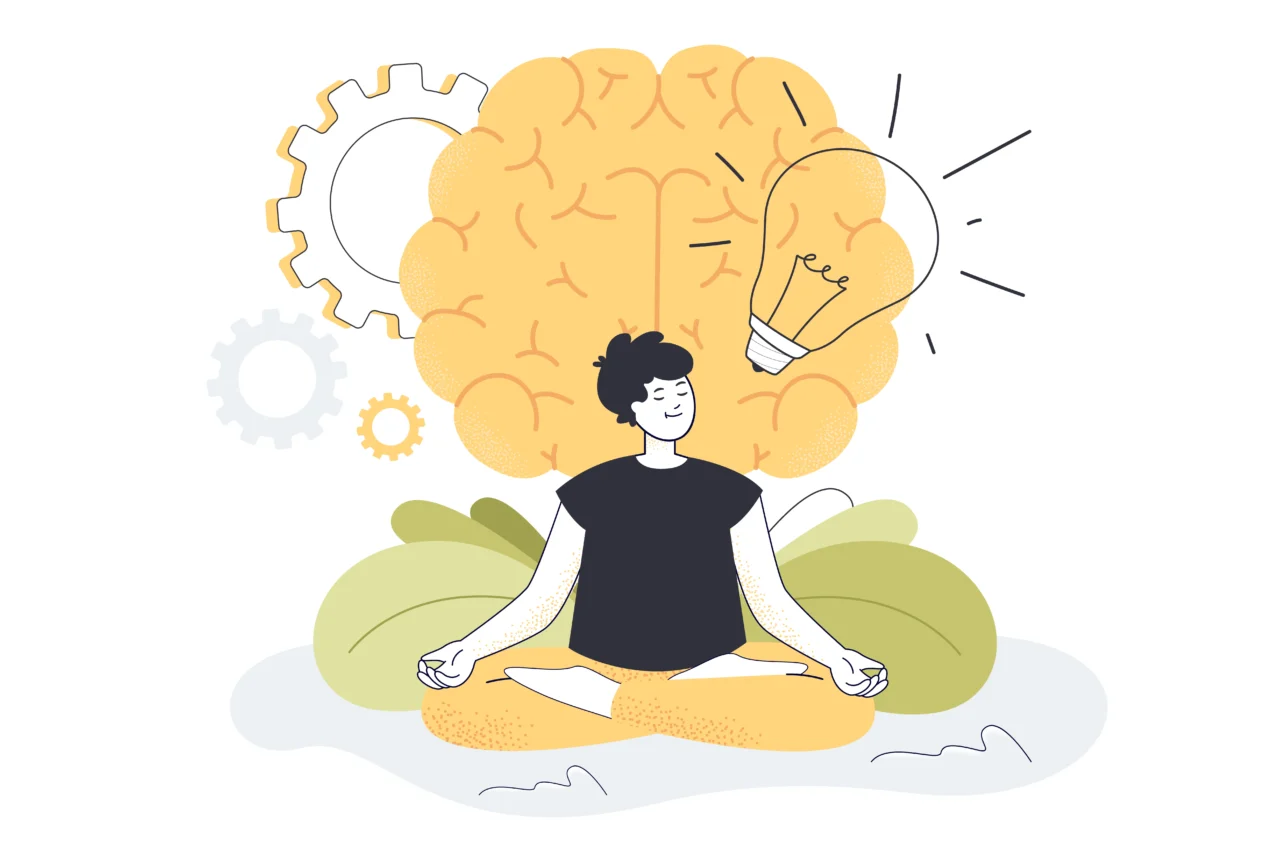
Meditation is often seen as a simple relaxation technique. But its effects go much further: studies show that meditation can change the brain. Regular practice creates new neural connections that can influence how we deal with stress, emotions and challenges.
But how exactly does this work? What happens in the brain during meditation, and why do people who meditate regularly often respond more calmly to pressure? The answer lies in what is known as neuroplasticity.
How exactly does meditation help us to react more calmly and recover more quickly from stress? What happens in our brain along the way? That is exactly what you will find out in this article.
What actually is neuroplasticity?
When we talk about how meditation affects the brain, we soon come across the term neuroplasticity.

Neuroplasticity describes our brain’s ability to change and adapt. For a long time, it was assumed that the brain was largely ‘finished’ after developing in childhood and adolescence, and that it barely changed in adulthood.
Today, however, we know that this assumption is wrong. Our brain remains capable of learning throughout our lives. New experiences, thoughts and habits can alter neural connections or create new ones.
The fact that we can learn new skills, remember names or find new ways of solving problems is only possible because our brain is plastic – in other words, changeable.
How meditation trains your brain
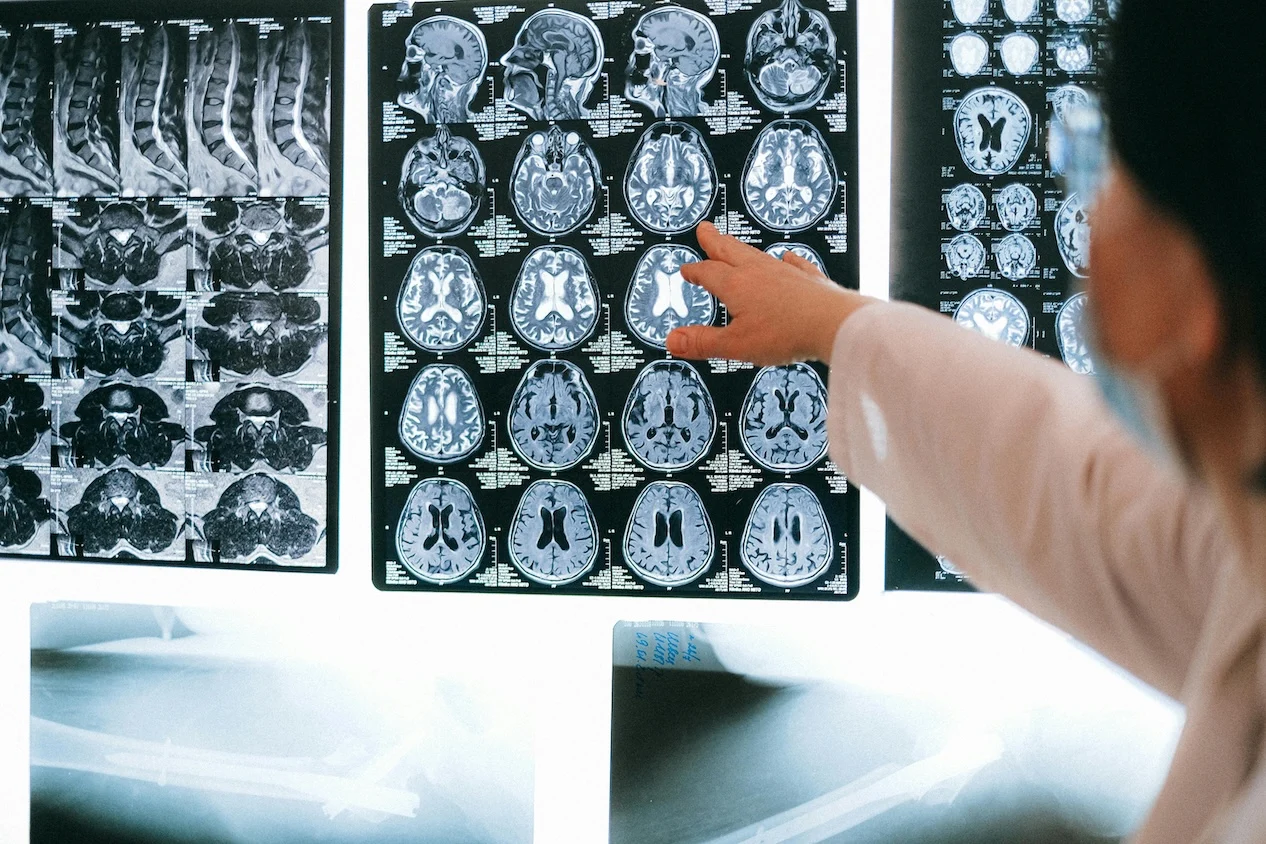
Everything we do mentally leaves traces in the brain. These can be made visible using imaging techniques such as functional magnetic resonance imaging.
Depending on the task we are carrying out, different areas of the brain are activated. Certain regions are also particularly active during meditation.
If you meditate regularly, these areas are activated again and again. As a result, the connections between nerve cells can grow stronger – much like muscles that grow through training.
Physical exercise is a good example: when you do press-ups, not much happens the first time. But if you repeat the exercise regularly, your muscles get stronger. Something similar happens in the brain. Regular meditation can change the structure and activity of certain brain regions.
Which areas of the brain can change through meditation
Studies provide evidence that meditation can influence the brain both functionally and structurally.
Changes are most frequently observed in two important areas.
Prefrontal cortex
The prefrontal cortex is located at the front of the brain and plays an important role in:
- Concentration
- Decision-making
- Self-regulation
- Emotional control
Research shows that meditation can be associated with increased activity in this area. In the long term, regular practice can even lead to structural changes, for example to certain areas of the cortex becoming more pronounced.
The amygdala and the stress response
The amygdala is part of the limbic system and plays a central role in processing emotions, especially fear and stress.
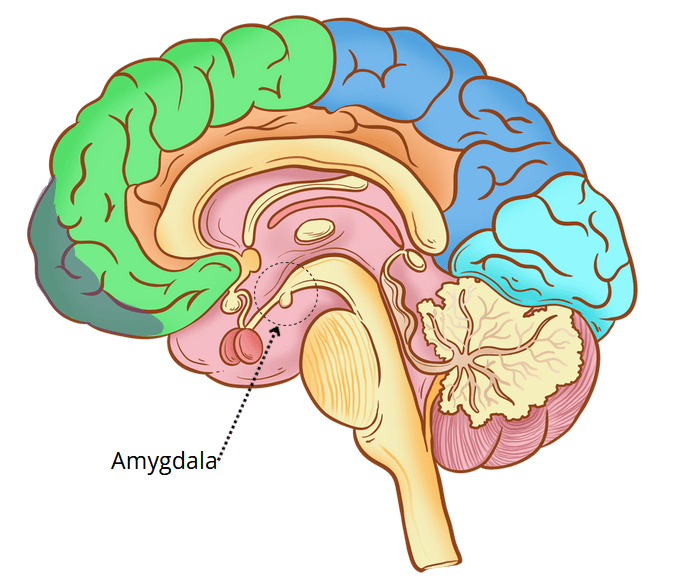
Studies suggest that regular meditation can be associated with reduced activity in the amygdala – especially in stressful situations. At the same time, a smaller volume of this area has been observed in some cases.
As the amygdala is heavily involved in the stress response, this could explain why people who meditate often react more calmly to stressful situations.
Why meditation helps you deal with stress more calmly
Many people see meditation primarily as a relaxation exercise. In fact, however, it is more of an attention and focus exercise.
During meditation, you train yourself to direct your attention deliberately – for example to your breath or to bodily sensations. Relaxation may come about along the way, but it is more of a pleasant side effect.
Through this regular attention practice, the way you handle stress can also change over time. You won’t automatically become stress-free, but you can learn to notice pressure more consciously and to find your calm again more quickly.
This is precisely where we see how meditation can influence the brain: repeatedly paying attention creates a new way of responding to thoughts, emotions and stress.
Short exercise (body scan):
Sit upright and relaxed. If you like, you can close your eyes.
Bring your attention to different areas of your body, one after the other:

- Feet (toes, soles, heels)
- Ankles, calves and knees
- Thighs, buttocks and lower back
- Abdomen and chest
- Hands and arms
- Shoulders, neck and face
Notice how each part of your body feels. Don’t try to change anything – simply observe.
Then sense your whole body. If you like, you can consciously let go of any tension you notice.
Slowly bring your attention back to your surroundings and notice the sounds or impressions in the room.
Conclusion: How does meditation change the brain?
Research is providing more and more evidence that meditation can influence the brain. Among other things, regular practice is associated with lower activity in the amygdala – a region heavily involved in stress responses.
At the same time, the prefrontal cortex, which is important for concentration, decision-making and emotion regulation, can be strengthened through mindfulness training.
This doesn’t mean that meditation makes stress disappear completely. But it can help you respond differently to pressure and find your way back to a state of inner calm more quickly.
Marie S. (psychology student)
Deepen your meditation practice with Mindfulife
Meditation can be more than a short break in your everyday life. If you would like to understand more deeply how meditation works, how to build a steady practice of your own and how to guide others mindfully, our meditation teacher training is the next step. There you will not only get to know meditation in theory, but also develop more confidence, clarity and trust in your own practice.
Would you like to find out more about the training first? In our weekly webinar you will get an insight and learn more about what your path to becoming a meditation teacher could look like.
For regular support in your everyday life, you can also use our online meditation studio and join guided meditations flexibly via Eversports.
We look forward to accompanying you on your journey.
You can find more mindfulness inspiration on our channels too
References
Michaelsen, M.M., & Esch, T. (2021). Die neuronale Basis von Meditation und Achtsamkeit im Bildungskontext. In Iwers, T. & Roloff, C. (Hrsg.), Achtsamkeit in Bildungsprozessen (S. 61-75). Springer. https://doi.org/10.1007/978-3-658-30832-2_5