Essential oils: how do they really work? 6 examples
Find out more about essential oils and mindfulness, and learn how to use them purposefully in your meditations.

 · 8 min read
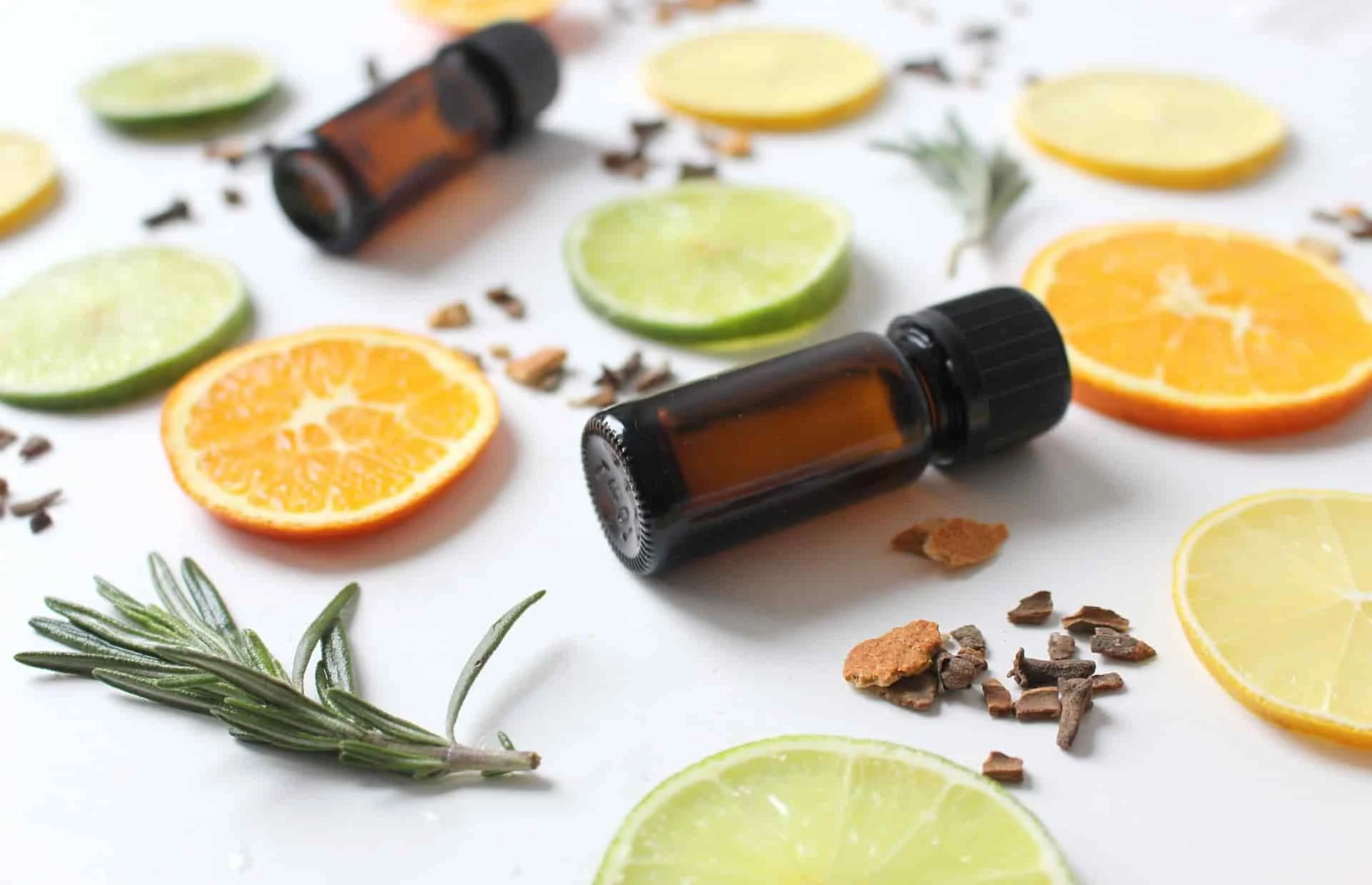
We associate life with many smells. The human body encounters several hundred smells every day. We can find smells appealing, but also repellent. One way of producing scents artificially is to extract them from plants. This process produces essential oils. Essential oils affect our body and our mind. They can also be used during meditation to achieve particular results. If you would like to find out more about essential oils and mindfulness and learn how to use them purposefully in meditation, you have come to the right place.

What are essential oils?
Essential oils are produced by extracting the volatile substances found in plants. As the name suggests, they are oils obtained from the plant in question. How much effort the extraction takes varies from plant to plant. Rose oil, for example, requires thousands of petals for just a few millilitres of oil, whereas citrus oils are often pressed from the peel.
What safety aspects should you consider?
The oils are highly concentrated. For external use they should always be diluted to avoid skin irritation. Internal use should only take place after expert advice.
How do essential oils affect our wellbeing?
Essential oils are highly concentrated plant essences that act on both the body and the mind (Karner, 2020; Gutmann, 2021). Studies show that, via our sense of smell, scents directly influence the limbic system – the area of the brain that governs emotions, motivation and memory (Herz, 2009). Inhaling certain scents can lower stress hormones such as cortisol while activating the parasympathetic nervous system, which leads to relaxation and inner calm.
How does smell influence our body, our subconscious and our mind?
The sense of smell is one of the five classic human senses. It performs an important function in the human body. Our sense of smell can warn us of danger, for example when we notice a burning smell while cooking. But smell can also have positive associations, for instance when we find a perfume particularly attractive and appealing.
How we perceive smells and whether we find them pleasant or rather off-putting is first and foremost subjective. Examples of this are the smell of petrol stations, glue or nail polish remover. Of course, there are smells that most people find pleasant and some that are perceived as less appealing. Breathing in different smells can also evoke different emotions and memories within us.
What effects do the different essential oils have?
Essential oils work in the human body in very different ways. To begin with, they can be used both internally and externally. The internal effect of essential oils unfolds as soon as they are inhaled. The whole process takes just a few seconds. Essential oils are used externally above all in cosmetic treatments such as massage.
The different types of essential oil also have different effects on the human body. Below, we would like to introduce you to a few selected essential oils in more detail and look at the various ways they act on the body.
Which essential oils have a particularly strong effect on body and mind?
Scientific studies confirm that scents such as lavender, rose or jasmine lower the physiological heart rate and promote parasympathetic activity – in other words, they put the body into a state of recovery (Field et al., 2005; Lewith et al., 2005).
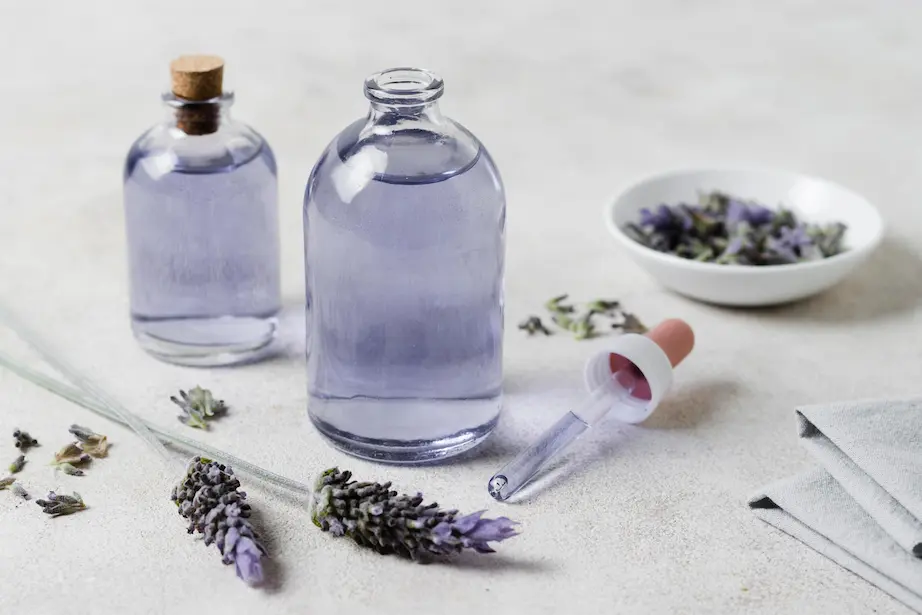
Lavender oil: Lavender oil has a particularly calming effect on the body, lowers stress hormones and supports sleep. Its pleasant scent lets the body slip into a relaxed state. Lavender also has an anti-inflammatory effect on the body.
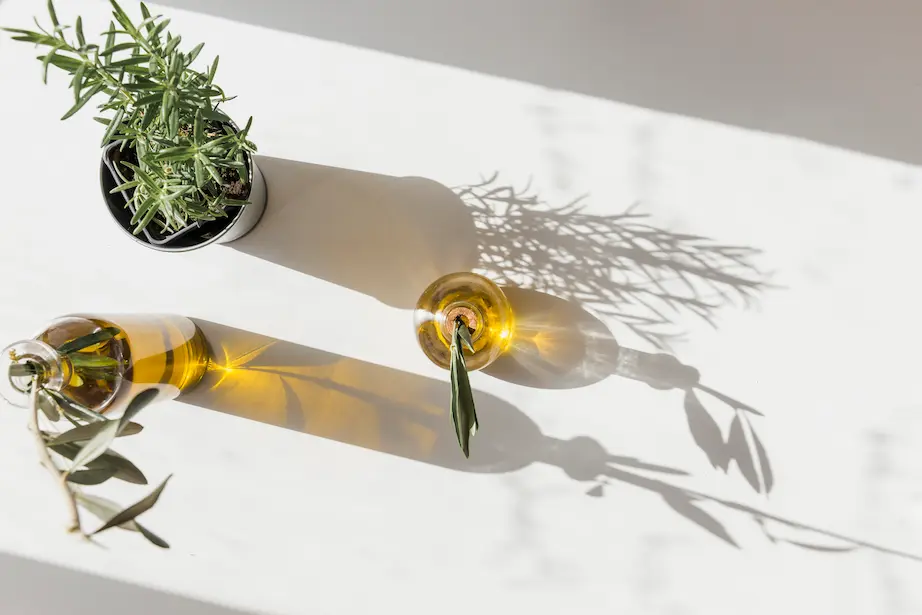
Rosemary oil: Rosemary is said to have antibacterial and anti-inflammatory properties. The plant also promotes circulation and can improve memory performance. As rosemary has a strong scent of its own, this essential oil is particularly well suited to inhalation when you have a cold, or to use with a compress for muscle pain.
Peppermint oil: Peppermint oil is another essential oil with a strong scent of its own. It is used above all for physical ailments. It is ideal for inhalation when you have a cold, but is also popular for headaches or migraines. For this, the peppermint oil is diluted and applied to the forehead and temples. The scent has a cooling as well as refreshing effect and increases attention and alertness.
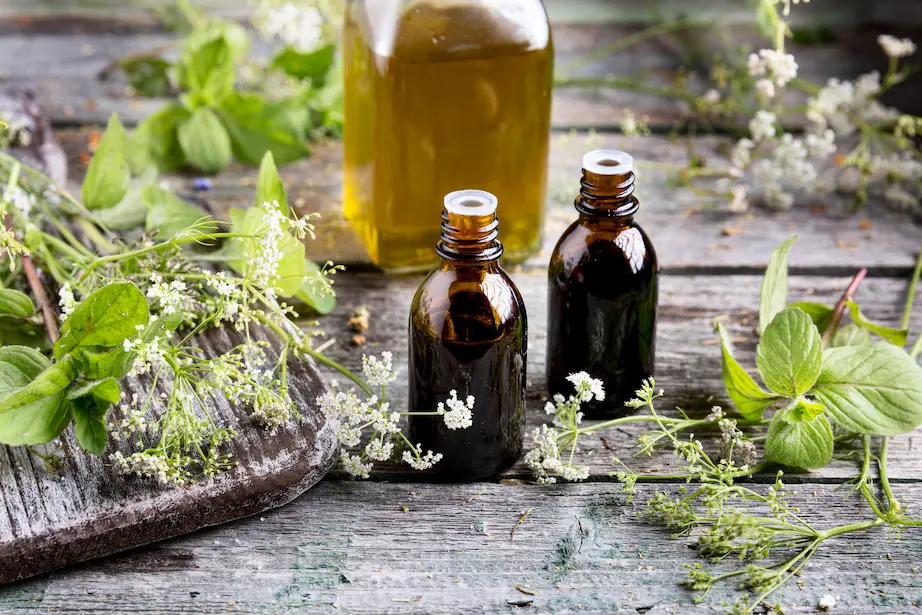
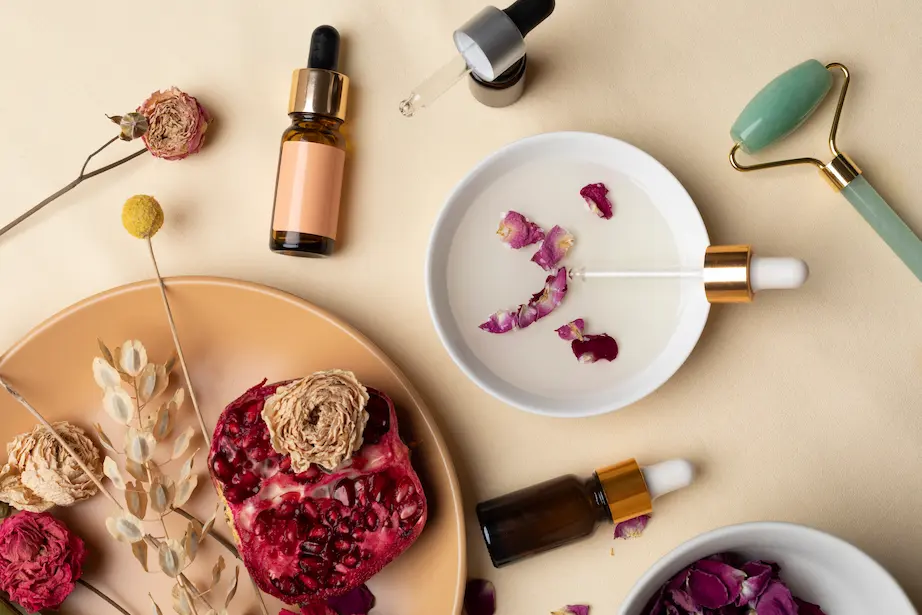
Rose oil: The essential oil obtained from rose petals is said to have an antiseptic effect. This makes it particularly suitable for skincare. Rose oil can also improve the appearance of scars and speed up the associated wound healing, as it promotes skin repair. The scent of rose oil is pleasant, fresh and floral too, creating a relaxed atmosphere in the room, and it is said to reduce anxiety.
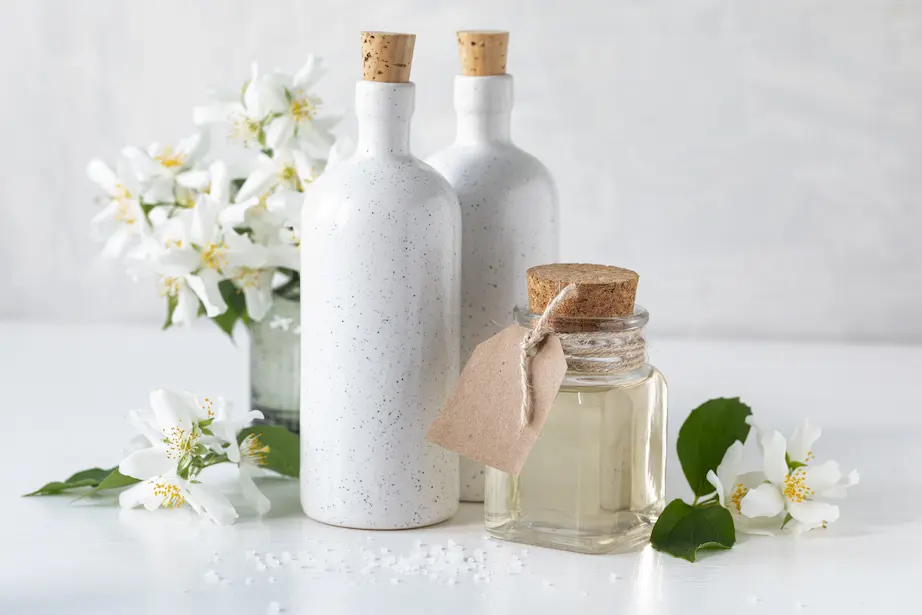
Jasmine oil: Jasmine oil has a relaxing and mood-lifting effect. Especially in stressful situations, jasmine oil can have a calming and relaxing effect on body and mind.
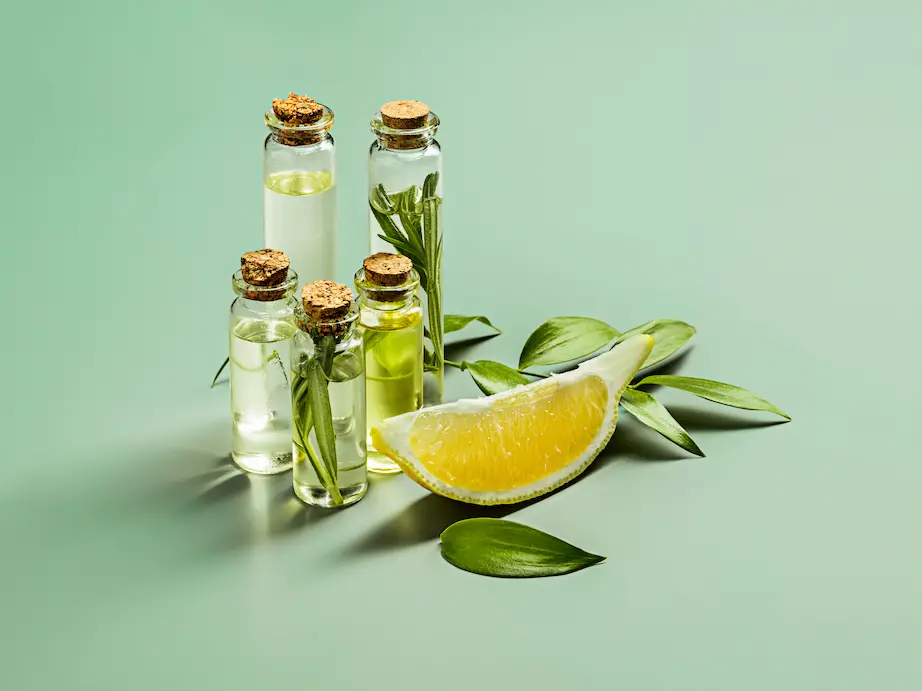
Lemongrass oil: Lemongrass oil can promote concentration and attention. This makes it an excellent companion when revising for exams or working. The essential oil is also very popular with outdoor enthusiasts. Lemongrass oil gives off an intense smell, which insects in particular are not very keen on, so it is often used as a natural insect repellent.
Scientific studies confirm that scents such as lavender, rose or jasmine lower the physiological heart rate and promote parasympathetic activity – in other words, they put the body into a state of recovery (Field et al., 2005; Lewith et al., 2005).
How are essential oils used and what methods are there?
Essential oils can be used in various ways. Probably the best-known method is the aroma lamp. A few drops of the chosen essential oil are mixed with water and placed in the lamp. A tealight is then lit underneath the container holding the liquid. Over time, the water and oil mixture evaporates and releases a pleasant fragrance into the surroundings.
Inhaling an essential oil comes into its own when you have a cold. A large bowl is filled with hot water, and a few drops of the chosen oil are then added. Breathing in the steam mixed with the essential oil has a positive effect on the body and on health. It can help clear the airways and create a feeling of relaxation in the body.
One study showed that regular inhalation of lavender oil over four weeks led to a marked reduction in perceived stress among participants (Koulivand et al., 2013).
Essential oils are also used in the sauna. The so-called infusion can be made with water alone or with a mixture of water and essential oil. Here too, the fragrances contained in the oil have a positive effect on body, mind and soul. The body relaxes, and especially in the early stages of a cold, using the sauna in combination with an essential oil can help shorten the cold.
There are also several other ways of using essential oils, whether as a bath additive, in a compress for injuries and muscle tension, or heavily diluted as a massage oil applied directly to the skin. Essential oils are particularly popular for back pain.
How can essential oils influence your meditation?
Whether or not you want to meditate with an essential oil is entirely up to you. It does, however, bring a number of benefits:
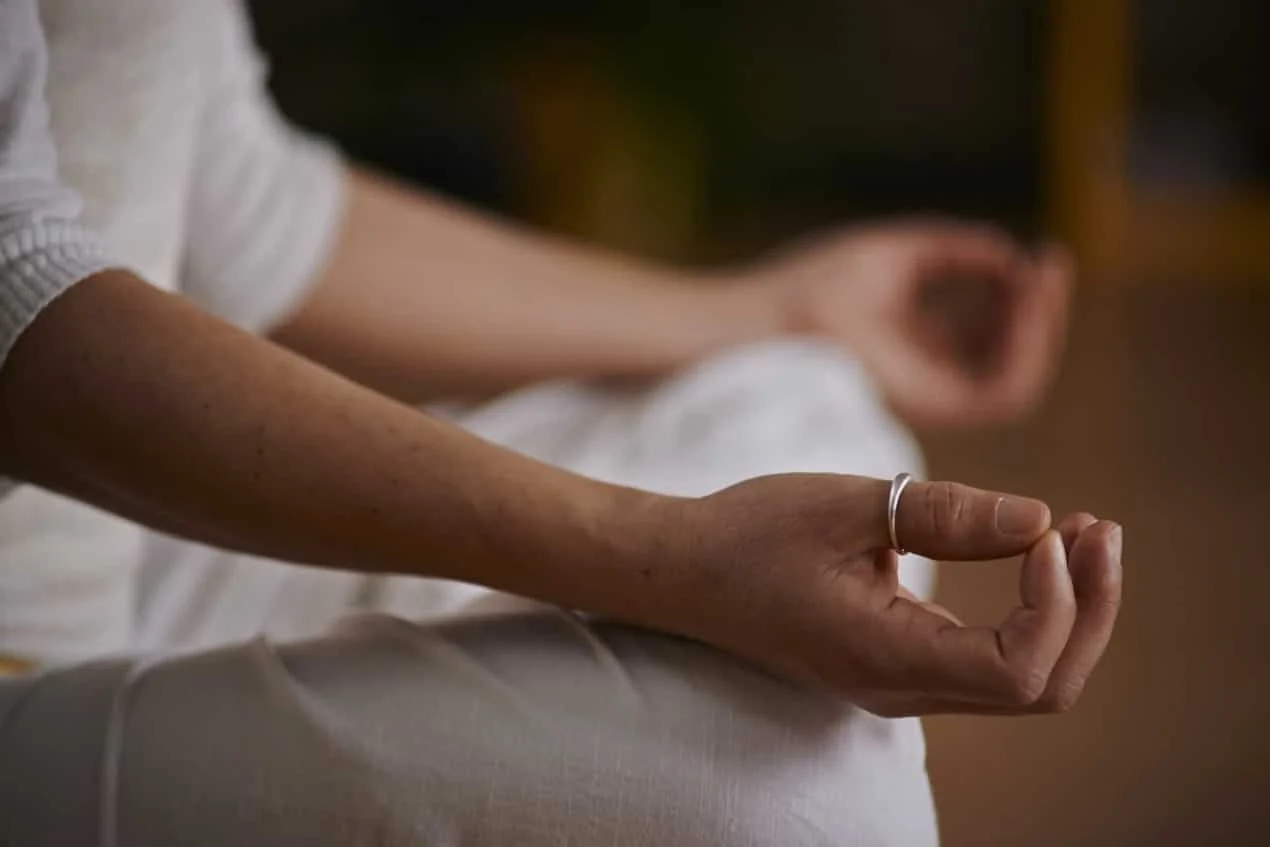
If you meditate with an essential oil, you may find it easier to relax and engage with the meditation. This is down to the chosen scent, which calms our body and mind and helps us reach a meditative state more quickly. For beginners to meditation practice in particular, this can be a real help. Scents such as jasmine, rose oil or chamomile are well suited to meditating with essential oils.
Essential oils can be used during meditation in various ways. The simplest option is to use an aroma lamp to give the whole room in which you meditate a pleasant scent. This makes meditating with an aroma lamp particularly suitable when several people want to meditate together.
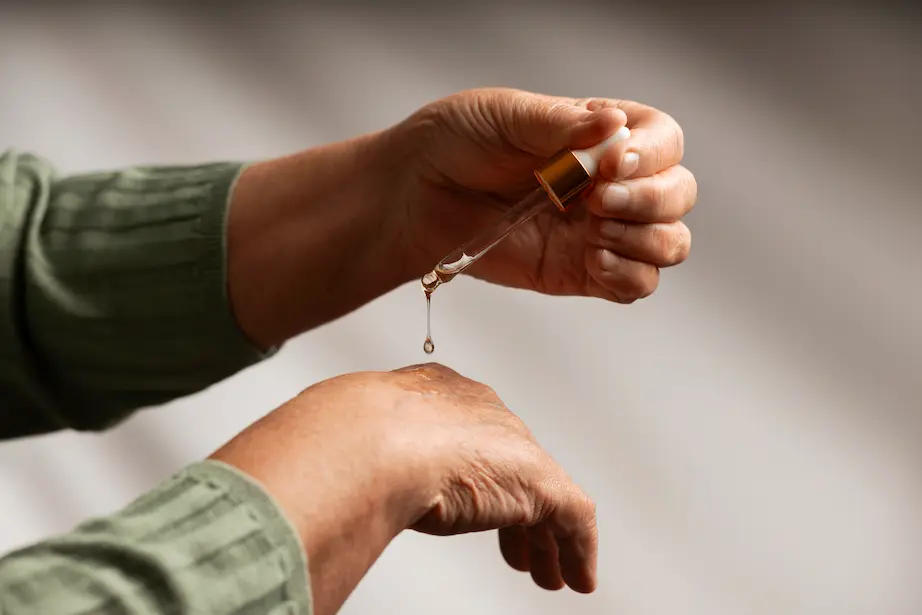
Alternatively, you can apply the essential oil directly to your skin. For example, you can rub the essential oil into your hands or the backs of your hands. Here again, it is important to use the essential oil only in diluted form when it comes into contact with the body, to avoid skin irritation. This way of using essential oils is particularly recommended if you want to meditate on your own.
Research shows that combining meditation with scents increases mindfulness and concentration (Söderlund et al., 2019). The scent serves as a focal point, similar to focusing on the breath, which reduces distractions. Study participants reported that they were able to settle into meditative practices more quickly and felt a stronger sense of calm when the room was scented with lavender or rose oil.
Which scents are particularly suitable?
- Lavender: promotes relaxation
- Rose oil: supports emotional balance
- Jasmine: lifts the mood, reduces stress
For group meditations, it is best to focus on a single scent to enhance the effect and avoid clashing fragrances.
How do essential oils improve our everyday mindfulness?
- Stress reduction: Lavender and jasmine lower cortisol levels.
- Concentration: Peppermint and lemongrass oil increase attention.
- Emotional stability: Rose and jasmine oil promote positive emotions.
- Sleep quality: Lavender oil improves sleep duration and quality.
- Mindful awareness: Using scents consciously sharpens our perception of the here and now.
These effects have been demonstrated in controlled studies both physiologically (heart rate, cortisol) and psychologically (perceived stress, mood) (Field et al., 2005; Koulivand et al., 2013).
Conclusion: why essential oils are worthwhile in everyday life and meditation
Essential oils offer a scientifically supported way of bringing body, mind and soul into harmony. They promote stress reduction, relaxation, mindfulness and emotional balance. Whether during meditation, at work or in everyday life – used purposefully, they enhance wellbeing and presence.
Now you know what essential oils are and why they can be a worthwhile addition and companion to meditation. Not every essential oil is suitable for meditation. That said, everyone’s sense of smell is different and highly subjective. So it makes sense to simply try out the different oils. What are you waiting for? Grab the essential oil of your choice and start meditating straight away!
revised on 16 October 2025
by Katharina R. (psychology student)
If you enjoyed this article, feel free to share your thoughts in the comments.
Deepen your meditation practice with Mindfulife
Meditation can be more than a short break in your everyday life. If you would like to understand more deeply how meditation works, how to build a steady practice of your own and how to guide others mindfully, our meditation teacher training is the next step. There you will not only get to know meditation in theory, but also develop more confidence, clarity and trust in your own practice.
Would you like to find out more about the training first? In our weekly webinar you will get an insight and learn more about what your path to becoming a meditation teacher could look like.
For regular support in your everyday life, you can also use our online meditation studio and join guided meditations flexibly via Eversports.
We look forward to accompanying you on your journey.