Activate the Power of the Vagus Nerve: 5 Simple Exercises

 · 5 min read
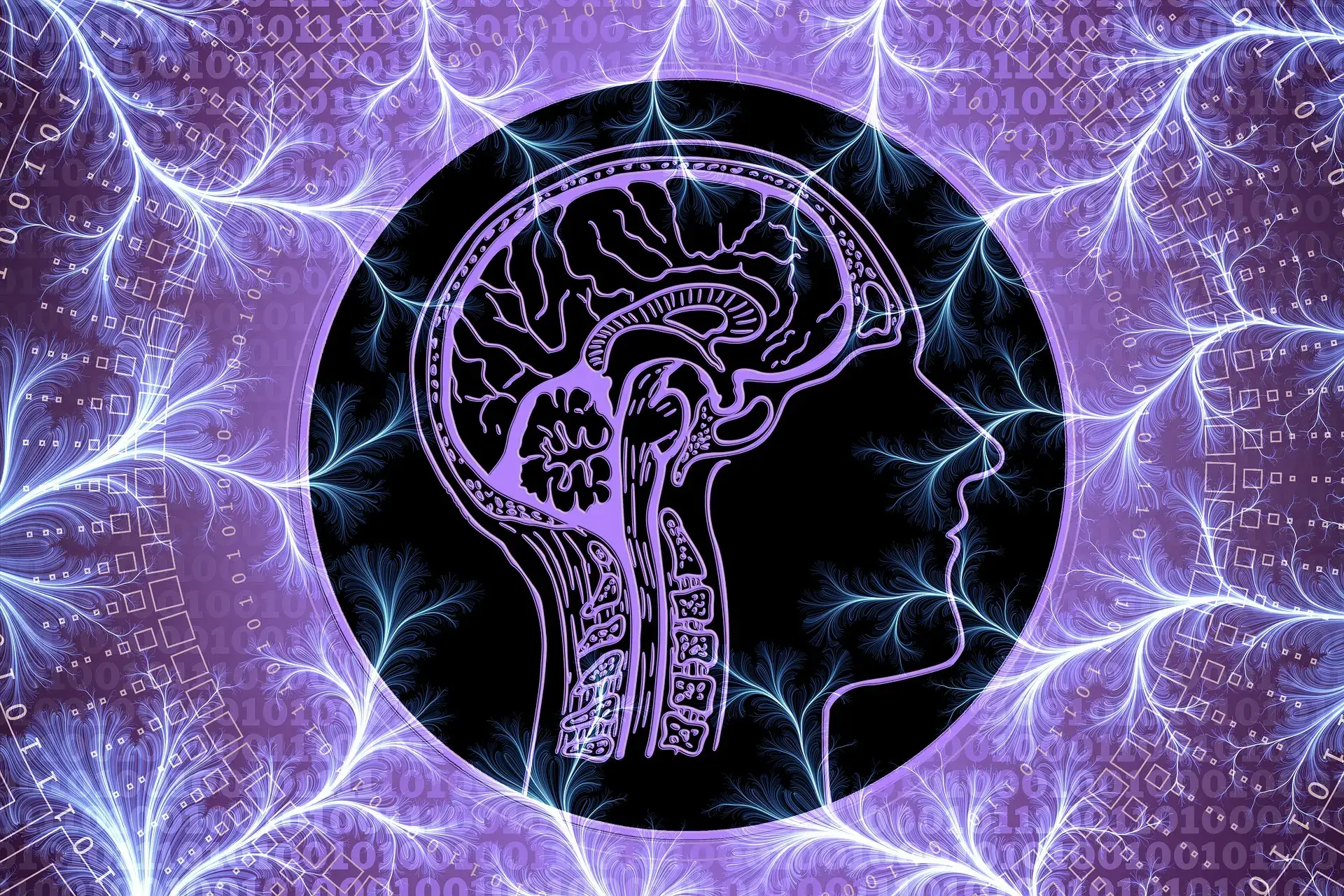
The vagus nerve plays an important role in mental health and in how we deal with stress. In this article, we introduce you to five straightforward exercises that you can use to deliberately activate your “self-healing nerve”.
What is the vagus nerve?
The name vagus nerve comes from Latin and means “wandering nerve”. It owes this name to its many branches, which lead it through the body and connect it to various organs and systems. The vagus nerve is the longest of the twelve cranial nerves and runs from the brainstem through the neck and chest down to the abdomen. It is part of the parasympathetic nervous system, which is responsible for regulating rest, relaxation and digestion. As such, it plays an important role in regulating heart rate, breathing, digestion and other vital bodily functions.
What is vagus nerve stimulation?
The term “vagus nerve stimulation” (VNS) covers all techniques used to stimulate the vagus nerve. This includes both manual stimulation (e.g. through massage) and electrical stimulation (e.g. through medical devices that emit electrical impulses). In medicine, electrical stimulation is used, among other things, to treat epilepsy and depression. But even without elaborate devices, there are many ways to activate the vagus nerve – you will get to know them in the exercises shortly!
What is vagal tone?
An important concept in connection with vagus nerve exercises is what is known as vagal tone. This refers to the level of activity of the nerve, which can be measured via heart rate and breathing rate. Increased vagus nerve activity is associated with positive effects; for example, the body can recover more quickly after stressful events. And this is exactly the activity you can deliberately increase with exercises!
💡 Studies have shown that mothers pass on their vagal tone to their newborns. If the mother is anxious and depressed during pregnancy, this shows up as low vagal tone, which is then also low in the newborn.
What effects do vagus nerve exercises have?
Now you know what the vagus nerve is and that high activity is beneficial for your mental health. But what specific effects can you achieve with exercises? Vagus nerve exercises are thought to have a wide range of positive effects on physical and mental health. Below you will find some examples of effects that have been demonstrated in studies.
Coping with stress
Vagus nerve exercises can improve your ability to cope with stress and so help you deal better with stressful situations. This effect comes about because the exercises increase heart rate variability (i.e. the variation in the time between two heartbeats) and lower cortisol levels, both of which are indicators of more effective stress management.
You can find useful tips on dealing with stress in our article Reducing stress!
Emotion regulation
Emotion regulation refers to the ability to influence your own feelings. This ability is helpful, for example, in interpersonal conflicts or when dealing with negative feelings. Studies have shown that higher activity of the nerve goes hand in hand with better emotion regulation. In addition, exercises help you to experience more positive feelings in general.
Cognitive performance
High vagus nerve activity is associated with better working memory performance. Working memory is the part of memory responsible for processing and briefly storing information. You need your working memory when reading, learning or thinking logically, for example. Besides working memory, higher activity of the nerve also boosts your attention.

What vagus nerve exercises are there?
That all sounds very promising, doesn’t it? With the following exercises, you can deliberately activate your vagus nerve and benefit from the positive effects. Just try out what works for you!
Slow, deep breathing
Even a simple breathing exercise can stimulate your vagus nerve. Breathe in slowly and deeply, letting your abdomen rise. Then hold your breath for a few seconds. Next, breathe out slowly again. Repeat this cycle a few times. You should aim for about six breaths per minute. If you like, you can also place a hand on your belly so that you can feel your abdomen rising and falling.
Breathing exercises are also part of the Wim Hof Method, a technique for promoting well-being, performance and health. If you would like to know more about the Wim Hof Method, take a look at our podcast episode with neuroscientist and Wim Hof expert Dr.rer.nat. Dipl. Psych. Matthias Wittfoth here!
Massaging the vagus nerve
There are various areas of the body you can use to stimulate your vagus nerve through massage. One particularly suitable area is the neck, as this is where the nerve runs alongside the carotid artery. To do this, place your fingertips on the right and left sides of your neck and gently massage the area just below your jawbone in a circular motion (you can also feel your pulse here). You should keep up this massage for about 2 to 3 minutes, and you can enhance the effect by breathing in and out deeply at the same time.
Cold and warmth
You can use both cold and warmth to activate your vagus nerve. To create an acute cold stimulus, you could, for example, take a cold shower. Sounds unpleasant? Just try turning the water to cold for the last 30 seconds only. In the long term, you can also increase the activity of the nerve by exposing yourself to cold regularly. This also weakens the well-known “fight or flight” response, helping you stay calmer in stressful situations. If you really can’t warm to the cold, use warm temperatures to activate your vagus nerve instead – how about a trip to the sauna, for example?

Vocal cords
Another way to stimulate your vagus nerve is to use your vocal cords and laryngeal muscles, as the vagus nerve is connected to them. Whether you sing along loudly to your favourite song, have a good hearty laugh, hum a tune or gargle with a little water – looking after yourself can be that simple!
Meditation
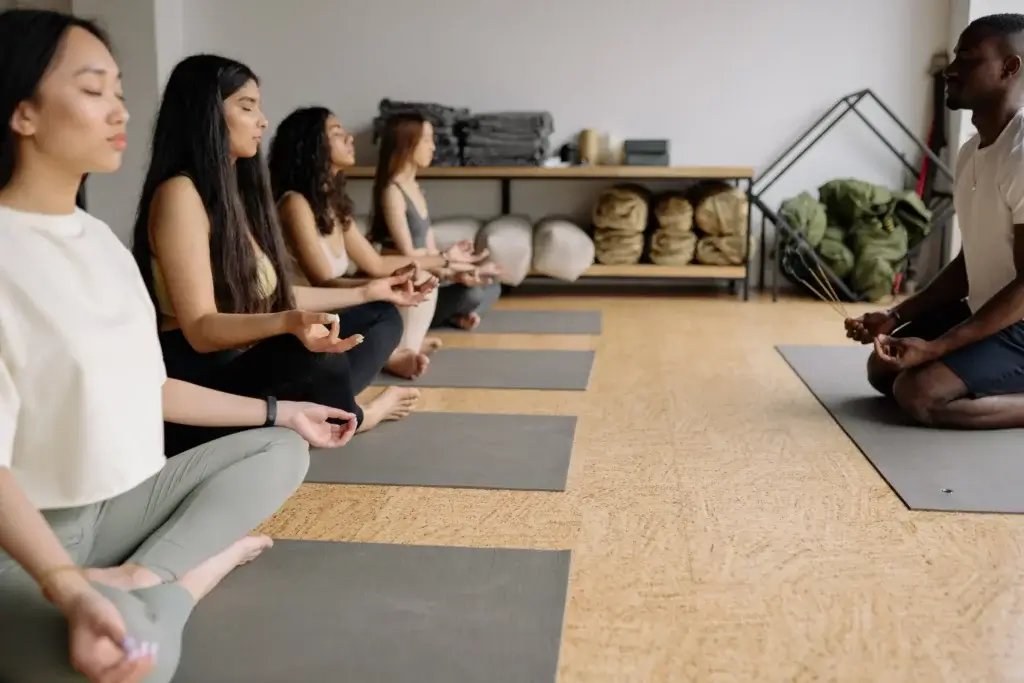
Meditation has a great many positive effects on body and mind, as a growing number of studies confirm. So it is hardly surprising that meditation can also improve the functioning of your vagus nerve. There are many different types of meditation, originating in different cultures. Why not try one of these three simple meditations?
💡 A study by Kok and colleagues (2013) showed that people had a significantly higher vagal tone after a six-week meditation programme than before it. The increased vagal tone also led these people to experience more positive emotions.
Changing habits
You have now learned about a number of vagus nerve exercises and their health benefits. To make the most of the positive effects, you should build these exercises into your everyday life. You can find out how best to do this in our article Changing habits!
Deepen your meditation practice with Mindfulife
Meditation can be more than a short break in your everyday life. If you would like to understand more deeply how meditation works, how to build a steady practice of your own and how to guide others mindfully, our meditation teacher training is the next step. There you will not only get to know meditation in theory, but also develop more confidence, clarity and trust in your own practice.
Would you like to find out more about the training first? In our weekly webinar you will get an insight and learn more about what your path to becoming a meditation teacher could look like.
For regular support in your everyday life, you can also use our online meditation studio and join guided meditations flexibly via Eversports.
We look forward to accompanying you on your journey.
You can find more mindfulness inspiration on our channels too
References
Dedoncker, J., Vanderhasselt, M. A., Ottaviani, C., & Slavich, G. M. (2021). Mental health during the COVID-19 pandemic and beyond: The importance of the vagus nerve for biopsychosocial resilience. Neuroscience and Biobehavioral Reviews, 125, 1–10. https://doi.org/10.1016/j.neubiorev.2021.02.010
Eysenck, M. W., & Keane, M. T. (2020). Cognitive psychology: A student’s handbook (8th ed.). Routledge.
Fallis, J. (2017, January 21). How to stimulate your vagus nerve for better mental health. University of Ottawa. https://www.providence.org/-/media/project/psjh/providence/or/files/behavioral-health/how_to_stimulate_your_vagus_nerve_for_better_mental_health_1.pdf
Field, T., Diego, M., Hernandez-Reif, M., Schanberg, S., Kuhn, C., Yando, R., & Bendell, D. (2003). Pregnancy anxiety and comorbid depression and anger: Effects on the fetus and neonate. Depression and Anxiety, 17(3), 140–151. https://doi.org/10.1002/da.10071
Grippo, A. J. (2017). Opinion: "Heart rate variability, health and well-being: A systems perspective" Research Topic. Frontiers in Public Health, 5, 246. https://doi.org/10.3389/fpubh.2017.00246
Hansen, A. L., Johnsen, B. H., & Thayer, J. F. (2003). Vagal influence on working memory and attention. International Journal of Psychophysiology, 48(3), 263–274. https://doi.org/10.1016/s0167-8760(03)00073-4
Howland, R. H. (2014). Vagus nerve stimulation. Current Behavioral Neuroscience Reports, 1(2), 64–73. https://doi.org/10.1007/s40473-014-0010-5
Kok, B. E., Coffey, K. A., Cohn, M. A., Catalino, L. I., Vacharkulksemsuk, T., Algoe, S. B., Brantley, M., & Fredrickson, B. L. (2013). How positive emotions build physical health: Perceived positive social connections account for the upward spiral between positive emotions and vagal tone. Psychological Science, 24(7), 1123–1132. https://doi.org/10.1177/0956797612470827
Laborde, S., Mosley, E., & Thayer, J. F. (2017). Heart rate variability and cardiac vagal tone in psychophysiological research – Recommendations for experiment planning, data analysis, and data reporting. Frontiers in Psychology, 8, 213. https://doi.org/10.3389/fpsyg.2017.00213
Ma, X., Yue, Z. Q., Gong, Z. Q., Zhang, H., Duan, N. Y., Shi, Y. T., Wei, G. X., & Li, Y. F. (2017). The effect of diaphragmatic breathing on attention, negative affect and stress in healthy adults. Frontiers in Psychology, 8, 874. https://doi.org/10.3389/fpsyg.2017.00874
Meyer, K. (2019). Vagus Nerv für Einsteiger. Self-published: Deggendorf.
Scott, B. G., & Weems, C. F. (2014). Resting vagal tone and vagal response to stress: Associations with anxiety, aggression, and perceived anxiety control among youths. Psychophysiology, 51(8), 718–727. https://doi.org/10.1111/psyp.12218