Neurotransmitters – The Brain’s Happiness Messengers

 · 6 min read
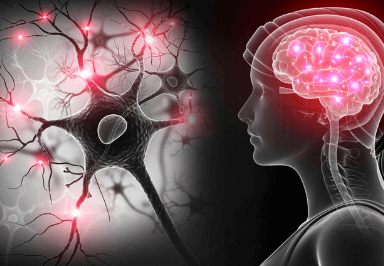
Our thinking produces messenger substances, known as neurotransmitters, which influence our moods and emotions. In this blog article, you will find out how you, too, can have a direct mental influence on your neurotransmitters!
What are neurotransmitters?
Neurotransmitters are a diverse group of biochemical messengers that pass stimuli, and therefore information, from one nerve cell to another. They are responsible for signal transmission and are therefore found at the junctions between nerve cells, which are also called synapses.
Neurotransmitters can be divided into three different groups. These classes of substances are amino acids, amines and neuropeptides.
| Classes of substances | Neurotransmitters: examples |
| Amino acids | Glutamate, GABA |
| Amines | Acetylcholine, serotonin, catecholamines (adrenaline, noradrenaline, dopamine) |
| Neuropeptides | Endorphins, oxytocin |
Neurotransmitters enable communication in the brain and can trigger an impulse to act. Your contentment, cheerfulness, motivation and clarity are directly linked to the balance of your various neurotransmitters. This is because neurotransmitters give rise to every feeling and every mood. They activate your motivation and influence your sleep as well as your learning. Our perception and information processing also depend on neurotransmitters working together.
In the following sections, you will find out which neurotransmitters exist and what they do in your body.
Neurotransmitters in the brain: dopamine and serotonin
The neurotransmitters dopamine and serotonin have a particularly strong and stimulating effect on your emotional world. This makes it all the more remarkable that we can have a direct mental influence on the levels of dopamine and serotonin in our bodies.
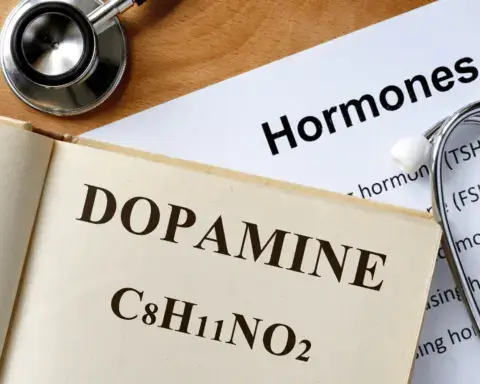
Dopamine belongs to the class of amines and is especially important for your motivation and your memory. Dopamine directs your attention towards positive stimuli and focuses you on worthwhile goals. Dopamine can also act on the sympathetic nervous system, which, as part of the autonomic nervous system, controls the activity of many organs, and it can strengthen our long-term memory. Alongside these positive aspects, however, dopamine can also contribute to the development of addiction. In addition, an imbalance in dopamine levels can lead to ADHD, lack of motivation, memory problems or even depression.
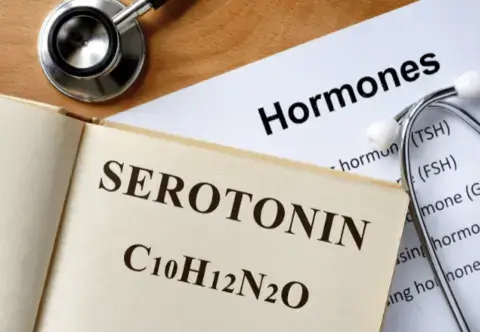
Serotonin also belongs to the class of amines and, as probably the most valuable happiness messenger, brings cheerfulness, emotional balance, good sleep and wellbeing, thereby fostering your contentment. Serotonin dampens negative emotional states such as anxiety, panic attacks, worry, aggression and even hunger. Serotonin has an anxiety-relieving effect and is therefore used, among other things, in the treatment of anxiety disorders, acute depression and obsessive-compulsive disorder .
What other neurotransmitters are there?
Besides dopamine and serotonin, there are other neurotransmitters that transmit signals in your body and thus influence your emotional world. Some examples of neurotransmitters are listed below.
Like dopamine and serotonin, noradrenaline belongs to the class of amines. It supports dopamine by driving you on and giving you both a physical and a mental boost. It also makes you more focused and alert, spurs you on and even regulates your appetite. However, noradrenaline can also make you nervous, as it raises your blood pressure under stress by constricting the blood vessels. For this reason, noradrenaline is also referred to as a stress hormone. Just as with dopamine, a lack of noradrenaline reduces your motivation and ability to concentrate, and you become more forgetful.
Acetylcholine also belongs to the class of amines. Acetylcholine is a neurotransmitter that transmits signals between nerve and muscle cells, ensuring that the information needed for movement reaches your muscles. This neurotransmitter is also involved in controlling your breathing and your heartbeat.
Glutamate belongs to the class of amino acids and is the most common excitatory neurotransmitter in the brain. In the brain, glutamate has a stimulating effect. This neurotransmitter is involved in the transmission of pain and the control of appetite.
GABA also belongs to the class of amino acids and is the most common inhibitory neurotransmitter in the central nervous system. It is also found in larger quantities in the pancreas, where it regulates blood sugar levels. GABA is also involved in your sleep.
The effects of GABA are the opposite of those of glutamate, as one neurotransmitter is inhibitory and the other excitatory.
Endorphins are neurotransmitters that lift your mood, have a euphoric effect and can relieve pain, so they can also help with chronic pain. They belong to the class of neuropeptides.
Like endorphins, oxytocin belongs to the class of neuropeptides and is also known as the feel-good hormone or cuddle hormone. Oxytocin creates calm, connection and trust, and can therefore help to reduce stress. This neurotransmitter is produced during interactions with others, for example when cuddling, kissing, hugging close friends, breastfeeding a baby or even stroking your pet.
How do neurotransmitters influence your emotional world?
You have now learnt how varied and different the effects of neurotransmitters on you and your emotional world are. But how can we actively influence these happiness messengers and thereby support our feelings, moods, physical and mental health and our sense of happiness? This is where our brain’s ability to learn new, helpful things and unlearn old, unhelpful ones comes in. This process is called neuroplasticity and describes the flexibility of the brain’s cells. With your mind, you can directly stimulate the production of neurotransmitters. This happens through the way you think.
Meditation is your key to happiness here. By practising meditation regularly, you can influence your brain metabolism and so improve your resilience to stress and boost your wellbeing. Numerous studies support this (e.g. Cahn et al., 2017). When you meditate, you learn to focus on the present moment and to observe your surroundings without judgement. It is above all our judgements of a situation that seem to have a negative effect on the production of messenger substances, as every negative judgement triggers the release of stress hormones, while every positive judgement promotes the production of feel-good hormones.
You are probably wondering how meditation manages to change your judgements. Evaluative reactions, such as getting annoyed at having picked the wrong queue at the supermarket checkout yet again, are habits and are often learnt in childhood. But habits can be changed! So replacing these inner patterns with new ones is simply a matter of practice, and you can do it with regular meditation!

Further findings on meditation and neurotransmitters
💡Studies (Kjaer et al., 2002) have shown that serotonin and dopamine levels rise during meditation. It was also found that only with meditation could a happy state be sustained for a long time, with dopamine levels falling only slightly even after a longer period, whereas money, food, drugs, sex and gambling all led to a massive downregulation of dopamine levels as soon as the stimulus was briefly absent.
💡Further studies (Davidson et al., 2003) also showed that meditation can positively change brain and immune function, leading to improved resilience to stress and greater wellbeing. Brand et al. (2012) likewise showed that after just an 8-week introductory meditation course, participants’ stress regulation and sleep quality improved. In their study, Infant et al. (2001) were able to show that regular meditation has a significant influence on the sympathetic-adrenomedullary system. This regulation of sympathetic tone results in a lower hormonal response to everyday stress.
💡Luders et al. (2011) were able to show that long-term meditators had more pronounced structural connectivity throughout the brain within the major projection, commissural and association pathways.
So why not start changing the way you think through meditation, too, and influence your brain in the process? Become more autonomous, happier, more productive, more successful and more efficient.
Neurological disorders
You have now learnt a lot about neurotransmitters and the process of neuroplasticity. Did you know that it has now been shown that, even after a stroke or a brain tumour, this process can help restore lost abilities or shift them to other areas of the brain, and that missing cells can in part be renewed? If you would like to know more about these or other neurological disorders, why not read our blog article “Neurological disorders“? Happy reading!
Deepen your meditation practice with Mindfulife
Meditation can be more than a short break in your everyday life. If you would like to understand more deeply how meditation works, how to build a steady practice of your own and how to guide others mindfully, our meditation teacher training is the next step. There you will not only get to know meditation in theory, but also develop more confidence, clarity and trust in your own practice.
Would you like to find out more about the training first? In our weekly webinar you will get an insight and learn more about what your path to becoming a meditation teacher could look like.
For regular support in your everyday life, you can also use our online meditation studio and join guided meditations flexibly via Eversports.
We look forward to accompanying you on your journey.
You can find more mindfulness inspiration on our channels too
References
Birbaumer, N., & Schmidt, R. F. (2010). Biologische Psychologie (7. Aufl.). Berlin/Heidelberg: Springer.
Brand, S., Holsboer-Trachsler, E., Naranjo, J. R., & Schmidt, S. (2012). Influence of mindfulness practice on cortisol and sleep in long-term and short-term meditators. Neuropsychobiology, 65(3), 109–118. https://doi.org/10.1159/000330362
Cahn, R. B., Goodman, M. S., Peterson, C. T., Maturi, R., & Mills, P. J. (2017). Yoga, meditation and mind-body health: Increased BDNF, cortisol awakening response, and altered inflammatory marker expression after a 3-month yoga and meditation retreat. Frontiers in Human Neuroscience, 11, 315. https://doi.org/10.3389/fnhum.2017.00315
Davidson, R. J., Kabat-Zinn, J., Schumacher, J., Rosenkranz, M., Muller, D., Santorelli, S. F., Urbanowski, F., Harrington, A., Bonus, K., & Sheridan, J. F. (2023). Alterations in brain and immune function produced by mindfulness meditation. Psychosomatic Medicine, 65(4), 564–570. https://doi.org/10.1097/01.psy.0000077505.67574.e3
Desbordes, G., Negi, L. T., Pace, T. W., Wallace, B. A., Raison, C. L., & Schwartz, E. L. (2012). Effects of mindful-attention and compassion meditation training on amygdala response to emotional stimuli in an ordinary, non-meditative state. Frontiers in Human Neuroscience, 6, 292. https://doi.org/10.3389/fnhum.2012.00292
Esch, T. (2014). The neurobiology of meditation and mindfulness. In S. Schmidt & H. Walach (Eds.), Meditation – Neuroscientific approaches and philosophical implications (pp. 153–173). Springer.
Infante, J. R., Torres-Avisbal, M., Pinel, P., Vallejo, J. A., Peran, F., Gonzalez, F., Contreras, P., Pacheco, C., Roldan, A., & Latre, J. M. (2001). Catecholamine levels in practitioners of the transcendental meditation technique. Physiology & Behavior, 72(1–2), 141–146. https://doi.org/10.1016/S0031-9384(00)00386-3
Kjaer, T. W., Bertelsen, C., Piccini, P., Brooks, D., Alving, J., & Lou, H. C. (2002). Increased dopamine tone during meditation-induced change of consciousness. Cognitive Brain Research, 13(2), 255–262. https://doi.org/10.1016/S0926-6410(01)00106-9
Newberg, A. B., & Iversen, J. (2003). The neural basis of the complex mental task of meditation: Neurotransmitter and neurochemical considerations. Medical Hypotheses, 61(2), 282–291. https://doi.org/10.1016/S0306-9877(03)00175-0