Why Is Gratitude So Important? – 3 Tips for Putting It into Practice

 · 8 min read
Gratitude – if you’re wondering what it actually is and how you, too, can become more grateful, you’ve come to the right place! We hope you enjoy reading!
What is gratitude?
Many people would be surprised by this question. Gratitude is not a technical term but something everyone is probably familiar with – so why look any more closely at its definition? Gratitude is often associated with the gesture of saying “thank you”, in other words showing that you are grateful, and it is valued as a form of positive interaction between people.
What is gratitude in psychology?
But that’s not all there is to gratitude. Researchers have examined the concept in numerous studies and looked at its possible effects on people and their environment.
Within the research community, gratitude was originally defined as an emotion that arises when people receive help that is perceived as costly, valuable and altruistic.1, 2 However, this definition is not enough to cover the full spectrum. According to this view, gratitude always relates to another person who has done something good for you.
Yet gratitude also arises in much more abstract situations – people may feel it, for example, because they get to wake up in the morning, because they are surrounded by their loved ones or because they appreciate the small joys of everyday life. So it doesn’t have to relate specifically to another person.
Gratitude is more than just saying “thank you” to someone.

What is a grateful person?
Psychologists define gratitude both as an emotion and as a personality trait.3 In professional circles, people speak of “state” and “trait” – in this case, “state gratitude” and “trait gratitude”. State gratitude means experiencing gratitude as an emotion in a specific moment – in other words, you feel grateful in response to a situation. Trait gratitude, on the other hand, describes the characteristic and personal tendency to be receptive to the feeling of gratitude. From this we can conclude that people with high trait gratitude feel grateful more often and more easily.3
Imagine a grateful person!
How would you describe them?
Scientists have asked themselves this question in several studies too, and have answered it with some interesting research findings. Statistically speaking, grateful people tend to be agreeable, emotionally stable and self-confident, while being neither narcissistic nor materialistic.4, 5, 6
Researchers have also found that gratitude is linked to spirituality. Scientifically speaking, this does not mean that grateful people are necessarily spiritual. Rather, this association suggests that, statistically, spiritual people are often, but not necessarily, grateful, and vice versa.3
What does gratitude change?
A meta-analysis, which looked at many different studies on the subject together, identified a number of characteristics that are positively associated with a strongly pronounced trait of gratitude.
Gratitude correlates with emotional stability and positive social relationships.1, 3 Stable relationships with other people are extremely important for all of us – not least because they are the strongest predictor of whether or not someone is happy.7
In general, a link has been found between gratitude and a tendency to be happier.4, 6 Statistically speaking, grateful people also tend to be less angry, hostile, envious, materialistic, depressed and emotionally unstable.1, 4
They also experience positive emotions more often than people with lower levels of gratitude.1, 3 It seems to be a cycle: grateful people tend to be more content, and more content people tend to be more grateful.8
Is gratitude the cause?
The research findings described so far, however, are merely correlations, i.e. associations – so we can only say that grateful people show certain tendencies, not that gratitude directly leads to the benefits described above.
Improved mood, wellbeing and more trust
To make a causal statement of the “X leads to Y” kind, experimental studies are needed. Fortunately, these exist on the topic of gratitude too: gratitude has been found to lead to an improved mood.6 Researchers have also found that a simple gratitude exercise results in improved wellbeing.9 And one experiment showed that increased gratitude leads to greater interpersonal trust.10
Gratitude lowers the risk of addiction and some mental illnesses
There are interesting findings in the area of mental health as well. Gratitude is associated with a lower risk of substance abuse and of developing depression, generalised anxiety disorder or phobias. Gratitude can also help to reduce stress in the long term.1 People suffering from a trauma-related disorder can reduce their symptoms and build adaptive coping strategies by adopting a grateful attitude.11
What does gratitude do to the body?
Alongside mental health, physical health is another important aspect influenced by gratitude. Gratitude has been shown to lead to lower stress levels over time.12 Stress, in turn, is linked to a range of health problems, so it is reasonable to assume that gratitude, through its positive effects on how we experience stress, indirectly benefits our general health.1

Better sleep
Another study found that gratitude in everyday life is associated not only with good sleep quality and optimal sleep duration, but also with better functioning during the day.13 This is because gratitude influences what happens before we fall asleep. Negative thoughts before bedtime often impair sleep, whereas positive thoughts improve both the quantity and the quality of sleep.14 Grateful people therefore experience more sleep-promoting thoughts, which is one of the reasons they sleep better. These positive effects are very good for your health!
All in all, we can say that gratitude is a true all-round package that has a positive effect on physical, mental and subjective wellbeing!
But this raises a burning question: can you change your own capacity to feel gratitude? In other words, can you become more grateful?
How can I cultivate more gratitude? – three methods
So far we’ve written quite a bit about the positive effects of a strong tendency towards gratitude. That may all be well and good, but with this article we want to offer you more than a few interesting facts on the subject. To be precise, we want to give you three research-based strategies for being more grateful in everyday life.
1. List your Blessings
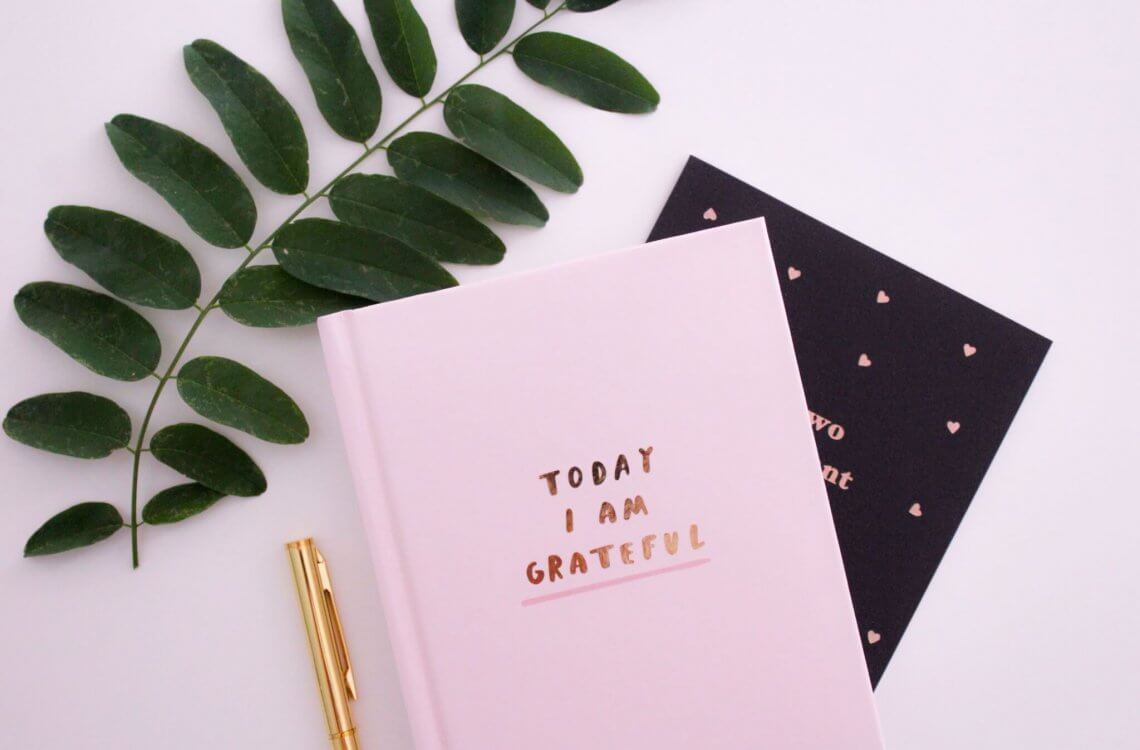
The first method we’d like to introduce is called “List your Blessings” – here you keep a list or a gratitude journal in which you regularly note down what you feel grateful for.6 What matters here, however, is that you genuinely feel the gratitude, rather than simply listing things you should be grateful for. So this method is about identifying which small or big elements of everyday life make you happy.
2. Thought experiment
The second strategy is also taken from a study.15 It involves replaying positive experiences in your mind and thus reliving them in order to evoke gratitude for them. It is essential that you don’t go through the events analytically, step by step, but instead focus on the emotions you felt in the positive situation as you replay it in your mind. You can practise this, for example, in the evening before falling asleep or in other quiet moments.
3. Gratitude letter
Finally, we’d like to talk about a method that has proven to be very effective.16 It involves writing a letter of gratitude and actually delivering it. The recipient should be someone who has done something good for you but whom you feel you have never properly thanked.
What’s special about this strategy is that it isn’t just a mental engagement with your own experiences of gratitude, but an actual behaviour.
The study in question recorded a large increase in the participants’ happiness. As might be expected, however, without repeating the exercise there were no long-term effects lasting beyond two months – so expressing your gratitude once does not seem to be enough to become a more grateful person in the long run. In the short term, though, this strategy is very effective, as explained above.

How often should you practise gratitude?
Of course, there’s also the general question of how often you should do gratitude exercises like these. Some researchers have looked into this with regard to strategy 1 (List your Blessings) and, interestingly, concluded that less is sometimes more: those who did the exercise once a week reported a greater increase in life satisfaction than those who did it three times a week.17 So you don’t need to change your entire routine – our recommendation: once a week, look back on the positive situations and grateful feelings of the past seven days and write them down.
How does meditation help you become more grateful?
You can think of meditation and gratitude as two siblings walking hand in hand.
Not everything we are grateful for is a major event in our lives. Perhaps today we appreciate the birdsong that reminds us of the diversity of our world. But if our minds are already on the next appointment, the next obligation, the next task, it is hard for us to notice such small treasures. Mindfulness teaches us to be in the present moment, which benefits our grateful attitude. Because when we perceive the moment more consciously, it becomes easier to recognise situations for which we feel gratitude.
Mindfulness and gratitude
But mindfulness can also go beyond the benefits of gratitude. Gratitude can help us notice the good things in our lives and experience positive emotions, yet throughout life we will keep being confronted with bad days, negative thoughts and unpleasant feelings. Gratitude cannot protect us from such experiences. However, by adopting a more mindful attitude, we can learn to accept unpleasant thoughts and feelings. Noticing and accepting them is a powerful skill, because when we neither judge nor suppress difficult things, they usually pass by themselves.
Where gratitude ends, mindfulness can take over – and so enable the greatest gain in wellbeing.18 (More on the topic of mindfulness).
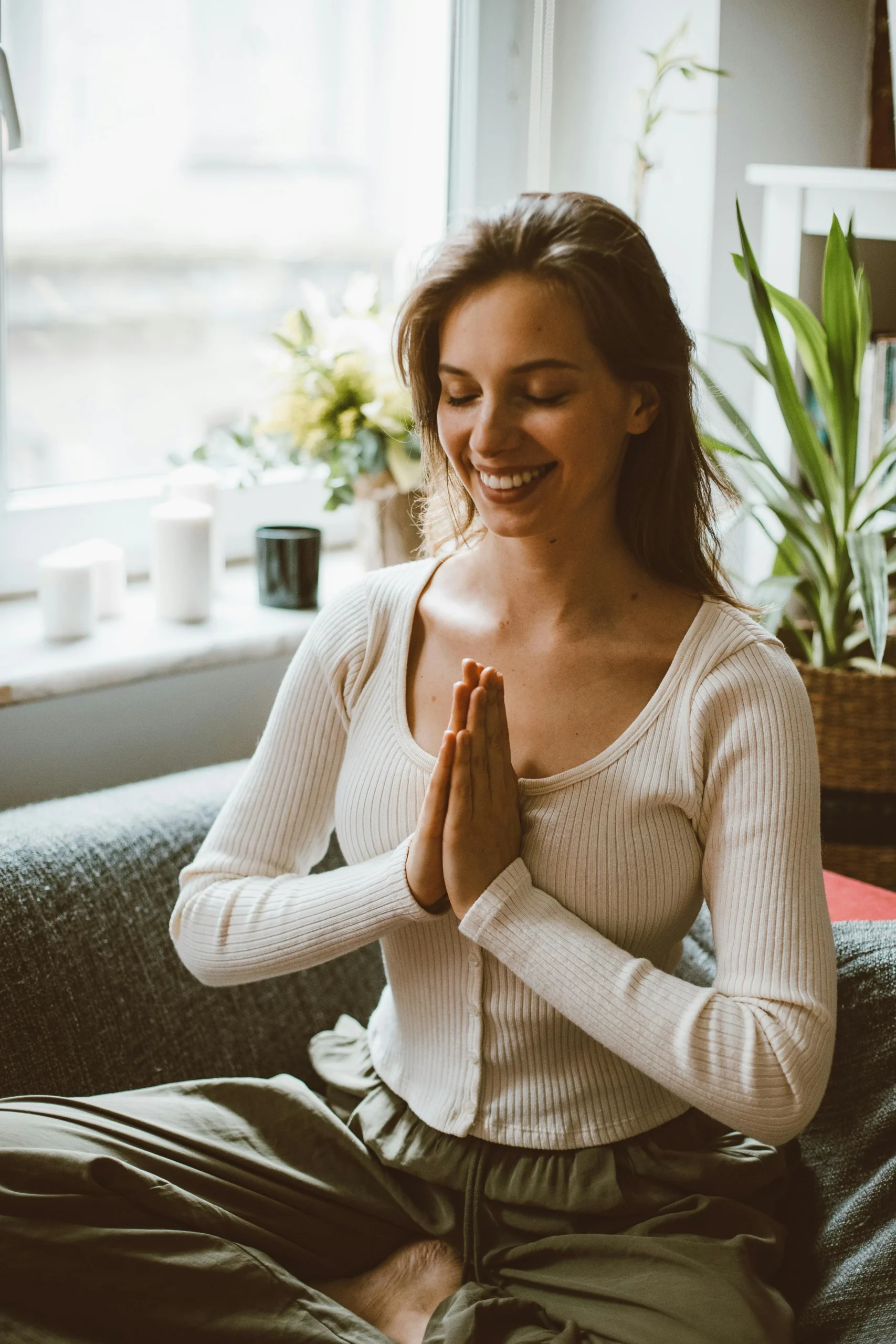
Last but not least, there are also forms of meditation that focus specifically on gratitude. And you can take a short detour into gratitude in your own meditation at any time. For example, after directing your attention to your bodily sensations or your breath, you can steer it towards gratitude – what and whom do I feel grateful for?
So, alongside the other effects of this practice, it is entirely possible to become more grateful through meditation.19, 20
What is meant by gratitude? – Summary
- Gratitude occurs both as an emotion (state) and as a personality characteristic (trait).
- It enriches life on various physical, mental, subjective and interpersonal levels.
- Three effective strategies for increasing your own gratitude are the “List your Blessings” exercise, mentally reliving pleasant situations, and writing and handing over a letter of gratitude.
- Mindfulness and gratitude go hand in hand: mindfulness helps make grateful feelings possible and takes over where gratitude ends.
- Meditation can increase your gratitude and boost your wellbeing.
Further reading
If you’d like to learn more about self-reflection, we have an interesting article for you here! See you there!
Deepen your meditation practice with Mindfulife
Meditation can be more than a short break in your everyday life. If you would like to understand more deeply how meditation works, how to build a steady practice of your own and how to guide others mindfully, our meditation teacher training is the next step. There you will not only get to know meditation in theory, but also develop more confidence, clarity and trust in your own practice.
Would you like to find out more about the training first? In our weekly webinar you will get an insight and learn more about what your path to becoming a meditation teacher could look like.
For regular support in your everyday life, you can also use our online meditation studio and join guided meditations flexibly via Eversports.
We look forward to accompanying you on your journey.
You can find more mindfulness inspiration on our channels too
References
Diener, E., & Fujita, F. (1995). Resources, personal strivings, and subjective well-being: A nomothetic and idiographic approach. Journal of Personality and Social Psychology, 68(5), 926–935. https://doi.org/10.1037/0022-3514.68.5.926
Dunn, J. R., & Schweitzer, M. E. (2002). Feeling, believing, and trusting: The influence of emotion on trust. PsycEXTRA Dataset. https://doi.org/10.1037/e617892011-029
Emmons, R. A., & McCullough, M. E. (2003). Counting blessings versus burdens: An experimental investigation of gratitude and subjective well-being in daily life. Journal of Personality and Social Psychology, 84(2), 377–389. https://doi.org/10.1037/0022-3514.84.2.377
Kashdan, T. B., Uswatte, G., & Julian, T. (2006). Gratitude and hedonic and eudaimonic well-being in Vietnam war veterans. Behaviour Research and Therapy, 44(2), 177–199. https://doi.org/10.1016/j.brat.2005.01.005
Lopez, S. J., & Snyder, C. R. (Eds.). (2011). Handbook of positive psychology (2nd ed.). Oxford University Press.
Lyubomirsky, S., Sheldon, K. M., & Schkade, D. (2005). Pursuing happiness: The architecture of sustainable change. Review of General Psychology, 9(2), 111–131. https://doi.org/10.1037/1089-2680.9.2.111
Lyubomirsky, S., Sousa, L., & Dickerhoof, R. (2006). The costs and benefits of writing, talking, and thinking about life’s triumphs and defeats. Journal of Personality and Social Psychology, 90(4), 692–708. https://doi.org/10.1037/0022-3514.90.4.692
McCullough, M. E., Emmons, R. A., & Tsang, J.-A. (2002). The grateful disposition: A conceptual and empirical topography. Journal of Personality and Social Psychology, 82(1), 112–127. https://doi.org/10.1037/0022-3514.82.1.112
McLeod, L., Maleki, L., Elster, B., & Watkins, P. (2005, April). Does narcissism inhibit gratitude? Paper presented at the 85th Annual Convention of the Western Psychological Association, Portland, OR.
Nelson, J., & Harvey, A. G. (2003). An exploration of pre-sleep cognitive activity in insomnia: Imagery and verbal thought. British Journal of Clinical Psychology, 42(3), 271–288. https://doi.org/10.1348/01446650360703384
Rahal, L. (2018, November 14). How gratitude and mindfulness go hand in hand. Psych Central. https://psychcentral.com/blog/how-gratitude-and-mindfulness-go-hand-in-hand/
Rao, N., & Kemper, K. J. (2016). Online training in specific meditation practices improves gratitude, well-being, self-compassion, and confidence in providing compassionate care among health professionals. Journal of Evidence-Based Complementary & Alternative Medicine, 22(2), 237–241. https://doi.org/10.1177/2156587216642102
Seligman, M. E. P., Steen, T. A., Park, N., & Peterson, C. (2005). Positive psychology progress: Empirical validation of interventions. American Psychologist, 60(5), 410–421. https://doi.org/10.1037/0003-066X.60.5.410
Shapiro, S. L., Schwartz, G. E. R., & Santerre, C. (2002). Meditation and positive psychology. In C. R. Snyder & S. J. Lopez (Eds.), Handbook of positive psychology (pp. 632–645). Oxford University Press.
Watkins, P. C., Grimm, D. L., & Kolts, R. (2004). Counting your blessings: Positive memories among grateful persons. Current Psychology, 23(1), 52–67. https://doi.org/10.1007/s12144-004-1008-z
Watkins, P. C., Woodward, K., Stone, T., & Kolts, R. L. (2003). Gratitude and happiness: Development of a measure of gratitude, and relationships with subjective well-being. Social Behavior and Personality: An International Journal, 31(5), 431–451. https://doi.org/10.2224/sbp.2003.31.5.431
Wood, A. M., Froh, J. J., & Geraghty, A. W. (2010). Gratitude and well-being: A review and theoretical integration. Clinical Psychology Review, 30(7), 890–905. https://doi.org/10.1016/j.cpr.2010.03.005
Wood, A. M., Joseph, S., Lloyd, J., & Atkins, S. (2009). Gratitude influences sleep through the mechanism of pre-sleep cognitions. Journal of Psychosomatic Research, 66(1), 43–48. https://doi.org/10.1016/j.jpsychores.2008.09.002
Wood, A. M., Maltby, J., Gillett, R., Linley, P. A., & Joseph, S. (2008). The role of gratitude in the development of social support, stress, and depression: Two longitudinal studies. Journal of Research in Personality, 42(4), 854–871. https://doi.org/10.1016/j.jrp.2007.11.003
Wood, A. M., Maltby, J., Stewart, N., Linley, P. A., & Joseph, S. (2008). A social–cognitive model of trait and state levels of gratitude. Emotion, 8(2), 281–290. https://doi.org/10.1037/1528-3542.8.2.281