Breath Meditation: How Do You Guide It Safely?
How do you actually guide a breath meditation? A step-by-step walkthrough of the process.

 · 4 min read
In today’s hectic world, where stress and distractions are everywhere, many people long for inner calm and composure. One method that has proven extremely effective in reaching this state is breath meditation. It is one of the most popular forms of meditation and teaches us to be in the here and now by directing our attention to the breath. In this blog article, we will take a look at how to guide a breath meditation and which key concepts to bear in mind.
Why breath meditation?
Before we dive into the instructions, it is worth understanding why breath meditation is such a popular practice. The reason is that our breathing always takes place in the here and now. Our breath only happens in the present – we cannot feel yesterday’s or tomorrow’s breath. By consciously focusing on our breath, we immerse ourselves in the present and leave the past and the future behind.
Focusing on the breath
A crucial aspect of breath meditation is recognising that there is no particular “right” way to breathe. Whether slow, fast, deep or shallow – every kind of breathing happens in the now. So it is not about controlling our breath, but simply about consciously observing it as it is.
The breath as an anchor
In meditation, the breath serves both as a point of focus and as an anchor. Whenever our thoughts wander, we can return to our breath at any time to arrive back in the here and now. The breath thus becomes a stable point amid the flood of our thoughts and emotions. This allows us to cultivate presence and calm the mind.

How do I prepare the breath meditation?
Before we begin guiding, it is important that we ourselves are clear about why we practise breath meditation. This helps us to create an authentic and supportive atmosphere for our students. At the start of the meditation, we adopt a comfortable, upright sitting position. If we wish, we close our eyes or let our gaze gently drop downwards. Then we take a moment to align our body and release any tension.
Beginning the meditation: focus on the breath
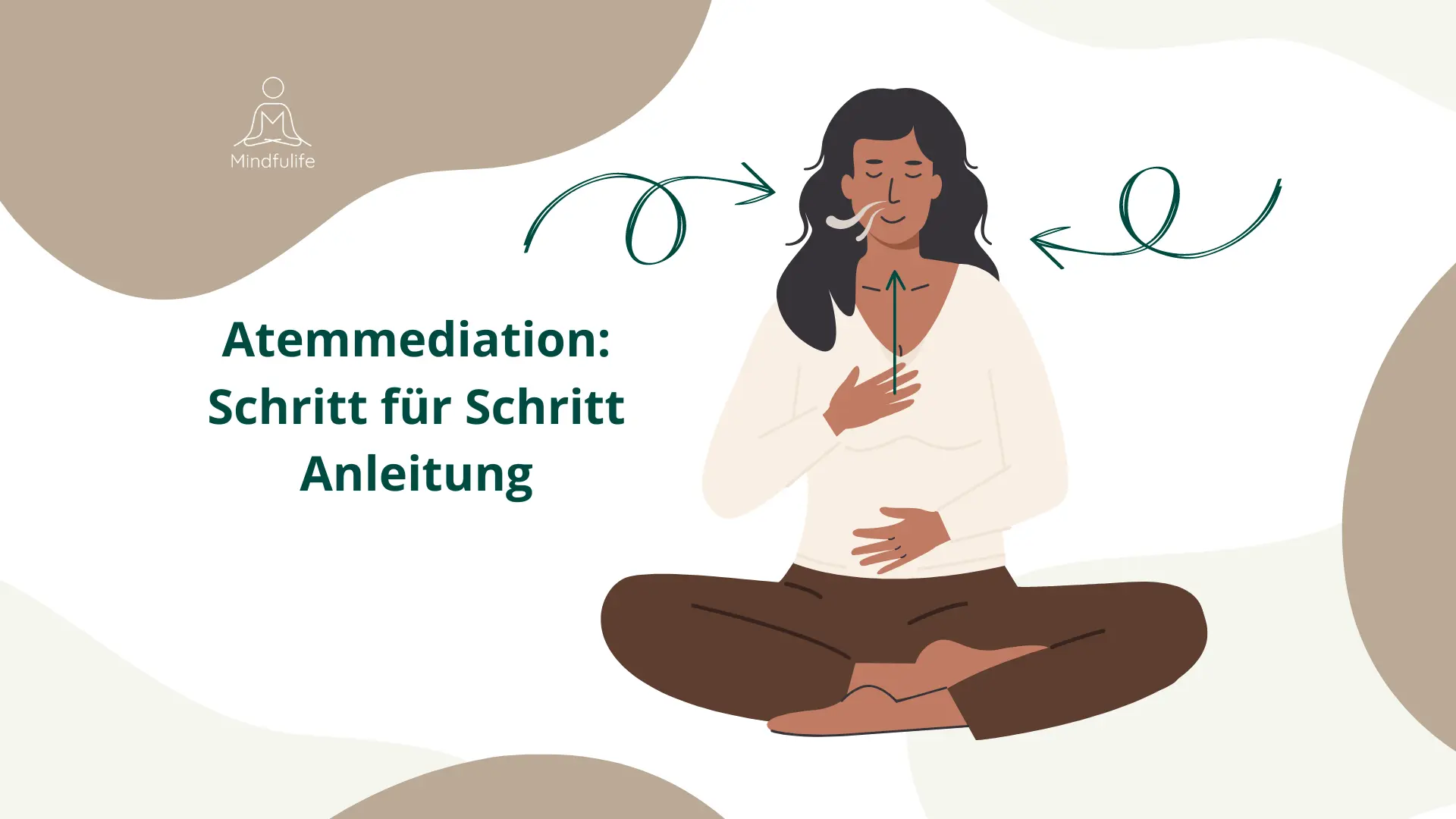
We explain to our students that there is no right or wrong way to breathe. Whether relaxed or tense, deep or shallow – everything is acceptable. The focus is on being present and noticing the breath wherever it feels natural. Attention rests on the breath, letting go of any ideas about how the breath should be. We simply observe it as it comes and goes and sense where the breath is most noticeable – whether at the nose, in the chest or in the belly.
Flexibility in perception
It is normal for thoughts to arise and distract the mind. When we notice our thoughts wandering, we simply acknowledge this and gently return to our breath. We allow our thoughts to pass by without getting absorbed in them. It is helpful to offer students different ways of noticing the breath, whether at the nose, in the upper body or in the belly. This variety allows everyone to experience the breath in the way that is most accessible to them. It is also important to emphasise that it is completely normal for thoughts to come up during meditation. Our task is to notice these thoughts without judgement and gently return to the breath.
Expanding mindfulness
After a while, we can expand our attention from the breath to the whole body. Feel the sensations arising in your body and consciously take in your surroundings. This helps to bring the meditation to a close and slowly return to everyday life. End the meditation gradually by slowly opening your eyes and becoming consciously aware of your surroundings again.
Final thoughts on breath meditation
Breath meditation is a powerful practice that helps us to be present and calm our mind. Through sensitive guidance, we can help our students understand the fundamentals of meditation and develop a deeper connection with themselves. May this guide serve to deepen your own meditation practice and help others on their path.
If you are interested in a deeper experience or are thinking about becoming a meditation teacher yourself, you can find out more about our training via this link. We invite you to explore this transformative practice and integrate it into your life.
The Mindfulife Team
Your journey to meditation teacher training
Start your training as a certified meditation teacher today. Our online training is based on solid scientific evidence and was developed by experienced psychologists. Immerse yourself in the fascinating world of meditation and mindfulness while qualified teachers guide you through a comprehensive curriculum. Get to know a range of meditation practices, explore the foundations of mindfulness and develop your skills to help others find inner calm and balance
No problem! If you have any questions that our website doesn’t answer, don’t hesitate to get in touch with us at any time. You can contact us by email or phone, with no obligation – whichever you prefer. We will get back to you as quickly as possible and will be happy to advise you personally. We look forward to accompanying you on this wonderful journey too.
- Email: info@mindfulife.de
- Phone: +49 (0)69 9999 3159
Deepen your meditation practice with Mindfulife
Meditation can be more than a short break in your everyday life. If you would like to understand more deeply how meditation works, how to build a steady practice of your own and how to guide others mindfully, our meditation teacher training is the next step. There you will not only get to know meditation in theory, but also develop more confidence, clarity and trust in your own practice.
Would you like to find out more about the training first? In our weekly webinar you will get an insight and learn more about what your path to becoming a meditation teacher could look like.
For regular support in your everyday life, you can also use our online meditation studio and join guided meditations flexibly via Eversports.
We look forward to accompanying you on your journey.