Meditating on Your Own: 3 Simple Steps to Stillness

 · 4 min read

How can you easily learn to meditate on your own and find inner calm?
In our overstimulated world, we increasingly long for moments of calm. Silent meditation is one of the most effective ways to escape the daily grind, calm the nervous system and sharpen your ability to focus.
But anyone who has ever sat down on a cushion without any guidance knows the typical phenomenon: in theory, stillness sounds incredibly simple, yet our mind usually has completely different plans. As soon as things go quiet around us, to-do lists pop up, thoughts wander off and we quickly start to feel that we are doing something ‘wrong’ or are simply ‘not cut out for meditation’.
These doubts are completely unfounded. The problem is by no means you; it is that sudden silence without a gentle introduction is a huge hurdle for our brain. In this article, you will find out what neuroscience says about silent meditation and how a simple 3-step method can guide you, step by step, towards inner calm.
If you want to learn to meditate on your own, it is worth taking a look at neuroscience:
If you want to learn to meditate on your own, it is worth taking a look at neuroscience. Numerous studies around the world show that silent meditation is by no means just esoteric, but triggers measurable changes in the body and brain:
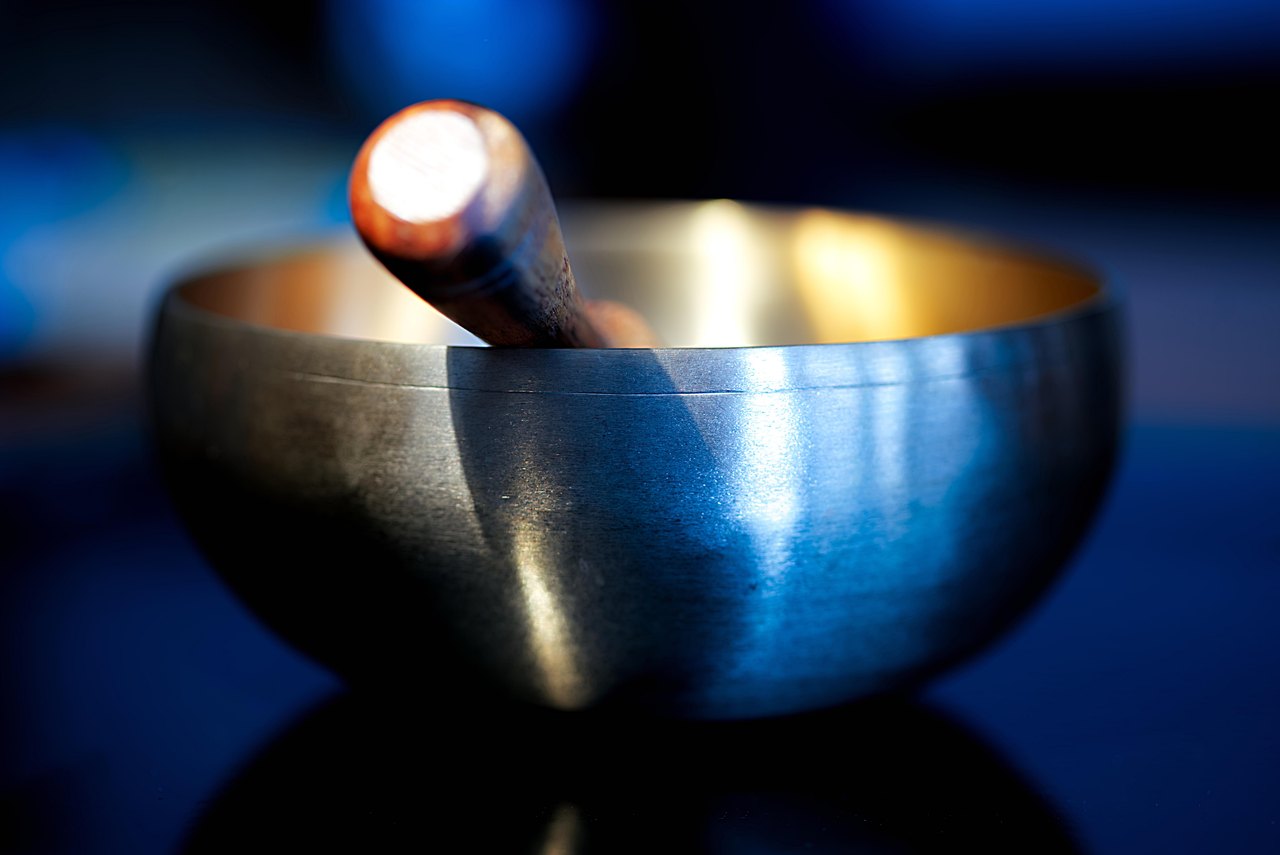
Less rumination in your head: Research from Yale University shows that silent meditation dampens activity in the so-called Default Mode Network (DMN) . This brain network kicks in when our thoughts drift, when we worry or when we are caught up in scenarios about the future or the past (Brewer, 2011, pp. 20254–20259).
Measurable stress reduction: A large meta-analysis by Johns Hopkins University involving more than 3,500 participants shows that regular meditation practice noticeably reduces anxiety, emotional distress and stress (Goyal et al., 2014, pp. 1-9).
Changes in the brain (neuroplasticity): MRI studies from Harvard Medical School showed that after several weeks of practice, grey matter density increases in regions responsible for attention and self-regulation, while the stress centre (the amygdala) is downregulated (Hölzel et al., 2010, pp. 1-10).
The 3-step method: learning to meditate on your own
To benefit from these positive effects, you do not have to sit still for hours. If you want to learn to meditate on your own, Phil shows you a simple approach in this guided video that gradually introduces you to stillness in short intervals:
To settle in, find a sitting position that allows you to sit stably, upright and relaxed for the next few minutes. Consciously notice your body and adjust your posture so that you do not have to keep moving during the practice and it feels comfortable for you.
Step 1 – The first minute of stillness
Direct your attention purely to your natural breathing. You do not need to change, deepen or adjust your breath; your body breathes on its own in a completely relaxed way. For one minute, simply stay with the air flowing in and out.
Step 2 – Two minutes of stillness & dealing with thoughts
Let go of the idea that your mind has to be completely quiet straight away! It is perfectly normal for various thoughts to come up. As soon as you notice that you have been distracted, simply return to your breath, kindly and without judgement. This time, stay with it for two minutes.
Step 3 – Three minutes of stillness
Now you deepen the practice and remain in stillness on your own for three minutes. Whenever your focus wanders: notice it and gently come back to your breath.
5. Closing
To finish, widen your focus from your breath back out to your whole body, consciously take in your surroundings and end the session with the sound of the singing bowl.
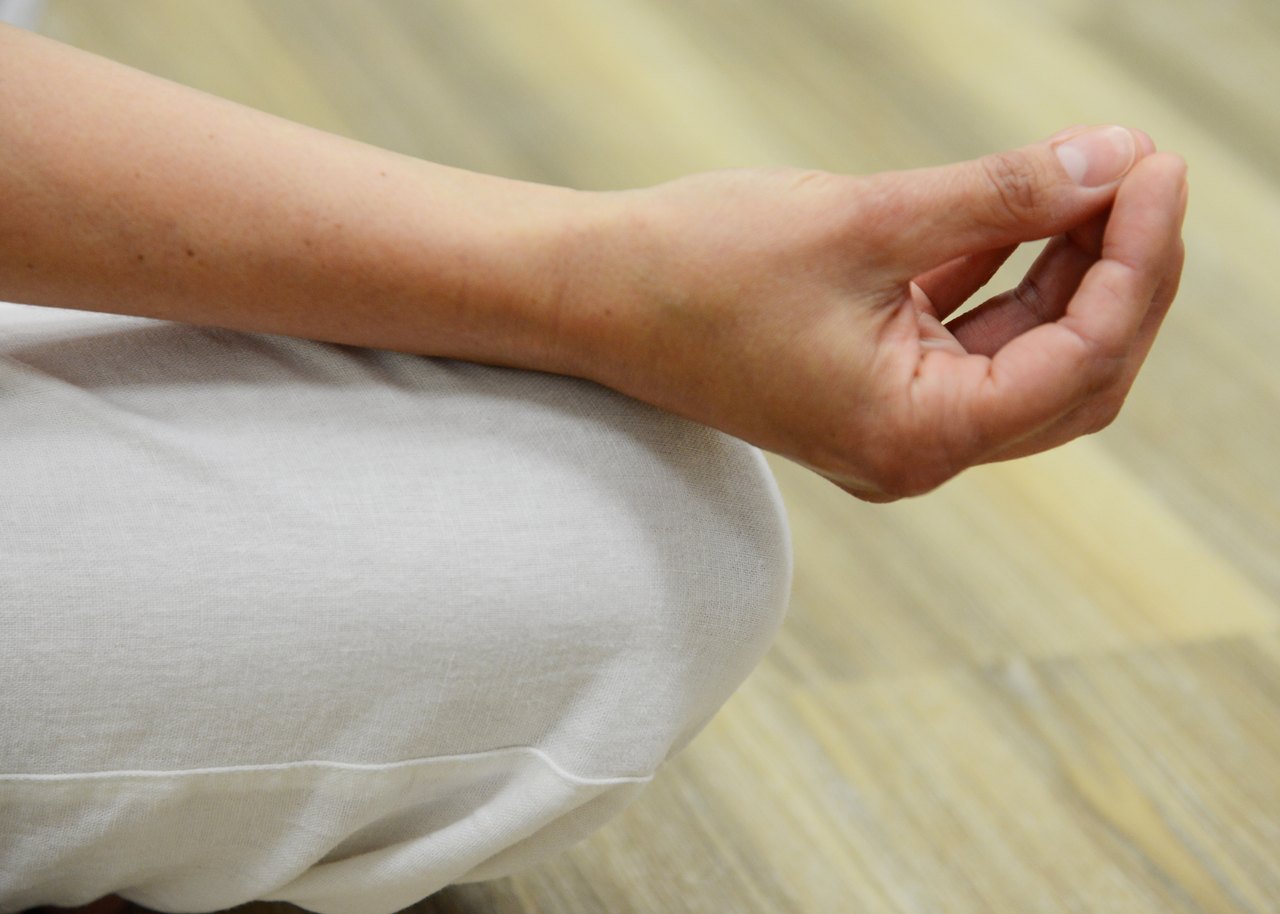
Conclusion: learning to meditate on your own
Learning to meditate on your own is not a goal you have to reach overnight, but a journey. If your thoughts wander during practice, that is not a failure but the perfect opportunity to train your mindfulness. Just a few minutes of stillness a day are enough to lower your stress levels in the long term and move through everyday life with greater calm.
Annika S. (psychology student, M.Sc)
Deepen your meditation with Mindfulife
Meditation can be more than a short break in your day. If you would like to understand more deeply how meditation works, how to build a stable practice of your own and how to mindfully guide others, our meditation teacher training is the next step. There, you will not only get to know meditation in theory, but also develop more confidence, clarity and trust in your own practice.
Would you like to find out more about the training first? In our weekly webinar you will get an insight and learn more about what your path to becoming a meditation teacher could look like.
For regular support in everyday life, you can also use our online meditation studio and join guided meditations flexibly via Eversports.
We look forward to accompanying you on your journey.