How to Stop Worrying – Finding Inner Peace

 · 3 min read

There are clearly plenty of reasons to worry – but how do we manage to stay positive, let go of our worries and avoid being at the mercy of our fears? How can we stop worrying?
Can mindfulness help with worries?
In recent years, a seemingly endless number of studies have looked at the benefits of meditation. Some of them have specifically examined the effects of mindfulness-based training on anxiety and worry. A study by Campbell et al. (2011) investigated the level of ‘rumination’ (brooding, worrying) in cancer patients.
The participants completed an eight-week MBSR programme (Mindfulness-Based Stress Reduction) focused on reducing stress. The post-intervention assessments showed that, compared with the control group, participants had higher levels of mindfulness, and that this went hand in hand with less rumination and worry.
How can I deal with worries?
Another study explored whether the effects of meditation differ depending on how heavily a person is burdened by anxiety and stress. Schreiner and Malcolm (2008) asked 50 study participants to complete the Depression Anxiety and Stress Scale before and after a ten-week meditation programme. After the ten weeks, all participants showed improvements in their scores for depression, anxiety and stress. What is particularly interesting is that the greatest improvements occurred in those who had previously been struggling most with strain and had the highest scores. So when it comes to letting go of worries through meditation, there is no upper limit.
How long does it take for mindfulness to help?
These findings lead us to assume that those of us who feel especially stressed can benefit most from mindfulness and meditation.
And you don’t need to invest a lot of time or create even more appointments and pressure. In their study on the effects of mindfulness-based meditation on stress and anxiety, Burgstahler and Stenson (2020) found that even short meditation sessions bring about successful changes.
They had students take part in an eight-week programme consisting of short meditation sessions six days a week. It turned out that just five to twelve minutes of meditation a day was enough to produce significantly lower levels of stress and anxiety. The positive changes increased even further with longer meditation sessions.
Letting go of worries: 6 techniques that can help
- Breathing meditation: focusing on the breath and directing your attention to a specific point
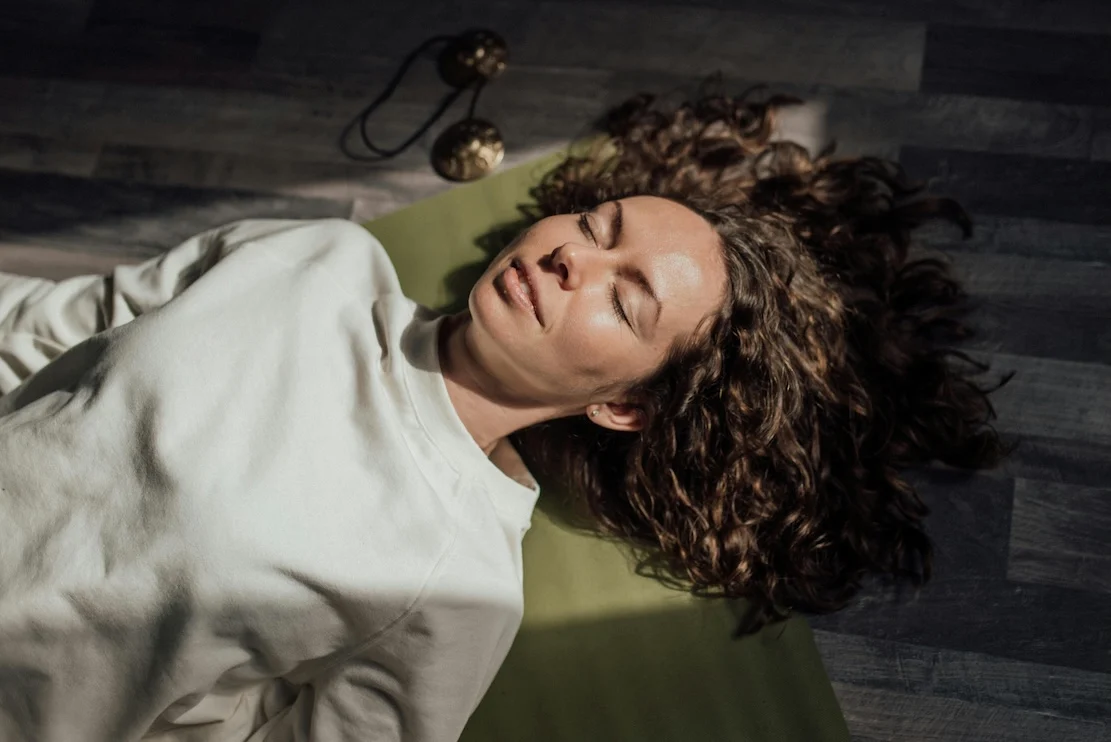
- Body scan: mindfully moving your attention through the body and its individual parts
- Gratitude meditation: an attitude of gratitude, practised in everyday life, for positive effects on your wellbeing
- Metta meditation: also known as loving-kindness meditation, the practice of cultivating love and compassion and offering positive wishes for wellbeing and happiness
- Visualisation meditation: imagining pictures in your mind’s eye, such as black smoke or bright light
- Sound meditation: focusing on sounds such as music, natural sounds or mantras to free yourself from distracting or negative thoughts

Letting go of worries: the article in brief
- MBSR can lead to greater mindfulness and fewer worries
- Even short meditations and mindfulness exercises have a positive effect
- Just five to twelve minutes of mindfulness a day can already help
- Possible exercises: breathing meditation, gratitude meditation or sound meditation
Letting go of worries – Mindfulife supports you
What’s interesting here is that even small changes in your everyday life can boost your wellbeing and help you worry less.
Further reading
If you’d like to learn more about mental health, we have just the right article for you here. Enjoy reading!
Deepen your meditation practice with Mindfulife
Meditation can be more than a short break in your everyday life. If you would like to understand more deeply how meditation works, how to build a steady practice of your own and how to guide others mindfully, our meditation teacher training is the next step. There you will not only get to know meditation in theory, but also develop more confidence, clarity and trust in your own practice.
Would you like to find out more about the training first? In our weekly webinar you will get an insight and learn more about what your path to becoming a meditation teacher could look like.
For regular support in your everyday life, you can also use our online meditation studio and join guided meditations flexibly via Eversports.
We look forward to accompanying you on your journey.
You can find more mindfulness inspiration on our channels too
References
Burgstahler, M. S. & Stenson, M. C. (2020). Effects of guided mindfulness meditation on anxiety and stress in a pre-healthcare college student population: a pilot study. Journal of American college health : J of ACH, 666–672. https://doi.org/10.1080/07448481.2019.1590371
Campbell, T. S., Labelle, L. E., Bacon, S. L., Faris, P. & Carlson, L. E. (2012). Impact of Mindfulness-Based Stress Reduction (MBSR) on attention, rumination and resting blood pressure in women with cancer: a waitlist-controlled study. Journal of behavioral medicine, 262–271. https://doi.org/10.1007/s10865-011-9357-1
Schreiner, I. & Malcolm, J. P. (2008). The Benefits of Mindfulness Meditation: Changes in Emotional States of Depression, Anxiety, and Stress. Behaviour Change, 25(3), 156–168. https://doi.org/10.1375/bech.25.3.156