Leading a meditation course: the ideal 4-week preparation?
"Discover the art of meditation: learn how to structure and lead your own meditation course. Find out step by step how to design a successful course. Find out more now!"

 · 4 min read
Meditation is becoming increasingly popular as more and more people recognise its positive effects on body and mind. Many people would like to learn meditation, whether to manage stress, to promote their general wellbeing or for spiritual development. If you are thinking about offering a meditation course to introduce others to this transformative practice, it is important to choose a structured approach that gives participants a solid foundation and guides them step by step on their meditative journey.
Meditation course week 1: The basics and getting to know each other
The first step in designing your meditation course is to introduce participants to the basics of meditation and to create a trusting and supportive learning environment. Begin the first session with a warm welcome and a short introduction to the topic of meditation. Encourage participants to get to know one another and to share their personal reasons for joining the course. This creates common ground and encourages exchange within the group.

Another important aspect of the first session is clearing up common myths and misconceptions about meditation. Many people have mistaken ideas about what meditation is and what they can expect during a meditation practice. For example, some believe that meditation is a relaxation technique in which you are supposed to feel relaxed. Others think that you have to switch off your thoughts completely while meditating. It is important to dispel these myths and give participants a realistic understanding of meditation.
Meditation course week 2: Introduction to meditation techniques
In the second week of the meditation course, the focus is on a practical introduction to meditation techniques. Start with a brief explanation of what meditation is and why people practise it. Then guide participants through a simple breathing meditation, in which they learn to direct their attention to their breath and let go of thoughts. This basic exercise gives participants a first experience of the practice and helps them to focus on the present moment.
After introducing the breathing meditation, you can introduce further meditation techniques, such as observing thoughts or a body scan. It is important to give participants a variety of tools so that they can choose the ones that best suit their individual needs.
Meditation course week 3: Deepening the practice
In week three of the course, you deepen the meditation techniques further and concentrate on developing a calm and stable mind. Focused meditations, in which participants learn to direct their attention to a particular point, can help to calm the mind and minimise distractions. These techniques can also help to reduce stress and promote emotional balance.
Another important aspect of week three is the integration of mindfulness practices. Participants learn to be mindful and to consciously perceive the present moment without evaluating or judging it. This can be achieved through exercises such as the body scan or the raisin meditation, in which participants sharpen their senses and focus on the experience of the moment.
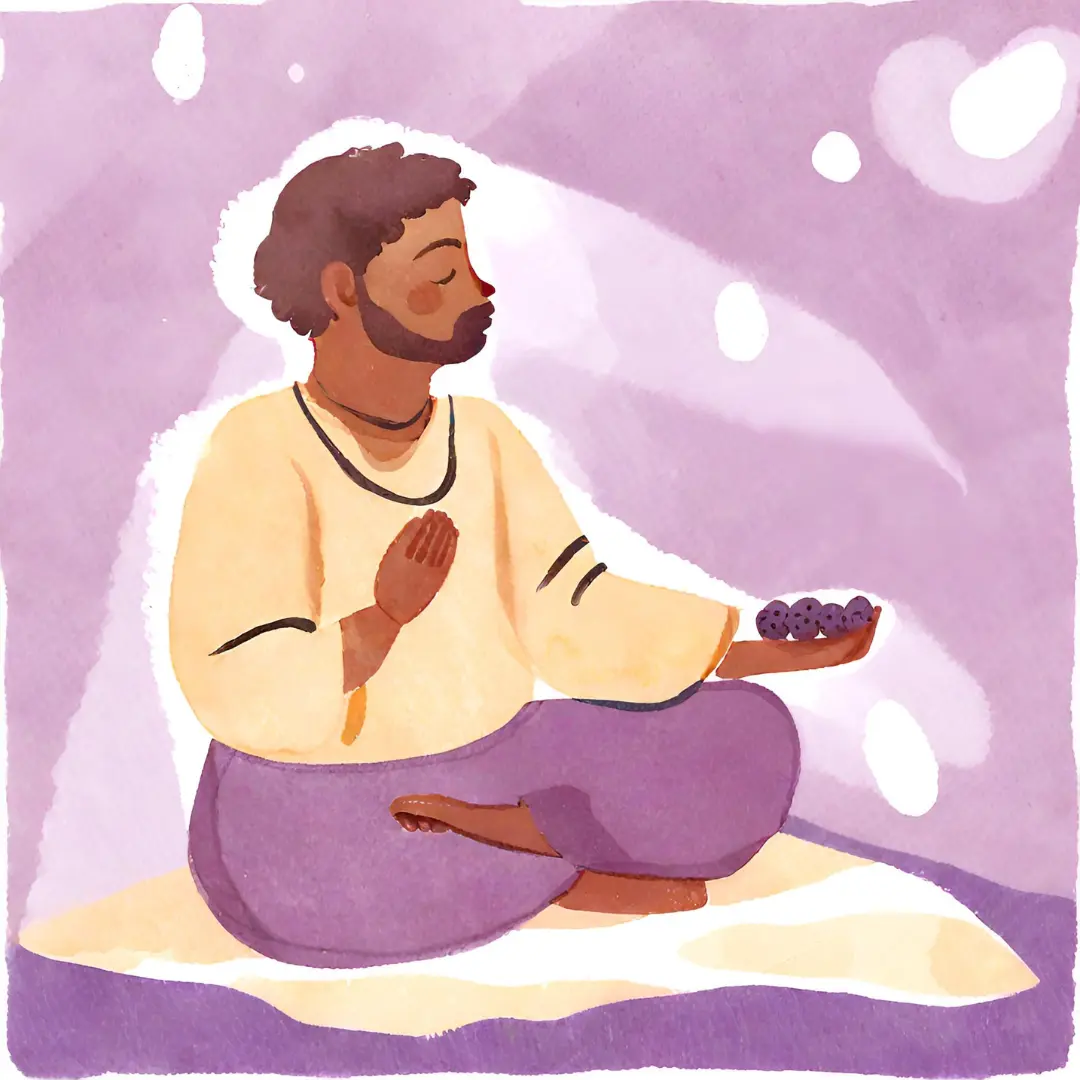
The raisin meditation is an exercise in which participants hold raisins in their hands, mindfully looking at them, touching them, smelling them and finally eating them. The raisin meditation helps us become aware of how often in everyday life we tend to consume our food without real mindfulness. By eating consciously and focusing on their sensory experiences, participants can build a deeper connection with their body and their food. This practice teaches us to experience the present moment fully and to develop a deep appreciation for the simple pleasures of life.
Meditation course week 4: Integration and looking ahead
The final session of the course focuses on integrating the techniques learned and looking ahead to the future. Over the previous weeks, participants have learned and practised a variety of meditation techniques and can now reflect on how they can integrate these practices into their everyday lives. Discuss with participants how they can develop a regular meditation routine, and encourage them to support one another and to join a meditation group.
Another important aspect of the final session is emphasising the long-term nature of meditation practice. Participants should understand that meditation is a lifelong process and that the experiences they have had on the course are only the beginning. Encourage them to continue their meditation practice.
After your meditation course: The strength of community
Once the meditation course has finished, it is important to offer participants a way to continue their practice and connect with like-minded people. Building a community of meditators can help to maintain motivation and commitment. This can be made possible through regular meetings, online groups or open meditation sessions. By sharing experiences and supporting one another, participants can continue to grow and deepen their meditation experience. The community offers a space for inspiration, encouragement and shared reflection, helping participants to progress on their spiritual path and consolidate their practice.
Conclusion
Designing and offering a meditation course requires careful planning and structuring in order to give participants an enriching and supportive experience. With step-by-step guidance over four weeks, participants can not only learn the basics of meditation but also get to know and deepen a variety of techniques.
The course begins by teaching fundamental concepts and clearing up misconceptions about meditation. This creates a solid foundation and allows participants to approach the course with realistic expectations. In the following weeks, various meditation techniques are introduced and practised, with the emphasis on developing a calm and stable mind and on cultivating mindfulness.
At the end of the course, participants are encouraged to integrate their meditation practice into their everyday lives and to build a long-term routine. By creating a supportive community and sharing experiences, participants can stay motivated and continually deepen their practice.
A meditation course offers not only the chance to learn meditation but also an opportunity for personal development and self-reflection. By engaging with their inner world and cultivating mindfulness, participants can gain a deeper understanding of themselves and their surroundings and lead a more fulfilling and conscious life.
Deepen your meditation practice with Mindfulife
Meditation can be more than a short break in your everyday life. If you would like to understand more deeply how meditation works, how to build a steady practice of your own and how to guide others mindfully, our meditation teacher training is the next step. There you will not only get to know meditation in theory, but also develop more confidence, clarity and trust in your own practice.
Would you like to find out more about the training first? In our weekly webinar you will get an insight and learn more about what your path to becoming a meditation teacher could look like.
For regular support in your everyday life, you can also use our online meditation studio and join guided meditations flexibly via Eversports.
We look forward to accompanying you on your journey.