What is maladaptive daydreaming? What can help, and can it also be useful?

 · 4 min read

Maladaptive daydreaming – the dysfunction, the obstacle, is already contained in the term itself. Daydreaming in itself is nothing unusual: everyone drifts off now and then, lives in their ‘own world’ for a while or dreams of a different reality.
This is not harmful per se and can even be genuinely valuable. These positive qualities should not be overlooked when it comes to daydreaming. Nevertheless, especially with regard to maladaptive daydreaming, it is important to look at the difficulties it can bring to everyday life and how they can be addressed.
But what exactly is meant by maladaptive daydreaming?
What is maladaptive daydreaming?

Maladaptive daydreaming affects people who often lose themselves in vivid daydreams for hours at a time, causing them to neglect everyday responsibilities and social relationships, which can lead to clinically significant distress. Based on current research, it is assumed that maladaptive daydreaming can be compared with other psychologically relevant dysfunctions such as addiction problems or compulsions. (Soffer-Dudek et al., 2018 & Roy et al., 2024)
This highlights how inevitable the negative consequences for the everyday lives and relationships of those affected are if they do not know how to deal with their daydreams. After all, if dreaming has become a compulsion for someone, they cannot simply stop – it is like an addiction. Because dreaming is positively reinforced, a vicious circle develops.
Who is particularly affected, and how can this vicious circle be broken?
Who is affected?
People with AD(H)D in particular often show symptoms that point to maladaptive daydreaming. (Kowalczyk et al., 2025) Knowing about this connection can help to recognise the relevant symptoms more quickly and to deal with them.
What kind of dreams are these?

People with MD (maladaptive daydreaming) develop fantasy worlds that are often highly detailed and vivid. In them, they frequently experience themselves as an idealised version of themselves or as characters they idealise. (Shanbhag T., 2024) For example, a person with MD might escape into a fictional world in which they have superpowers that let them overcome all kinds of obstacles with ease, or they might experience themselves as a successful singer if that is their ideal vision of their life. Because this idealised vision of one’s own life is so tempting, it can be hard to let go of it and engage with ‘real’ life.
So what can help to shift your focus back towards reality?
What helps?
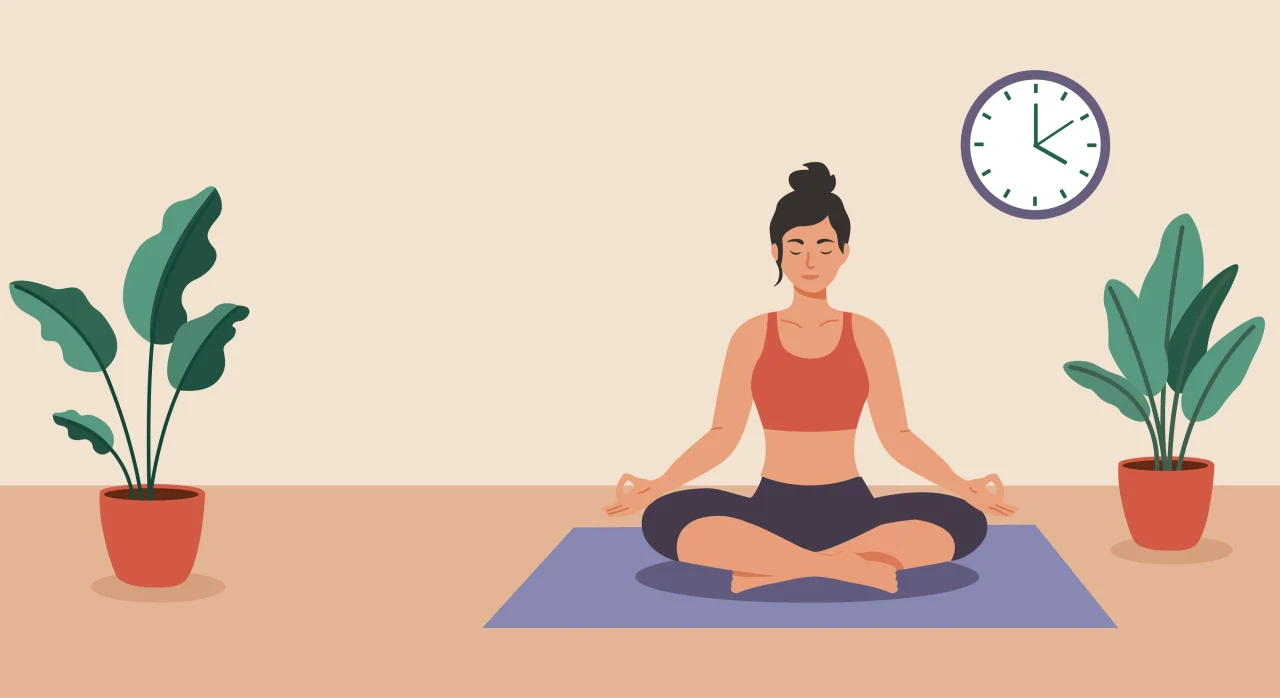
One measure that can help to regain control over daydreaming is practising mindfulness exercises. (Herscu et al., 2023)
Meditation has been shown to reduce drifting off into daydreams (Calderone et al., 2024) and can consequently help people to engage more with their actual lives again.
While practising the exercises, you direct your focus to the present and adopt a non-judgemental attitude, which can contribute to greater wellbeing in life. (Blanke et al., 2020) Accepting yourself, even when you do not match the ideal from your dreams, could be trained, and a better connection to your own life could be established.
Another measure that could also help to counteract excessive daydreaming is approaching it with humour. Precisely because avoidance behaviour is often at the forefront of maladaptive daydreaming, regulating one’s own emotions is central to dealing with it constructively. Adopting a humorous perspective could have a positive effect on the ability to regulate emotions. (Öğüt et al., 2025) Mindfulness can also strengthen this ability. (Blanke et al., 2020)
Daydreams and creativity
As its name suggests, maladaptive daydreaming describes ‘too much’ dreaming, but drifting off into your own imagination can in itself also bring advantages and strengths. In their study on creativity and daydreaming, Sun et al. found that positive-constructive daydreaming is associated with higher creativity scores. (Sun et al., 2022)
When daydreaming, you are not so bound by the laws of the world; your thoughts are freer and more playful, which can certainly help you to think about all kinds of topics in unconventional, creative ways. However, Sun et al. also found that poor attentional control is associated with lower creativity. (Sun et al., 2022) Measures such as mindfulness exercises can, however, increase attention to the here and now, and you might then be better able to benefit from your ability to create detailed daydreams.
If you would like to learn more about mindfulness practice, feel free to browse our blog for more articles on the topic or have a look at a video or two on the Phil Pham channel:
Neo Holste (German studies student)
Deepen your meditation practice with Mindfulife
Meditation can be more than a short break in your day. If you would like to understand more deeply how meditation works, how to build a stable practice of your own and how to guide others mindfully, our meditation teacher training is the next step. There, you will not only get to know meditation in theory but also develop more confidence, clarity and trust in your own practice.
Would you like to find out more about the training first? Our weekly webinar gives you an insight and shows you what your path to becoming a meditation teacher could look like.
For regular support in everyday life, you can also use our online meditation studio and join guided meditations flexibly via Eversports.
We look forward to accompanying you on your journey.