Wearables: How can they support your mental health?

 · 5 min read
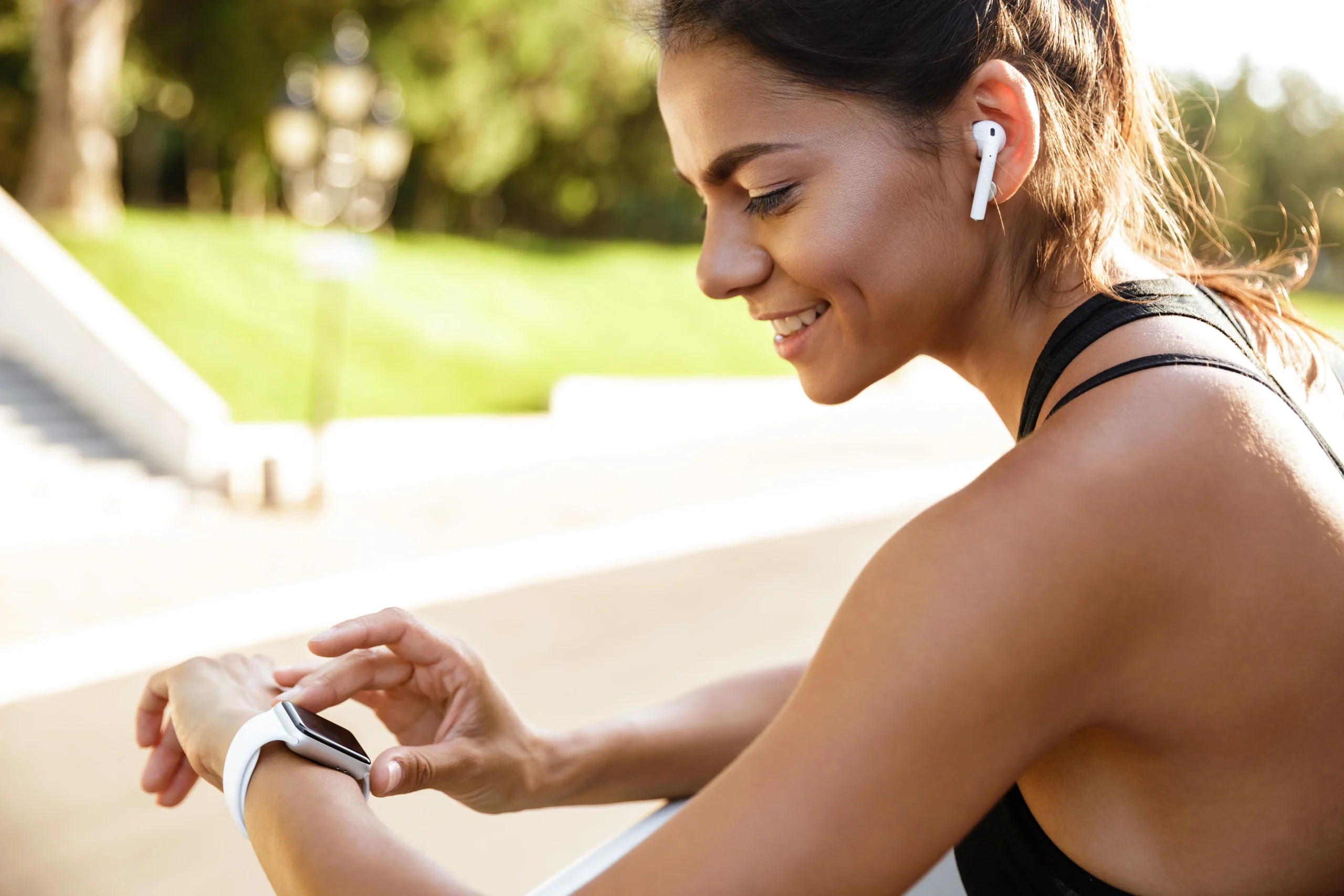
Mental health and stress management are more important today than ever. Have you ever thought about how all the modern technology in your everyday life could help you with this? Wearables – smartwatches, fitness trackers and the like – have long been more than just step counters. They can be genuine helpers when it comes to recognising stress, sleeping better and treating yourself more mindfully. In this article, you’ll find out what wearables are and how they can help you reduce stress and look after your mental health in everyday life!
Wearables: a definition
Wearables are portable electronic devices or computer technologies that you wear on your body and that collect various health and fitness data. The most popular models are fitness trackers and smartwatches. Depending on the device, you can use them to measure your heart rate, blood pressure, sleep, calorie consumption or even your stress level, for example. You can then view and analyse the collected data via apps on your smartphone. This gives you a better understanding of your body and lets you track changes or progress. Many wearables also offer useful features such as receiving calls and messages, appointment reminders or mindfulness and breathing exercises. But how exactly are wearables connected to mental health?
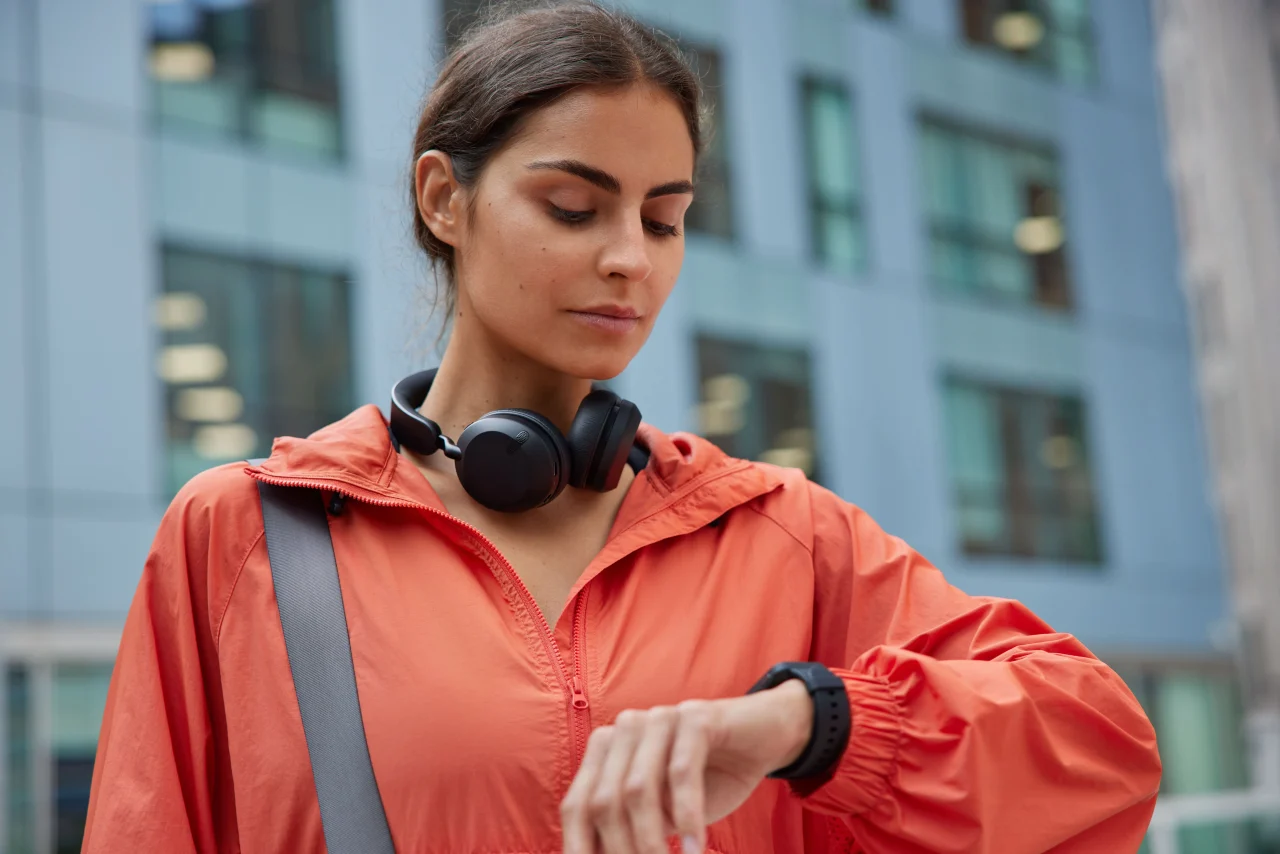
How do wearables work in relation to mental health?
Wearables can be a valuable support for your mental health by helping you, over time, to better understand your body and your wellbeing and so work on them actively. They can also be a motivation to develop or maintain healthier habits. In addition, wearables can monitor the quality of your sleep and give you valuable insights to improve it, as sleep plays an important role in your mental health.
What’s more, many devices use your physiological data to detect stress signals and therefore also signs of overload or emotional exhaustion. Thanks to this continuous monitoring, you can respond early to signs of stress or even burnout. Many wearables also offer guided breathing exercises, mindfulness training or relaxation exercises directly on the device, reminding you to take necessary breaks during the day and offering quick support. This allows you to deal with your feelings more consciously, reduce stress and stay more balanced overall. All of these are factors that help you maintain and nurture your mental health!
Two more interesting facts: in the context of digital workplace health promotion, wearables are also regarded as useful tools. They also open up many new possibilities for psychiatric research and treatment: they can help to observe mental health problems closely in everyday life and measure them in real time. They can also identify important situations or moments in which particular support or testing is needed – so treatment can be better tailored to the individual.
Wearables in stress and anxiety management
Portable devices such as wearables play an important role in detecting stressful situations and at the same time offer you support in coping with them. Studies have shown that wearable-based interventions have achieved promising results in effective stress management. Such interventions mainly serve to support self-regulation during stressful moments, to complement self-regulation therapies and to raise awareness of stress prevention.
In specific anxiety-provoking situations, or if you often struggle with anxiety, wearables can support you by using so-called biofeedback to help you understand and regulate your physical reactions better in real time. Biofeedback is a method in which physiological data give you feedback on bodily processes such as your heartbeat or breathing. You can use this data to consciously influence and regulate your bodily functions. The aim of this conscious intervention is to reduce stress, promote relaxation or gain better control over certain physical reactions.
A large study has even shown that wearables can help detect mental illnesses such as depression or anxiety disorders at an early stage. As more and more people use such devices, this approach is a promising step towards recognising mental health problems in good time and treating them more effectively.

What are the limitations and risks of wearables?
Wearables can offer you many benefits in everyday life. But they also have limitations and risks that you should be aware of:
Not all data is always accurate or reliable: technology isn’t infallible, so readings can sometimes be inaccurate, which may lead you to draw the wrong conclusions or worry unnecessarily.
Data security: your data is very personal and sensitive. If it falls into the wrong hands, it could be misused, for example for unwanted advertising or even identity theft. That’s why it’s important to check carefully which data you share and how secure the devices are.
Risk of fixating on data or perfectionism: if you’re prone to it, there’s a risk that you become too fixated on the devices – for instance by obsessively checking your readings. In the worst case, this can fuel stress, anxiety or a distorted self-image and so prove counterproductive.
Wearables are no substitute for professional therapy: wearables do not replace professional medical treatment. They are merely tools that can give you pointers or motivate you, but for serious health problems you should always consult a medical or therapeutic professional.
Summary and conclusion
Here’s a summary of the most important points for you:
- Versatile support: Wearables help monitor stress, sleep quality and physical reactions in order to better understand and improve wellbeing.
- Early detection: They can detect signs of overload, stress or mental illness early on, enabling timely intervention.
- Mindfulness & relaxation: Many devices offer guided breathing exercises, mindfulness training and relaxation exercises that provide support in everyday life.
- Motivation for healthy habits: Wearables encourage a more conscious relationship with your own body and motivate you to lead a healthy lifestyle.
- Limitations & risks: Inaccurate data, data protection issues and the risk of becoming fixated on the devices are important aspects to bear in mind.
- No substitute for professional help: Wearables are useful tools, but they do not replace medical or therapeutic treatment for serious problems.
Wearables are therefore a valuable everyday aid that can help you understand your body better, treat yourself more mindfully and motivate you to lead a healthy lifestyle.
What do you think about using wearables for mental wellbeing? Or have you already had some experience with them? Feel free to share your thoughts and experiences with us in the comments or on Instagram!
Leana S. (psychology student)
Deepen your meditation practice with Mindfulife
Meditation can be more than a short break in your everyday life. If you would like to understand more deeply how meditation works, how to build a steady practice of your own and how to guide others mindfully, our meditation teacher training is the next step. There you will not only get to know meditation in theory, but also develop more confidence, clarity and trust in your own practice.
Would you like to find out more about the training first? In our weekly webinar you will get an insight and learn more about what your path to becoming a meditation teacher could look like.
For regular support in your everyday life, you can also use our online meditation studio and join guided meditations flexibly via Eversports.
We look forward to accompanying you on your journey.
You can find more mindfulness inspiration on our channels too
References
Dai, R., Kannampallil, T., Kim, S., Thornton, V., Bierut, L., Lu, C. (2023). Detecting Mental Disorders with Wearables: A Large Cohort Study. In International Conference on Internet-of-Things Design and Implementation (IoTDI ’23), May 09–12, 2023, San Antonio, TX, USA, 39-51. ACM, New York, NY, USA. https://doi.org/10.1145/3576842.
Ebner-Priemer, U. W., Reichert, M., Tost, H. & Meyer-Lindenberg, A. (2019). Wearables zum kontextgesteuerten Assessment in der Psychiatrie. Der Nervenarzt, 90(12), 1207–1214. https://doi.org/10.1007/s00115-019-00815-w
Hickey, B. A., Chalmers, T., Newton, P., Lin, C., Sibbritt, D., McLachlan, C. S., Clifton-Bligh, R., Morley, J. & Lal, S. (2021). Smart Devices and Wearable Technologies to Detect and Monitor Mental Health Conditions and Stress: A Systematic Review. Sensors, 21(10), 3461. https://doi.org/10.3390/s21103461
Ramírez, M. L. G., Vázquez, J. P. G., Rodríguez, M. D., Padilla-López, L. A., Galindo-Aldana, G. M. & Cuevas-González, D. (2023). Wearables for Stress Management: A Scoping Review. Healthcare, 11(17), 2369. https://doi.org/10.3390/healthcare11172369
Schmidt, S., Andersch-Rupprecht, C., Dengler, T. & Nagel, E. (2023). Zur Wirksamkeit der digitalen betrieblichen Gesundheitsförderung in Zeiten von Home-Office: Eine systematische Übersichtsarbeit. Das Gesundheitswesen, 86(06), 412–419. https://doi.org/10.1055/a-2143-7457
Xue, Y. (2019). A review on intelligent wearables: Uses and risks. Human Behavior And Emerging Technologies, 1(4), 287–294. https://doi.org/10.1002/hbe2.173